
Leadership Test: Do You Prefer the Grown-Up Table or the Kids’ Table?
Confessions of the eldest son of the eldest children
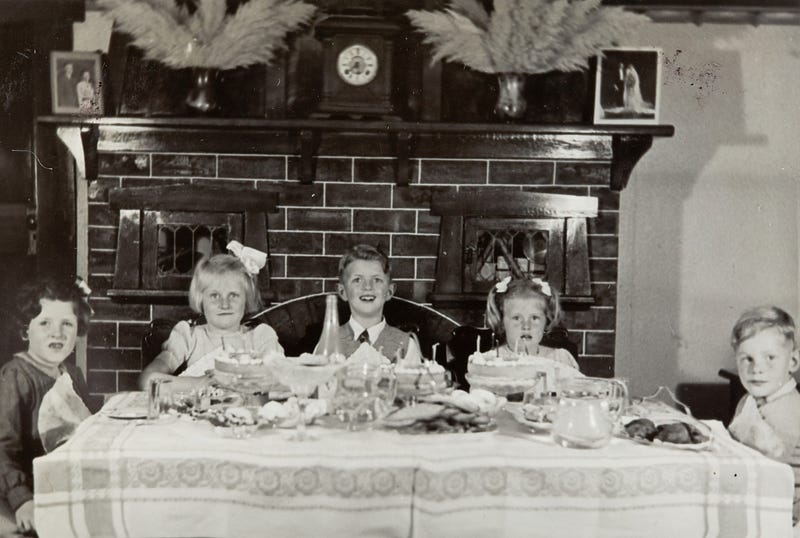
I was the “firstborn” and eldest grandchild, so I started life at “the grown-up table,’’ showered with love, joy, affection, and attention: The child.
Eldest children carry on family traditions (like father, like son). Youngest kids tend to get the most attention and go their own way. Middle children have to work the hardest to get noticed, becoming “the glue.’’ My bride and closest friends are “middle kids.’’
The main pluses and minuses to sitting at both tables:
- The grown-up table is the seat of power where decisions are made. Your creators, the authors, kings, and queens of your world sit here. If you want face-time with the leadership, you want to be at the big table.
- The kids’ table is your own world where you can be a big fish in a little pond. You have more freedom, learn to lead. The eldest watch over younger kids while young ones learn by playing “Follow the Leader.” At parties, crowds pack the big rooms, but the hipper “cool people’’ are talking in the kitchen.
We grew. We went from being “the child’’ to “one of the kids.’’ New siblings and cousins were born. Grandma kept the adults in the dining room, setting up a “kids’ table,’’ in the kitchen, where smaller kids surrounded the eldest.
“Train up a child in the way he should go; even when he is old he will not depart from it.” (Proverbs 22:6, ESV).
I felt a bit like Adam and Eve: cast out of paradise
One minute, you’re the center of attention: The kid, getting all the attention and glory. You’re then sent to the kitchen, the biggest of a bunch of even smaller, sillier kids. Similar jolts:
- Being born, leaving a familiar womb for a scary world.
- Being weaned off mother’s milk. Baby formula is better? Yeah, sure.
- Being dropped off at college the first time, all alone.
More independence is invigorating, exciting, and educational at each step, but big changes come all at once.
“If you would only recognize that life is hard, things would be so much easier for you,’’ — U.S. Supreme Court Justice Louis Brandeis (1856–1941).
I’d sit at that “kid table” listening to goofiness and “baby talk,’’ able to see the distant big table, the center of the action where the storytellers sat. The news and stories were at the grown-up table.
“Your wife will be as a fruitful vine, in the innermost parts of your house; your children like olive plants, around your table.”(Psalm 128:3, WEB).
Which would you prefer?
Would you rather be the youngest at the “big’’ place or sit with the little kids? We all know both types and sit in both kinds of chairs.
The desire to get a seat at the bigger table remained with me in my career: the desire to be at the “big’’ meetings with the decision-makers.
- In my newspaper days, the editors and more appreciated reporters worked “downtown’’ while the less-appreciated worked “in the bureaus’’ out in the hinterlands. Many people you covered were at big tables too.
- In my time working at the University of Michigan, most people worked in little offices spread all over the place. At the same time, the president and vice presidents and other “EOs’’ (executive officers) made the decisions in the Fleming Administration Building, which resembles a scary Borg “cubed’’ spacecraft from “Star Trek: The Next Generation.’’ My Fleming meetings always felt like “returning to the grown-up table.’’
- In my state government days, the governor and Legislature had all the power and influence in the Capitol while us “lesser’’ officials were spread elsewhere. The Capitol is “the grown-up table’’ of government. Though you get to that bigger table and think, “why is there so much more common sense at the ordinary kitchen tables of the world?’’
“You prepare a table before me in the presence of my enemies; you anoint my head with oil; my cup overflows.’’ (Psalm 23:5, ESV).
Freedom! The advantages of the smaller, humbler tables
Men my age learned a lot from being left home alone (or watching little siblings) while Mom and Dad went to work.
We learned about life watching “Star Trek’’ reruns. In one of the best episodes, Captain James T. Kirk drops criminal charges against the notorious Khan. His officers are shocked. Still, Kirk asks about an isolated, “habitable’’ planet Spock calls “a bit savage, somewhat inhospitable.”
The wise Kirk issues the power-hungry Khan a challenge, admitting this planet is savage: “But no more than Australia’s Botany Bay colony was at the beginning. Those men went on to tame a continent, Mr. Khan. Can you tame a world?’’
Khan knowingly answers: “ Have you ever read Milton, Captain?”
Kirk understands immediately. He has to explain the conversation to his officers: John Milton, writing Paradise Lost in 1658, tried to make sense of our fallen world, to “justify the ways of God.’’ Here is how Milton explains the devil and the people who listen to him:
“Better to reign in Hell than serve in Heaven,’’ Satan says.
Khan is pleased to be left at his own “table’’ even if it seemed “hellish’’ because he, too, will have what he always wanted: His own world to rule.
Like the song “My Way,’’ the urge to “play god’’ and rule our own worlds is very appealing. In the second “Star Trek’’ film, 15 years later, “Wrath of Khan,’’ the defiant Khan has changed his mind, growing angry and resentful, blaming the father figure (Kirk) for the choice Khan himself made.
Just as we blame our parents, father figures, and the Father for the choices we make.
“Parents rarely let go of their children, so children let go of them. They move on. They move away. The moments that used to define them — a mother’s approval, a father’s nod — are covered by moments of their own accomplishments.
“It is not until much later, as the skin sags and the heart weakens, that children understand; their stories, and all their accomplishments, sit atop the stories of their mothers and fathers, stones upon stones, beneath the waters of their lives.” ― Mitch Albom, The Five People You Meet in Heaven.
Eventually, everyone returns to the grown-up table
Tables turn. Place settings are rearranged. Seating is realigned and reallocated. And eventually, you find yourself back at the “grown-up table.’’
Your family changes with time. People die, get divorced, move away, split apart. Or you grow up and start your own “grown-up table.’’
“They spoke against God, saying, ‘Can God spread a table in the wilderness?’’’(Psalm, 78:19, ESV).
Little boys become teenagers and find themselves “the man of the house’’ due to divorce or death. They return to the big table, gain bigger responsibilities, and finally, truly understand.
“Therefore a man shall leave his father and mother and hold fast to his wife, and the two shall become one flesh.” (Ephesians 5:31 ESV).
Sometimes, we even learn the difference between “childish’’ and “childlike.’’ The former means silly or immature, while the latter means being trusting, innocent, full of imagination and wonder, and seeing the joys adults miss.
“Some day you will be old enough to start reading fairy tales again,” C.S. Lewis said.
After our weekly Catholic Men’s Fellowship meeting, I found myself at breakfast with a smaller group. Every one of the men surrounding me was a hero or role model to me. All richer in wealth. All brilliant and wise and sharing powerful spiritual lives and inspiration.
A voice whispered, “You’re back at the grown-up table,’’ and I beamed. Our church was founded by a small group of men sharing a table, a good meal with bread and wine, and memorable conversations.
Someday, each of these wise men knows, we will all die, praying we shall go home to the Father, sitting at His table, hearing His stories. But will we be ready? Life is about getting ready, spending time at the kids’ table, learning from each other, and loving and growing.
Trying our best to make Him proud.
“And I assign to you, as my Father assigned to me, a kingdom, that you may eat and drink at my table in my kingdom and sit on thrones judging the twelve tribes of Israel.” (Luke 22:29–30, ESV).
