
Lao Tzu on the Truth of Life and the Nature of Reality
Reflections on the ancient text that still speaks timely wisdom
It’s a real art to remain present while life is continually changing, shifting, evolving into something vast, spacious, and fleeting — yet eternal.
I had a big plan for writing this week: at least 2 or 3 articles, maybe even a few book reviews, the sky was the limit! Then the email came, which instructed all parents to resume remote learning until at least January.
At first, the eternally optimistic side of me thought, “My freelance writing is going well, the dogs are adjusting to each other, and after a course of physical therapy, I can handle this! We will make the best of it. We can go to the forest and learn about nature (except that it is freezing, windy, and the earth blanketed with snow, and oh, my truck broke down last week — good timing!)…
I’ll step back into remote learning mode, a challenge that I both relish and somewhat dread with equal love and intensity.”
And then reality set in.
I couldn’t think for a while, couldn’t separate the peaceful way that I go about working from home with the chaos of assuming teaching responsibilities in addition to everything else — again. Don’t get me wrong, I love teaching my son, in all his optimistic exuberance; but I have difficulty keeping up with his energy. “Difficulty” is an understatement.
Cue the coffee maker.
“Wait,” I thought, “why am I succumbing to this stress created in my brain? Or rather, why am I allowing it? I’ll have to par down on the writing and other endeavors, work a little slower on those projects, and assume the teacher’s role again while carefully carving out time to work. It will be a lesson in creativity and stillness,” as I brought out an old pocket copy of the Tao Te Ching, lovingly creased and folded from years of daily meditation.
The first verse that I turned to read:
“Do the difficult things while they are easy and do the great things while they are small. A journey of a thousand miles must begin with a single step.”
It’s easy to ignore the difficult things in life while letting our angst pile up and stress multiply. I’m a firm believer that we don’t have to be perfect, but taking a step in the right direction while facing challenges head-on, saves precious emotional energy that we can use to focus on the things that bring us joy. Taking that first step is the hardest but also the most important.
Perfect words for today.
Breathing a sigh of needed relief, I turned the recycled card-stock page again, this time it read:
“Life is a series of natural and spontaneous changes. Don’t resist them — that only creates sorrow. Let reality be reality. Let things flow naturally forward in whatever way they like.”
It’s such a human tendency to control and shape things how we would like, but that only creates suffering. Letting things exist as they are is a more peaceful way to live. Because we will never fully know our true nature and purpose if we are constantly chasing the next best thing and resisting reality.
Who was Lao Tzu?
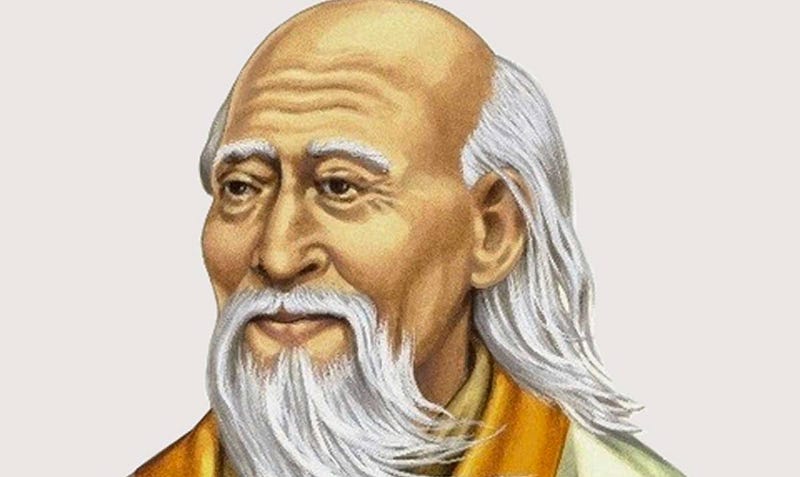
Although there isn’t much historical information on Lao Tzu (and some historians wonder if he was actually a mythical conglomeration of several philosophers), he is said to have been an ancient Chinese philosopher and poet who is best known for penning the book Tao Te Ching.
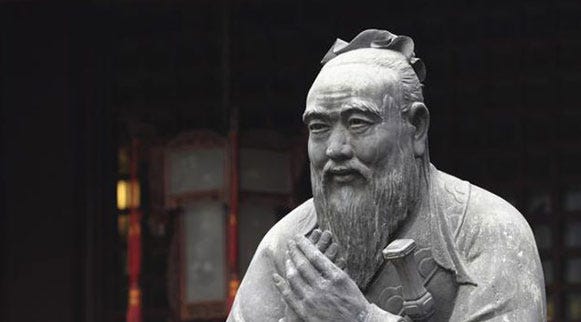
He was the founder of the philosophy of Taoism, a religious and ethical custom of ancient China, and he is also believed to have been a senior contemporary of the famous philosopher Confucius. Source
Lao Tzu’s journey toward enlightenment began as he set foot towards the western border of China, currently Tibet. He was troubled by what he saw around him: men being led away from nature and the goodness that it brings.
An officer whom he met on the border asked Lao Tzu to write down his teachings as he traveled. This is when he wrote the famous Tao Te Ching, a 5,000 character account of his thoughts and philosophical ideas. There are several hypotheses on the origins of the Tao Te Ching; learn more here and here.
And much like the unique journey that stands waiting before each of us, Lao Tzu and the Tao Te Ching can help us remember to stay present, to be aware, and to take a chance on those inevitable hunches that we all get. Maybe I should… or What if I…
Those nudges happen for a reason. The world would be a dimmer place without the philosophical genius of Lao Tzu, and the same goes for every single one of us. The world needs that special gift or gifts that each of us has to offer. What are your unique gifts?
Taoist Philosophy and The Tao Te Ching
Tzu is also the father of the Taoist philosophy which, along with Buddhism and Confucianism, is one of the foundational pillars of ancient Chinese thought and has assumed the form of an organized religion. Though the two elements of religion and philosophy are separate, they are also profoundly intertwined. Lao Tzu’s teachings encompass the depths of both.
Written well over two millennia ago, the Tao Te Ching is considered one of the most profound philosophical pieces known to humankind, spanning countries, ideologies, and the changing fabric of time. Written with Taoist teachings in mind, it touches on humanistic issues such as happiness, success, power, and the meaning behind it all.
Like various ancient Chinese philosophers, Lao Tzu used rhyme and rhythm, paradoxes, and interesting analogies to get his points across. Realistically speaking, the entire book can be considered as one great analogy.
The Tao Te Ching, which can be translated to something like “The Book of The Way and Its Power,” presents the idea of Tao as being the end all and be all of existence. It is powerful yet down to earth. It is the source of everything in the world. The book guides readers on returning to the ways of nature to maintain the balance of the Tao.
The passages contain uncommon wisdom such as:
“If you do not change direction, you may end up where you are heading.”
Have you ever looked up from the busyness of life and thought, how did I get here? Try paying attention to daily habits and routines now because it’s the little things we do and say each day that cumulatively add up. This is one way to get more of what we want in life. And that’s the beauty of our interconnected lives, that at any moment we can radically or minutely change direction, but the key is in being aware.
“A good traveler has no fixed plans and is not intent on arriving.”
Life is an exciting, unpredictable journey, which is similar to traveling. We prepare ourselves each day and leave home to a destination on a mission. Whether it’s to work or the grocery store, during our journey, we often encounter surprises and challenges. But good travelers can overcome and adapt as circumstances change, all while continuing to move toward our goals with determination. By not fixating on the destination, we can grasp the lessons given to us throughout our lives. And there is always a lesson.
This wisdom endured across time and eventually expanded in the West. And although it can be considered an ancient text, those who read it feel that it applies directly to the lives that they live right now, yesterday, and tomorrow.
It reads like a continual river, equally as changing as it is unchanging.
“A man with outward courage dares to die; a man with inner courage dares to live.”
Owning our own true story can be tough but not nearly as difficult as spending our lives running from it. Embracing our vulnerabilities takes practice and great courage but it is only when we are courageous enough to explore the darkness will we discover the infinite power of our light.
“Nature does not hurry, yet everything is accomplished.”
It often happens that the more you hurry, the less you achieve. The more pressure, the less positive results. I’ve noticed and perhaps you have also, that this directly impacts writing and creativity. Some of my favorite pieces were created in twenty-minutes, sitting on the bathroom floor, getting a pause from the daily house chaos.
Book Structure:
The Tao Te Ching is part verse and part prose, and everything that Lao Tzu says has an elusive quality to it. The lack of specificity is part of what gives it a deep sense of wisdom paired with an incisive intellect, all written in poetic flair.
The Tao Te Ching is a type of limitless reverent prose with no boundaries and no limits in its imagination, as each carefully sculpted verse weaves itself into a broader picture of the vast mystery of which we are all a part.
And at its core, Lao Tzu’s philosophy was a simple one. He was against struggle and saw it as not only futile but also an obstacle to productivity. In his theory of “Wu-Wei,” he advises doing nothing, but which means not to go against the forces of nature, and instead wait for the stream of events nature brings to you, naturally acting without thought or struggle.
He advised bringing spontaneity to one’s actions as one honors the natural way of existence. Followers of Taoism believe that striving for nothing will never lead them to failure.
Lao Tzu’s works have continued to influence individuals and anti-authoritarian campaigns around the world. Belonging to the sixth century, Lao Tzu taught the world about the importance of the ways of nature and how embracing the principle of doing nothing can help achieve everything.
I included several passages from the Tao Te Ching throughout this article, and here are 3 additional lines that are brief yet brimming with timeless wisdom, and which can offer us peace and solace throughout our ephemeral lives:
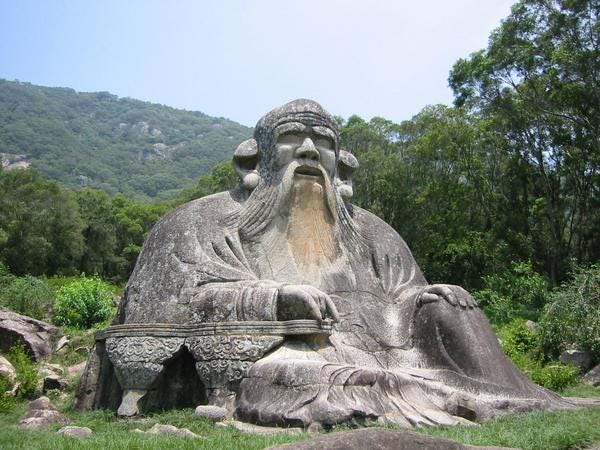
Timeless passages from the Tao Te Ching:
“Use the lights but return to your insight.”
In a way, our experiences shape and teach us crucial lessons on our paths. It is our choice whether these challenges build us up or set us on a path of destruction. We can use these metaphorical lights to let these subtle messages permeate our psyche. But peace, truth, and freedom are in knowing when to return to our insight, using the wisdom and knowledge we’ve gleaned over time, to make conscious, wise, and loving decisions.
“I have just three things to teach: simplicity, patience, compassion. These three are your greatest treasures.”
These three loving teachers are eager to guide us in all of life’s experiences. Simplicity is a state of being. At the same time, patience means trusting the process and focusing on our unique and much-needed contribution to the world. And compassion, especially toward ourselves, helps to reconcile all beings in the world. Because to bring peace and light to all beings, we first need to bring peace and love to our souls.
“Knowing others is wisdom. Knowing yourself is enlightenment.”
Knowledge about others can make us wiser, smarter, and more able to sustain ourselves in our limited existence. When we truly know ourselves, that’s when we step out of the empty existence and into the eternal voice of the soul. That’s when we become one with everything. Because when we know ourselves, we know everything. No illusions or curtains things exist anymore; we know reality in full.
Final Thoughts:
Lao Tzu’s philosophy advocates naturalness, spontaneity, and freedom from social conventions and desires. In the Tao, Lao Tzu refers to the ultimate order of things and the ultimate truth of reality. He instructs us how to live a pleasant life in the here and now without causing ourselves needless suffering by worrying about the past or future. He tells us that one who can harmonize with Tao will be at peace with all existence.
When it comes down to it, reality is never more accessible than it is right now. This is where we live, in the now. There is no direct route to the truth; all that matters is that we see through the fictitious façade of the rest of the world, and then everything becomes clear.
With love and gratitude, Aurora


