avatarAvi Kotzer

Free AI web copilot to create summaries, insights and extended knowledge, download it at here

2883

Abstract

i. That’s <b>tetri</b> with no “s”, so don’t go confusing it with this:</p><figure id="a849"><img src="https://cdn-images-1.readmedium.com/v2/resize:fit:800/1*yTRKyfm7MbnOGBmsWlMVAg.png"><figcaption>Credit: wikipedia.com</figcaption></figure><p id="4cbb">The words <i>lari</i> and <i>tetri</i> are both old Georgian words; the first meaning “treasury” or “valuables”, the second meaning “white” or “silver”.</p><p id="0570">Georgia declared its independence shortly before the U.S.S.R. dissolved in 1991. But it took two more years to replace the Russian currency (ruble) with a national one. In 1993 the Georgian kuponi was created, on par with the ruble. But this currency had several issues: it had only banknotes and no coins, and had no subdivisions. Oh, and it also suffered from terrible hyperinflation. Maybe it was not a good idea to name their money “coupon”. Georgia issued notes in denominations between 1 and 1 million kuponi, including the weird 3, 3000, 30,000, and 150,000 notes.</p><p id="def2">In 1995, the Georgian government replaced the kuponi with the <i>lari</i>, at a rate of one million to one. One million seems like a lot of kuponi to pay for one <i>lari</i>, until you look at the <i>lari</i>’s awesome and humbling symbol (which became official in 2014):</p><figure id="383d"><img src="https://cdn-images-1.readmedium.com/v2/resize:fit:800/0*kPM4JwqHpR4O_FH2.jpg"><figcaption>Credit: wikipedia.com</figcaption></figure><p id="3d4c">Here are some <i>laris</i> and tetri. Please don’t print them out and try to use them.</p><figure id="ca42"><img src="https://cdn-images-1.readmedium.com/v2/resize:fit:800/1*ltNOgk2jhZjdXhK5cdFMkQ.png"><figcaption><b>Really lousy screenshot collage by Iva Reztok</b></figcaption></figure><h2 id="007a">Laari</h2><p id="0484">With two a’s, <i>laari</i> refers to a subdivision of the Maldivian<b> rufiyaa,</b> the currency of the Maldives, an archipelago country in the Indian Ocean. The most commonly used symbols for the rufiyaa are MVR and Rf.</p><p id="d702">Our friends at Merriam-Webster explain that the word <i>laari</i> may have originated from Divehi (an Indo-Aryan language of the Maldive Islands), from the Persian <i>lārī</i>, a piece of <b>silver wire</b> used as currency.</p><p id="b15b">Centuries ago cowry shells were used as currency in the Maldives. I’m not sure what the exchange rate to the U.S. dollar was back then, though. Oh, wait, there was no U.S. dollar in the 13th century. But there was the gold dinar, and a single one of those was worth 400,000 shells around 1344.</p><p id="4510">In any case, like other shell-using nations, this island country probably had one of the prettiest currencies at the time.</p><figure id="d5fe"><img src="https://cdn-images-1.readmedium.com/v2/resize:fit:800/0*kf4EUH9wEP8b4fgD.jpg"><figcaption>Credit: wikicommons.com</figcaption></figure><p id="23be">Then, du

Options

ring the 17th and 18th centuries, lārin (the silver wire mentioned earlier) were imported from Persia and traded as currency. The first known coins were brought by Sultan Ibrahim Iskandar (1648–1687); they were minted in pure silver. Later on gold coins replaced the silver ones.</p><p id="80b4">Here are some Maldive coins from the 17th and 18th centuries. Please don’t print these out, either.</p><figure id="699f"><img src="https://cdn-images-1.readmedium.com/v2/resize:fit:800/0*rQzEY_RQITAQ9Xmy.jpg"><figcaption>Credit: A robustus at en.wikipedia</figcaption></figure><p id="e573">Sultan Mohamed Imaadhudheen IV (who reigned from 1900–1904) introduced the first machine struck coins, 1 and 4 laari denominations. These were made only until 1913, and after that, the Sultanate switched to the Ceylonese rupee. This was supplemented in 1947 by banknotes in <b>rufiyaa</b>, equal in value to the rupee. Finally, in 1960, coins denominated in laari, now worth one hundredth of the rufiyaa, were introduced.</p><p id="7582">Here are some rufiyaa bills. You know the warning by now…</p><figure id="786f"><img src="https://cdn-images-1.readmedium.com/v2/resize:fit:800/0*8sK2C4ldt2BO3Si4.jpg"><figcaption>Credit: wikicommons.com</figcaption></figure><p id="a742">So there you go. If you ever visit Georgia (the country, not the state) or the islands of the Maldives, make sure to let the people of those two countries know that the the editors of the Spelling Bee have decided that their currencies, <i>lari</i> and <i>laari</i>, are dords*.</p><p id="c0de">You can check out my previous entry on another <b>dord* </b>here:</p><div id="cfae" class="link-block"> <a href="https://readmedium.com/tictoc-325bad01ad6f"> <div> <div> <h2>Tictoc</h2> <div><h3>Why not toctic? Let’s find out</h3></div> <div><p>medium.com</p></div> </div> <div> <div style="background-image: url(https://miro.readmedium.com/v2/resize:fit:320/0*p03m07dBFUfczJ-W)"></div> </div> </div> </a> </div><p id="e1e5">*What the heck is a <b>dord, </b>you ask? Here’s the answer:</p><div id="1864" class="link-block"> <a href="https://www.merriam-webster.com/words-at-play/dord-a-ghost-word"> <div> <div> <h2>'Dord': A Ghost Word</h2> <div><h3>One of the questions people like to ask lexicographers is this: Can you sneak something into the dictionary? Can you…</h3></div> <div><p>www.merriam-webster.com</p></div> </div> <div> <div style="background-image: url(https://miro.readmedium.com/v2/resize:fit:320/0*7VwpQBZklCeUAPCO)"></div> </div> </div> </a> </div></article></body>

La(a)ri

Change the currency by adding or subtracting an “a”!
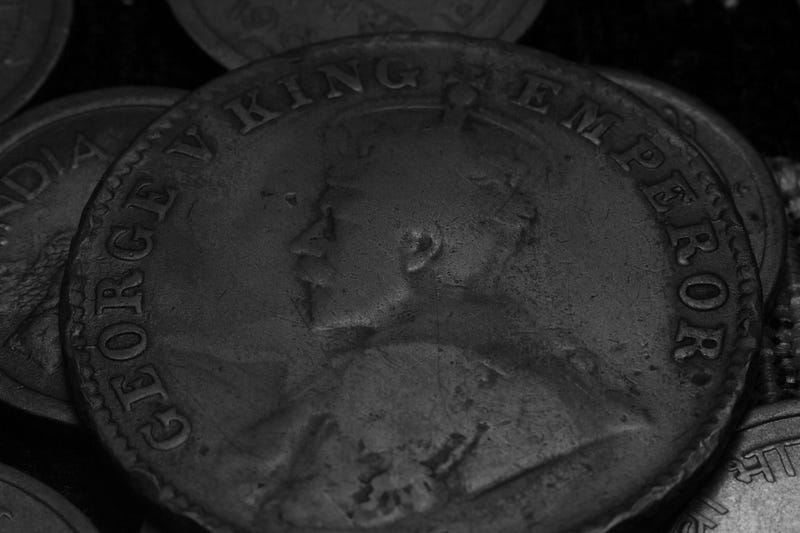
Photo by Lenstravelier on Unsplash

Today’s New York Times Spelling Bee letters:
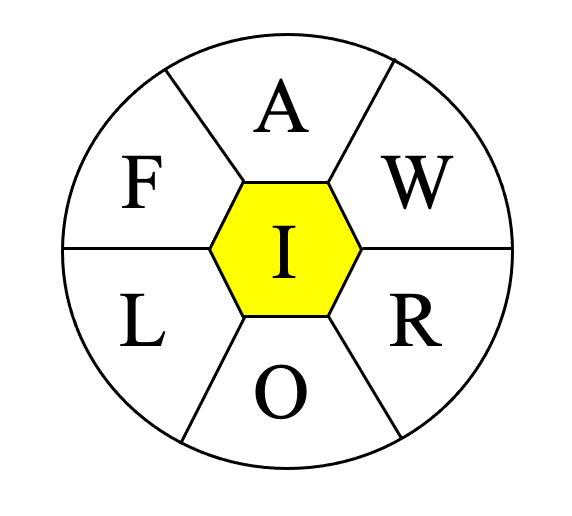
Art: Iva Reztok

A, F, L, O, R, W, and center I (all words must include I)

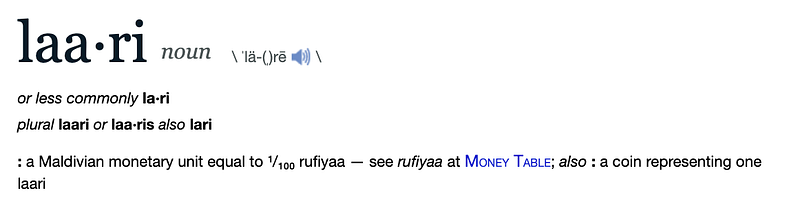
Merriam-Webster says…
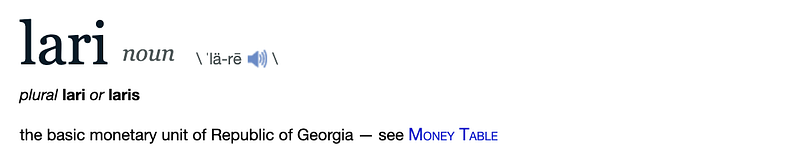
Credit: merriam-webster.com

…and…

Credit: merriam-webster.com

Silly little dictionary! Don’t you know lari and laari can’t possibly be words if the New York Times says they ain’t?

For further fascinating facts, check out the Spelling Bee Master.

What’s your favorite dord* from today’s puzzle?

My Two Cents

The guy engraved on the coin in the photo at the top of today’s column is not named Lari or Laari or even Larry. It’s George V (George Frederick Ernest Albert, who was King of the United Kingdom and the British Dominions, and Emperor of India, from 6 May 1910 until his death in 1936. He was the current Queen Elizabeth II’s grandfather, and the father of Edward VIII, best-known for abdicating the throne in order to marry divorcée Wallis Simpson (no relation to Bart Simpson).

Oh, and Edward was also a racist and an antisemite who gave the Nazi salute when he and his wife met Hitler in 1937. Plus, there is evidence the Nazis were trying to recruit him during World War II, including his final communications with the Nazis before leaving for the Bahamas, in which he supposedly encouraged the bombing of his own country so that the Brits would be forced to go to the negotiating table with the Germans.

Okay, I have no clever segue into our daily dords*, so let’s just get on with it.

Lari

The lari is the currency of Georgia (the country, not the state). It is divided into 100 tetri. That’s tetri with no “s”, so don’t go confusing it with this:
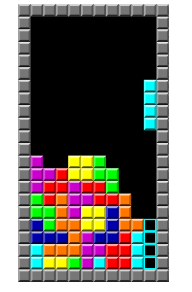
Credit: wikipedia.com

The words lari and tetri are both old Georgian words; the first meaning “treasury” or “valuables”, the second meaning “white” or “silver”.

Georgia declared its independence shortly before the U.S.S.R. dissolved in 1991. But it took two more years to replace the Russian currency (ruble) with a national one. In 1993 the Georgian kuponi was created, on par with the ruble. But this currency had several issues: it had only banknotes and no coins, and had no subdivisions. Oh, and it also suffered from terrible hyperinflation. Maybe it was not a good idea to name their money “coupon”. Georgia issued notes in denominations between 1 and 1 million kuponi, including the weird 3, 3000, 30,000, and 150,000 notes.

In 1995, the Georgian government replaced the kuponi with the lari, at a rate of one million to one. One million seems like a lot of kuponi to pay for one lari, until you look at the lari’s awesome and humbling symbol (which became official in 2014):

Credit: wikipedia.com

Here are some laris and tetri. Please don’t print them out and try to use them.
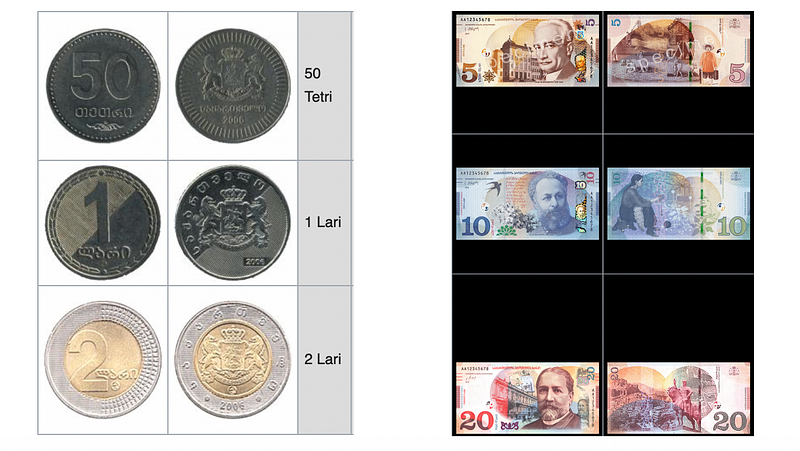
Really lousy screenshot collage by Iva Reztok

Laari

With two a’s, laari refers to a subdivision of the Maldivian rufiyaa, the currency of the Maldives, an archipelago country in the Indian Ocean. The most commonly used symbols for the rufiyaa are MVR and Rf.

Our friends at Merriam-Webster explain that the word laari may have originated from Divehi (an Indo-Aryan language of the Maldive Islands), from the Persian lārī, a piece of silver wire used as currency.

Centuries ago cowry shells were used as currency in the Maldives. I’m not sure what the exchange rate to the U.S. dollar was back then, though. Oh, wait, there was no U.S. dollar in the 13th century. But there was the gold dinar, and a single one of those was worth 400,000 shells around 1344.

In any case, like other shell-using nations, this island country probably had one of the prettiest currencies at the time.
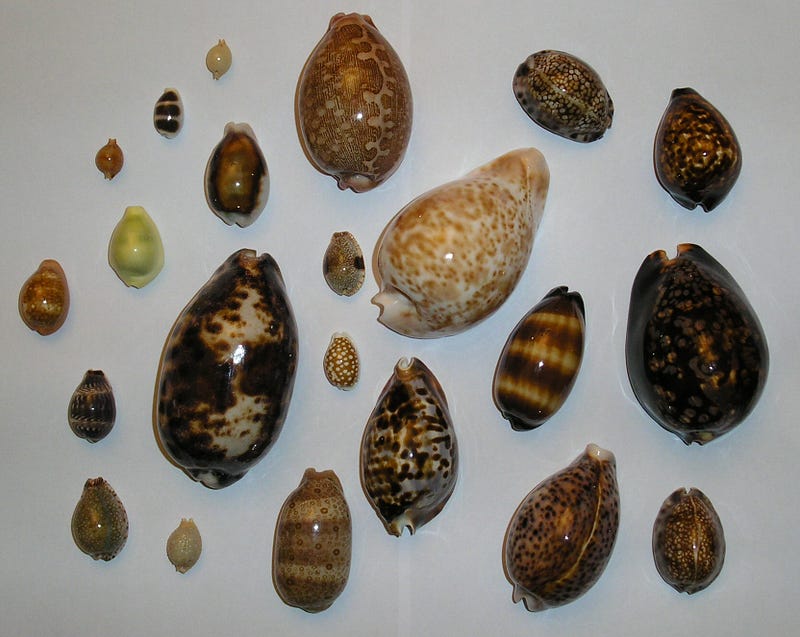
Credit: wikicommons.com

Then, during the 17th and 18th centuries, lārin (the silver wire mentioned earlier) were imported from Persia and traded as currency. The first known coins were brought by Sultan Ibrahim Iskandar (1648–1687); they were minted in pure silver. Later on gold coins replaced the silver ones.

Here are some Maldive coins from the 17th and 18th centuries. Please don’t print these out, either.
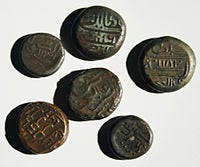
Credit: A robustus at en.wikipedia

Sultan Mohamed Imaadhudheen IV (who reigned from 1900–1904) introduced the first machine struck coins, 1 and 4 laari denominations. These were made only until 1913, and after that, the Sultanate switched to the Ceylonese rupee. This was supplemented in 1947 by banknotes in rufiyaa, equal in value to the rupee. Finally, in 1960, coins denominated in laari, now worth one hundredth of the rufiyaa, were introduced.

Here are some rufiyaa bills. You know the warning by now…
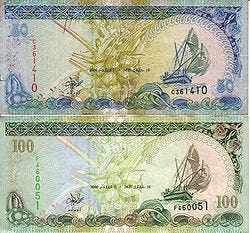
Credit: wikicommons.com

So there you go. If you ever visit Georgia (the country, not the state) or the islands of the Maldives, make sure to let the people of those two countries know that the the editors of the Spelling Bee have decided that their currencies, lari and laari, are dords*.

You can check out my previous entry on another dord* here:

*What the heck is a dord, you ask? Here’s the answer:

Spelling Bee
Language
History
Coins
Currency
Recommended from ReadMedium