
Hong Kong English/Cantonese (VI)
Lunar New Year Special: Some Phrases to Remember during LNY
Kung Hei Fat Choy!

A lot of people in the world thought this is “Happy (Lunar) New Year” in Cantonese.
But NO. It isn’t.
It is true that we, Hong Kong Cantonese speakers, greet others using this phrase during Lunar New Year very often. However, the phrase has no meaning related to “happy new year”.
(Mind you: I’m not saying Chinese New Year because this new year is not only celebrated in China, but also in some other Asian countries.)
In Chinese, “Kung Hei Fat Choy” (spellings may vary) is actually 恭喜發財 (Jyutping: gung1 hei2 faat3 coi4), which means “Congratulations on (you) being wealthy(-ier)”.
But why do we say this? Simple. We love $. We would never mind being rich.
I really congratulate you.
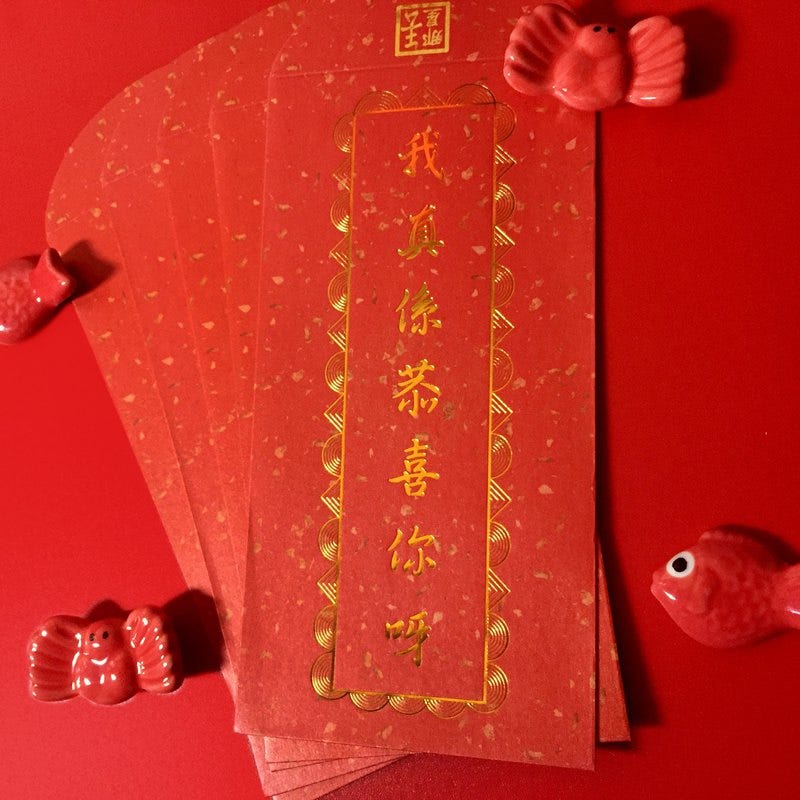
Probably this is the worst congratulations ever in Cantonese.
The sentence "我真係恭喜你呀 (Jyutping: ngo5 zan1 hai6 gung1 hei2 nei5 aa3)" is leaked in YouTube a long time ago, and it is rumoured to be said by a famous celebrity (because it sounds like her). The celebrity was then arguing with her then boyfriend, a businessman, about signing an actress into his company.
She then uttered this sentence sarcastically. She also said that actress was a "stupid bitch".
This sentence was spread widely again in recent years as a way of congratulating others not by heart.
What more can I say except "congratulations"?
Sorry I'm not giving suggestions here, but this question was a famous quote from a Wong Jing's movie, God of Gamblers II, starring Stephen Chow and Andy Lau.
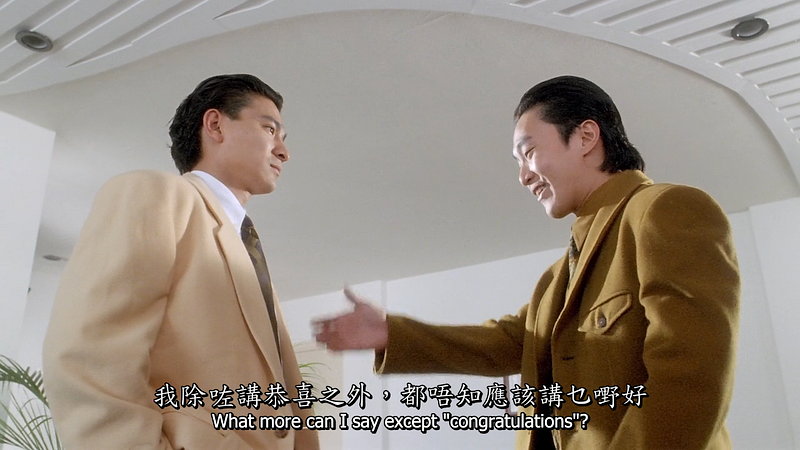
The sentence "我除咗講恭喜之外,都唔知應該講乜嘢好 (Jyutping: ngo5 ceoi4 zo2 gung1 hei2 zi1 ngoi6, dou1 m4 zi1 gong2 mat1 je5 hou2)" literally means "I don't know what I can say apart from 'congratulations'". This could be used in some awkward situations but you really need to congratulate somebody. This sentence was quite funny and everybody knows you are quoting the movie when you say this.
People may laugh when you say this.
We wish every industry business boom, except one.
We wish people working in medical industry, mostly doctors and nurses, little or no business.
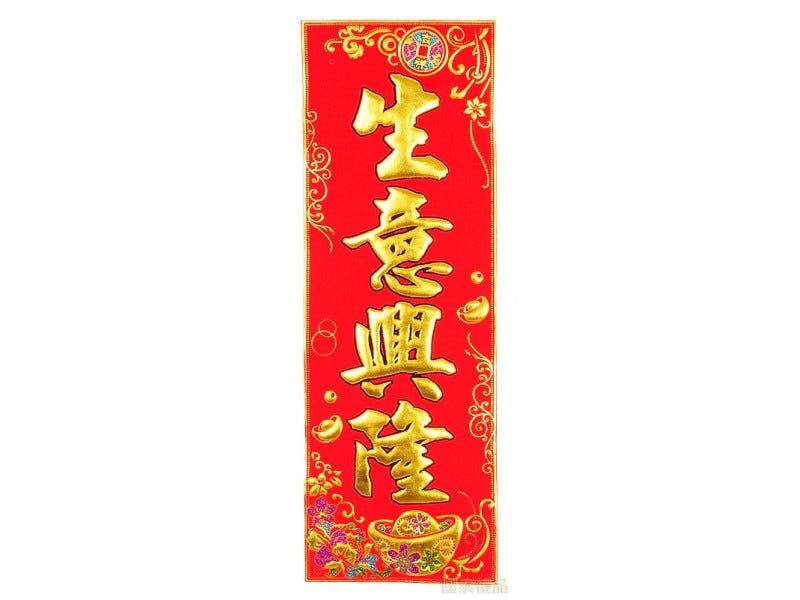
For most business sectors, we wish 生意興隆 (Jyutping: saang1* ji3 hing1 lung4) to them. It means we wish them a great business. We say this to everyone who does business, such as the hawkers in the market.
Moreover, as Hong Kong treat everything as business, we can just wish everyone great business in the coming year (probably not students who should have no business doing).
Owing to superstitions, medical industry hates being wished a great business.
Let’s think about it. If a hospital has great “business”, what will happen? It means there are a lot of patients in wards. The whole hospital is bombarded with patients and their concerned families.
It means lots of people are unhealthy and ill. It is not good. More importantly, Hospital Authority has never hired enough doctors and nurses for quite some time already, the medical professionals would be too busy if “business boomed” in a hospital.
The general public concerned the shortage of medical professionals in the recent flu surge.
Therefore, for the sake of everybody’s well-being, we would love to wish the medical industry 生意淡薄 (Jyutping: saang1* ji3 daam6* bok6) as a way to wish everybody good health (身體健康, Jyutping: san1 tai2 gin6 hong1).
But at the end of the day, let me quote from Jessie J’s song: It’s not about the money.
Good luck since the new spring. (新春大吉)
*Side note:
- Some words in Cantonese have literal and colloquial pronunciations (文白異讀) For example, 生 is usually pronounced as sang1 when reading aloud (which is literal pronunciation) but it is frequently pronounced as saang1 during daily conversation (which is colloquial pronunciation).
- Some people would pronounce 淡薄 as taam5 bok6. Recently, daam6 bok6 (literal pronunciation) is more common than taam5 bok6 (colloquial pronunciation).


