avatarAvi Kotzer

Free AI web copilot to create summaries, insights and extended knowledge, download it at here

3488

Abstract

first is that I misspelled you’re at the beginning of the previous sentence. The second is that <b>kaka</b> is the Old Norse word from which the Middle English word <i>cake</i> was coined.</p><p id="55c5">Your right on both accounts! Ooops… you’re write. I mean, you’re right…</p><p id="2ee9">What does that have to do with our daily dord? Well, that Old Norse <b>kaka</b> was apparently “akin” to the Old High German <b>kuocho</b><i>, </i>from which <i>kuchen</i> originates.</p><p id="fcec">In fact, <i>kuchen</i> is a borrowed word, as the Germans still use it today (albeit with a capital K). In fact, somewhere in the world there is a German person demanding <i>Kuchen</i> even as I write this. This incredible statistic has been verified by <a href="https://justmadethatup.godaddysites.com/"><b>justmadethatup.com</b></a>.</p><p id="ed79">And that’s because there is a German tradition called “Kaffee und Kuchen”, which you may have guessed means “coffee and cake”, which sounds like a tradition many people have in many different countries. I can confirm I’ve visited more than a dozen countries––in four different continents––where people observe this venerable tradition.</p><p id="dbcb">(As an aside, I want to take the opportunity here to explain the difference between coffee cake and <i>kuchen</i>: all coffee cake is <i>kuchen</i>, but not all <i>kuchen</i> is coffee cake. There. It had to be said!)</p><p id="d849">Perhaps because people like to gossip while drinking coffee and eating cake, the “Kaffee und Kuchen” tradition eventually turned into the <a href="https://www.merriam-webster.com/dictionary/kaffeeklatsch">kaffeeklatsch</a> tradition––<b>klatsch</b> meaning “gossip”.</p><figure id="88d8"><img src="https://cdn-images-1.readmedium.com/v2/resize:fit:800/0*3VnnSfP8GYPetnVG.jpg"><figcaption>Source: unlockyourhistory.com</figcaption></figure><p id="1126">The translation of the above title is roughly “the cheerful kaffeeklatsch”.</p><p id="154d">And it refers to a jolly card game created for adults to play while… you guessed it, gathered around a table drinking coffee and gossiping.</p><h2 id="0a28">Qu’ils mangent de la brioche</h2><p id="027a">The above is the French quote famously attributed to <a href="https://en.chateauversailles.fr/discover/history/great-characters/marie-antoinette">Marie Antoinette</a>; usually translated as “let them eat cake”, it was her alleged reaction when told the peasants were suffering great hunger in 1789.</p><p id="88e7">There are a couple of problems with the quote. Firstly, the French word <b>brioche</b> does not accurately translate to “cake”. In reality, <b>brioche</b> in English is… <a href="https://www.merriam-webster.com/dictionary/brioche">brioche</a>.</p><figure id="c391"><img src="https://cdn-images-1.readmedium.com/v2/resize:fit:800/1*gJ0pT73DMhkAbmJ_hTfuuA.png"><figcaption>Credit: merriam-webster.com</figcaption></figure><p id="4593">The word typically used in French for “cake” is <i>gâteau</i>.</p><figure id="2338"><img src="https://cdn-images-1.readmedium.com/v2/resize:fit:800/1*KGZIWnnvBcV_fSUAOFilEg.png"><figcaption>Credit: wordreference.com</figcaption></figure><p id="5bab">In her book <i>Très exquisse histoire des gateaux et des friandises, </i>(which I think roughly translates to “Cakes are really tasty, yum yum yum!”) Maguelonne Toussaint Samat explains that the brioche originated from “the blessed bread of the church that gradually became of better quality, more and more cost

Options

ly, less and less bread; until becoming the savory brioche”.</p><p id="8b32">The point being that a brioche was, back in 18th century France, an expensive version of bread. It’s likely that any peasants who had eggs and milk during a famine probably did not add them to their dough… if they were able to get their hands on any dough, that is.</p><p id="8926">The other big reveal about Marie Antionette’s quote is that she probably never said those words herself. For one thing, there was no record of her uttering the phrase around or immediately after it supposedly happened. The first attributions began decades laters. One would think French revolutionaries would have wasted no time in using that quote against her during that time.</p><p id="b11d">The argument against Marie Antoinette having said “let them eat brioche” is <a href="https://gutenberg.org/ebooks/3913"><i>Confessions</i></a>, a collection of books authored by Genevan-born philosopher Jean-Jacques Rousseau. In book six he wrote this:</p><blockquote id="0e0f"><p>At length I remembered the last resort of a great princess who, when told that the peasants had no bread, replied: “Then let them eat brioches.”</p></blockquote><p id="3d55">Thing is, Rousseau wrote this around 1765. Even if one considers the date in which the volumes were actually published ––1782–– that is still seven years before Marie Antoinette allegedly said what was alleged that she said. And taking into account that Marie Antoinette was born in 1755 and did not marry Louis XVI until 1770, she couldn’t have been the princess Rousseau was referencing in his story.</p><p id="d7f2">Now you know.</p><p id="2585">Next time someone sends out a message on social media claiming the last queen of France said “let them eat cake”, you will be able to start a pointless online shouting match with them.</p><p id="255b">Today we’ve explained the difference between cake, coffee cake, kuchen, and brioche… and also righted a wrong quote attribution. But that wasn’t enough for the editors of the Spelling Bee, who still declared the word <i>kuchen</i> a dord*.</p><p id="1e6b">You can check out my previous entry on another <b>dord* </b>here:</p><div id="cadc" class="link-block"> <a href="https://readmedium.com/cucaracha-91bc05f46c51"> <div> <div> <h2>Cucaracha</h2> <div><h3>The Spelling Bee rejects a rare opportunity to go bilingual</h3></div> <div><p>medium.com</p></div> </div> <div> <div style="background-image: url(https://miro.readmedium.com/v2/resize:fit:320/1*yGNBbMbMA9HQiw8HMjp38g.png)"></div> </div> </div> </a> </div><p id="e468">*What the heck is a <b>dord, </b>you ask? Here’s the answer:</p><div id="3916" class="link-block"> <a href="https://www.merriam-webster.com/words-at-play/dord-a-ghost-word"> <div> <div> <h2>'Dord': A Ghost Word</h2> <div><h3>One of the questions people like to ask lexicographers is this: Can you sneak something into the dictionary? Can you…</h3></div> <div><p>www.merriam-webster.com</p></div> </div> <div> <div style="background-image: url(https://miro.readmedium.com/v2/resize:fit:320/0*snty9rZm4_IXIXW-)"></div> </div> </div> </a> </div></article></body>

Kuchen

Let them eat… coffee cake?
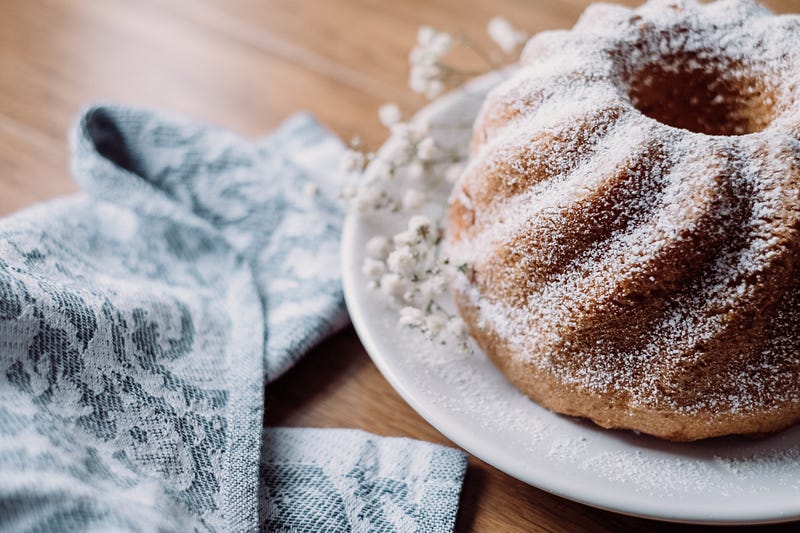
Photo by freestocks on Unsplash

Today’s New York Times Spelling Bee letters:
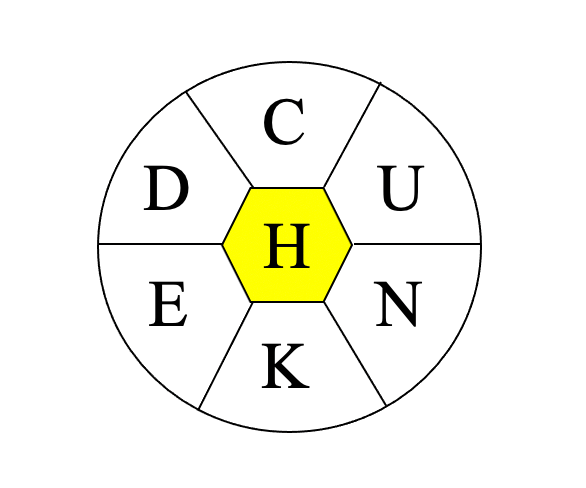
Art: Iva Reztok

C, D, E, K, N, U, and center H (all words must include H)

Merriam-Webster says…
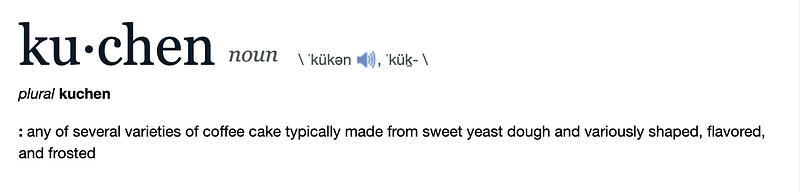
Credit: merriam-webster.com

Silly little dictionary! Don’t you know kuchen can’t possibly be a word if the New York Times says it ain’t?

For further fascinating facts, check out the Spelling Bee Master.

What’s your favorite dord* from today’s puzzle?

My Two Cents

Slim pickins in today’s short list of rejected Spelling Bee words. The Spelling Bee Master listed only nine:
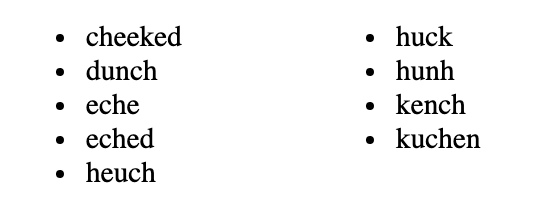
Credit: nytbee.com

I found a couple more on my own. Cheeked as a verb might have been interesting to discuss, but I ended up selecting kuchen.

Supposedly the limited choice is good for you. Overchoice, a term introduced in Alvin Toffler’s book Future Shock, essentially describes the stressful effect that having a lot of options creates upon the mind of the average person. The end result is that making a decision becomes an overwhelming task because of the multiple possible outcomes and risks that could result from the wrong choice.

Well, I can definitely say there was no stress involved in selecting kuchen. The only harm done is that researching and writing about it made me hungry for some cake. Since I didn’t have any, I settled for bread.

Kaka

If you’re a fan of football (soccer for those who speak American), the above combination of letters makes you think of a combination of Brazilians who played the sport. Namely:

  • Claudiano Bezerra da Silva (born 1981)
  • Ricardo Izecson dos Santos Leite (born 1982)
  • Carlos Augusto dos Santos da Silva (born 1987)
  • David Leonel Faleiro (born 1991)
  • Everton Ferreira Guimarães (born 1991)

Oh, and there are also two more players who were known as Kaka, one Portuguese and one Polish.

The one player I’ve left a link for (dos Santos Leite) is probably the best-known of all of them.

If your a fan a of linguistics, however, you will immediately point out two things. The first is that I misspelled you’re at the beginning of the previous sentence. The second is that kaka is the Old Norse word from which the Middle English word cake was coined.

Your right on both accounts! Ooops… you’re write. I mean, you’re right…

What does that have to do with our daily dord? Well, that Old Norse kaka was apparently “akin” to the Old High German kuocho, from which kuchen originates.

In fact, kuchen is a borrowed word, as the Germans still use it today (albeit with a capital K). In fact, somewhere in the world there is a German person demanding Kuchen even as I write this. This incredible statistic has been verified by justmadethatup.com.

And that’s because there is a German tradition called “Kaffee und Kuchen”, which you may have guessed means “coffee and cake”, which sounds like a tradition many people have in many different countries. I can confirm I’ve visited more than a dozen countries––in four different continents––where people observe this venerable tradition.

(As an aside, I want to take the opportunity here to explain the difference between coffee cake and kuchen: all coffee cake is kuchen, but not all kuchen is coffee cake. There. It had to be said!)

Perhaps because people like to gossip while drinking coffee and eating cake, the “Kaffee und Kuchen” tradition eventually turned into the kaffeeklatsch tradition––klatsch meaning “gossip”.
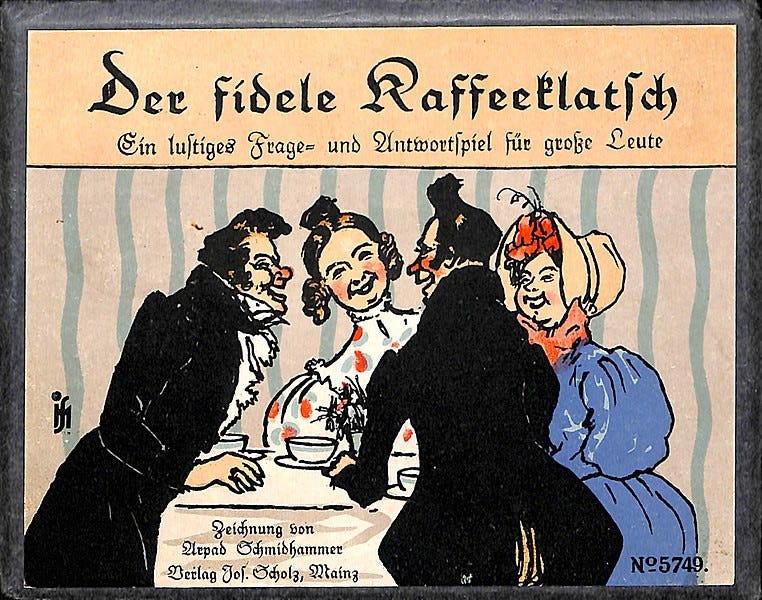
Source: unlockyourhistory.com

The translation of the above title is roughly “the cheerful kaffeeklatsch”.

And it refers to a jolly card game created for adults to play while… you guessed it, gathered around a table drinking coffee and gossiping.

Qu’ils mangent de la brioche

The above is the French quote famously attributed to Marie Antoinette; usually translated as “let them eat cake”, it was her alleged reaction when told the peasants were suffering great hunger in 1789.

There are a couple of problems with the quote. Firstly, the French word brioche does not accurately translate to “cake”. In reality, brioche in English is… brioche.
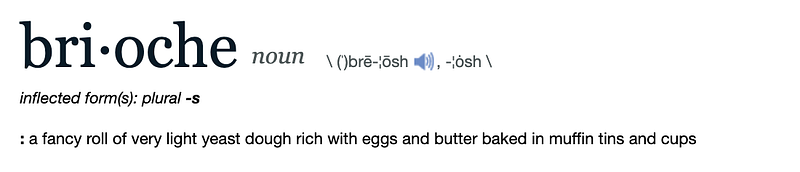
Credit: merriam-webster.com

The word typically used in French for “cake” is gâteau.

Credit: wordreference.com

In her book Très exquisse histoire des gateaux et des friandises, (which I think roughly translates to “Cakes are really tasty, yum yum yum!”) Maguelonne Toussaint Samat explains that the brioche originated from “the blessed bread of the church that gradually became of better quality, more and more costly, less and less bread; until becoming the savory brioche”.

The point being that a brioche was, back in 18th century France, an expensive version of bread. It’s likely that any peasants who had eggs and milk during a famine probably did not add them to their dough… if they were able to get their hands on any dough, that is.

The other big reveal about Marie Antionette’s quote is that she probably never said those words herself. For one thing, there was no record of her uttering the phrase around or immediately after it supposedly happened. The first attributions began decades laters. One would think French revolutionaries would have wasted no time in using that quote against her during that time.

The argument against Marie Antoinette having said “let them eat brioche” is Confessions, a collection of books authored by Genevan-born philosopher Jean-Jacques Rousseau. In book six he wrote this:

At length I remembered the last resort of a great princess who, when told that the peasants had no bread, replied: “Then let them eat brioches.”

Thing is, Rousseau wrote this around 1765. Even if one considers the date in which the volumes were actually published ––1782–– that is still seven years before Marie Antoinette allegedly said what was alleged that she said. And taking into account that Marie Antoinette was born in 1755 and did not marry Louis XVI until 1770, she couldn’t have been the princess Rousseau was referencing in his story.

Now you know.

Next time someone sends out a message on social media claiming the last queen of France said “let them eat cake”, you will be able to start a pointless online shouting match with them.

Today we’ve explained the difference between cake, coffee cake, kuchen, and brioche… and also righted a wrong quote attribution. But that wasn’t enough for the editors of the Spelling Bee, who still declared the word kuchen a dord*.

You can check out my previous entry on another dord* here:

*What the heck is a dord, you ask? Here’s the answer:

Spelling Bee
Language
History
Soccer
Food
Recommended from ReadMedium