
Knowledge Engagement: The “Dot and Circle” meta-diagram
A new meta-diagram and a new diagram network
In 2021, I wrote a book (draft) titled Diagram Blending: Building Diagram Networks. You can see more details in the Introduction and Table of Contents.
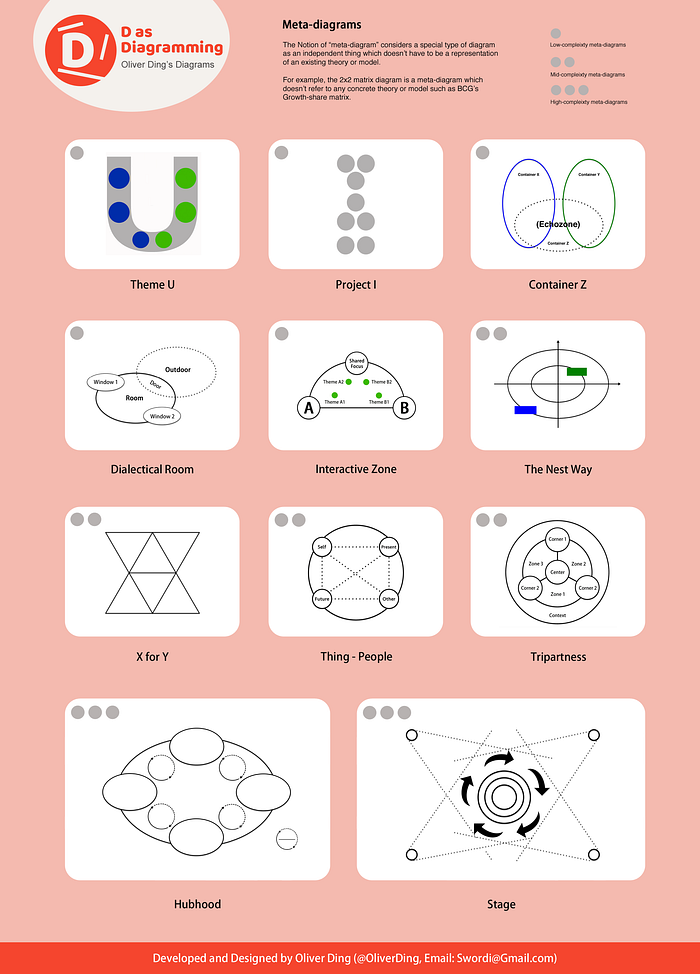
The book introduced a new practice of diagramming: Diagram Blending. I used a set of new terms to describe related ideas. The book's core idea is the notion of “meta-diagram" which refers to a particular type of diagram as an independent thing that doesn’t have to represent an existing theory or model. For example, the 2x2 matrix diagram is a meta-diagram that doesn’t refer to any concrete theory or model such as BCG’s Growth-share matrix.
I also used the concept of “Diagram Network” in the book. Several diagrams connect together and form a network. From the perspective of Activity Theory, the concept of “Diagram Network” echoes the idea of “Activity Network”. Each diagram refers to an activity and a Diagram Network refers to an Activity Network. A Diagram Network can be built with the Diagram Blending method or the Diagram Expanding method.
The book also introduced a set of meta-diagrams I developed in the past several years.
Today I am going to introduce a new meta-diagram called “Dot and Circle”. You can see four examples below.
Also, these four diagrams can connect together and form a Diagram Network.
1. Product and Speech
The “dot and circle” diagram was detached from the “Product Speech” model which is part of the Product Langue project. See the original diagram of the “Product Speech” model.
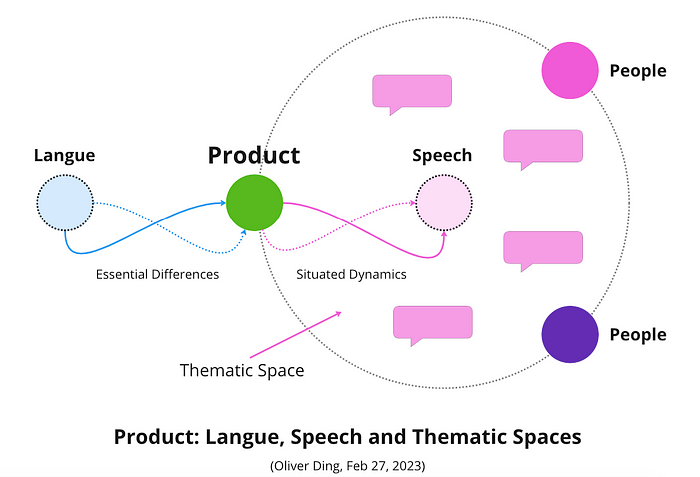
You can find more details in TALE: Product, Langue, and Speech.
2. Thematic Space and Framework
On May 2, 2023, I wrote an article and discuss the notion of “Thematic Space and Framework”. I used the “dot and circle” diagram again. See the diagram below.
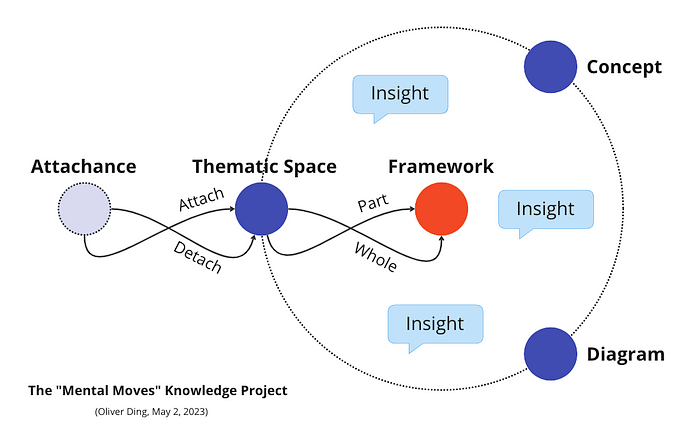
… I often associated the concept of “Attachance” with my works of developing knowledge frameworks. I always identified thematic spaces within a particular knowledge framework and emphasized the Attachance of moving between thematic spaces. I also encouraged people to take the attachance of moving between different knowledge frameworks.
As mentioned above, the development of Attachance was tied to the development of Thematic Space in 2022. This morning, I realized that the development of Thematic Space was tied to my work of developing knowledge frameworks.
You can find more details in Mental Moves #3: Attachance, Thematic Space, and Framework.
3. Mental Models and Project
On June 9, 2023, I reflected on Mental Moves #3: Attachance, Thematic Space, and Framework (The “Thematic Space and Framework” case study) and Mental Moves #5: The Attachance of Rediscovery and Diagram Development (The “ARCH” case study) and started thinking the relationship between Frameworks and Projects. Finally, I used the “dot and circle” diagram to make a new model.
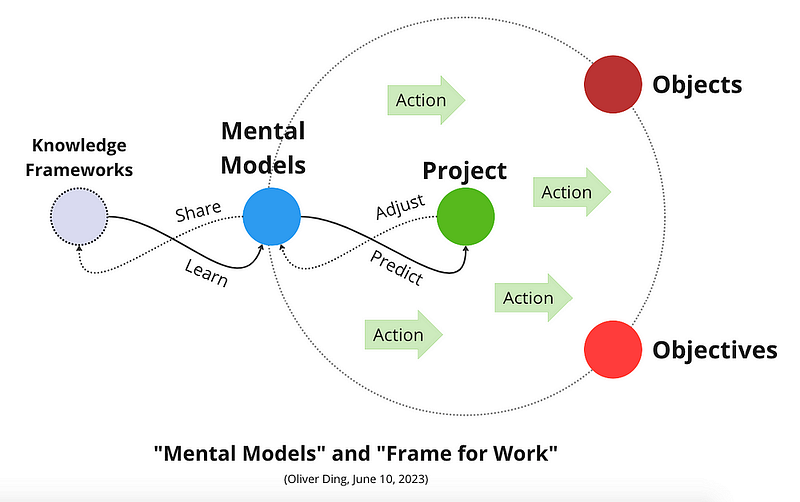
You find more details in Mental Moves #6: Mental Models and the Attachance of Multiple Moves.
4. Notes and Draft
This week I started a thematic conversation about “note-taking” with a friend. Our conversation inspired me to think about “note-taking”, “concept system” and “project engagement”.
Tonight I made the diagram below. The primary focus of the diagram is “Note-taking” and “Draft-making”.
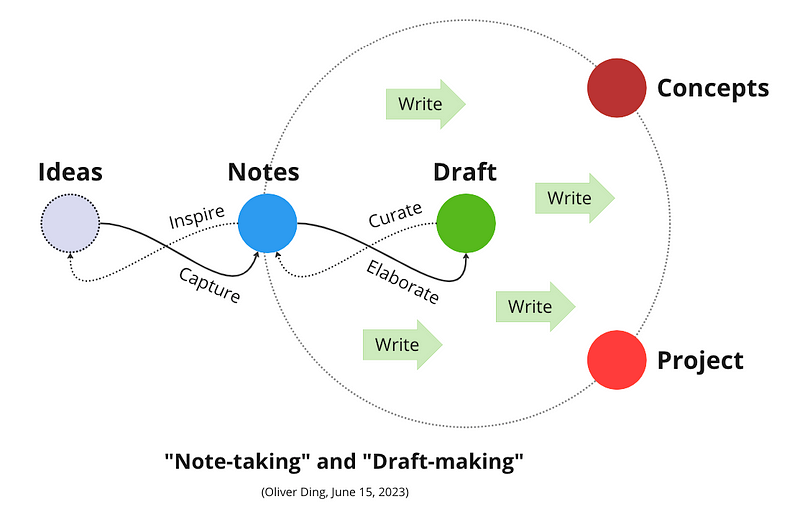
Moreover, this diagram inspired me to discover the following three types of “Frame for Work”.
- Frame A: a Framework for Developing a “Spontaneous Concept System”
- Frame B: a Framework for Running a “Developmental Project”
- Frame C: a Framework for Curating Notes and Continuous Curation
Since these diagrams share a set of terms, you can see them as a diagram network.
5. The “Dance” Meta-diagram
The “Dot and Circle” meta-diagram is an expanded version of the “Dance” meta-diagram.
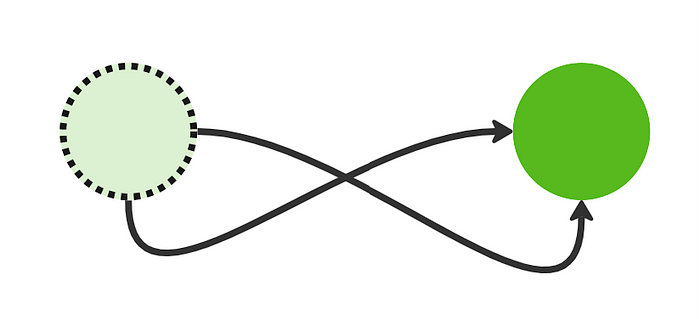
You can find a story about the above “Dance” meta-diagram in Creative Action: The Attachance of Moving Mental Elements.


