
Kin Selection vs. Group Selection and Other Possible Theories
Introduction
This story is a sidebar to another that examines the cognitive and emotional underpinning of our extreme sociality: Good Tribe/Bad Tribe — Nerdcore Mix
Controversy
Unsurprisingly, the components I’ve assembled here are controversial.
First, there’s been a particularly nasty shootout between kin selection and group selection proponents recently. Kin selection derives easily from gene selection…for example, a sacrifice for three siblings pays off big for your genes. Altruism is really only deducible from a model that goes beyond helping only close kin. Even one of my heroes, Frans de Waal, thinks group selection is an unnecessary theoretical encumbrance.
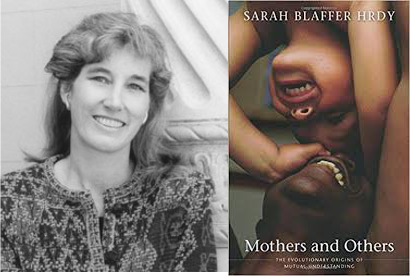
Second, even without getting into the group/kin selection thicket, there are other explanations for our eusociality. A favorite of mine is Sarah Hrdy’s work on the complexity of raising human children and its impossibility outside a highly coordinated group. Another theory focuses on hunting as a coalitional activity needed to gain enough calories to allow big brains, which, in turn, are needed to handle our complex social structures. I’ve got some links to both in the references below.
I do have to point out that all these different theories are not mutually exclusive and could, in fact, leverage each other up.
Group Selection vs. Kin Selection
There’s an ongoing dispute about whether there is anything like ‘group’ or ‘multilevel’ selection beyond the widely accepted ‘kin selection’ model. The resolution of this dispute in the direction of group selection is critical to the core of my base story. Despite my own admitted bias, here follows what I hope is only a somewhat biased review of the history and current status of the dispute.
To start, let me reveal my bias. Steven Pinker writes:
…if it [group selection] is meant to explain the psychology of individuals, particularly an inclination for unconditional self-sacrifice to benefit a group of nonrelatives, it is dubious both in theory (since it is hard to see how it could evolve given the built-in advantage of protecting the self and one’s kin) and in practice (since there is no evidence that humans have such a trait).
I disagree with both his points. First, it’s not hard to see how it could evolve and, second, there is evidence that humans have such a trait.
(There will be a link to the full Pinker article below.)
Onward.
Shootout in Nature Mag
o=> Prior to the Nature brohaha, E O Wilson and D S Wilson published an article, Rethinking the Theoretical Foundation of Sociobiology, in the U of Chicago’s Quarterly Review of Biology that proposes a rehabilitation of group selection.
In this article, we take a “back to basics” approach, explaining what group selection is, why its rejection was regarded as so important, and how it has been revived based on a more careful formulation and subsequent research. Multilevel selection theory (including group selection) provides an elegant theoretical foundation for sociobiology in the future, once its turbulent past is appropriately understood.
o=> In August of 2010, Nature Magazine, E O Wilson and coauthors Nowak and Tartina published a defense of group selection and a dismissal of kin selection as an explanation for the sociality of some species.
The pull quote from that article: Eusociality, in which some individuals reduce their own lifetime reproductive potential to raise the offspring of others, underlies the most advanced forms of social organization and the ecologically dominant role of social insects and humans. For the past four decades kin selection theory, based on the concept of inclusive fitness, has been the major theoretical attempt to explain the evolution of eusociality. Here we show the limitations of this approach.
o=> A letter in response signed by 150 other academics published in Nature in March 2011 disputed that.
The pull quote: Nowak et al. (hereafter “NTW”) argue that inclusive fitness (IF) theory has been of little value in explaining the natural world, and that it has led to negligible progress in explaining the evolution of eusociality. However, their arguments are based on a misunderstanding of evolutionary theory and a misrepresentation of the empirical literature. We do not have space to go into all their specific errors…
o=> Some were fairly nasty in their private blogs.
The pull quote: …a big raspberry to the folks at Nature who decided to publish such a strange paper in the interest of stirring up controversy. If they’d gotten decent reviewers, and followed their advice, it never would have seen print.
o=> EO Wilson defended himself, of course. Here’s an example from an interview in Discover Magazine’s in an issue covering the top science stories of 2010.
The pull quote: Q: But for now it seems like the bulk of scientific opinion is against you? A: Science is not done by polling. Have you ever heard of “100 Scientists Against Einstein?” It was a pamphlet signed by 100 physicists to overthrow his theory of relativity. After they published it, Einstein remarked, “Why 100 authors? If I were wrong, then one would have been enough!”
Background and Coverage
To get an understanding of the issues involved Wilson’s interview in Discover cited above and the three articles below are helpful. If you’re interested in a deep dive, I recommend you start with the third.
The Battle Continues
Richard Dawkins was probably the best-known critic of E O Wilson et al. and has been a consistent critic of any form of group selection theory. Both Dawkins and Wilson have enormous stature so it was natural that much of the coverage seized on these two figures since the news tends to highlight conflict to the disadvantage of the substance beneath it.
The first shot: Dawkins publishes a highly jaundiced review of E O Wilson’s The Social Conquest of Earth.
E O Wilson counters by terming Dawkins a ‘journalist.’ Them’s fighting words.
There’s a huge amount of commentary on this. I’m going to skip most of it. This below, from David Sloan Wilson, is worth reading. It’s got some good history and points out that both sides are using essentially the same math making it quite possible that this is, at this point, more a dispute about perspective and background than about evidence and modeling. The third part is a fuck you to Dawkins, so you might want to skip that if you’re a Dawkins partisan:-).
A Few Other Superstars Weigh In
For kin selection, Steven Pinker:
(This is the source of the quotation that starts this article.)
For group selection, Freeman Dyson:
Interestingly, in a recent essay, Freeman states that, in The Selfish Gene, Dawkins advances “a paradoxical conclusion, that selfish genes can orchestrate the evolution of cooperation, generosity, and self-sacrifice in humans.” I guess I missed that part. The full essay, Biological and Cultural Evolution: Six Characters in Search of an Author, is worth a read.
Multilevel Selection and Seriously Selfish Genes
Finally, extending the concept of selfish genes, Burt and Trivers look at genes that cheat within an organism!
And heading the other direction, group selection is beginning to be called multilevel selection by its proponents on the evolutionary biology side. Coming at it from the social science side, some are calling it ‘dual inheritance’ theory. Here’s an interview with author Robert Paul and a link to his book.
Lagniappe
Just so you know…
Subscribe
You can sign up below. I’ll let you know when I publish something.