Kids Don’t Need School To Thrive
Advice on how to deal with forced homeschooling
How can parents leverage the positive outcomes of non-traditional school in a world of forced homeschooling?
The traditional method of mandatory school attendance in the United States is no more than 150 years old. The options before that were private tutoring or homeschooling. Today, public schools have become so entrenched in our culture that the majority of parents don’t think there are viable alternatives to conventional schools. But school closures caused by Coronavirus Disease threaten to change that perception. Whether they realize it or not, parents the world over are now forced to run makeshift homeschools. And, given the unpredictable nature of viruses, you might be considering what to do if this becomes a long-term disruption. I hope that my story and experience can be helpful during this difficult time.
I’ll never forget when I dropped out of high school at the end of my sophomore year. My grades had been suffering and my parents didn’t know what to do. They tried encouraging me to work harder, incentivizing me for doing my homework, and sending me to therapy. When all else failed, they took away my video games. But even then, I read books and wrote poetry instead of doing my school work. They were completely disheartened.
For a year and a half after starting high school I complained about the educational system of the U.S. and derided structured schooling as “prison.” Although I underachieved in classes, I loved learning on my own. And the developing internet provided an ever-growing library of online resources. I devoured Wikipedia articles and would often head to the library to check a cited source. Through this process, I read many books on topics that aren’t covered in high school classes. At the end of the school day I would head to the library and continue learning about quantum mechanics, epistemology, and neuroscience.

My parents knew I was intelligent, but they didn’t understand how to help me improve my grades. In the middle of my sophomore year they finally broke down and admitted that school wasn’t working for me. So they gave me what I had been asking for: freedom from the constraints of structured education. They set up some ground rules and allowed me to homeschool myself. I ran from the “prison” of high school and never looked back. Many of my friends were jealous. But they all decided to coast through school rather than be self-motivated homeschoolers.
I received my first bachelor’s degree as I turned 18. I saved myself a ton of money and time by working through college credit equivalency programs like CLEP. The freedom to follow my passion led me to learn more and more, and I started grad school as my classmates were applying for college. Dropping out of high school was one of the best decisions I’ve ever made.
Homeschooling For Everyone
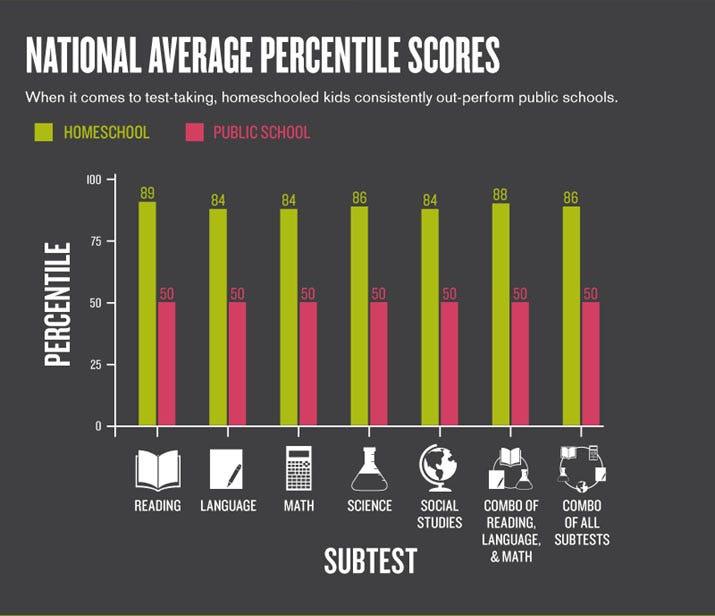
Many people hear my story and say, “That’s great, but you’re far smarter than the average kid.” That may be true. But homeschooling can be for everyone, and I’m not alone in thinking that. The Supreme Court has ruled that parents have a fundamental right to educate their own children —this legal precedent allows millions of kids to learn outside the confines of traditional schooling every year. If you’re imagining millions of kids sitting on their couches watching TV or being isolated from the world as they learn about the bible from their overzealous parents, think again. Research shows that homeschoolers consistently out-perform their conventionally-schooled peers. Compared to their conventionally-schooled peers, homeschoolers score significantly higher on standardized tests and have enhanced socio-emotional development on a variety of measures, from less incidence of depression and anxiety to higher levels of self-esteem and maturity.
As a homeschooled kid I can attest to the benefits of non-traditional education. Traditional schools teach facts and techniques but skimp on real-world applications and soft skills. For example, self-regulation, sustained focus, setting a personal schedule, purposeful curiosity. Did you learn any of these things in middle or high school? I had to learn them on my own. Being stuck at home is a great opportunity for kids to practice these essential life skills that even many adults lack. So how can parents leverage the positive outcomes of non-traditional school in a world of forced homeschooling? Here are a few nonexhaustive things you can do to help your kid succeed without the structure of a normal school day.
Let kids decide what they study.
It isn’t enough to assign tasks. Kids, like adults, need to understand why they’re doing what they’re doing. But this isn’t enough either. Kids, like adults, also need motivation. And that doesn’t mean extrinsic motivators like reward or punishment. It means a desire to achieve that can only come from doing what we love. True learning results from passion, not from rote memorization or completion of assignments. True accomplishment isn’t about what you do, it’s about how you feel about what you do. To that end, each of us needs the opportunity to follow our calling. Kids are no different.
It can be difficult to let go and allow a child to wander their own path, but they need the freedom to explore their personal interests. Everyone is more motivated to learn when they see the relevance of a topic to their lives. And the more you know about a subject, the more you can see how it relates to everything else. When I started homeschooling the internet was still in infancy. Now, there is a practically infinite availability of resources for researching any topic. And this leads me to my second suggestion.
Let kids learn through teaching.
A key misconception about school is that we need a teacher to learn from. I don’t want to undervalue the power of a good teacher, but I also know how much a kid can learn on their own. In fact, traditional schooling wisdom has it all backward. Teachers unnecessary for learning and teaching is itself one of the most effective and enjoyable ways to learn. Even teaching to an inanimate object can enhance learning more than spending time studying.
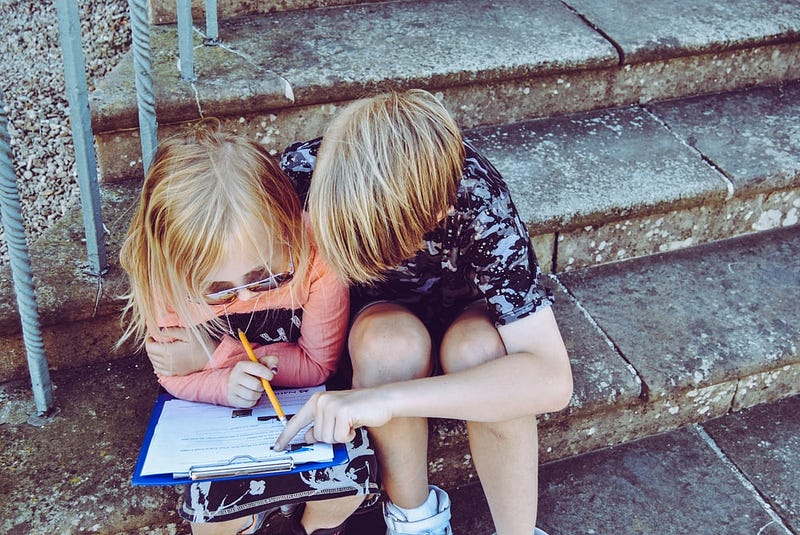
So have kids teach you what they’re learning. Ask them to research a specific topic for you. If you’re feeling brave, you can combine this advice with the first suggestion and let them decide what to learn about. Then, get curious and ask them to teach you about what they found. Be sure to ask where they got their information from — how do they know that what they’re teaching is true? It’s a good way for everyone to learn while also spending time together. Teaching, especially to an adult, helps kids build confidence and take control of their own learning. Which brings us to my third and final piece of advice.
Let kids take responsibility.
This may be the hardest part of independent, self-driven learning. In a way, a school environment shelters kids from the consequences of their actions. Sure, a lack of effort can result in bad grades and misbehavior can lead to detentions. But, like motivation, responsibility cannot be instilled from the outside. No amount of incentive or punishment can help a person feel the rightness or wrongness of their behavior. Kids (and adults) need to be given space to fail. We all deserve the opportunity to feel the need to do better. If everyone around us is constantly saying “be better,” we may never get to feel that need for ourselves. Parents and other adults still have to be responsible for setting boundaries and providing feedback, but there’s only so much they can do. Whether you’re a kid or an adult, you can only be accountable for yourself.
The best non-traditional schooling resources (like Khan Academy) provide a structure that seems like a game. Because the best way to learn self-accountability is through play. Obviously no parent wants their kid to sit and play video games all day. But too many parents underestimate the learning that can happen through play (and yes, even video games). That’s how it works in nature too: young animals explore boundaries and practice life skills by having fun. Evolution has given us an intrinsic motivation to learn in the form of play. But through years of rigid authority and purposeless rules, we learn how to dislike our natural tendency to learn. As strange as it seems, letting kids have fun is one of the best ways to help them become responsible. Help them design their own long term goals, then step back and let them get there independently. Whether they succeed or fail, they’ll only have themselves to blame. They’ll thank you later for this gift of responsibility.
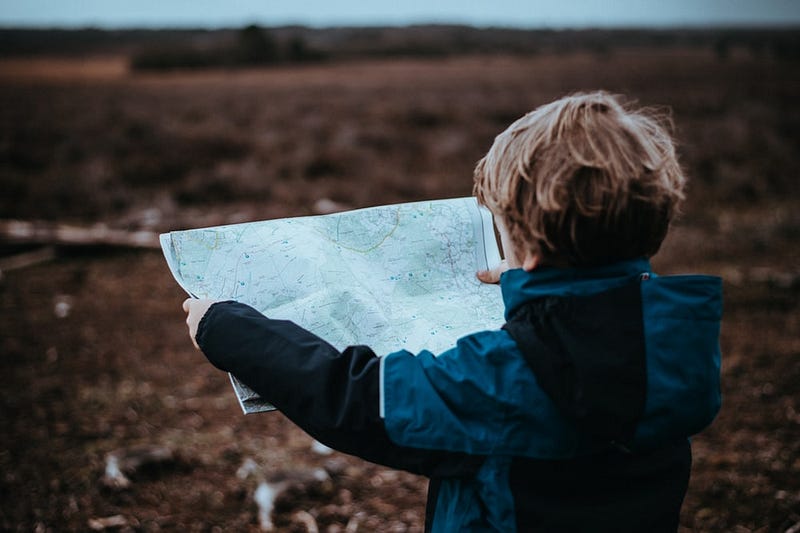
Leaving school was one of the best decisions I’ve ever made. It allowed me to chart my own path through life with resilience and determination. It prevented my love of learning from being quashed by the stifling authoritarianism that the majority of people have to face. It helped me build a strong sense of purpose, identity, and self-esteem. Most importantly, it let me see my parents in a new light. Their approval and support made all the difference for my future. It must have been very difficult for them to sit back and watch me make mistake after mistake. But I’m so glad they did. I don’t think I would be nearly as competent and emotionally developed if they had sheltered me from the real world by keeping me in school. The classroom isn’t representative of the realities of life and work. If we want our kids to be successful in the world, and to improve the world, we need to prepare them in realistic and natural ways. Emptying the classrooms may be the best way to achieve this goal.
I hope this story helps even one family during these unusual times. But it is not an exhaustive to-do list or a master plan for how to homeschool forever. I welcome questions or comments if you have any intention of trying out non-traditional schooling on a longer-term basis. It worked for me and it can work for anyone. Our world would be a better place if every parent became alive to the inherent intelligence in their children. Everyone was inquisitive as a child, and if we nourish this trait in our kids we can create a generation far better than any that came before it.