
Senseless Theories Of Karl Marx Where No One Can Listen To Music
Suppressing individualism, Marx believed the value of commodities was determined solely by necessary labor.
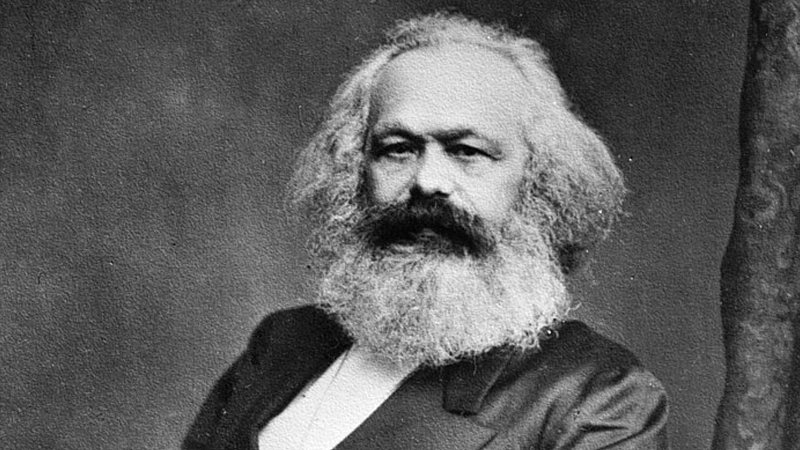

German philosopher, critic of political economy, political theorist, journalist, economist, and socialist revolutionary Karl Heinrich Marx is best known for his work the Communist Manifesto.
Devotees of Marx to this day occupy positions as economists and socialists, but even they cannot shy away from the glaring critique against Marx. Most famously is the critique against the labor theory of value, a central belief of Marxism.
What is the Labour Theory of Value?
The Labour theory of value or LTV states that the economic value i.e market price of a good or service is determined by the total amount of “socially necessary labor” required in production.
Basically if conducting a surgery requires more socially necessary labor than waiting on tables, it is more valuable, and thus the surgeon should be paid more.
To understand this further, we have to grasp the concept of socially necessary labor.
The easiest way to define socially necessary labor time is by understanding that it is the amount of time spent by a worker of average skill and productivity, working with tools of the average productive potential, to produce a given good or service.
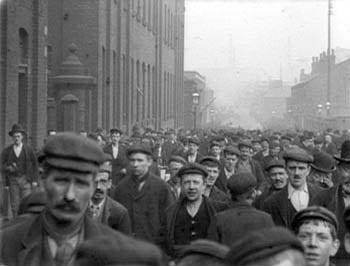

This is measured in working hours. So if an average doctor with average resources takes 5 hours to perform cardiac surgery, there are 5 units of labour cost.
However, if a below-average doctor takes 10 hours to do the same surgery with the same resources, then even though he has done 10 hours of labour, he has only produced 5 units of labour cost. So will be awarded the same.
Problems with this theory
Argument 1
The first problem that arises is the omission of the pre-production labour from the equation. Keeping our example in mind, a doctor may require scalpels or scissors during the surgery. These goods have also been produced at some point, and thus their socially necessary labour ideally should be counted into the equation.
Argument 2
The person who owns the hospital and has invested in the operation theatre is also putting in labour in this service by investing the money he earns into the OT room, etc., instead of spending it all on himself.
They are doing the labor by delaying their gratification. The supporting doctors and the staff on hand are also performing labour during the service, so fixing the price based only on the surgeon’s socially necessary labour is unfair.
Argument 3
The third argument is that in a changing world, where machinery and technological advances have made certain processes much easier than others, scaling socially necessary labour is difficult and does not have defined guidelines.
It isn’t a fair way to judge the value of a commodity because a lot of the factors involved are evolving and constantly undergoing immeasurable and unquantifiable changes.
Criticisms
This theory also fails to take into account the idea of supply and demand, Marx ignores the individual experience by ignoring the demand of the consumers.
If a product is in high demand, then that has an affects its costs. For example, let’s consider dinner. Your food is prepared by a chef who takes 3 hours to prep, cook, and serve the meal to you.
Meanwhile, you are also listening to some soulful music as you wait for the food. The producer of that music took 2 months to compose, play, record, package, and sell the single.
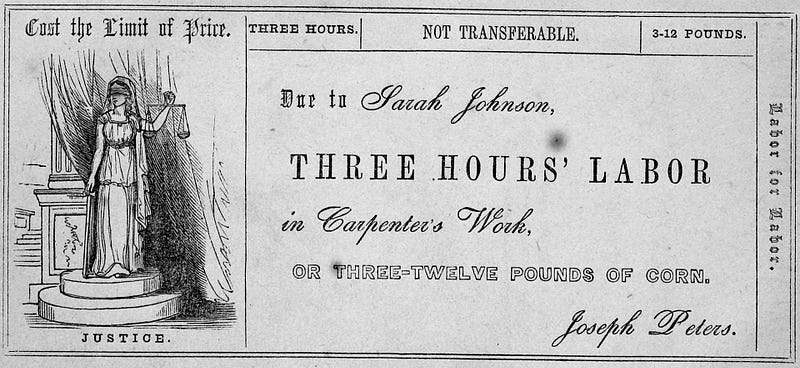

In this scenario, it took the musician 1460 hours to provide you with the commodity, which is almost 500 times more than the time it took for the cook to provide you with food. That means if you paid 30$ for the food, you will be paying 15000$ for ONE SONG.
Thus, the theory greatly failed to work in a realistic market, as the price for a good/service inevitably depends on factors other than labour!
Have and Have-nots
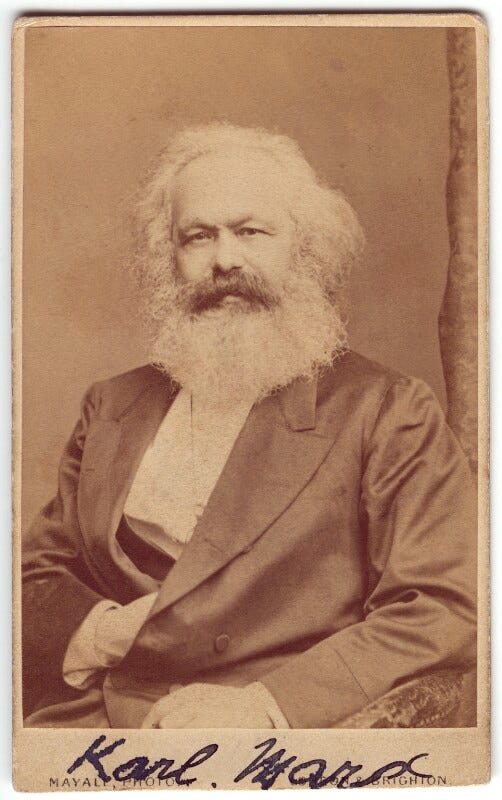

The basis of Marx’s economic and political beliefs was rooted in the idea of freeing the poor.
Marx’s scientific socialism merged his economical and philosophical beliefs, including his theory of value and the concept of alienation, to exhibit that in human history, an intense struggle has developed between the people who “have” and the people who “have-not.”
Particularly, Marx blamed capitalism for starting a war between two classes: the bourgeoisie (the capitalist or rich class that owns the companies producing goods) and the proletariat (the working/poor class, who actually work in said companies).
Marx said the competitive environment created by capitalism would lead to its downfall, and instead of creating goods at cheaper rates, the market would produce monopolists hoarding wealth and a mass of unemployed, poor people.
However, his theories did little to translate into practical solutions.
In practice, socialism failed to create a non-alienated, self-charged social system. It failed to “free the masses” and instead trapped them under state power.
Nations that have gone against Marxism, allowing ownership of property, and a free market have undergone economic growth. Free-market economies save the masses from poverty and allow for political freedom, which Karl intended on doing. Capitalism has its flaws, but ultimately the Marxist theory fails to be a good enough replacement for it.
Want to follow up more from me and other amazing writers on Medium?
Hop on the chance to join: