
PHOTOGRAPHY
Just a Bunch of Fun Facts About Black-Eyed Susans
This flower was named after a famous ballad written by a well-known poet
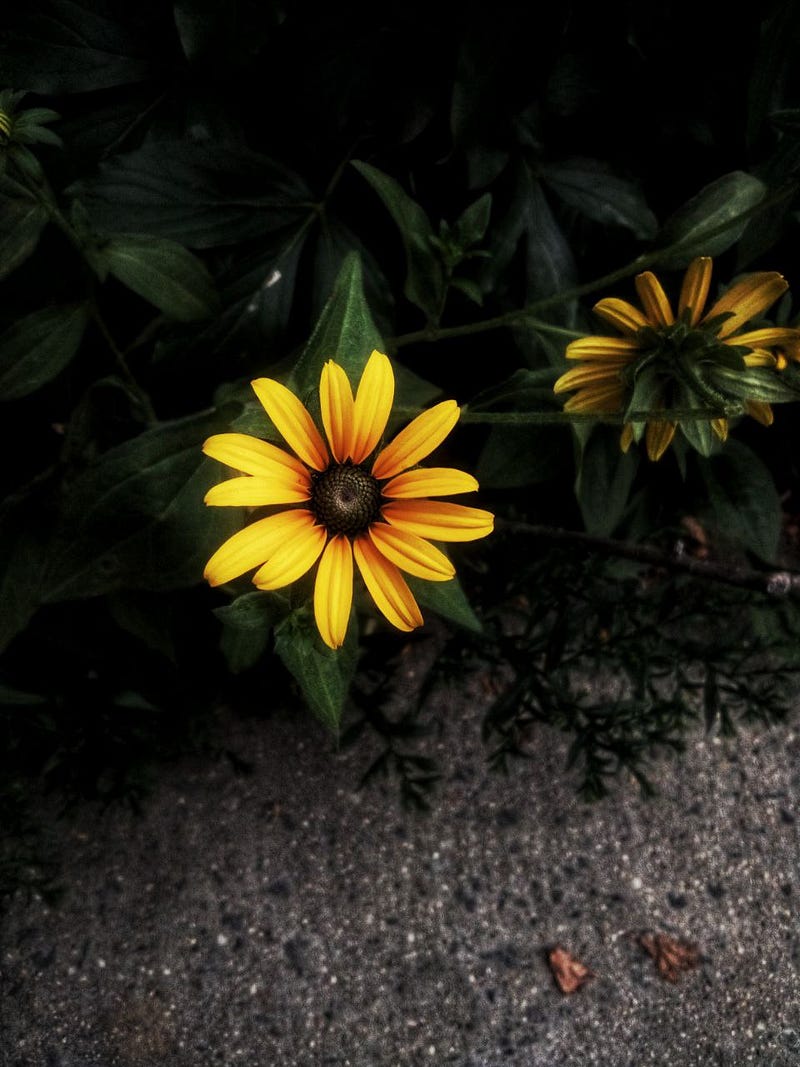
These flowers are yellow Daisies (also called gloriosa daisies) that specifically go by the nickname Black-Eyed Susan (Rudbeckia hirta).
The genus name Rudbeckia was in honor of the botanist Olof Rudbeck Junior. But the nickname Black-Eyed Susan has two arguable origins.
- It stems from the black center of the flower — also called its eye. The center was a deep brown color when I looked at it closely. (There has been some debate about this.)
- It comes from a ballad written by a famous English playwright and poet named John Gay. (The cooler origin story.)
It is called Sweet William’s Farewell to Black-ey’d Susan: A Ballad
It details the sad story of a young woman who boards a ship to tell her lover, a sailor she calls Sweet William, goodbye.
Susan was crying so hard that she had black circles around her eyes as she looked for him before his departure, gaining the nickname “Black-eyed Susan.”
Here is an in-depth look at the ballad and its correlation to the flower.
Sunflowers and Black-Eyed Susans are cousins.
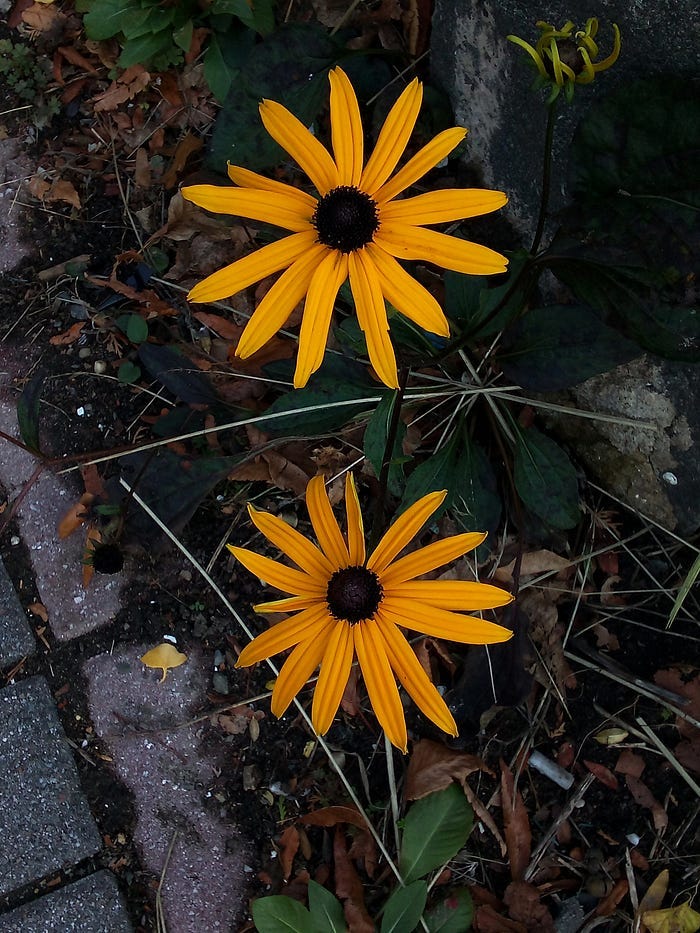
I have constantly mistaken these beauties for sunflowers because I usually spot them side-by-side. I just thought they were mini-sunflowers and I was pretty close in my analysis because the two are related.
Sunflowers are the older cousins of Black-Eyed Susans; that is why they look like different versions of one another. Unlike sunflowers, Black-Eyed Susan does not face the Sun or follow it.
And unlike their big cousins, Black-Eyed Susans can self-seed.
Self-seeding is when a plant is capable of
reproducing and spreading by the dispersal of its own seeds, without human involvement.
(However, when plucked and placed in a vase, Black-eyed Susans have a lifespan of six to ten days.)
They are also pioneer plants, making them one of the first flowers to grow after a fire or other natural disaster.
For this reason, Black-eyed Susans symbolize resilience, making them the perfect gift to send to someone who has fallen on hard times.
Another reason Black-Eyed Susans are notorious for their resilience is because they are so hellbent on surviving that they can grow anywhere they are planted.
Whereas certain plant species cannot co-exist, Black-Eyed Susans thrive among different flowers.
Below is a photo of Black-eyed Susan with her fraternal twin, the signature White Daisy.
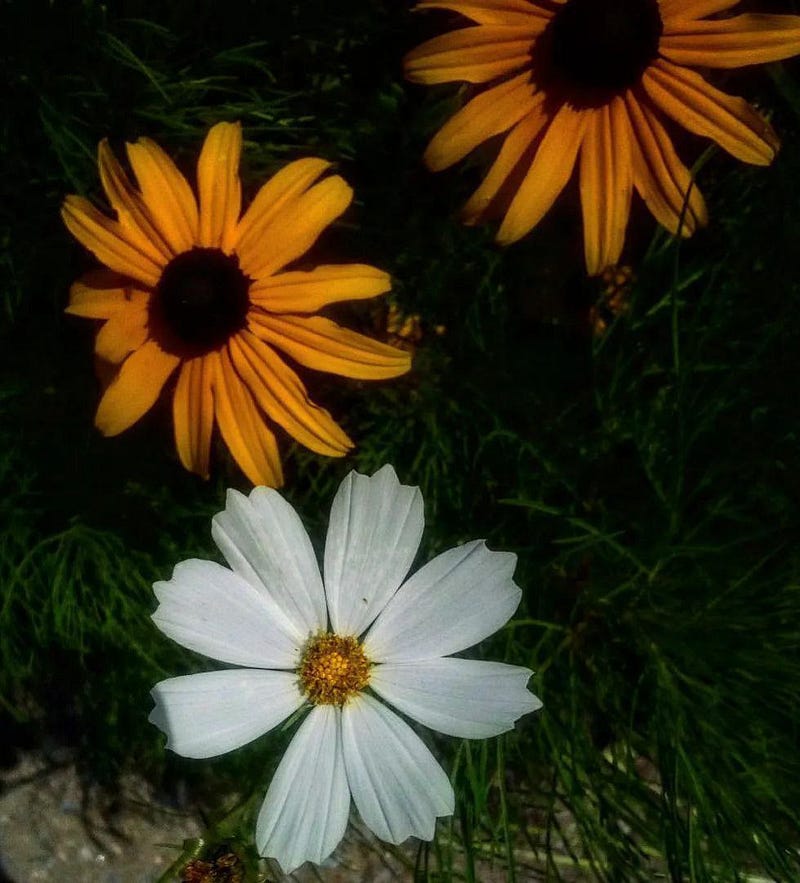
I have found Black-eyed Susans among different plants, including the sunflowers I mentioned earlier. I usually see them throughout the Summer and Fall; they bloom from June to October.
It is considered a late-summer bloomer.
Different parts of the plant serve an important purpose.
The fuzzy leaves on the plant deter deer with an unappealing aroma, which can also protect neighboring plants from being eaten by them.
Even though the aroma may make these plants inedible to deer, the plant treats numerous health issues.
Indigenous tribes used the juice from the roots to treat parasitic worms, earaches, and even snakebites. They also used Black-Eyed Susans to treat (and prevent) the common cold and influenza.
If you make a tea out of it and dip a cloth in it, you can apply it to sores, cuts, and swelling to heal it. The stem can treat high blood pressure. The plant has also been used to treat ulcers and is a diuretic used to treat diuresis.
Science has supported some of these medicinal properties.
Here is a PubMed article on how Black Susans heal tuberculosis. Here is another article with a more in-depth listing of its medicinal and culinary purposes.
Thanks for reading. ❤
© Linda Sharp 2024. All Rights Reserved.
Check out this writer (and editor)
Aside from us writers, another endearing factor of Medium is our editors. I have been lucky to know some incredible ones; among them is Fiza Ameen, an editor of Soul Magazine.
In her article AI (Almost) Killed My Deep Reading; Editing Brought it Back, Fiza details the significant role editing plays in the intimate relationship between reading and writing.
Her journey involves the everpresent, and complicated, influence of AI on society and the creative process. Still, her creative perseverance tells a story of transformation and success.
Please give this amazing woman a read.
✍ — Published by DR Rawson — The Possibilist at Dancing Elephant Press. Click here for guidelines to post click here.


