
Women, History, Tribute
Josephine Baker: An Inspiration to Generations Yet Unborn
Women’s History Month: She started off with little and through her determination and resilience achieved so much
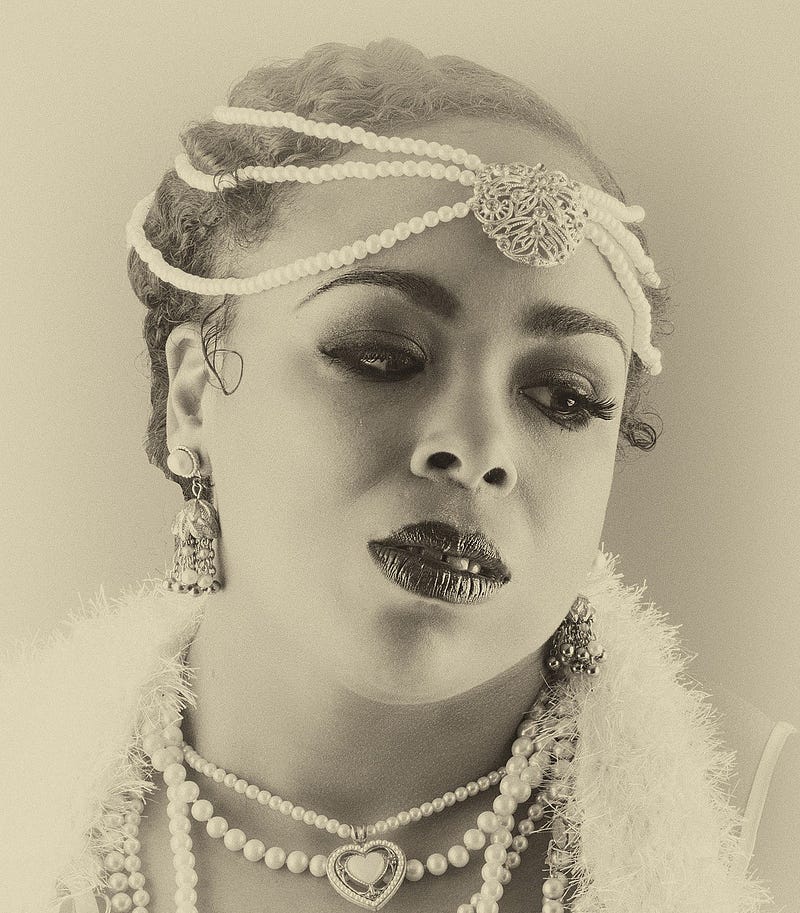
I first became aware of who Josephine Baker was when I was an early teenager. My mum loved glamour, dancing, France and strong determined women. So it wasn’t surprising that she had several prints of Josephine Baker dancing or simply looking beautiful, similar to the image above.
I was fascinated by Josephine’s story. To me, it seemed as if she had packed many lives into one. Not only that, she started off with little and through her determination and resilience achieved so much.
March is women’s history month so seems like the perfect time to reflect on this inspirational woman’s life…
Early Days
Josephine — a true icon of the Jazz Age — was born Freda Josephine McDonald, in St. Louis, Missouri in 1906. Her mother had desperately wanted to be a dancer but had to forgo her dream when she had children.
Josephine’s father had been a drummer — so dancing and music were in the genes. However, he left soon after she was born. Being young, Josephine’s mother soon remarried and produced more children.
At a very early age Josephine cleaned and babysat for wealthy white houses, to help support her family. This meant she didn’t receive much schooling which in all honesty makes what she achieved even more remarkable. When she was thirteen she decided to leave home and found work as a waitress at a club.
Dancing Was in Her Genes
It appears that whilst working at the club the young Josephine took up dancing and then started touring America with the Dixie Steppers, performing comedic sketches. It was also during this time she met and married Willie Baker and in doing so, took his surname — Baker.
Things were going well for the young dancer. In 1923, she won a chorus part in a musical and proved to be a popular addition, due to her natural comic timing.
Moving to New York she soon became a favourite at the Plantation Club in Harlem…
From the 1910s, into the 20s and 30s, Black culture in all forms proliferated in Harlem, known as the Harlem Renaissance. There was a flowering of jazz music, performance and night-clubs in the early part of the 20s. This trend extended into Manhattan, first with Lew Leslie’s cabaret venue called the Plantation Club… Jazz Age Club
A Parisian Sensation
In 1925 at the peak of France’s obsession with American jazz, Josephine who was still only 19, moved to Paris. She quickly became a sensation in the city’s nightlife scene and gained a reputation for her provocative and sensual dancing style, which included the Charleston, the Black Bottom, and other popular dances.
She particularly made an impression when she performed the Banana Dance at the Folies Bergère — where she was semi-nude. You can watch it here.
In addition to her dancing career, Baker was also a successful singer and actress. She appeared in several films and stage productions, including the 1934 film “Zouzou” and the Broadway revue, “Ziegfeld Follies”.
Baker became a French national after her marriage to industrialist Jean Lion in 1937. She was also openly bisexual and had long-term relationships with other women.
When the Germans advanced on Paris in 1940, Josephine moved to the south of France.
Working for the Resistance
It was then that she was approached by the head of French counter-military intelligence, seeking to recruit people who could help the resistance efforts against the Nazi occupation. Josephine Baker replied,
“France made me what I am. I will be grateful forever. The people of Paris have given me everything… I am ready, captain, to give them my life. You can use me as you wish.”
Baker was able to use her fame and international connections to gather intelligence for the resistance effort. Indeed, she was the first American woman to receive the French War Cross for acts of bravery.
A Trailblazer Breaking Down Barriers
Throughout her career, Baker was a trailblazer for Black performers, breaking down racial barriers and challenging societal norms with her performances.
Dr. Martin Luther King Jr. once sent Josephine a letter which stated:
“Your genuine good will, your deep humanitarian concern and your unswerving devotion to the cause of freedom and dignity will remain an inspiration to generations yet unborn.”
During the 50s and 60s, while visiting America, Baker publicly advocated for civil rights, refused to perform for segregated audiences and demanded equal treatment as an entertainer.
The Rainbow Tribe
Josephine married Jo Bouillon, the orchestra director, in 1947. The couple struggled to conceive so from 1954 to 1964, they adopted twelve children from all around the world, calling them the Rainbow Tribe. Once again Baker was ahead of her time and celebrities such as Angelina Jolie, who also have large multicultural adopted families.
Some think Josephine’s desire to create a multiracial utopia was generated from the poverty and racism she had to endure growing up. Baker continued to perform well into her later years needing to financially support her large family.
In 1961, she was awarded the French Legion of Honour for her contributions to French culture.
She passed away too young in 1975 — at the age of 68 — leaving behind a legacy as one of the greatest entertainers of all time.
Still Celebrating this Unique Woman
In 2021 France paid tribute to Josephine Baker by saying she was, “the embodiment of the French spirit,” and made her the first Black woman to enter France’s Pantheon.
The Pantheon is a monument in the heart of Paris, featuring France’s most notable figures for over a century …
It was easy for me to see why my Mum — a strong, kind-hearted woman, admired Josephine Baker. I have taken up that baton and also have a picture of this incredible trailblazer on my wall.
References
Josephine Baker receives one of France’s highest honors
Another story about a woman involved with the resistance by Sal


