avatarAvi Kotzer

Free AI web copilot to create summaries, insights and extended knowledge, download it at here

3038

Abstract

alculation on a lined boards similar to an abacus. In the illustration below, you can see a counting board with lines and spaces between them. These function like the wires or rods on an abacus. The place value is marked at one end. If it seems as though everyone is confused, that’s because no one can understand those markings on the left side, which makes them suspect that guy doing the counting may be cheating everyone in town.</p><figure id="b04d"><img src="https://cdn-images-1.readmedium.com/v2/resize:fit:800/0*G_BxJ-bbCNU0Nbdi.png"><figcaption>Credit: Pub Licdomain</figcaption></figure><p id="0160">In the late Middle Ages, mints in parts of Europe produced the counters for official bookkeeping. Most of them had an effigy of the ruler within a <b>flattering text</b> and on the reverse the ruler’s escutcheon and the name or city of the accounting office. These are from Nuremberg, Germany:</p><figure id="18d9"><img src="https://cdn-images-1.readmedium.com/v2/resize:fit:800/0*aFAhqrECCELjUIr2.jpg"><figcaption>Photo by Kees38</figcaption></figure><p id="3b64">I’m not sure that’s really the effigy of any ruler, and the flattering text seems to be just an alphabet. Perhaps it was flattering because this guy was the only one who could read?</p><p id="0b1b">Later on, <i>jetons</i> found use as a money substitute in games, similar to modern casino or poker chips. Hence the photo at the top of today’s column. There’s no flattering text on those. It’s not needed considering some chips are worth ten thousand or one hundred thousand dollars… or even more!</p><h2 id="cb6a">En español</h2><p id="ef1b">In Spanish, <i>jetón</i> literally means big-mouthed. That’s because <i>jeta</i> is slang for “mouth” and the -ón suffix is augmentative. But the word <i>jetón</i> can also mean different things in different Spanish-speaking countries. For example, in Costa Rica it means “liar”. And in Chile it can mean “schmuck” or “idiot”.</p><p id="6390">As in this joke:</p><figure id="ed4e"><img src="https://cdn-images-1.readmedium.com/v2/resize:fit:800/0*ZXDFKIS-FhiCze9P.jpg"><figcaption>Credit: Condorito</figcaption></figure><p id="f886">In case you don’t understand Spanish, I’ll translate it briefly. The prisoner (yes, he looks like a condor!) calls out for the guard and then asks for a glass of water. The guard asks him why he wants water. In the last panel, the prisoner sarcastically replies: “To drink it! It’s not like I’m going to go out swimming, <i>jetón</i>!”</p><p id="2ad3">The above cartoon is probably familiar if you grew up in Latin America in the 20th century, and perhaps if you are a Spanish speaker who grew up in the States after 1990. The name of the strip is <b><i>Condorito</i></b>, which is also the name of the main character, an anthropomorphic condor (who plays the prisoner in the above scene).</p><p id="4da4"><a href="http://www.condorito.com/"><b><i>Condorito</i></b></a> (literally “little condor” in Spanish) was created in 1949 by the Chilean cartoonist René Ríos, nicknamed <i>Pepo. </

Options

i>The comic strips features the eponymous Condorito and his friends, who all live in the fictitious town of Pelotillehue, meant to typify rural towns in Chile. Condorito himself is a representation of the common Chilean, and assumes different roles throughout the strips.</p><p id="7dc5">Condorito is likely one of the most popular comic strips ever created in Latin America, perhaps rivalled only by Quino’s <a href="https://en.wikipedia.org/wiki/Mafalda">Mafalda</a>. Yet Condorito has had a much longer run than Mafalda, and has managed to succeed in the Hispanic market in the U.S. If you’ve lived in a big city in the States, especially one with a large Spanish-speaking population, perhaps you remember seeing the <i>Condorito</i> magazine at a newsstand.</p><p id="06c2">The one below shows many of the regulars that appear alongside Condorito in the strips.</p><figure id="ed1c"><img src="https://cdn-images-1.readmedium.com/v2/resize:fit:800/0*Ld4al6ZUQRYoFmk8.jpg"><figcaption>Credit: <a href="https://bibliocracoggzai.blogspot.com/2013/07/condorito-nos-publico.html">bibliocracoggzai.blogspot.com</a></figcaption></figure><p id="aaef">And here is a photo of a statue of Condorito (along with his dog, Washington) in Santiago, Chile’s capital city. That’s how popular this cartoon condor is!</p><figure id="7b86"><img src="https://cdn-images-1.readmedium.com/v2/resize:fit:800/0*ojwT_m3BWudIWOzC.jpg"><figcaption>Photo by adapar / Andrés David Aparicio Alonso</figcaption></figure><p id="9085">In any case, whether you spell <i>jeton</i> with one “t” or two won’t matter. And that’s because the editors of the Spelling Bee decided that <i>jet(t)on</i> is a dord*.</p><p id="e37c">You can check out my previous entry on another <b>dord* </b>here:</p><div id="b12c" class="link-block"> <a href="https://readmedium.com/echolocate-ce8cd5a83c79"> <div> <div> <h2>Echolocate</h2> <div><h3>The Spelling Bee whiffs during this at bat</h3></div> <div><p>medium.com</p></div> </div> <div> <div style="background-image: url(https://miro.readmedium.com/v2/resize:fit:320/0*Hp9UekFsctp1ql7t)"></div> </div> </div> </a> </div><p id="bf00">*What the heck is a <b>dord, </b>you ask? Here’s the answer:</p><div id="97ed" class="link-block"> <a href="https://www.merriam-webster.com/words-at-play/dord-a-ghost-word"> <div> <div> <h2>'Dord': A Ghost Word</h2> <div><h3>One of the questions people like to ask lexicographers is this: Can you sneak something into the dictionary? Can you…</h3></div> <div><p>www.merriam-webster.com</p></div> </div> <div> <div style="background-image: url(https://miro.readmedium.com/v2/resize:fit:320/0*68DpGQEHI4gRNY-i)"></div> </div> </div> </a> </div></article></body>

Jet(t)on

One “t” or two didn’t make a difference: rejected!

Photo by Joachim Schnürle on Unsplash

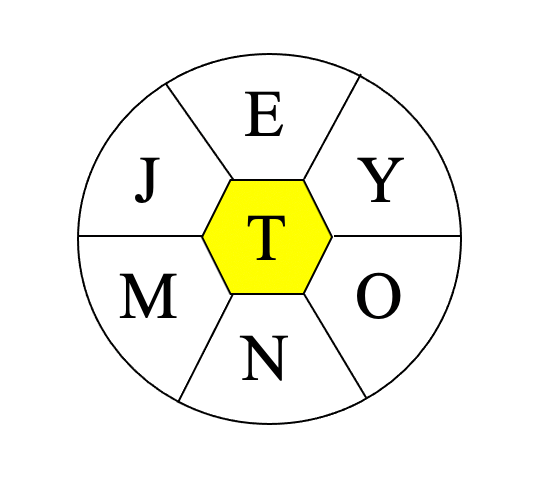
Today’s New York Times Spelling Bee letters:
Art: Iva Reztok

E, J, M, N, O, Y, and center T (all words must include T)

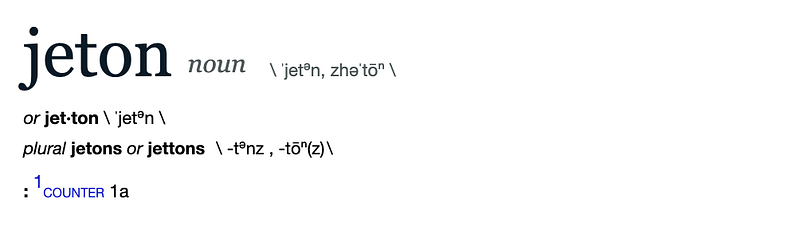
Merriam-Webster says…
Credit: merriam-webster.com

Silly little dictionary! Don’t you know jet(t)on can’t possibly be a word if the New York Times says it ain’t?

For further fascinating facts, check out the Spelling Bee Master.

What’s your favorite dord* from today’s puzzle?

My Two Cents

I confess that I had no idea that jeton or jetton was a word in English. I still tried it out while I was playing today’s Spelling Bee, just for kicks. Obviously it was rejected, or I wouldn’t be writing about it today. I did know, however, that jetón (one “t”, accent mark on the “o”, j-sound like a very hard “h”) was a word in Spanish. More about that below, so please keep scrolling down slowly to help this article earn those 13 cents today.

In English

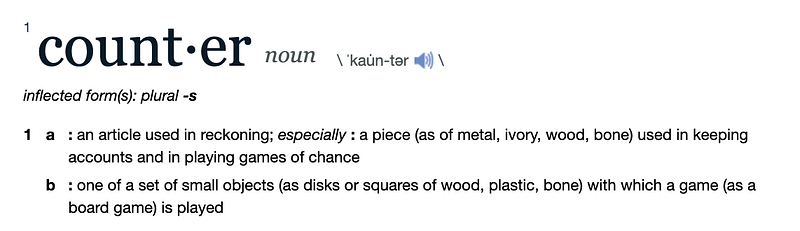
The dictionary explains that jeton comes to us from the French jeton, itself from Middle French, from the word jeter meaning “to throw” or “cast up” (accounts), or calculate. For further clarification, the dictionary also refers us to the first definition of the first entry of the noun counter. So I’ll oblige my readers by asking Iva Reztok to screenshot that:
Credit: merriam-webster.com

As an interesting aside, the word calculate is also related to jeton via Latin. The Romans used pebbles in order to do some of their math operations. And those little stones were called calculi in Latin. Eventually that derived into the English calculate. And as a further interesting aside, the Spanish word for a kidney stone is cálculo.

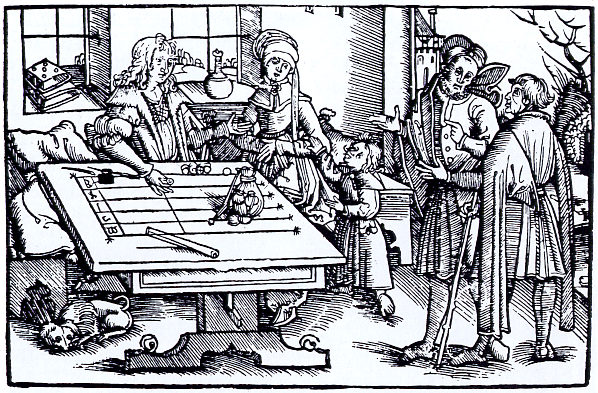
Jetons became popular as tokens in Europe between the 13th and 18th centuries. They were also produced as counters for use in calculation on a lined boards similar to an abacus. In the illustration below, you can see a counting board with lines and spaces between them. These function like the wires or rods on an abacus. The place value is marked at one end. If it seems as though everyone is confused, that’s because no one can understand those markings on the left side, which makes them suspect that guy doing the counting may be cheating everyone in town.
Credit: Pub Licdomain

In the late Middle Ages, mints in parts of Europe produced the counters for official bookkeeping. Most of them had an effigy of the ruler within a flattering text and on the reverse the ruler’s escutcheon and the name or city of the accounting office. These are from Nuremberg, Germany:
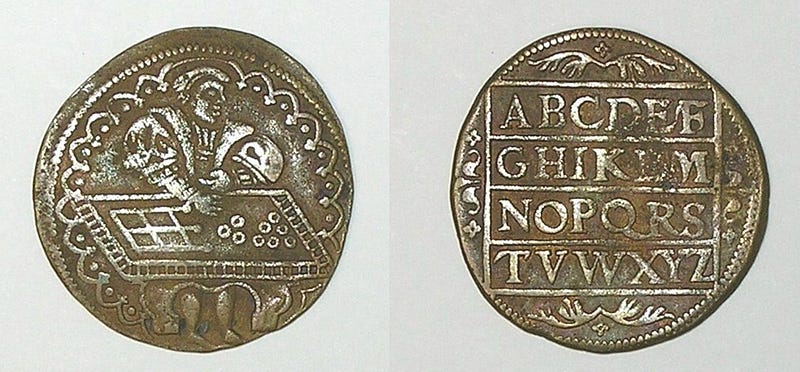
Photo by Kees38

I’m not sure that’s really the effigy of any ruler, and the flattering text seems to be just an alphabet. Perhaps it was flattering because this guy was the only one who could read?

Later on, jetons found use as a money substitute in games, similar to modern casino or poker chips. Hence the photo at the top of today’s column. There’s no flattering text on those. It’s not needed considering some chips are worth ten thousand or one hundred thousand dollars… or even more!

En español

In Spanish, jetón literally means big-mouthed. That’s because jeta is slang for “mouth” and the -ón suffix is augmentative. But the word jetón can also mean different things in different Spanish-speaking countries. For example, in Costa Rica it means “liar”. And in Chile it can mean “schmuck” or “idiot”.

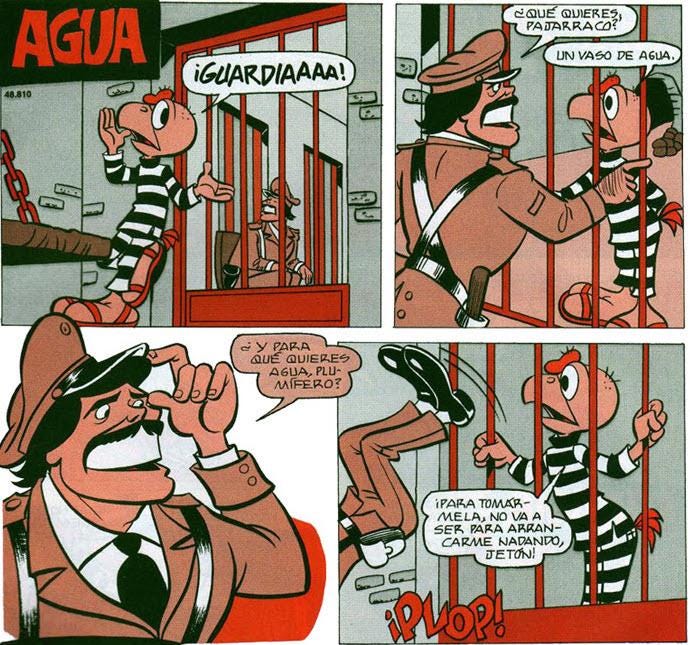
As in this joke:
Credit: Condorito

In case you don’t understand Spanish, I’ll translate it briefly. The prisoner (yes, he looks like a condor!) calls out for the guard and then asks for a glass of water. The guard asks him why he wants water. In the last panel, the prisoner sarcastically replies: “To drink it! It’s not like I’m going to go out swimming, jetón!”

The above cartoon is probably familiar if you grew up in Latin America in the 20th century, and perhaps if you are a Spanish speaker who grew up in the States after 1990. The name of the strip is Condorito, which is also the name of the main character, an anthropomorphic condor (who plays the prisoner in the above scene).

Condorito (literally “little condor” in Spanish) was created in 1949 by the Chilean cartoonist René Ríos, nicknamed Pepo. The comic strips features the eponymous Condorito and his friends, who all live in the fictitious town of Pelotillehue, meant to typify rural towns in Chile. Condorito himself is a representation of the common Chilean, and assumes different roles throughout the strips.

Condorito is likely one of the most popular comic strips ever created in Latin America, perhaps rivalled only by Quino’s Mafalda. Yet Condorito has had a much longer run than Mafalda, and has managed to succeed in the Hispanic market in the U.S. If you’ve lived in a big city in the States, especially one with a large Spanish-speaking population, perhaps you remember seeing the Condorito magazine at a newsstand.

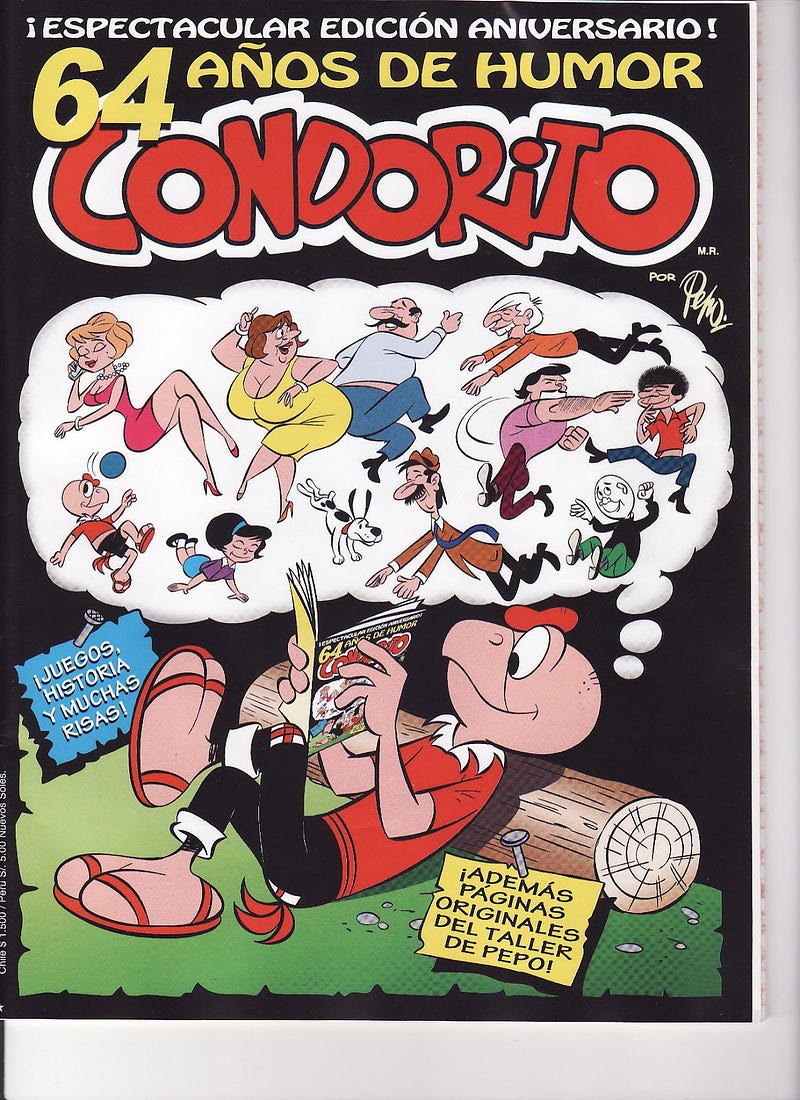
The one below shows many of the regulars that appear alongside Condorito in the strips.
Credit: bibliocracoggzai.blogspot.com

And here is a photo of a statue of Condorito (along with his dog, Washington) in Santiago, Chile’s capital city. That’s how popular this cartoon condor is!
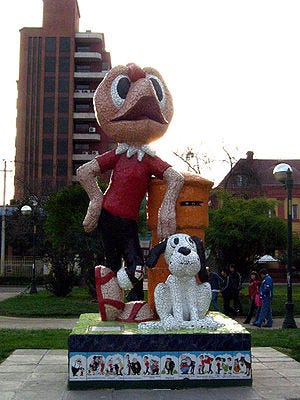
Photo by adapar / Andrés David Aparicio Alonso

In any case, whether you spell jeton with one “t” or two won’t matter. And that’s because the editors of the Spelling Bee decided that jet(t)on is a dord*.

You can check out my previous entry on another dord* here:

*What the heck is a dord, you ask? Here’s the answer:

Spelling Bee
Language
History
Comics
Spanish
Recommended from ReadMedium