
Japan’s Love Hotels: A Secret Love-Making Place for Adults
Where privacy is paramount.
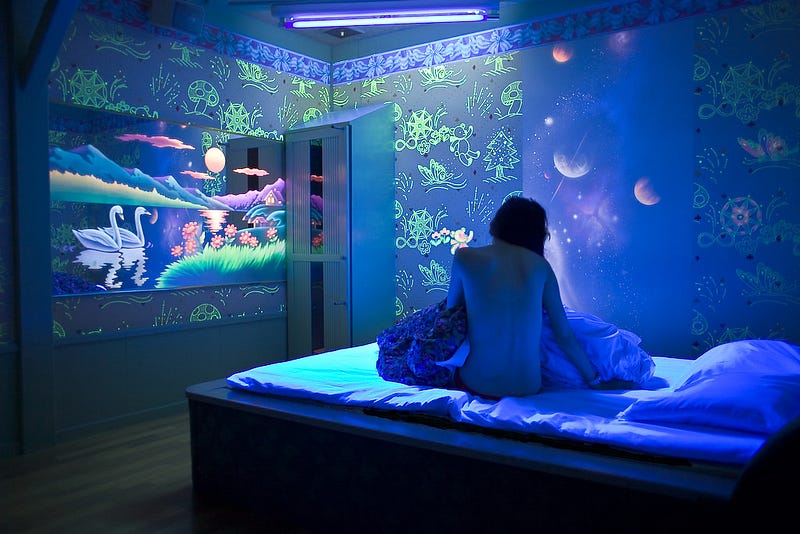
While searching for the reasons behind Japanese people’s reluctance to marriage and family life, I encountered these love hotels, a not-so-hidden place for couples, secret lovers, and others to have secret pleasures.
Surprisingly, there are more than 30,000 love hotels in Japan. They are in almost every big city and town. It’s a 40 billion dollar industry.
Love hotels offer you an experience of a lifetime for a pay-by-the-hour or overnight cost. The facilities and privacy you will get there are beyond your wildest imagination.
Well, if you are wondering — you will not meet any staff in a love hotel, and your identity will also be kept secret. But before diving too deep, let’s have a tiny bit of Japan’s love hotel history.
A Tiny Bit of Japan’s Love-Hotel History
The boom of Japan’s love hotels industry has its root in the Hotel Love, the first of its kind opened in Osaka in 1968. That hotel was a short-stay secretive destination for couples and young lovers.
In postwar Japan, people generally lived with their extended families. So, to have some private moments, the adventurous couples started to visit love hotels.
Moreover, the introduction of the automobile in the 1960s gave this pleasure motel concept a great push. Couples and adults started engaging with their partners privately in the love hotels more than ever — not because the environment was secretive but all the comfort and amenities love hotels offered to them.
Thus the love hotels business started booming. It is to mention that The Meguro Emperor, the first castle-style love hotel, opened in 1973 started earning approximately ¥40 million a month.
In the late ’80s and early ’90s, love hotels turned out to be a status symbol dating spot for lovers in Japan.
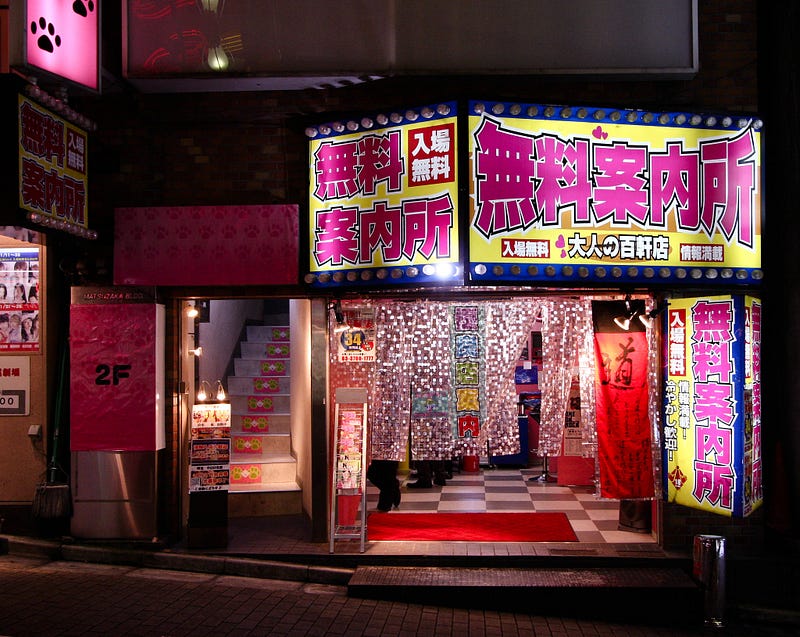
How to Identify Love Hotels in Japan
Well, for some, it is very easy. If you see a hotel with a neon sign outside that says rest and stay with rates, you can be sure that it is a love hotel.
Rest means a short stay from 2–4 hours that costs between ¥3,000-¥7,000, while an overnight stay can cost anywhere from ¥3,900 to well over ¥20,000. The cost fluctuates depending on the room, availability, date, facilities, etc.
The names of the love hotels are quirky too — Hotel Zebra, Hotel Oz, Casablanca, Hotel Public Jam, Hotel Fooo, Hotel Papion, Hotel Edoyado, etc.
Many love hotels based are theme-specific. One is like the shape of a big ship — another one is like the set of Jurassic Park or a spaceship. And the interior is thematic too. Some can go beyond your imagination. I mean literally, there can be rooms designed like doctor’s chamber, prison cell, and so on. I think you get it.
Where Privacy Is Paramount
Your visit to love hotels is extremely private. You will not meet any staff during your stay in the love hotel.
When you first enter the hotel, you will see a screen displaying the rooms and facilities with the cost involved. All you need is to select your desired room on that screen, and the machine will give you an anonymous membership card and access to the room.
You can take food, drinks, costumes, or any other necessary items to make your stay comfortable from the hotel. All will be delivered to you through a tiny hole in the wall next to the entrance. You don’t need to meet anyone.
Even when you park your car in the parking lot of the love hotel, the number plate of your car will be covered to keep your identity secret.
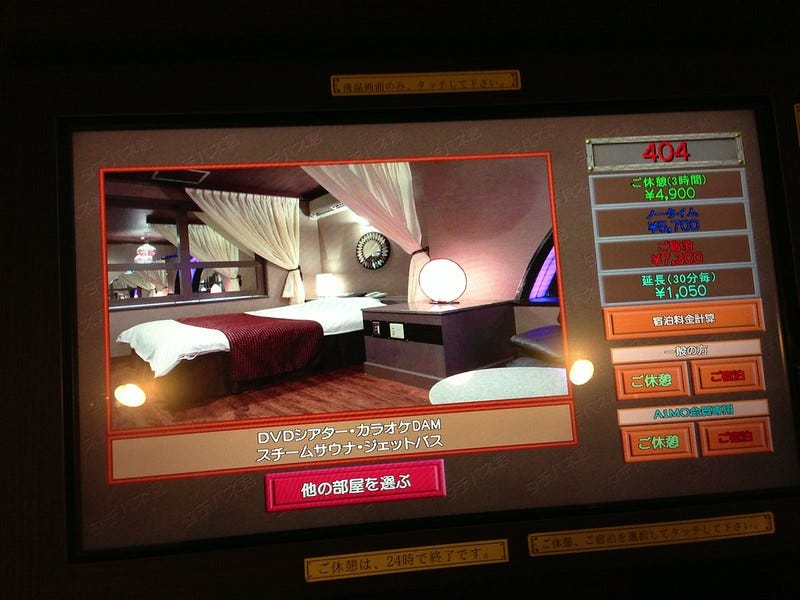
What to Expect In a Standard Love Hotel
A standard room has an extravagant look as it is spacious and well-decorated with hundreds of amenities. The smallest room is about 20 square meters, while more luxurious suites are anywhere from 25 to 80 square meters in size.
You will find the following things in a standard room -
- A small living room with a television and sofa.
- A bedroom with a giant television and a king-size bed. You can change the lights and music from the board behind your bed. In many hotels, you can also change the wallpaper of the room.
- You can watch videos (of any kind), on-demand videos, and order food and other items from the TV screen. You can also order different costumes displayed on the screen or menu book kept on the table.
- Next to your bed, you will find different types of condoms, eye-mask, and a few sex toys in a small box.
- One or two vending machines will be kept in the room for you to buy your drinks or other items like extra condoms, or else.
- A small kitchen will be there with a fridge, mini bar, and microwave.
- You will have a full Jacuzzi bath and shower with unscented soap, shampoo, conditioner, oil, bathrobe, towels, slippers, facial cleansers, hairdryers, combs, razors, and plenty of other items you might need during your stay.
- Moreover, you can rent anything, even the items like a phone charger or nail clips.
- Your room will be well-furnished and decorated with all the things you need and possibly, do not need at all.
It’s like your dream bedroom. Whatever can make your stay comfortable and lengthy, you will definitely find there either free or on rent.
Future of Japan’s Love Hotels Industry
Shishido-san, who runs a love hotel in northern Japan, explains, “Japanese people tend to not be very publicly open about sex, so love hotels are necessary as a space to free their sexual desires.”
According to government data, over 40% of men and women aged between 18–34 have never had sex. And they are also reluctant to get involved in physical activities. However, Japan Family Planning Association discovered that 45% of women from 16 to 24 are not interested in or despise any sexual contact.
As Japan has shown a less restrictive attitude than many other countries during the pandemic, its love hotels are doing quite well. But considering the constant population shrinking and the growing celibacy syndrome in Japanese people, the future of Japan’s love hotels industry is not at all shiny.
We may assume that this multibillion-dollar industry will become more dependent on foreign tourists than its own people day by day.
Sources: Japan Guide, National Geographic, Atlas Obscura, The Guardian, Savvy Tokyo.
New to Medium?? Unlock thousands of AWESOME stories only for $5/mo. and OUTSHINE others — Click Here.
If you are interested to read more of my writings, you may check out the following ones:
- Things You Should Never Do in Japan
- Japan’s Toilets Have More Functions Than Your iPhone
- Why Japanese Men Are Replacing Women with Holograms and Sex-Dolls
You can share your outstanding stories and inspire others. Just click the below image and be a writer for The Masterpiece.


