Part 2 of 2
It’s Not The End — More Trippy Rides from the 60s
By train, ships, spaceships or magic carpets — it’s about the trip
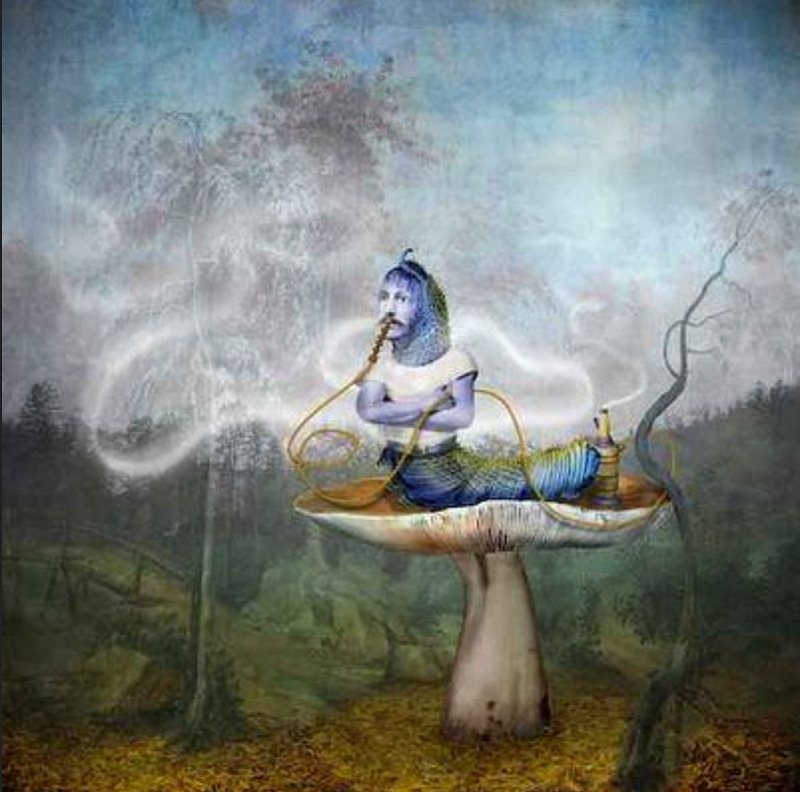
“Crystal Ship” — The Doors (2:32)
Any song that begins immediately with —
“Before you slip into unconsciousness I’d like to have another kiss Another flashing chance at bliss Another kiss, another kiss.”
Definitely needs to be included on a playlist of drug-acid-trippy drugs. Sailing away (cue that Styx song from a decade later) on a ship is one huge trope. It’s the same with a magic carpet ride or taking a train — a voyage — like CSN’s “Marrakech Express.” A drug trip is disguised as a genuine trip — from one state to another — or an altered state of reality.
This goes with literature as well. This song was the B-side of “Light My Fire.”
Jim Morrison on this song, included on their debut album from 1967, is even more cryptic in its meaning than usual:
“The days are bright and filled with pain Enclose me in your gentle rain The time you ran was too insane We’ll meet again, we’ll meet again.”
I like the paradox of bright and pain — and whatever Morrison envisions kissing here, encloses him in a gentle rain — and why was running away so insane? Literally, this could be a relationship, a woman, but I read into things much too symbolically to know that there are always levels, much like the time I disappointed my mom about what McCartney really wanted back into his life.
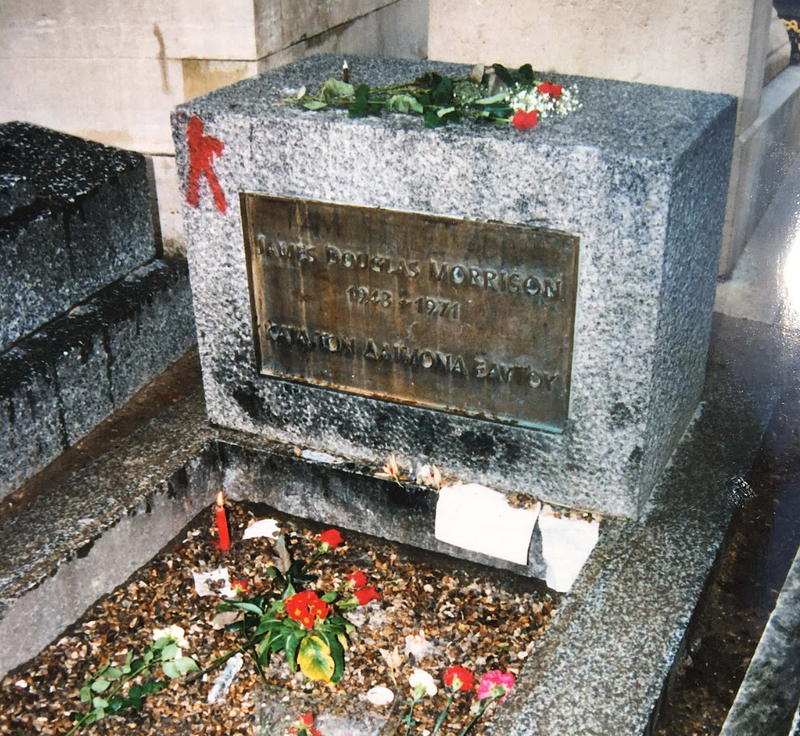
Does Morrison see his future success? The Doors becoming big? More temptations on the Crystal Ship? (It would be an overreach to talk about crystal meth — and was that even a thing, then — that Crystal Blue Persuasion — cue Breaking Bad).
But wait! I ain’t wrong. In reading the letter the Doors drummer John Densmore wrote to the LA Times on January 28, 1990:
Jim wrote “The Crystal Ship” for Mary Worbelo, a girlfriend with whom he was breaking up.
We knew that crystal (as Clayton writes) was slang for the drug Methedrine, but the song was a goodby love song . It is Justin Clayton who decided that ship meant hypodermic needle and that kiss meant drug injection (link).
So it is a break-up song as well. Justin Clayton is a rock critic. Crystal is fragile, right? Like relationships.
The crystal ship is being filled A thousand girls, a thousand thrills A million ways to spend your time When we get back, I’ll drop a line.
Dropping a line? A drug reference, perhaps? As well as, you know, a note. And of course, while others cry, he would rather “fly.” And we know that Morrison wasn’t the most faithful and a man full of fidelity to one woman?
Here are what the rock critics said:
“According to Greil Marcus, the opening lines “Before you slip into unconsciousness, I’d like to have another kiss” could be about “sleep, it could be an overdose, inflicted by the singer or the person he’s addressing; it could be murder suicide, or a suicide pact.”
Critic James Perone noted that the song’s title is open to wide interpretations, and that the crystal ship “could just as easily represent sleep as a drug trip”. He conceded that “in 1967 the latter would probably have been the more common interpretation.”
Authors David Luhrssen and Michael Larson formulated in their book that sex could be expressed as “the lucid dream of ‘The Crystal Ship’” (link)
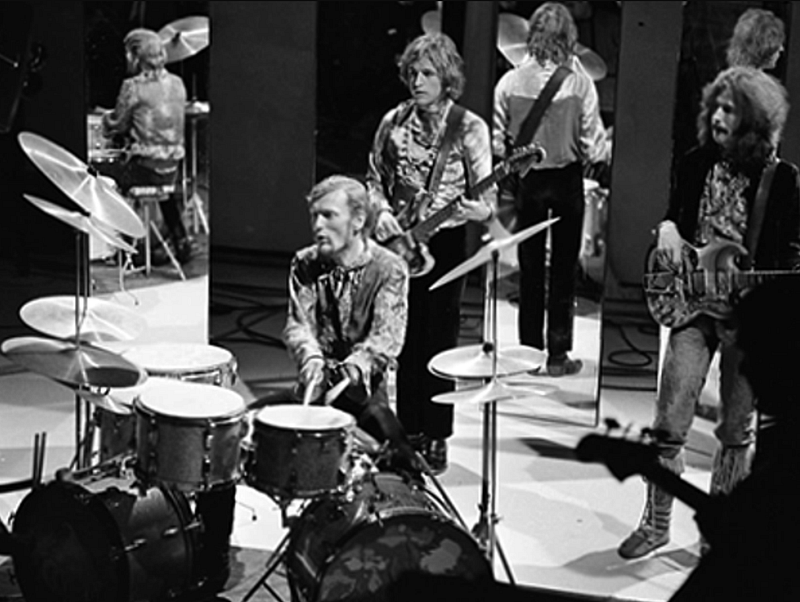

“Strange Brew” — Cream (2:46)
This song appeared on the 1967 LP Disraeli Gears. Was this an allusion to the Tory/Conservative Prime Minister of Britain during Queen Victoria’s reign — Benjamin Disraeli? By the way, he was also a novelist. Can you picture politicians also writing novels? Boris Johnson? OMG.
I only know this from reading The Victorian Age by Paul Johnson.
Back to acid, what a strange brew here. “Kill what’s inside of you.”
Does the strange brew kill? Is this a command? Where is the subject? Is it innate? Or a type of potion? Drug?
First verse:
“She’s a witch of trouble in electric blue In her own mad mind she’s in love with you With you Now, what you gonna do?”
Okay — it’s always Eve’s fault, right males? The whole femme fatale (cue The Velvet Underground and Mia Wallace from Pulp Fiction). The mad woman in the attic trope? Witchy Women (Eagles), “Black Magic Women.”
Hey — why do women even put up with so many toxic male lyrics and artists?
Or — is the witch the brew? It’s not love that will possess you, but drugs. So that dog in Anti-Drug ads is right? (Well, of course).
Second verse:
“She’s some kind of demon messin’ in the glue If you don’t watch out it’ll stick to you To you What kind of fool are you?”
Okay — I like the extended metaphor — glue and stick. But more drug references? Huffing glue? Was that done back then? Again — this demon drug will stick to you and make a mess of you. I’ve read Pete Townshend’s autobiography and know so much of what his great friend Eric Clapton went through with his drug habit — and just listen to his song “Cocaine.”
Not really the type of song that glorifies drugs, right — unlike some songs earlier on this list.
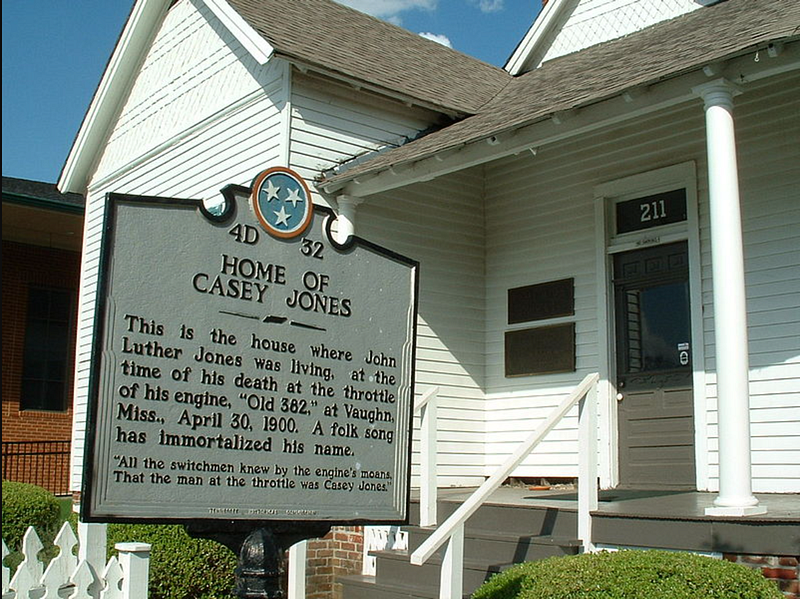

“Casey Jones” — The Grateful Dead (4:25)
Casey Jones — you better watch your speed, man. And watch out for that femme fatale in red. Here we have another “vehicle” archetype — a ship, a carpet, and now a train.
My buddy Dan does not like the Dead. The only song he likes is “Ripple.” That debate on The Dead should be recorded for a piece on The Riff.
I happen to love The Grateful Dead. This song appeared in 1970 on Workingman’s Dead. The other hit off the album is “Uncle John’s Band.” The true Dead fans would berate me for even mentioning the word “hit.”
I would have loved to have been Thomas Wolfe’s assistant while he was writing The Electric Kool Aid Acid Test about Kesey and LSD. The Dead were his garage band. Imagine.
Jerry Garcia is not too cryptic here, lyrically:
“Driving that train High on cocaine Casey Jones you better Watch your speed Trouble ahead Trouble behind And you know that notion Just crossed my mind.”
There was a real Casey Jones:
John Luther “Casey” Jones was an American railroader who was killed when his passenger train collided with a stalled freight train at Vaughan, Mississippi. He was immortalized as an American folk hero with the release of Wallace Saunders’s song “The Ballad of Casey Jones” (link).
His name is now associated with America’s steam era — and growing Industrialism.
The Dead reinterpret and retell the story:
Trouble ahead A lady in red Take my advice You’d be better off dead! Switchman’s sleeping Train hundred and two is On the wrong track And headed for you!
Is this an updated folk hero for 1970? In fact, Casey Jones was not only famous for sacrificing his life (“by keeping one hand on the brake to slow the train and one hand on the whistle to warn others who might be near the train”) and for his “whippoorwill call,” but he also “earned a reputation as an engineer who would always stay on schedule, even if it meant pushing the train to great and sometimes dangerous speeds — a trait that made him a popular employee” (link).
Here are some lyrics from that popular ballad by Saunders. Here is Johnny Cash covering Casey Jones. (of course). Love Cash! Love American folk!
A big headlight stared him in the face; Shout to the fireman, “Jump for your life.” Give my love to my children, say goodbye to my wife. Casey said, just before he died, “There’s a lot more railroads that I’d like to ride;” He said the good Lord whispered, “It’ll never be,” The Illinois Central be the death of me. Headaches and heartaches and all kinds of pain Ain’t no different from a railroad train. You can take your stories, noble and grand, All just a part of a railroad man…..(link)
Here is a video of The Dead live at the Filmore West in 1971.
“Crimson and Clover” — Tommy James and the Shondells (5:32)
Of course, as a reluctant child of the 1980s, I knew the great Joan Jett cover of this song. It was later, perhaps, that I listened to the original from 1968. The album version is longer (and better, in my opinion).
The video is such a time warp to a time that may have scared me. It’s so psychedelic. In all honesty, back in the day, 1986, at 17, I waved away a joint because I love being in full command of my faculties, and I get so riled up on music, anyway, man.
I think the video alone made this song on the “trip” list. The lyrics are not that trippy. It’s rather basic and repetitive:
“Yeah, my, my such a sweet thing I wanna do everything What a beautiful feeling Crimson and clover Over and over.”
But it’s the sustain on the voice, the bass line, and the trippy feel to the music — the clover perhaps being a euphemism for poppy fields.
Pitchfork Magazine named the song #57 from the 1960s (link). #200 was “Sunny Afternoon” from The Kinks. And #1? “God Only Knows” from The Beach Boys. Brian Wilson was a genius — and the Beach Boys too often get labeled as only a “beach party band.” That’s a shame. Pet Sounds is fuckin’ amazing (sorry for the language). I have it on LP. “Wouldn’t It Be Nice” is #7.
The name — Tommy James and the Shondells of the band sounds like a Motown group, right? My daughter picked up a vinyl pressing from the era at the great Princeton Record Exchange (in Princeton, NJ). Lots of great songs.
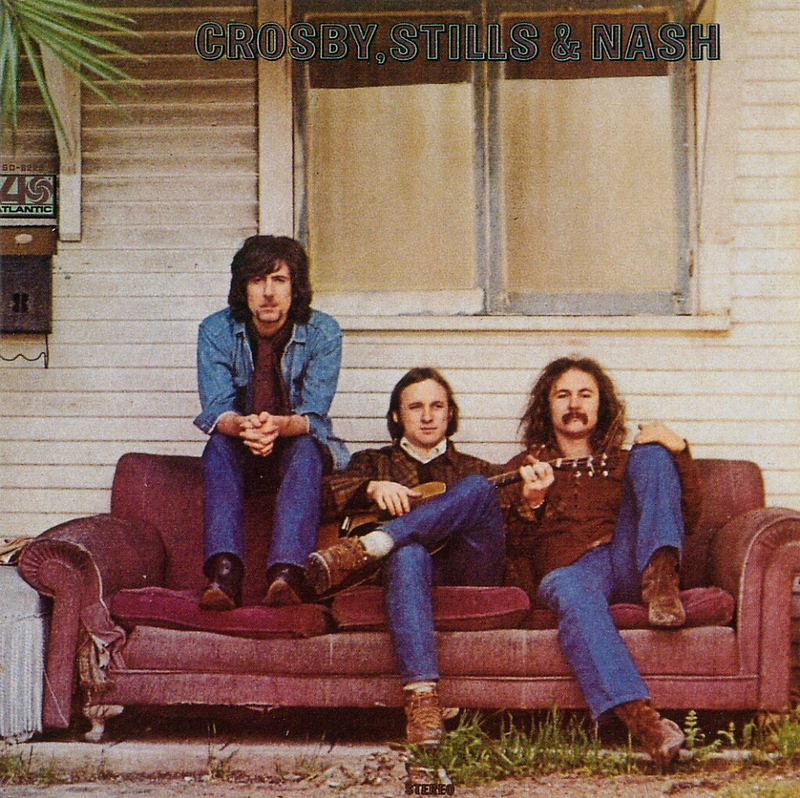
“Marrakech Express” — Crosby, Stills, and Nash (2:36)
The song always made me feel like I’m tripping. Wasn’t it created to be like that? Wasn’t Morocco a place to flee to dabble with some drugs? Well — back then. NOT NOW! And wasn’t there some damn bad movie that I refused to watch based on this great song?
I can be that way, you know. Obstinate. Here is a great live version of just David Crosby and Graham Nash on the BBC from back in the day. Who does harmonies like this anymore? Why just from the 60s?
Rob Hughes writes about the origin of the song:
By the late 60s, Morocco was fast becoming an essential stop-off point on the new hippie trail. It was a place frequented by seekers of all stripes, from travellers and the more adventurous tourists through to artists, writers, fashionistas and rock stars. They were all drawn by the exotica of this storied corner of North Africa, whose heady promise of spiritual enlightenment and hashish served to melt away the conventions of the West (link)
It’s a Graham Nash classic — one that was conceived when he took a holiday from The Hollies — and went to Morocco.
“I was in first class and there were a lot of older, rich American ladies in there, who all had their hair dyed blue,” Nash recalls today. “And I quickly grew bored of that and went back to the third class of the train. That was where it was all happening. There were lots of people cooking strange little meals on small wooden stoves and the place was full of chickens, pigs and goats. It was fabulous; the whole thing was fascinating” (Hughes).
Like many of their songs, it’s a classic narrative song with insanely vivid concrete imagery. I use the song in class when discussing the four modes of discourse.
Again — we have a “trip” on a “train.”
Because Neil Young is not on the song, I can link from Spotify. By the way, I somewhat agree with him. But that’s another essay.
Talk about vivid writing here:
“Looking at the world through the sunset in your eyes Travelling the train through clear Moroccan skies Ducks, and pigs, and chickens call Animal carpet wall-to-wall American ladies five-foot tall in blue.
Take the train from Casablanca going south Blowing smoke rings from the corners of my mouth, my mouth Colored cottons hang in the air Charming cobras in the square Striped djellebas we can wear at home Well, let me hear ya now.”
This song does make me envision “blowing smoke rings from the corners of my mouth, my mouth/Colored cottons hang in the air.” And talk about alliteration!
By the way:
“a djellaba or jillaba (/dʒɪˈlɑːbə/; Arabic: جلابة; Berber: aselham), also written gallabea, is a long, loose-fitting unisex outer robe with full sleeves that is worn in the Maghreb region of North Africa” (link).
(I recently saw David Crosby live with my wife three years ago — and it was a fun time, but what a cantankerous old fart).

“25 or 6 to 4” — Chicago (4:49)
My brother hated when I told them the meaning of the lyrics. He just wanted to imagine what the math formula was about — using one’s imagination. But a deep read makes one aware of the drug references without needing to know the drug recipe for LSD.
It was composed by keyboardist and singer Robert Lamm. This comes from 1970 and Chicago II — with such classics as “Colour My World” and “Make Me Smile.” But this is THE song.
In his book LSD — My Problem Child, chapter Lysergic Acid and Its Derivatives, Albert Hofmann states;
“… In 1938, I produced the twenty-fifth substance in this series of lysergic acid derivatives: lysergic acid diethylamide, abbreviated LSD-25 (Lyserg-säure-diäthylamid) for laboratory usage. …” (Calderon).
The drug trip would usually last from 6 pm to 4 am. About ten hours.
Terry Kath is such a beast on the song. “Guitar World ranked this at #22 on their 2015 list of best wah solos of all time in praise of Terry Kath's use of a distorted, wah-driven guitar line during the second half of his guitar solo” (link).
Singer Cetera is also great on bass. And that horn section!
“Waiting for the break of day.” “Should I try to do some more?” “Giving up I close my eyes.” “Sitting cross-leg on the floor.” “Staring blindly in space.” “Wanting to just to stay awake.” “Wondering how much I can take.”
Hello — yes — this is the Drug Help Line. What is your current state of mind?
“Spinning room and sinking deep.” “Searching for something to say.”
LSD-25? Yes. Most likely.


“2000 Light Years From Home “— The Rolling Stones (3:46)
The Stones get heat from trying to copy or emulate Sgt. Pepper from The Beatles. I get it. Even The Beatles knew it was time to “Get Back” to the blues of rock and roll.
Their Satanic Majesties Request (1967) — yeah, the same year as that “little” album from The Fab Four.
But this album is actually good — and has some great tunes. This is one of them. “Like a Rainbow” is also very good. Is it classic Stones? No. But does it deserve haters? No.
It’s also great for this list, man.
It’s the most psychedelic the Stones will ever get? Why are we 2,000 light years from home? Have we taken a trip? A bad trip? It’s very spacey — the sound of a fun-house-planetarium-insane-asylum.
We have Jagger on maracas, we have a fuzz bass, a Mellotron, an electric dulcimer, bass, an oscillator, and Richards on backing vocals. The Mellotron was an early synthesizer. Brian Jones, the lead guitarist, played that (link).
“Sun turnin’ ‘round with graceful motion We’re setting off with soft explosion Bound for a star with fiery oceans It’s so very lonely, you’re a hundred light years from home.”
Bell flight fourteen you now can land Seen you on Aldebaran, safe on the green desert sand It’s so very lonely, you’re two thousand light years from home It’s so very lonely, you’re two thousand light years from home.”
Space flight is incremental — 100, 600, 1000, and then 2000 light years. Talk about hyperbolic loneliness! Of course, in 1967, space travel was a huge topic. In two years, we would be on the moon — without drugs.
Mick Jagger said he came up with the song while in Brixton prison on drug charges (link).
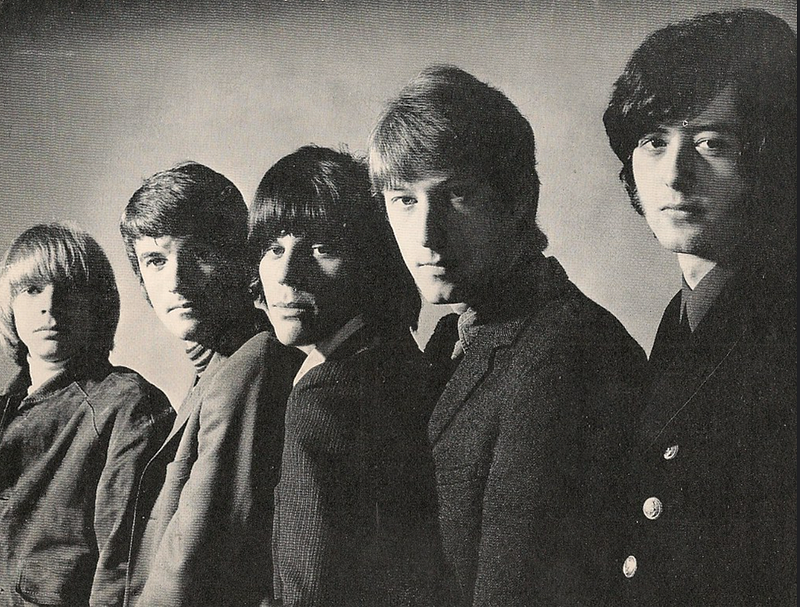
“Over Under Sideways Down” — The Yardbirds (2:22)
For some reason, this is also listed as Children’s Music. What? Like Alice in Wonderland? Or “Octopus’ Garden.”
Is there another band that spawned three of the best guitarists of all time? Jimmy Page #3, Eric Clapton #2, and Jeff Beck #5. This is according to Rollingstone Magazine.
This was Jimmy Page’s band before that little band called Led Zeppelin who John Entwistle of The Who quipped would go down as a “Led Balloon.”
“For Your Love” and “Heart Full of Soul” are better songs, but this is also good and doesn’t get much air time. In fact, I first heard it on LP from an album called More Electric 60s. I still have it.
I also like their cover of “Train Kept a Rolling.” Doesn’t every band cover that?
This is one of the earliest songs (1966) on this “trip mix.” It’s from the LP Roger the Engineer. It’s also very trippy. Lyrically and musically. I was hooked when I first heard it in my teens. It’s also, like “Tomorrow Never Knows” from John Lennon on Revolver, that seems to come out of nowhere, ushering in a New Age of “Immorality” and social upheaval and cultural shifts in mores.
“Hey! Hey! Hey! Hey!
Cars and girls are easy come by in this day and age Laughing, joking, drinking, smoking Till I’ve spent my wage When I was young people spoke of immorality All the things they said were wrong Are what I want to be
Over under sideways down (Hey) Backwards forwards square and round (Hey) Over under sideways down (Hey) Backwards forwards square and round.”
When will it end? When does the trip end? I don’t know which side is up or down? Talk about a “Go Ask Alice” vibe here.
If you’re interested in the 13 tracks that feature Jimmy Page before Led Zeppelin, read this from William Goodman for Billboard. What shocked me the most — Petula Clark — “Downtown” (1964). A song that is also so damn good, but not trippy.
And guess what? The breakout hit for The Who — “I Can’t Explain.”
“Spill the Wine” — Eric Burdon and War (4:06)
I'm stupid enough to have almost missed this great song for this list. My buddy Dan Norbury, fellow writer and music dude said, “Where is ‘Spill the Wine.” Oh, my. Yes — Eric Burdon, now Animal-less and recruited for War.
It’s a multi-ethnic group that really knew how to groove. So much hip funk!
The lyrics and the melody are perfect for an acid trip sans acid. “Low Rider” and “Why Can’t We Be Friends” have more “listens” than “Spill the Wine,” but I do like this song better. It was also featured in Boogie Nights if you recall.
The band lasted only two years with two albums.
It’s a narrative song — I love narrative songs, like “Tangled Up in Blue” from Dylan and “She’s Leaving Home” from The Beatles. These songs tell a story. The song is categorized as R&B/Soul/Blues/Rock.
That’s about right. It came out in 1970 — right before a big change in rock. I think of 1971–72 (Zeppelin IV, Who’s Next, Dark Side of the Moon) as when rock veered away from the influence of San Francisco and LSD and acid trips, and even some protest music.
And Eric Burdon on cowbell! So much cowbell, man. The video is a trip!
I was once out strolling one very hot summer’s day When I thought I’d lay myself down to rest In a big field of tall grass I laid there in the sun and felt it caressing my face As I fell asleep and dreamed I dreamed I was in a Hollywood movie And that I was the star of the movie This really blew my mind.
For some reason, I’m thinking of Dorothy and her friends skipping through a drug poppy field and then suddenly getting sleepy. What did Dorothy dream? Whatever it was — especially being in Oz, like a Wonderland, must have also “really blew her mind,” man.
Of course, he awakes naked to the world on a mountain in the hall of great mountain kings in front of all sorts of women — “long ones, tall ones, short ones, brown ones, Black ones, round ones, big ones, crazy ones.”
Then one comes forth:
I could feel hot flames of fire roaring at my back As she disappeared, but soon she returned In her hand was a bottle of wine In the other, a glass She poured some of the wine from the bottle into the glass And raised it to her lips And just before she drank it, she said
Take the wine, take that pearl Spill the wine, take that pearl
Ok — that surprised me; I always thought Burdon sang: “take that girl,” which seemed rather toxically male. But it’s take that pearl. Much better lyric! Symbolic? What is that pearl? A drug? A woman’s virginity? A precious stone — like the Lord of the Rings- thing? IDK, man.
Whatever — what a groove. What a beat. I love the percussion — the African bongo, the flute, the bass, harmonica, and cowbell. One commentator even noted the “ghost notes” from the drummer — Such a great composition. So tight.
It debuted on the Billboard charts at #99 and went to #3 on 1970/08/22 (link). Writing this makes me want to explore this whole album, which seems to have been lost to the annals of great music.
“Incense and Peppermints” — Strawberry Alarm Clock (2:47)
Talk about an over-the-top Zeitgeist piece! What is the color of time? Well, 1967, obviously. Not ’66 or even ’68. How about these lyrics:
Incense and peppermints, meaningless nouns Turn on, tune in, turn your eyes around Look at yourself, look at yourself, yeah, girl Look at yourself, look at yourself, yeah, girl, yeah, yeah
Good sense, innocence, cripplin’ mankind Dead kings, many things I can’t define Occasions, persuasions clutter your mind Incense and peppermints, the color of time.
What did Timothy Leary say? Tune in. Drop out.
Even in 1968, The Moody Blues claimed Timothy Leary was dead:
Timothy Leary’s dead No, no, no, no, he’s outside, looking in.
This era created such great music. This one, however, is not one of them. Would I turn it off? No. Would I want to listen to it over and over and over? Hell, no, man. It’s a period piece.
Can you imagine “Incense and Peppermints” spent 16 weeks on the Billboard chart, reaching the #1 spot on November 25, 1967? (link). What?
In diving into its history, it’s quite a story, though. It was initially conceived as an instrumental by band members Mark Weitz and Ed King. Then it gets weird, other than being used on the Austin Powers Soundtrack:
“As legend has it, none of the actual bandmembers sang lead on the hit single; the singer was in fact a vocalist named Greg Munford, who was attending the session as a visitor. The track was originally issued by Thee Sixpence on the regional All-American label. By the second pressing, however, the band’s name had changed to Strawberry Alarm Clock. Sensing the possibility of a national hit, they were scooped up by the MCA Records subsidiary Uni and given the go-ahead to commence recording this, their debut LP. Much of the band’s sound is due at least in part to the writing styles of George Bunnell (bass/vocals) and the uncredited Steve Bartok (flute/vocals)” (link).
If someone named Patton303 is to be believed in the comment section of the video, which is a rather lengthy discussion of the song:
“John Carter wrote some lyrics but the band thought they were dumb and embarrassing so nobody would sing it. A 16 year old friend of the band named Greg Munford just happened to be in the studio that day.”
So does the two-source rule hold up here? I think so. If this type of psychedelic bubblegum appeals to you, check out what may be the other song worth listening to — and the word worth isn’t worth much, especially with this title: “Rainy Day Mushroom Pillow.”
I think that’s more Alice again, not an Anti-War Mushroom cloud ironic reference.
Here is my Spotify playlist for all 20 songs: