
It’s Not LGBTQ People’s Duty to Come Out and Change the World
The importance of allyship and why educating the masses on right from wrong is everybody’s responsibility.
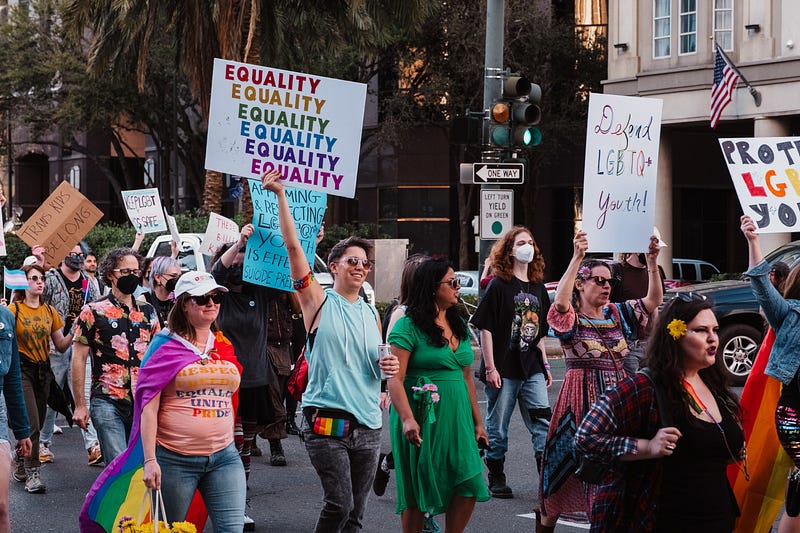
Have you ever been tasked with a responsibility that is objectively bigger than what you’re capable of?
Maybe you were left alone to babysit a group of rowdy infants at the pool because you’re the only adult who can swim, or your grandma volunteered you to make the entire Thanksgiving dinner because you once casually mentioned a desire to get back into cooking.
A responsibility you didn’t ask for, nor do you necessarily want, but one for which people believe you’re the most fitting candidate so you effectively get nominated on everyone’s behalf.
Yeah, that.
That’s how it feels when, as a queer person, straight people expect you to rectify the state of society by educating the homophobia out of it. That’s also how it feels as a person of colour expected to turn the tides of racism. Or as a woman expected to scream and cry hard enough to lower the rates of femicide. And a long et cetera, no doubt.
It’s an overwhelming task for a minority to tackle the masses.
It’s like standing at the start of the ultramarathon with half a packet of energy gel and the beginnings of a blister forming — sure, you can attempt it, but it’s going to be painful and exhausting and you’re going to bleed.
I came across this YouTube video by Farha Khalidi earlier today that really resonated with me.
She talks about how homophobic her elderly grandmother is, and when she mentioned that on Tiktok, she received an influx of comments like:
“I hope you check her on that, Farha”
“I hope you’re not a f*****g bystander little b***h, Farha”
“It’s your job to educate her”
To which she responds:
I am a bystander little b***h. What are you talking about? She’s 84. I can’t even teach her to not give out her social security number and mother’s maiden name on the phone, let alone about Dylan Mulvaney.
Anyone who’s ever been expected to right the wrongs of their family or community knows what that feels like.
You suddenly become a human tourniquet expected to stop the negative biases of society from bleeding out.
It’s a heavy burden.
And it’s a battle — one that you have to be very considerate about signing up for because life on the front line is far from easy.
Farha’s point is that her grandmother is ill-equipped to be “converted” out of her prejudice. She’s been entrenched in her beliefs for 84 years and, considering she’s bedridden and unlikely to come into contact with any queer or easily influenced people, she’s not a case worth fighting for.
And that’s an important distinction to make. While I don’t believe you should buckle at the first sign of hard work, it’s important to be realistic about the potential outcome of your decisions.
Of course, there are cases that come out of left field and take you pleasantly by surprise, such as when I told my dad that I was gay. But those instances are a lot fewer and farther between than is ideal.
Miriam Margolyes, iconic British actress and long-time lesbian, speaks very candidly about regretting coming out to her parents because she believes the stress of it gave her mother a stroke.
She wrote in her memoir, “I had caused the person I loved most in the world a pain she could not bear. It was a horrendous time and I was very unhappy. I knew I couldn’t change what I was; I should not have told them.”
A declaration like this will likely rub a lot of people up the wrong way, however, I definitely sympathise with her sentiments.
My ex-girlfriend was out to everyone in her immediate family except her mother. She was certain, given that her mum is deeply religious, that it would bring about a tremendous amount of turmoil for her.
She knew that it would stress their current relationship potentially to breaking point or even beyond, and that it would drive a very divisive wedge into the existing family dynamic.
So, she concluded that she didn’t need her mother’s approval or validation of her sexuality. She wasn’t willing to risk the peace, and the likelihood of her mother being comfortable with her sexuality was zero or thereabouts.
Uncomfortable with the potential outcome she felt she’d accurately predicted, she chose accordingly.
As someone who lost half of my family when I came out, to that I say:
Fair enough.
There should be no expectation for queer folks to be crusaders just because we’re queer, in my opinion.
What Farha’s commenters don’t realise is that while you might positively impact a relatively small number of people and successfully encourage them to reconsider their prejudices, you’re not going to be able to eradicate the problems in society that have become bigger than the sum of all of us together.
This is an endeavour that requires strategy and collaboration. Not to mention careful consideration.
“There is always strength in numbers. The more individuals or organizations that you can rally to your cause, the better.” — Mark Shields
So when it comes to Farha, my ex, and all those who don’t wish to embark upon that feat, I understand. Everybody’s situation is unique and we all have a different threshold for what we’re comfortable or capable of undertaking.
Not every LGBT person wants to be Here, Queer, and Activist of the Year.
Some just want to live their lives peacefully, without being the mouthpiece for a community typically treated with violence and derision by those in opposition.
It’s here that I think allyship needs to step in and do so vocally.
The likelihood of influencing bigotry out of society increases exponentially when it doesn’t come from the thing the bigots actively despise.
Pitiful as it may be, there’s a greater chance of the message being heard and internalised if it comes from outside those benefitting directly from the cause. Advocacy is convincing, and allies have influence.
The last thing the average homophobe wants to do is engage in a tête-à-tête with a queer person over what’s right and what’s wrong.
However, an ally stands a much greater chance.
According to this Gallup poll, only 7.1% of US adults identify as LGBTQ. Allies, I’d imagine, are many more.
As appreciated as rainbow pins, flags, and bumper stickers are, speaking up against prejudice is where the most impact lies. Advocacy from those who support the LGBTQ community is the most powerful force behind the changes we all wish to see moving forward.
Of course, I don’t encourage anyone to put themselves in harm’s way and I urge everyone to act with caution, however, if ever there’s an opportunity to get your voice heard as a supporter, I think it should be capitalised upon.
You’re less likely to get assaulted as an ally defending a queer person than as a queer person defending themselves.
I know that using your identity to make a political statement is a hot topic nowadays, especially given how much exposure is available to us. That’s why, sadly, Heartstopper actor Kit Connor found himself forced to come out as bisexual.
But while I believe it’s important to encourage those who are willing, it’s equally important not to shame those who aren’t.
Not frontloading your sexuality for whatever reason is a person’s prerogative. It’s not necessarily a marker of cowardice or shame. And honestly, even if it is, who cares? There’s nothing wrong with being afraid. Hell, there are many things in life that terrify me, too.
One thing I can’t stress enough is the importance of collaboration — of banding together and using teamwork to strengthen alliances.
Allies and queer people. POCs and white people. Men and women.
Fighting together, whether everyone is visible or not, is how we can really make a difference.
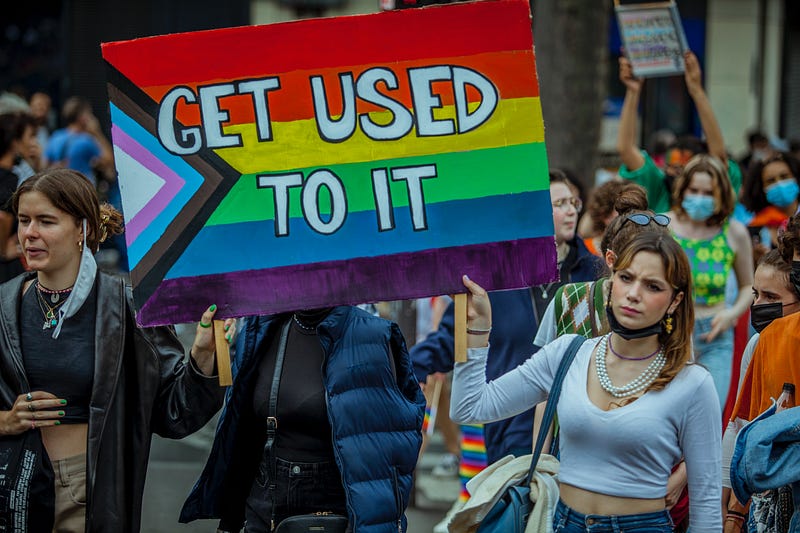
Natalie S. Ohio is a British-Nigerian LGBTQ writer who enjoys writing about the queer experience. For more content like this, check out her other LGBTQ+ articles here!
Thank you very much for reading! If you have any questions or comments, please feel free to leave them below.
If you enjoyed this read and are feeling generous, please consider buying me a coffee as a token of your appreciation. I will send you positive vibes with every single sip. ☕🌸