avatarAli Alzahrani, M.Sc., Editor

Free AI web copilot to create summaries, insights and extended knowledge, download it at here

1662

Abstract

that testing on our closest animal relatives, like monkeys, would be a safe option instead. Monkeys are like us, so they may help scientists learn without risking human lives.</p><p id="2fd3">But testing on monkeys could also hurt them or even cause them to die. Is this okay? Moral? Or should we protect monkeys, too, since they could get sick? It’s a hard choice with good arguments on both sides.</p><p id="b921">Some people say that humans are more important, so testing on monkeys is acceptable. But others think that animals can feel pain and fear, just like us, so we shouldn’t hurt them if we can avoid it. I am not sure what the right answer is either!</p><p id="2bfc">Philosophers have looked at this question too. One idea they have is called “moral status.” People with moral status have their needs and feelings thought about when they make important choices that affect them.</p><p id="c58d">In the past, most philosophers believed only humans had moral status. But now, some think animals may have it, too. Animals can feel happy and scared, just like people. These philosophers believe we should consider how our choices might affect animals as well.</p><p id="acae">Other philosophers say anything that can feel pain deserves moral status. Since animals clearly feel pain, this would include them. Thinking this way means we have to care about more living things than humans.</p><p id="8e6e">Our closest relatives, monkeys, are brilliant and social-like people. They definitely feel pain, too. Yet many still think a human life is worth more than a monkey’s. But is this always true?</p><p id="cfa7">Is it okay to test on monkeys if it saves fi

Options

ve people? What about 100 monkeys to save one person? There’s no perfect answer. And with smallpox, tests on monkeys may not even help cure it!</p><p id="118c">These are big, complicated questions. I am still learning too. Most importantly, we discussed this issue kindly and respected each other’s perspectives. What do you all think? I would love to hear your views, too!</p><div id="a3f1" class="link-block"> <a href="https://medium.com/subscribe/@aliwritesaz?source=publishing_settings---user_settings----------------------------------"> <div> <div> <h2>Get an email whenever Ali Alzahrani, M.Sc., Editor publishes.</h2> <div><h3>Get an email whenever Ali Alzahrani, M.Sc., Editor publishes. By signing up, you will create a Medium account if you…</h3></div> <div><p>medium.com</p></div> </div> <div> <div style="background-image: url(https://miro.readmedium.com/v2/resize:fit:320/0*3gUPFYEoRdkm7nxm)"></div> </div> </div> </a> </div><h1 id="7596">Author’s Note</h1><p id="b867">Thank you for reading my story. Here is some information about <a href="https://readmedium.com/editorial-bio-of-ali-alzahrani-b78c1a23fcbc?sk=1150094bb674aaa7701f61972f40b86c"><b>my background</b></a>. 🙏Consider sharing and participating in the conversation if this content speaks to you. For any queries, collaborations, or comments, reach out to me at <a href="https://medium.com/@aliwritesaz/[email protected]"><b>[email protected]</b></a>. Thank you for supporting my work!</p></article></body>

Philosophy

It May Take 100 Monkeys to Save One Person!

The story of the scary sickness of Smallpox
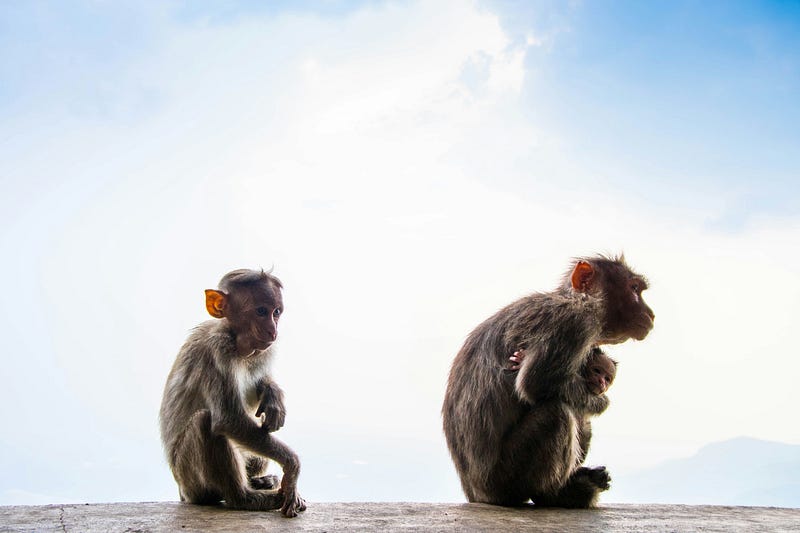
Photo by Shashank Sahay on Unsplash

Whose lives are more important, humans or other animals? I wrote an article titled: “Would You Save Your Pet or Your Friend’s Life,” which discusses our human bias and how it takes over some of our complicated decisions (Read Here). That was not the point. Instead, I got a comment on that article from one of my readers saying, “I am sorry for me. Human life has to come first, no matter the pet.” This made me wonder why we consider human life more important than other creatures, such as animals.

To find an answer, I looked it up. I found that a long time ago, there was a scary sickness (virus) called smallpox. It made lots of people very sick. Thankfully, doctors found medicine to stop this sickness from spreading.

But some of this sickness is still in labs, just in case. The government worries evil people may use it to hurt people. They want tests to make new medicines just in case smallpox comes back.

But testing on humans could make them very sick, too. So scientists thought that testing on our closest animal relatives, like monkeys, would be a safe option instead. Monkeys are like us, so they may help scientists learn without risking human lives.

But testing on monkeys could also hurt them or even cause them to die. Is this okay? Moral? Or should we protect monkeys, too, since they could get sick? It’s a hard choice with good arguments on both sides.

Some people say that humans are more important, so testing on monkeys is acceptable. But others think that animals can feel pain and fear, just like us, so we shouldn’t hurt them if we can avoid it. I am not sure what the right answer is either!

Philosophers have looked at this question too. One idea they have is called “moral status.” People with moral status have their needs and feelings thought about when they make important choices that affect them.

In the past, most philosophers believed only humans had moral status. But now, some think animals may have it, too. Animals can feel happy and scared, just like people. These philosophers believe we should consider how our choices might affect animals as well.

Other philosophers say anything that can feel pain deserves moral status. Since animals clearly feel pain, this would include them. Thinking this way means we have to care about more living things than humans.

Our closest relatives, monkeys, are brilliant and social-like people. They definitely feel pain, too. Yet many still think a human life is worth more than a monkey’s. But is this always true?

Is it okay to test on monkeys if it saves five people? What about 100 monkeys to save one person? There’s no perfect answer. And with smallpox, tests on monkeys may not even help cure it!

These are big, complicated questions. I am still learning too. Most importantly, we discussed this issue kindly and respected each other’s perspectives. What do you all think? I would love to hear your views, too!

Author’s Note

Thank you for reading my story. Here is some information about my background. 🙏Consider sharing and participating in the conversation if this content speaks to you. For any queries, collaborations, or comments, reach out to me at [email protected]. Thank you for supporting my work!

Philosophy
Humanity
Life
Morality
Writing
Recommended from ReadMedium