
It doesn’t matter who wins in 2020–75% of voters won’t support the winner.
The President doesn’t represent the country and hasn’t in a long time, but now whoever wins will probably also be called a fraud.
Since the election of the 45th president of the United States many millions of Americans have been loudly, or at least with handclaps 👏 and ALLCAPS online, denouncing Donald Trump. This crass person does not represent us! America is not Trump’s America.
But neither was this Obama’s America. Or Bush’s. Or Clinton’s. For every election that I’ve been eligible to vote in (that’s ’96, if you must know), the results were functionally irrelevant when it comes to representing the wishes, let alone the character, of the country. If you’ve ever thought that your vote doesn’t matter, you’re right: whoever wins, 75% of voters didn’t vote for the president. What does that mean?
Average voter turnout in presidential elections over the last 60 years is 55%. Turnout in 1960 was 63%, the highest in over a century and almost the high water mark of the 20th century (you’d have to go back to 1908 to get the peak of 65%). The 21st century so far has not bucked this trend, although we saw a small jump in 2008 to 58%. Basically half of America doesn’t vote and we’ve been like this for over a half century. An election in which only half of the country shows up to vote may not be a shining example of democratic integrity.
That only half of eligible Americans cast ballots is not necessarily cause for alarm — a proverb about cooks and broths comes cynically to mind — however the strength of American democracy is further questioned when we look at who we’re voting for. The same pachyderms and jackasses, in the same quantities, every time.
The popular vote in every election since 1984 has ended up in more or less a fifty/fifty split, along major party lines. The winner declares victory with no more than an 8% margin of victory, usually just between 2–4%. No matter who wins, the end result is that 75% of eligible voters did not cast their ballot for that person. A president who sails to office with only 55% of the vote is captain of a ship in which half the crew thinks they’re unqualified and most of the passengers feel ignored.
The whole point of the democratic process is that leaders will govern with the consent of the people. Elections aren’t just the process by which we choose our executives and lawmakers, it’s also how their roles and subsequent rules are legitimized. The process demands respect because the process respects those of us who make it happen. It’s hard to argue that you represent anything when only 25% of voters put you in office.
These are historical problems that we’ve been dealing with for many decades but five elections ago a new twist developed. This century began with an election that set the stage for a problem that every president in the new millennium so far has faced and, in my opinion, poses the greatest challenge to the continuity of our system. Besides being voted in by only 25% of the voters, every American president in the 21st century was illegitimate for a large minority of the country.
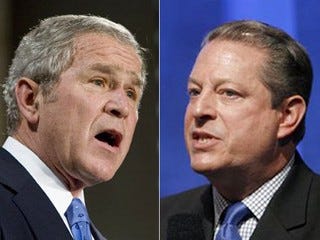
In 2000, the election was famously contested and George W. Bush was dogged by constant undermining of the legitimacy of his presidency. In 2008, Barack Obama suffered one of the more heinous accusations of political illegitimacy when his citizenship itself was questioned. Current President Donald Trump was dealing with suggestions of impeachment for colluding with a foreign government even before he was inaugurated.
Not my president? Every president for the last nineteen years has been called a fraud at best, a subversive threat to the nation at worst. This has happened before, many presidents were best with accusations of illegitimacy, corruption, or even treason.
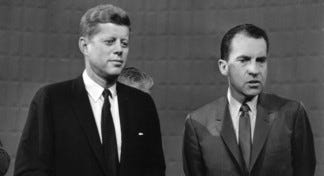
John Tyler, was famously called ‘his accidency’ after becoming president upon the death of William Henry Harrison. Andrew Jackson was loud in denouncing the 1824 election as the result of corruption. Lincoln’s election was so contested it fractured the country and started the Civil War. The 1876 election was so compromised that the only way Rutherford Hayes could enter office was to end Reconstruction and hand the South to corrupt racists.
But this is the first sustained period of pervasive belief that the person in the Oval Office does not belong there. Every president in this century so far, does not enjoy universal recognition that they won the office in a fair contest. This is new. This is dangerous. We need to move past this.
Maybe recognizing that the president is not a representative of us is a good first step. We can fix our democracy only if we recognize the problems. That Trump was elected is not the problem, that we swing so wildly from Bush to Obama to Trump is not the problem. That they were each elected by less than 25% of eligible voters is a problem. That so many people think the winner is illegitimate is a problem.
We can fix this though.
By ceasing the hyperbole. If your candidate loses, it isn’t the end of the world. No, the president doesn’t represent the country. He never really has as far as basically your lifetime is concerned. When your team loses, it doesn’t mean the fix is in. Whoever wins won’t have a mandate, regardless of whatever the electoral college says or the popular vote results are. We need to get over ourselves, accept defeat graciously, and maybe encourage more people to vote.
Thomas Brown is a history teacher and recovering political consultant hiding out in the American South. He is also managing editor of The Swamp and has been published in The Bipartisan Press, Alaska Native News, GEN, Human Events, Times of Israel, Dialogue & Discourse. Argue with him on Twitter: @reallythistoo.
Originally published at http://intheswamp.wordpress.com on May 1, 2019.