avatarRoo Benjamin

Free AI web copilot to create summaries, insights and extended knowledge, download it at here

2483

Abstract

eality, it’s about the boys’ clubs not being willing to let go of power.</p><p id="c66c">A reckoning is happening right now with international cricket, whereby the International Cricket Council (for men’s cricket) took control of the International Women’s Cricket Council in 2005.</p><p id="345d">The merger of the men’s and women’s cricket councils didn’t play out on the field. It was a financial decision to combine resources but keep the two genders separate. And yet power lies in a membership where <a href="https://www.icc-cricket.com/about/members/about-our-members">over ninety percent are men</a>.</p><p id="579d">History knows that it was women who created the first Cricket World Cup in 1958, with men copying a couple of years later. And yet the game for women has been squandered since the merger. There is now talk about de-merging, so women can gain greater control over the game and rebuild it.</p><p id="076c">If women had more power in the International Cricket Council, I wonder whether de-merging would even be the solution. I can imagine finding a more creative and inclusive approach. Perhaps even having mixed teams as part of the future of cricket.</p><p id="e280">Physical or biological differences are often cited as the biggest concern. And yet surely — if this mattered at all — physical differences would have the greatest impact in contact sports.</p><p id="df55">One could argue that there are few sports with as much contact as boxing or martial arts — both having a strong history of mixed-gender participation.</p><figure id="7476"><img src="https://cdn-images-1.readmedium.com/v2/resize:fit:800/1*mdezsHRroSGh9udoE3HSgg.jpeg"><figcaption>Photo by <a href="https://www.pexels.com/photo/group-of-people-wearing-uniform-sitting-on-roadside-5081178/">Thao Lee</a></figcaption></figure><p id="e6ca">Perhaps, in part, this is a Western thing. Martial arts uniforms have always been unisex. In many forms, classes are taught in mixed settings and combat competitions increasingly see men and women compete.</p><p id="7daf">If sporting bodies aren’t quite ready to let go of the binary, then why not at least create a third non-gendered or mixed-gender category. Allow athletes to nominate and participate alongside other athletes of any gender.</p><p id="54fd">Sure, this doesn’t solve the issue of a trans woman who wants to — rightfully — participate alongside other women. Or the trans man who wants to participate alongside men.</p><p id="d478">And o

Options

f course there will be those tired debates about locker rooms. But we’ve been sharing bathrooms on planes since the beginning and no one seems to care.</p><blockquote id="cf10"><p>“It has to be possible to do it… transgender people should have access to sport. Sport should be accessible to everyone.” <i>— Maria Tourpakai</i></p></blockquote><p id="3a08">Sports aren’t static. Every year sporting bodies change or evolve rules to “improve” the game. It’s time for sports to evolve towards inclusivity.</p><p id="629e">Most public resistance to change has not been from athletes, but from sporting organisations.</p><p id="4d48">If sporting bodies can’t keep pace of the natural movement of social change, then perhaps new competitions are created to give sportspeople power and choice — including over how they identify.</p><p id="99a3">The ideas in this article aren’t some fix-all solution. My friends know I am the last person to be having an opinion on sport. But you bet I’m going to keep on dreaming up futures with more creativity and inclusion.</p><p id="961b">What I do know for sure is that we need to do better.</p><div id="a4c5" class="link-block"> <a href="https://readmedium.com/our-queer-future-is-already-here-f778c3fc4108"> <div> <div> <h2>Our Queer Future Is Already Here</h2> <div><h3>It’s just not very evenly distributed</h3></div> <div><p>medium.com</p></div> </div> <div> <div style="background-image: url(https://miro.readmedium.com/v2/resize:fit:320/1*JDrLaqSCPL_u-rLCIxDGcw.jpeg)"></div> </div> </div> </a> </div><div id="63c3" class="link-block"> <a href="https://readmedium.com/why-i-choose-they-them-pronouns-and-the-power-of-including-yours-in-your-writing-and-profile-6926cd9baf66"> <div> <div> <h2>Why I Choose They/Them Pronouns and the Power of Including Yours in Your Writing and Profile</h2> <div><h3>And it’s not the reason you probably expect (hint: it’s much more than a social-conscience thing)</h3></div> <div><p>medium.com</p></div> </div> <div> <div style="background-image: url(https://miro.readmedium.com/v2/resize:fit:320/0*H0KF7jvJBEQzdA28)"></div> </div> </div> </a> </div></article></body>

Isn’t It About Time We Considered Genderless Sport?

Current debates around trans participation are so offensively uncreative and exhausting
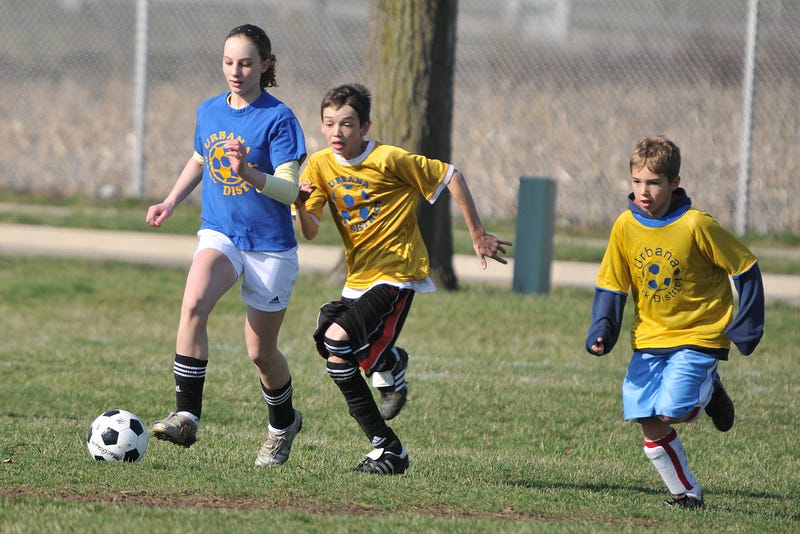
Photo by Code Slinger | Courtesy of Flickr

I’m exhausted. Every night, it’s the same story. I switch on the news and some clown is trying to defend why they are blocking trans people from participating in sports.

And then politicians weigh in, as if they have a moral right to an opinion.

Of course, they clumsily try to hide behind some kind of argument and call it science. But these arguments only cause harm and division.

Have we lost the art of creativity?

Can we not consider non-binary solutions to sport?

How about mixed-gender relays where teams are made up of, well, mixed genders? You could apply this to most non-contact sports — gymnastics, diving, skating, running, swimming, equestrian, shooting, and track and field.

Athletics communities have no problem with this. From fun runs and nude swims to triathlons and Iron “man” races— people seem to do okay participating alongside each other.

Tennis has been doing this for years with mixed doubles. When I say “years,” I mean since the Summer Olympics in 1900.

For crying out loud, why does gender need to be a prerequisite for participation? Most sports would be a whole lot more appealing if they included diversity.

“We cannot fit a multi-gender world into a two-gender system of sports.” ― Abhijit Naskar, Hometown Human: To Live for Soil and Society

So many international sporting organisations are run by men who seem to lack the creativity required to think beyond the binary. In reality, it’s about the boys’ clubs not being willing to let go of power.

A reckoning is happening right now with international cricket, whereby the International Cricket Council (for men’s cricket) took control of the International Women’s Cricket Council in 2005.

The merger of the men’s and women’s cricket councils didn’t play out on the field. It was a financial decision to combine resources but keep the two genders separate. And yet power lies in a membership where over ninety percent are men.

History knows that it was women who created the first Cricket World Cup in 1958, with men copying a couple of years later. And yet the game for women has been squandered since the merger. There is now talk about de-merging, so women can gain greater control over the game and rebuild it.

If women had more power in the International Cricket Council, I wonder whether de-merging would even be the solution. I can imagine finding a more creative and inclusive approach. Perhaps even having mixed teams as part of the future of cricket.

Physical or biological differences are often cited as the biggest concern. And yet surely — if this mattered at all — physical differences would have the greatest impact in contact sports.

One could argue that there are few sports with as much contact as boxing or martial arts — both having a strong history of mixed-gender participation.
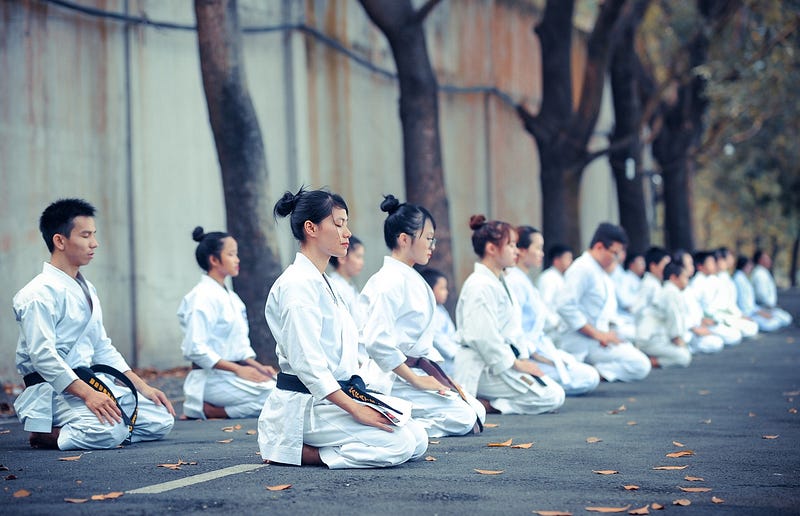
Photo by Thao Lee

Perhaps, in part, this is a Western thing. Martial arts uniforms have always been unisex. In many forms, classes are taught in mixed settings and combat competitions increasingly see men and women compete.

If sporting bodies aren’t quite ready to let go of the binary, then why not at least create a third non-gendered or mixed-gender category. Allow athletes to nominate and participate alongside other athletes of any gender.

Sure, this doesn’t solve the issue of a trans woman who wants to — rightfully — participate alongside other women. Or the trans man who wants to participate alongside men.

And of course there will be those tired debates about locker rooms. But we’ve been sharing bathrooms on planes since the beginning and no one seems to care.

“It has to be possible to do it… transgender people should have access to sport. Sport should be accessible to everyone.” — Maria Tourpakai

Sports aren’t static. Every year sporting bodies change or evolve rules to “improve” the game. It’s time for sports to evolve towards inclusivity.

Most public resistance to change has not been from athletes, but from sporting organisations.

If sporting bodies can’t keep pace of the natural movement of social change, then perhaps new competitions are created to give sportspeople power and choice — including over how they identify.

The ideas in this article aren’t some fix-all solution. My friends know I am the last person to be having an opinion on sport. But you bet I’m going to keep on dreaming up futures with more creativity and inclusion.

What I do know for sure is that we need to do better.

Sports
Transgender
Inclusion
LGBTQ
Creativity
Recommended from ReadMedium