avatarClaire Splan

Free AI web copilot to create summaries, insights and extended knowledge, download it at here

2106

Abstract

pes should have lower plants near the house with shrubs and trees getting taller farther away from the house.</p><h1 id="759d">Reduced Fuel Zone</h1><p id="ae42">In this area that extends from to 100 feet from your house or to the edge of your property, cut down high grass, prune low-hanging limbs of trees, and thin out dense shrubbery. If you keep woodpiles for your fireplace, they should be stored in this zone. Fallen leaves and pine needles should be removed or kept to a depth no higher than 3 inches if you use them as mulch.</p><h1 id="2434">Fire-Resistant Plant Choices</h1><p id="8b8e"><a href="https://ucanr.edu/sites/fire/Prepare/Landscaping/Plant_choice/">No plants are fire-proof,</a> but once you’ve cleared out the especially flammable plant material around your property, you can focus on filling in with <a href="https://www.readyforwildfire.org/prepare-for-wildfire/get-ready/fire-resistant-landscaping/">plants that are less likely to go up like kindling</a> if a fire approaches.</p><p id="e6b0">Succulents, which are so well-suited for our Mediterranean, drought-prone climate, hold lots of moisture in their thick leaves, making them tougher to ignite. Aloes, agaves, echeverias, and sedums are just a few of the options.</p><p id="4554">For trees, opt for maple, cherry, walnut, and other hardwoods. Pines, firs, and other conifers contain resins that make them more flammable and should be avoided. And definitely do not plant Eucalyptus trees, which are loaded with oil and can go up like a candle or even explode once they start to burn. (The prevalence of Eucalyptus trees in the Oakland Hills was one of the factors that contributed to the scale of the 1991 fire.)</p><p id="d2c9">While it might seem that native plants are a good choice, when it comes to fire safety, some are better than others. Check with your local master gardeners and fire-fighting agencies to get a list of plants for fire-safe landscaping.</p><h1 id="95e1">Additional Fire-Safe Garden Tips</h1><ul><li>Prune tree branches to keep them at least 6 feet above the ground and 10 feet away from the chimne

Options

y.</li><li>Clear roofs and gutters of piles of needles and leaves.</li><li>Remove vines from exterior walls of the house.</li><li>Take care when using power tools to remove dry brush. Have a water source at hand in case a spark ignites a fire.</li><li>If cost is an issue regarding removing trees and brush that are a fire hazard, check with local agencies. Public funds may be available to homeowners and neighborhoods to help pay for removal.</li></ul><p id="c35e">If you liked this article, check out this:</p><div id="6cd0" class="link-block"> <a href="https://readmedium.com/the-secret-to-a-productive-small-garden-grow-up-fb3c66cac740"> <div> <div> <h2>The Secret to a Productive Small Garden: Grow Up!</h2> <div><h3>Use tried-and-true vertical gardening techniques to squeeze a bigger harvest from your small-space garden</h3></div> <div><p>medium.com</p></div> </div> <div> <div style="background-image: url(https://miro.readmedium.com/v2/resize:fit:320/1*_IgFUsMbf-NnnFgzU0bYrw.jpeg)"></div> </div> </div> </a> </div><p id="85b7"><i>Claire Splan is the author of <a href="https://bookshop.org/a/4847/9781591866091"></a></i><a href="https://bookshop.org/a/4847/9781591866091">California Month-by-Month Gardening<i></i></a><i> and <a href="https://bookshop.org/a/4847/9781591865285"></a></i><a href="https://bookshop.org/a/4847/9781591865285">California Fruit and Vegetable Gardening<i></i></a><i>. She edits <a href="https://medium.com/garden-to-table"></a></i><a href="https://medium.com/garden-to-table">Garden to Table<i></i></a><i>, a Medium publication about victory gardening in the 21st century.</i></p><p id="0226"><a href="https://clairesplan.medium.com/membership"><i>Become a member of Medium.com</i></a> <i>and you’ll get full access to every story on Medium while your membership fee directly supports Claire Splan and thousands of other writers creating fresh stories you’ll want to read.</i></p></article></body>

Is Your Beautiful Garden Fire-Safe?

Western states are burning. Don’t let your garden become a tinderbox.
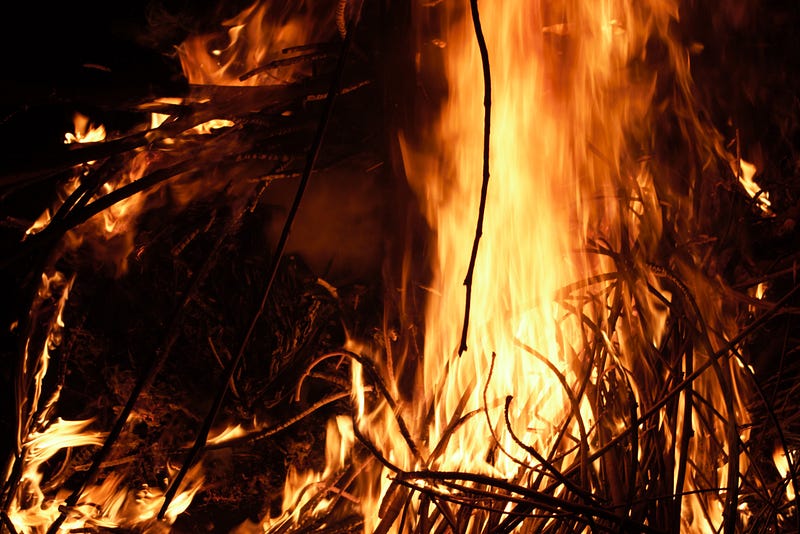
Photo by Juan Mari Zurutuza on Unsplash

Fire safety should always be a consideration for gardeners and never more so than in the autumn, typically the driest season of the year. Wildfire awareness tends to be a fact of life in rural areas, but California’s massive Oakland Hills Fire of October 1991 and the numerous more recent wildfires serve as a lesson to all that landscaping for fire safety is necessary even in urban and suburban areas.

Don’t assume that just because your garden is lovely and well-tended that it’s also fire-safe.

Fire-safe landscaping requires the removal of excess “fuel,” that is, grasses, brush, dense shrubs, woodpiles, or any flammable debris around your property. Check with your local and state agencies to the required or recommended standards for your area. For example, California state law requires that you keep a 100-foot “defensible space buffer” around your house that not only will minimize fire risk but will also create a safer space for firefighters to defend your home in case fire does break out.

They break that defensible space down into two zones.

Lean, Clean, and Green Zone

In this 30-foot perimeter around your home, clear out stacks of firewood, compost piles, building materials, woodpiles, stacks of paper, or collections of other flammable items. It is essential in this zone that you eliminate any fire ladders, which are dense plantings increasing in height as they go toward your house. Landscapes should have lower plants near the house with shrubs and trees getting taller farther away from the house.

Reduced Fuel Zone

In this area that extends from to 100 feet from your house or to the edge of your property, cut down high grass, prune low-hanging limbs of trees, and thin out dense shrubbery. If you keep woodpiles for your fireplace, they should be stored in this zone. Fallen leaves and pine needles should be removed or kept to a depth no higher than 3 inches if you use them as mulch.

Fire-Resistant Plant Choices

No plants are fire-proof, but once you’ve cleared out the especially flammable plant material around your property, you can focus on filling in with plants that are less likely to go up like kindling if a fire approaches.

Succulents, which are so well-suited for our Mediterranean, drought-prone climate, hold lots of moisture in their thick leaves, making them tougher to ignite. Aloes, agaves, echeverias, and sedums are just a few of the options.

For trees, opt for maple, cherry, walnut, and other hardwoods. Pines, firs, and other conifers contain resins that make them more flammable and should be avoided. And definitely do not plant Eucalyptus trees, which are loaded with oil and can go up like a candle or even explode once they start to burn. (The prevalence of Eucalyptus trees in the Oakland Hills was one of the factors that contributed to the scale of the 1991 fire.)

While it might seem that native plants are a good choice, when it comes to fire safety, some are better than others. Check with your local master gardeners and fire-fighting agencies to get a list of plants for fire-safe landscaping.

Additional Fire-Safe Garden Tips

  • Prune tree branches to keep them at least 6 feet above the ground and 10 feet away from the chimney.
  • Clear roofs and gutters of piles of needles and leaves.
  • Remove vines from exterior walls of the house.
  • Take care when using power tools to remove dry brush. Have a water source at hand in case a spark ignites a fire.
  • If cost is an issue regarding removing trees and brush that are a fire hazard, check with local agencies. Public funds may be available to homeowners and neighborhoods to help pay for removal.

If you liked this article, check out this:

Claire Splan is the author of California Month-by-Month Gardening and California Fruit and Vegetable Gardening. She edits Garden to Table, a Medium publication about victory gardening in the 21st century.

Become a member of Medium.com and you’ll get full access to every story on Medium while your membership fee directly supports Claire Splan and thousands of other writers creating fresh stories you’ll want to read.

Gardening
Sustainability
Environment
Wildfires
Outdoors
Recommended from ReadMedium