avatarClaire Splan

Free AI web copilot to create summaries, insights and extended knowledge, download it at here

2039

Abstract

creativecommons.org/licenses/by/2.0/">CC BY 2.0</a>)</figcaption></figure><h1 id="fbc9">Hang it up</h1><p id="a5f4">Almost any plant that can grow in a container can be grown in a hanging pot. For dramatic pops of color, try pots of impatiens, pansies, or petunias. But don’t forget about vegetables and fruits too. Tomatoes can be grown upside-down in topsy-turvy hangers and strawberries will happily grow out the sides of coir liners in wire hangers.</p><h1 id="5957">Trellises make a blank wall interesting</h1><p id="eb2a">Climbing roses, clematis, jasmine, and wisteria make quite an impact when grown on a trellis or arbor. Lush, colorful vines can even make a drab cyclone fence look great. But don’t stop at flowers. You can also grow cucumbers, squash, and pumpkins against a trellis.</p><h1 id="80c4">Teepees stand above the rest</h1><p id="8b88">A basic teepee of bamboo poles tied with wire or jute rises up to grab the sunlight and show off its vines. Plant it with sweet peas for color, or go the edible route. Pole beans and peas do great on a teepee.</p><h1 id="1837">Stack up levels</h1><p id="6d1b">Stacking pots is perhaps the simplest method of all, but the results can be amazing. For a stacking herb garden, try planting the perimeter of a large oak barrel planter with mint or basil, then add a smaller pot in the center, and another pot in the center of that, each with another herb that will fill out and spill over the side. For a fun, quirky look, anchor a metal rod in the ground and stack terracotta pots by running the rod through the drainage holes, tipping each pot in a different direction. Plant strawberries, calibrachoa, or lobelia in the pots so they can spill out the sides.</p><figure id="4f44"><img src="https://cdn-images-1.readmedium.com/v2/resize:fit:800/1*0W-T5sEck0r-ezHhFfbVDg.jpeg"><figcaption>Photo: <a href="https://www.flickr.com/photos/joccay/34557424184">Flickr</a> (<a href="https://creativecommons.org/licenses/by/2.0/">CC BY 2.0</a>)</figcaption></figure><h1 id="ee36">Espalier a tre

Options

e</h1><p id="c557">Plant young trees and prune them to the formal or informal shape you want, or look for trees in the nursery that have already been pruned to an espalier form. Lots of trees, including fruit trees, can be trained to grow flat against a fence or wall, or you can grow a row of espaliered trees to serve as a fence or garden divider by themselves.</p><p id="92d2">If you liked this article, check out these stories too:</p><div id="3946" class="link-block"> <a href="https://readmedium.com/your-victory-garden-can-be-made-in-the-shade-6656aa3080e2"> <div> <div> <h2>Your Victory Garden Can Be Made in the Shade</h2> <div><h3>Not much sun? No problem! Here are 5 vegetables you can grow in partial shade.</h3></div> <div><p>medium.com</p></div> </div> <div> <div style="background-image: url(https://miro.readmedium.com/v2/resize:fit:320/0*eBadCaLaosIE2D_P)"></div> </div> </div> </a> </div><div id="0f61" class="link-block"> <a href="https://readmedium.com/you-can-fit-an-entire-orchard-in-your-back-yard-73ed41505443"> <div> <div> <h2>You Can Fit an Entire Orchard in Your Back Yard</h2> <div><h3>Choosing the right trees and growing conditions is key to a bountiful harvest</h3></div> <div><p>medium.com</p></div> </div> <div> <div style="background-image: url(https://miro.readmedium.com/v2/resize:fit:320/0*Fuqy7emhALts6at6)"></div> </div> </div> </a> </div><p id="b4b1"><a href="https://clairesplan.medium.com/membership"><i>Become a member of Medium.com</i></a> <i>and you’ll get full access to every story on Medium while your membership fee directly supports Claire Splan and thousands of other writers creating fresh stories you’ll want to read.</i></p></article></body>

The Secret to a Productive Small Garden: Grow Up!

Use tried-and-true vertical gardening techniques to squeeze a bigger harvest from your small-space garden
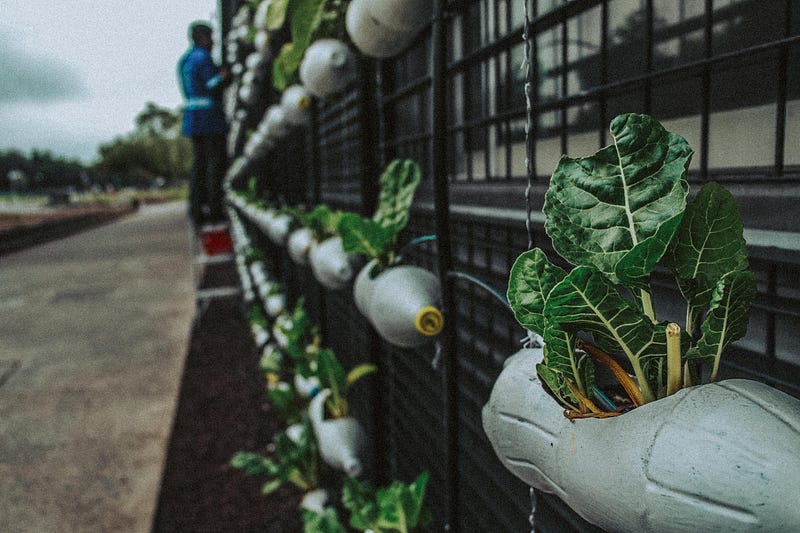
Photo: Juanjo Menta / Pexels

If you’re looking for new ways to garden, you may need to just grow up.

Vertical gardening is not only one of the latest trends, it’s also a smart technique that maximizes space, lessens the impact of some garden pests, and provides great visual interest.

The term vertical gardening refers to any method that emphasizes growing plants up (or down) rather than spreading out horizontally. The techniques for growing vertically certainly aren’t new, but they are particularly relevant in today’s smaller gardens where every square foot of ground is precious.

Vertical gardening can make a small garden seem bigger because it directs the eye upward, drawing the focus away from horizontal boundaries, and adds another layer of interest and complexity to your garden design. Plants grown vertically are also less vulnerable to garden pests that attack from below because less of the plant is in direct contact with the soil.

Following are a few ideas for using vertical growing techniques on annuals, perennials, and edibles in your garden.
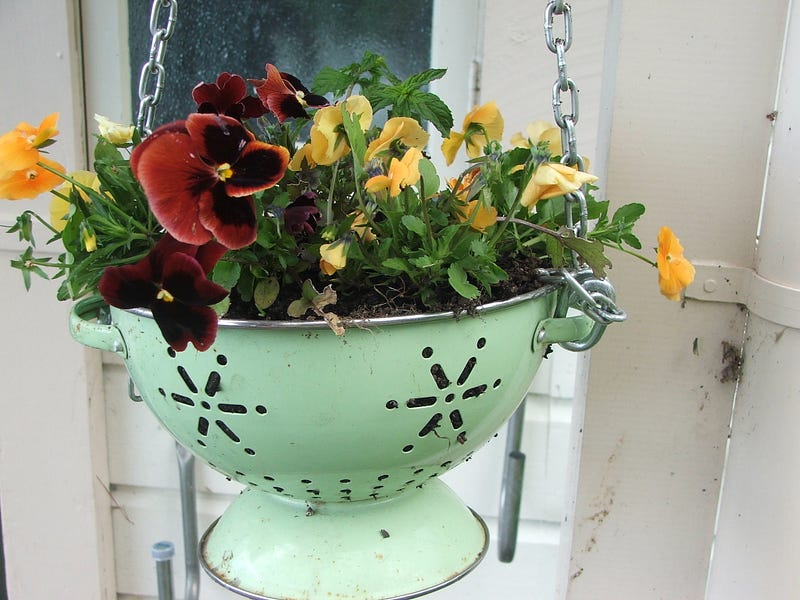
Photo: Flickr (CC BY 2.0)

Hang it up

Almost any plant that can grow in a container can be grown in a hanging pot. For dramatic pops of color, try pots of impatiens, pansies, or petunias. But don’t forget about vegetables and fruits too. Tomatoes can be grown upside-down in topsy-turvy hangers and strawberries will happily grow out the sides of coir liners in wire hangers.

Trellises make a blank wall interesting

Climbing roses, clematis, jasmine, and wisteria make quite an impact when grown on a trellis or arbor. Lush, colorful vines can even make a drab cyclone fence look great. But don’t stop at flowers. You can also grow cucumbers, squash, and pumpkins against a trellis.

Teepees stand above the rest

A basic teepee of bamboo poles tied with wire or jute rises up to grab the sunlight and show off its vines. Plant it with sweet peas for color, or go the edible route. Pole beans and peas do great on a teepee.

Stack up levels

Stacking pots is perhaps the simplest method of all, but the results can be amazing. For a stacking herb garden, try planting the perimeter of a large oak barrel planter with mint or basil, then add a smaller pot in the center, and another pot in the center of that, each with another herb that will fill out and spill over the side. For a fun, quirky look, anchor a metal rod in the ground and stack terracotta pots by running the rod through the drainage holes, tipping each pot in a different direction. Plant strawberries, calibrachoa, or lobelia in the pots so they can spill out the sides.
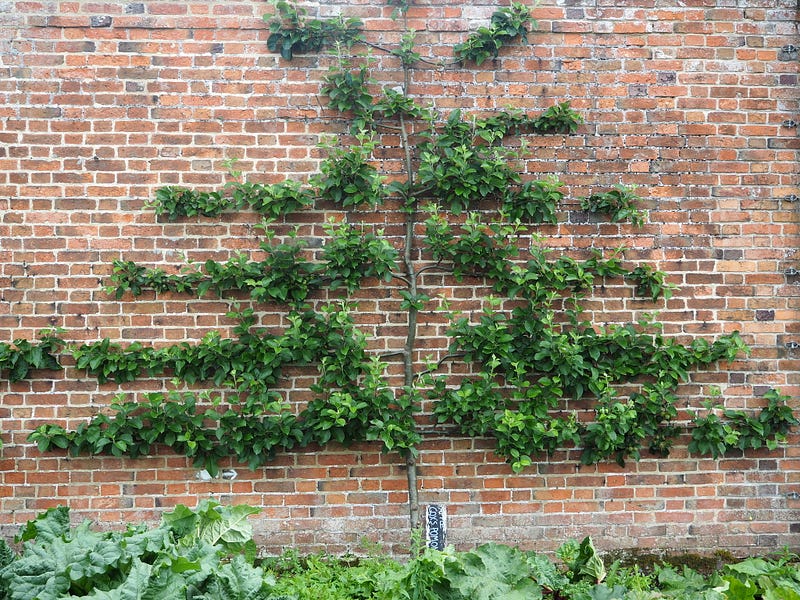
Photo: Flickr (CC BY 2.0)

Espalier a tree

Plant young trees and prune them to the formal or informal shape you want, or look for trees in the nursery that have already been pruned to an espalier form. Lots of trees, including fruit trees, can be trained to grow flat against a fence or wall, or you can grow a row of espaliered trees to serve as a fence or garden divider by themselves.

If you liked this article, check out these stories too:

Become a member of Medium.com and you’ll get full access to every story on Medium while your membership fee directly supports Claire Splan and thousands of other writers creating fresh stories you’ll want to read.

Gardening
Outdoors
Food
Advice
Sustainability
Recommended from ReadMedium