
Is This Goodbye For The Printed Newspaper?
EXTRA! EXTRA! Read them now before they’re gone.
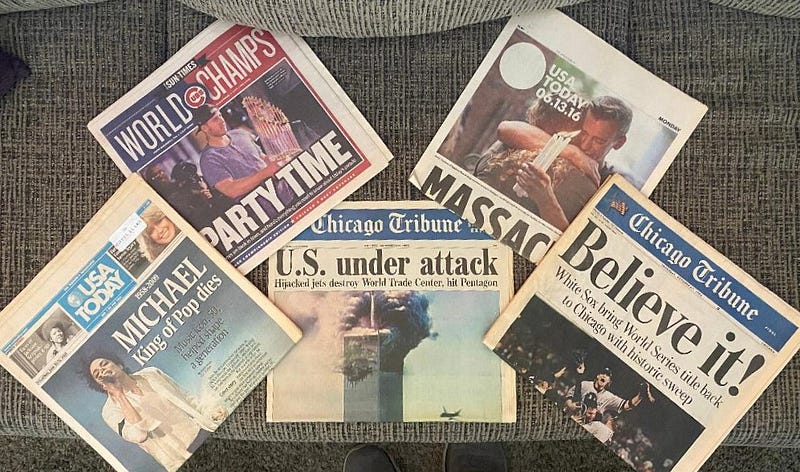
I’m a print media guy.
In the past, “taking” the local newspaper was something almost every household in America did.
Oh, we would watch Walter Cronkite and The Huntley/Brinkley Report (well, at least my Mom and Step-Dad would). But the newspaper was the primary source of news and information. They told us what was happening in our towns, cities, and even our neighborhoods. They gave us the daily stock market numbers. What was playing at the movies. Who got married, and who died.
My Mom was in the paper several times as a model for the Abilene Women’s Club. In addition, we were included in the accompanying picture for a story about her remodeling job on our home — covered in the Abilene (Texas) Reporter News.
I guess I didn’t start reading the newspaper until I was in the sixth grade. By that time, life had become normal. We moved into a forever home, got a dog, and had security, knowing we would no longer be moving yearly.
And we took the paper. At that time, it was the Ventura County Star-Free Press, now known as the Ventura County Star. The paper boy would deliver it at about 4:00 pm, right after we got home from school. Since living in Southern California was forever summer, I’d sit on the grass in the front yard and read it. But not the big news —in that I was somewhat disinterested
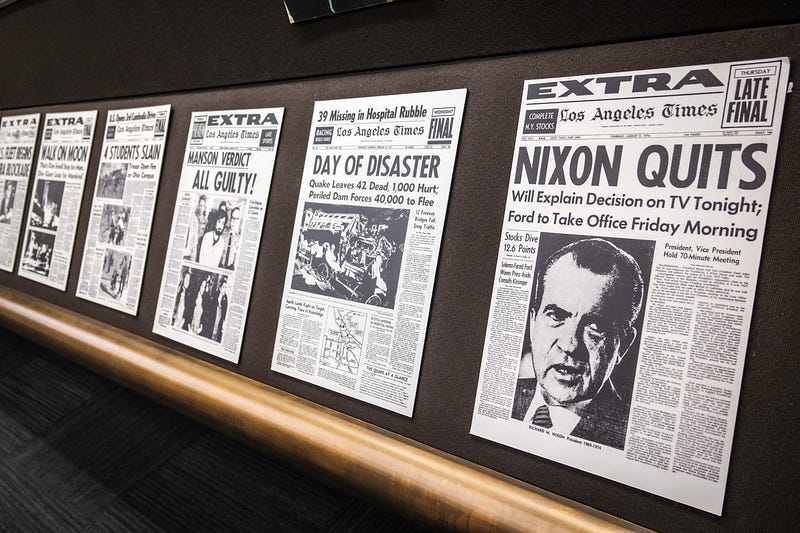
The largest cities had multiple newspapers. For example, the Los Angeles area had The Los Angeles Times, The Herald-Examiner, Los Angeles Daily News, Long Beach Press-Telegram, and The Daily Breeze. The Los Angeles Times Sunday edition must have weighed ten pounds. They sold an early edition on Saturday. So did the Chicago Tribune, and I imagine papers in New York did too. I lived in Cedar Rapids, Iowa, for a spell. One day I asked a convenience store clerk if The Cedar Rapids Gazette’s Sunday paper was available on Saturday, and he just gave me a weird look.
Owned by William Randolph Hearst, Jr., The Herald Examiner was plagued with an employee strike for ten years! He was known to prolong the unrest, hiring replacement employees who had to cross the picket line daily. When it was over, the newspaper’s circulation had dropped in half to 350,000. Esquire Magazine said of the paper:
“On January 1 (1978), Jim Bellows came to Los Angeles as editor of the worst urban daily newspaper in America, the Los Angeles Herald Examiner.”
The newspaper couldn’t compete against the gargantuan circulation of The Los Angeles Times, and it ceased publication in 1989.
The Chicago Daily News, an afternoon daily newspaper, began publishing in 1875 as an alternative to the Chicago Tribune, which was seen as an elitist paper. Field Enterprises (owned by heirs of the Marshall Field and Company department store) acquired the paper in 1959. But with the rise in television, afternoon dailies began to decline, and it was last published in 1978.
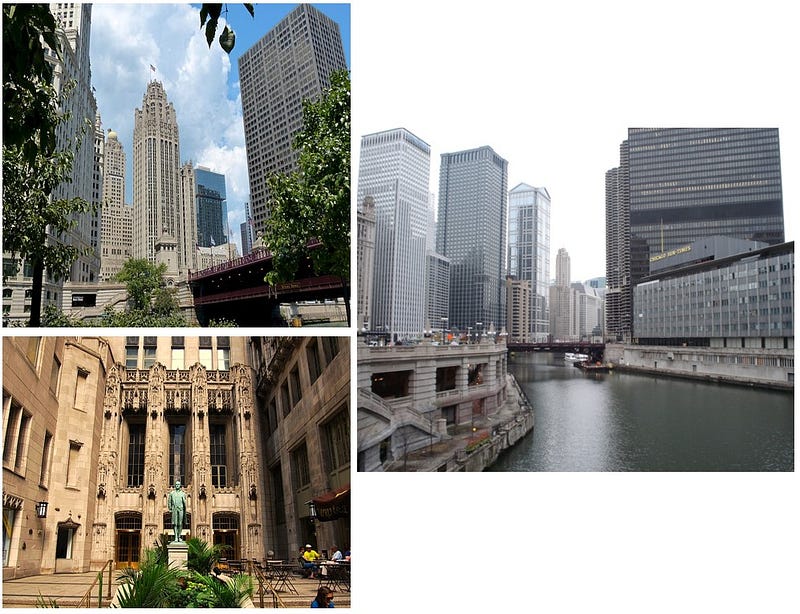
The Daily News moved in with the Chicago Sun-Times, also owned by Field. The headquarters was a long-standing landmark building on the Chicago River, almost universally seen as “one ugly piece of work.” It was nowhere as pretty as the Tribune Tower, but it stood as a part of the city. In its place, the Trump Tower was built. Ninety-eight stories of bling that few in Chicago wanted.
My first job in media was as a telephone solicitor at the Ventura sales office of The Los Angeles Times. The shift was 4–9, perfect for school kids. Then, like now, you had to be 16 to work, but I lied about my age. How would they have checked without computers?!
We sold subscriptions to the newspaper by telephone. It was a real sweatshop job. Our opening line was, “Hello, may I speak to the lady of the house?” I guess they were more of a pushover than the “man of the house!” If they already subscribed, I’d say, “Keep on readin’!” and move on to the next prospect.
There was an older woman there who sold the most subscriptions. She drank on the job, occasionally pulling a bottle of whiskey out of her desk. The manager was a stoner. So we would often go to his apartment nearby after work and get loaded on his finest!
In high school, I worked on the newspaper staff as the advertising manager. It was a great gig, as the four of us (my team!) would drive around the area and sell ads during class, which coincided with lunch, so we were free for a good two hours. Enough time to get plenty stoned!
There seems to be a theme going on here!
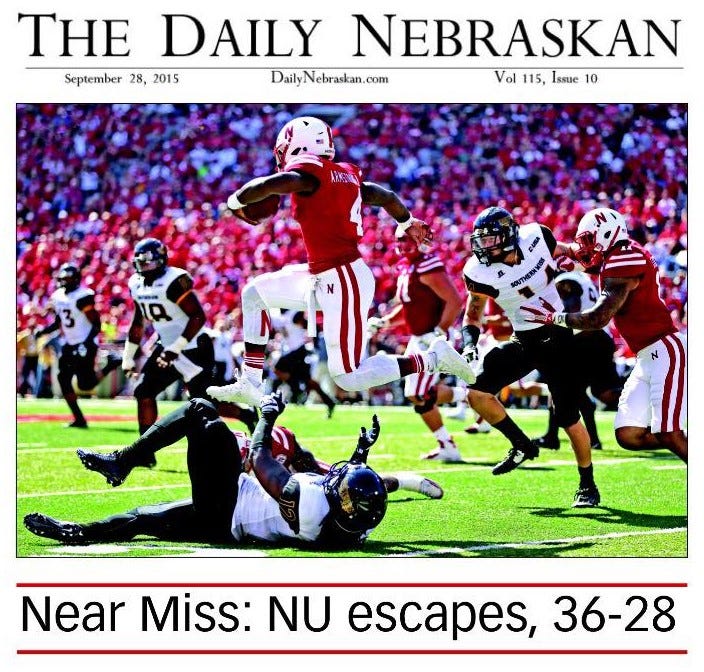
With this “vast” experience in media, it only made sense that I would major in journalism at the University of Nebraska in Lincoln. So I immediately got on board with the Daily Nebraskan, the college’s student newspaper, as an advertising account rep. I ended up staying there for six years, eventually becoming the Advertising Director with a staff of 15. For college kids, we made a boatload of money selling ads.
At the same time, I worked as a “copy boy” at the Lincoln Journal-Star, delivering the news from the teletype machines to the copy editors. What seemed so sophisticated back then is now archaic.
My job at The Santa Fe Reporter, a weekly alternative newspaper, would be my last in the newspaper business. It was housed in an old two-story bungalow next to the downtown/Plaza area and staffed primarily by liberal journalists from the East. I loved that they had beer in the vending machine.
Newspapers had begun going through mergers and acquisitions, with big corporations running the newsroom, which put a biased spin on almost everything they reported. As a result, afternoon newspapers, which once outnumbered morning newspapers 4:1 in the U.S., either merged with their morning counterparts or went out of business altogether.
According to statista.com, circulation numbers for daily weekday newspapers in the U.S. peaked in 1987 when they amounted to 62.82 million. By 2020, that number had declined to a measly 24.29 million. You can blame that squarely on the Internet.
The New York Times, however, has managed to keep its paid Sunday circulation above one million. In 2016, the company’s digital-only product had 1.6 million subscribers.
In 1990, at its height, the Los Angeles Times had a circulation of 1,225,189 daily, and 1,514,095 on Sundays, making it the largest newspaper in the country at the time. The current weekday circulation has dwindled to just 142,382.
If you love newspapers, love them now. Between the low circulation numbers, the high price, and the volatile cost of paper, they’re bound not to be around much longer. I used to travel for business extensively. Hotels would often (and some still do) distribute free copies of USA Today to all of the guests. I, however, opted for the local paper. They represented the heart and soul of a city, something you couldn’t get anywhere else.
We were exposed to world, national, and local news with newspapers. With digital, you pick and choose what you want to read, which, I think, has led to a less informed public.
I get it, but that doesn’t mean I have to like it.
After newspapers, I worked in the magazine business. Next, we’ll take a look at how cable television has killed that industry.
More from Arthur Keith in Illumination:
Like what you’re reading? Consider subscribing to Medium. For the price of a monthly magazine ($5/month), you’ll have access to all of my stories and thousands of other writers. And I’ll get a wee bit! Just click the link below.