avatarDividendHorizon

Free AI web copilot to create summaries, insights and extended knowledge, download it at here

2111

Abstract

rc="https://cdn-images-1.readmedium.com/v2/resize:fit:800/1*3q67tDSyp9LloFJxXJ-zbA.jpeg"><figcaption>Picture by <a href="https://www.canva.com/p/sciencephotolibrary/">Science Photo Library</a> on <a href="https://partner.canva.com/AoYrnK">Canva</a></figcaption></figure><p id="56f1">In some way, the atoms combined to form the DNA. That is the famous dual-helix structure discovered in 1950.</p><p id="796d">The DNA consists of four nitrogenous bases: Adenine, Guanine, Thymine, and Cytosine. These molecules combine in a unique sequence forming two chains. Each chain can separate from the other and could serve as a template to form another chain. That way, the DNA is able to reproduce itself.</p><figure id="cc80"><img src="https://cdn-images-1.readmedium.com/v2/resize:fit:800/1*VsJh_fUjFncZ1s0kwHCW0Q.jpeg"><figcaption>Picture by <a href="https://www.canva.com/p/sciencephotolibrary/">Science Photo Library</a> on <a href="https://partner.canva.com/AoYrnK">Canva</a></figcaption></figure><p id="b13f">You might ask yourself why DNA and no other form?</p><p id="4af0">Well, there might have been also other forms of life coding, but once the DNA appeared it simply took over all the others. An example is RNA encountered in viruses. It is much simpler and does not have a double helix structure.</p><p id="0ab6"><i>Tired of so much science? Then let’s jump to my last takeaway.</i></p><h1 id="c336">Ways for intelligence</h1><p id="a8aa">It is very likely that evolution is a random process and intelligent life is just one of the possible consequences. Stephen talks about three possibilities why another intelligent life might not exist.</p><p id="08ba"><b>Occasional </b>— although he strongly believes there is life on other planets in the Universe, intelligent life is just occasional. In other words, the existence of life does not imply it will become intelligent.</p><p id="611c"><b>Extinct </b>— As were the dinosaurs, so could any form of life be extinct before it evolves to become intelligent. It is approximated that such an event might occur every 20 million years. We are now at about 66 mil

Options

lion years since the last catastrophic event, but other species in the Universe might have been less lucky.</p><p id="6bfc"><b>Autodestructing </b>— well, nowadays that’s not hard to imagine. The nuclear arsenal is able to destroy the whole Earth, several times. A very sad possibility is that any intelligent form of life becomes unstable at some moment in time and leads to autodestructing.</p><p id="b0ca">We might never find out whether there are any intelligent alien species. However, we should be careful if we really want to know the answer. Encountering a more technologically advanced civilization could be similar as when the indigenous people of the Americas met Columb.</p><p id="2104">We all know what happened next.</p><p id="a4d1">If you missed the first parts, you can check them here:</p><p id="391d"><a href="https://medium.com/@alex.artenie/my-first-takeaway-from-brief-answers-to-the-big-questions-by-stephen-hawking-86fee54705e7"><b>Is there God?</b></a></p><p id="aa13"><a href="https://readmedium.com/how-everything-began-78b8f1f67da1"><b>How everything began?</b></a></p><div id="a9d7" class="link-block"> <a href="https://medium.com/@alex.artenie/membership"> <div> <div> <h2>Join Medium with my referral link - Alex Artenie</h2> <div><h3>As a Medium member, a portion of your membership fee goes to writers you read, and you get full access to every story…</h3></div> <div><p>medium.com</p></div> </div> <div> <div style="background-image: url(https://miro.readmedium.com/v2/resize:fit:320/0*HAPstzkEaS114U89)"></div> </div> </div> </a> </div><p id="d0b6">Hope this was a nice read for you! If so, give it a <b>clap</b>!</p><p id="79e9">Feel free to share your opinions in the comments section below. <a href="https://medium.com/subscribe/@alex.artenie"><b>Follow </b></a>to get more unique content or <a href="https://ko-fi.com/alexartenie"><b>buy me a coffee</b></a> ☕for more inspiration!</p></article></body>

Is there other life in the Universe?

One day, we might receive a signal from a planet like this

Stephen Hawking
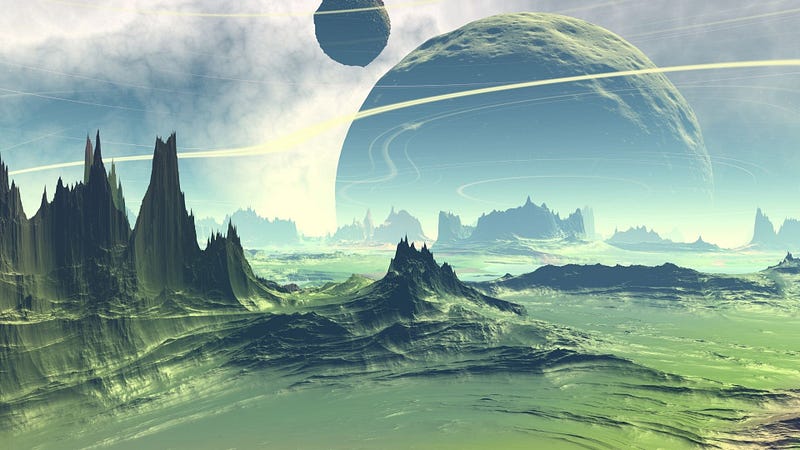
Picture by ppl58 on Canva

Inspired by “Brief Answers to the Big Questions” by Stephen Hawking. The book is an addictive lecture that drags you into a world of philosophical and scientific arguments to the major question we might have as humankind.
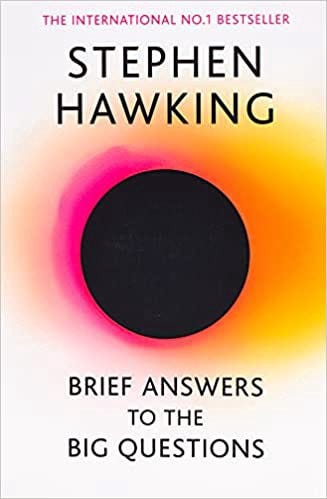
This is the third big question addressed by Stephen. We are especially interested in other intelligent forms of life, although mankind proved itself quite stupid all over history.

What is life?

It is a system that maintains itself, regardless of the world’s tendency to disorder, known as increasing the Entropy, which is also able to reproduce itself, i.e. a similar system but independent.

What we usually call organisms are based on Carbon, with some different atoms like Nitrogen and Phosphor. Some think life could be based on some other elements, like Silicon, however, Carbon remains the best fit due to its chemical properties.

There was no Carbon at the beginning of the Universe, after the Big Bang, 13.8 billion years ago. The matter existed just in form of protons and neutrons. As the Universe started to cool down, atoms formed. The first one was Hydrogen, consisting of one proton. Then, their atoms collided forming the second element, Helium. The more heavy elements like Carbon, Oxygen, and Iron were formed inside of stars.

The code of life
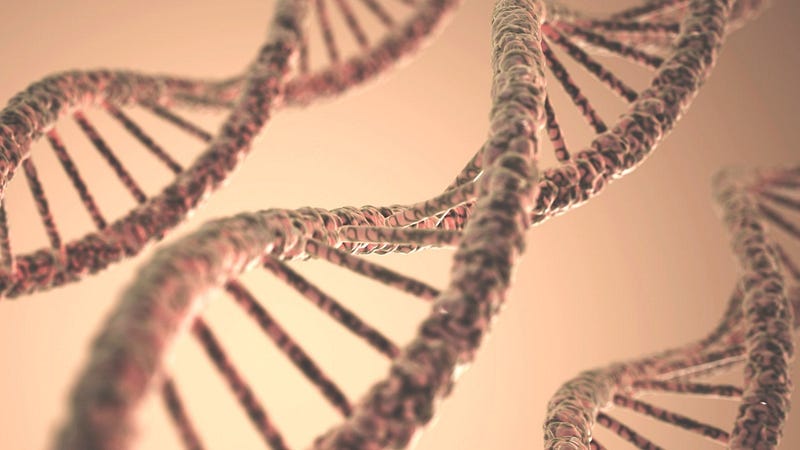
Picture by Science Photo Library on Canva

In some way, the atoms combined to form the DNA. That is the famous dual-helix structure discovered in 1950.

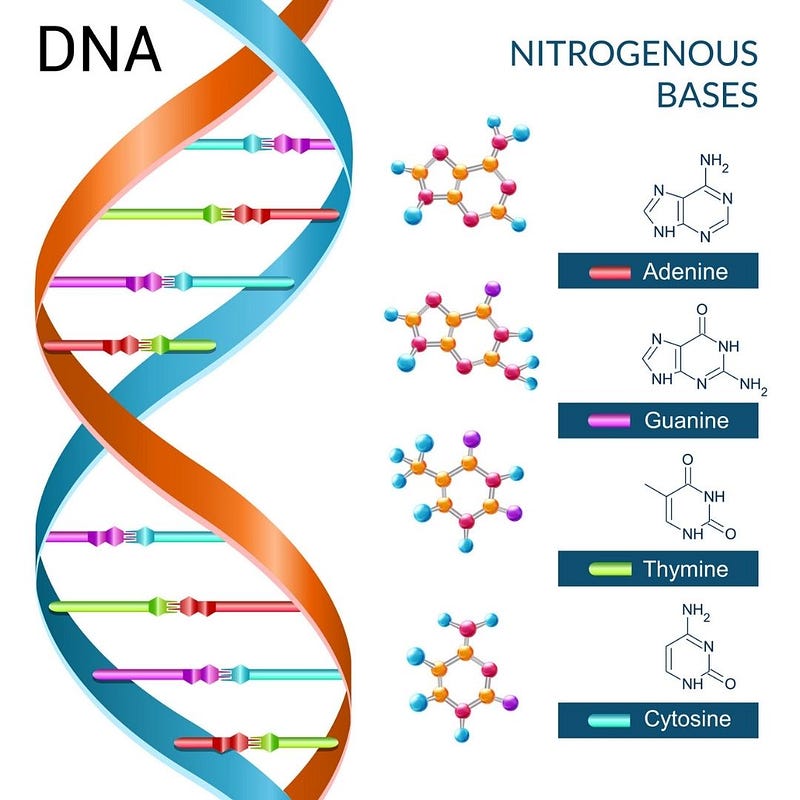
The DNA consists of four nitrogenous bases: Adenine, Guanine, Thymine, and Cytosine. These molecules combine in a unique sequence forming two chains. Each chain can separate from the other and could serve as a template to form another chain. That way, the DNA is able to reproduce itself.
Picture by Science Photo Library on Canva

You might ask yourself why DNA and no other form?

Well, there might have been also other forms of life coding, but once the DNA appeared it simply took over all the others. An example is RNA encountered in viruses. It is much simpler and does not have a double helix structure.

Tired of so much science? Then let’s jump to my last takeaway.

Ways for intelligence

It is very likely that evolution is a random process and intelligent life is just one of the possible consequences. Stephen talks about three possibilities why another intelligent life might not exist.

Occasional — although he strongly believes there is life on other planets in the Universe, intelligent life is just occasional. In other words, the existence of life does not imply it will become intelligent.

Extinct — As were the dinosaurs, so could any form of life be extinct before it evolves to become intelligent. It is approximated that such an event might occur every 20 million years. We are now at about 66 million years since the last catastrophic event, but other species in the Universe might have been less lucky.

Autodestructing — well, nowadays that’s not hard to imagine. The nuclear arsenal is able to destroy the whole Earth, several times. A very sad possibility is that any intelligent form of life becomes unstable at some moment in time and leads to autodestructing.

We might never find out whether there are any intelligent alien species. However, we should be careful if we really want to know the answer. Encountering a more technologically advanced civilization could be similar as when the indigenous people of the Americas met Columb.

We all know what happened next.

If you missed the first parts, you can check them here:

Is there God?

How everything began?

Hope this was a nice read for you! If so, give it a clap!

Feel free to share your opinions in the comments section below. Follow to get more unique content or buy me a coffee ☕for more inspiration!

Life
Universe
Stephen Hawking
Philosophy
Science
Recommended from ReadMedium