
Is Queen Unsafe For Children?
A popular platform has dropped ‘Fat Bottomed Girls.’ Will ‘Bohemian Rhapsody’ be next?

In the blue collar suburbs of my New Jersey youth, few polka lyrics had more appeal than the deathless, “I don’t want her / You can have her / She’s too fat for me.” Even as a child, I understood that those words were crude and insulting to women.
But would I have turned down an uncle who wanted to drag me onto a dance floor when an accordionist played the “Too Fat Polka” at a Polish wedding? Never. Too young to have heard of fat-shaming, I loved that toe-tapper, and so did my Hungarian relatives.
Can Queen survive the culture police?
The “Too Fat Polka” was still popular decades later in Cleveland, one of the polka capitals of the Western Hemisphere, when I moved there to take a newspaper job.
But lately I’ve wondered if the “Too Fat Polka” can survive the stepped-up activity of the culture police. As I noted in a recent story, their latest targets include The Tale of Peter Rabbit, which they’ve faulted for “cultural appropriation.” Even bunnies, it seems, aren’t safe from arrest.
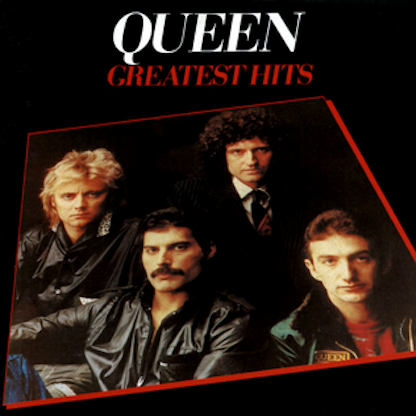
#/media/File:Queen_Greatest_Hits.png)
Now comes a challenge to Queen’s 1978 hit “Fat Bottomed Girls.” It was track four on the British rock band’s 1981 “Greatest Hits” album. But last month the news broke that it isn’t included in a re-release of some of those hits on Yoto, a children’s audio streaming service.
A publicist for the band approved the omission, and it’s easy to see why. You can read the “Fat Bottomed Girls” lyrics as a celebration of sex abuse:
“Left alone with big fat Fanny
“She was such a naughty nanny
“Hey, big woman
“You made a bad boy out of me.”
But that reading involves a judgment call. The age of consent in Britain is 16 and that of the speaker isn’t specified. A reference to his “nursery” suggests he’s underage, but even that’s tricky when the word nursery has slightly different connotations in the U.K. and the U.S.
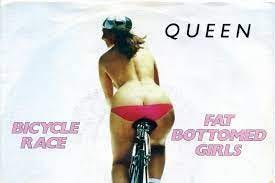

None of the gray areas has kept “Fat Bottomed Girls” from igniting controversy. Sen. Ted Cruz tweeted on X, “They’re trying to cancel Queen? Idiotic.” Yes, the same Ted Cruz who has unfairly accused teachers of bringing “explicit pornography” to schools is now objecting to the omission of a song about sex abuse from a children’s streaming service.
Here’s the problem with all the howls of protest. Yoto responded to the flap by saying that “the average age of our listeners is 5 years old” and the service saw the song as inappropriate for such a young audience.
Can you really fault Yoto and Queen for thinking that a song about sex with the nanny might not belong on a platform for preschoolers?
Countless other options exist for parents who believe their 4-year-olds have a federally protected right to listen to lyrics about getting it on with the babysitter. They range from dredging up an old vinyl album to watching Queen sing it on YouTube to humming a few light bars for the kids at bedtime to give them break from “Baby Shark.”
The absence of “Fat Bottomed Girls” from Yoto isn’t “neopuritanical cultural censorship,” as the British television presenter Richard Madeley has argued. It’s a reasonable business decision by the Yoto and Queen.
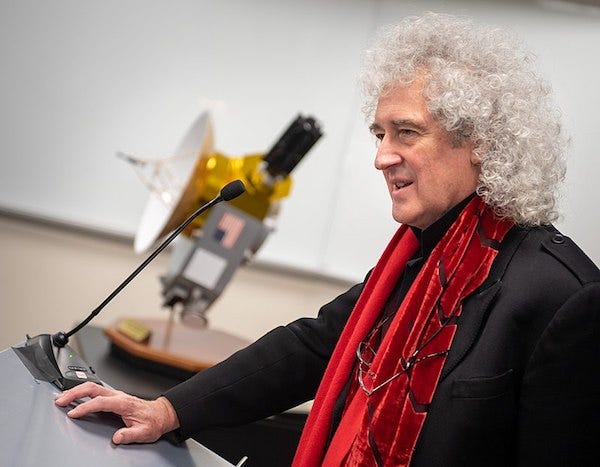
The British Library hasn’t banned all books about Queen. The National Portrait Gallery hasn’t removed its photos of lead singer Freddie Mercury, who sang “Fat Bottomed Girls.” King Charles hasn’t revoked the knighthood he bestowed this year on Queen guitarist and vocalist Brian May, who wrote the song.
Where’s the injustice here?
.jpg)
One of the sorry lessons of this mess is that overzealous morality police are exceeding the speed limit in both the left and right lanes of cultural highways. The recent assault on The Tale of Peter Rabbit came from a scholar on the left. The loudest criticisms of the de-listing of “Fat Bottomed Girls” have come from politicians and others on the right.
You know how absurd all of this is when people cry foul about the omission of a song from children’s platform after the band that made it famous approved the removal.
TV presenter Madeley was wrong to call what happened to Queen “censorship,” but he was to argue that’s real harm in imposing on artists norms that didn’t exist in their day:
“These icons from the past are rather like maps, guiding us to our shared history. They tell us where we are today; how far we’ve come — or maybe we’ve slipped. The present can have no meaning if we keep erasing the past. Queen sang about fat-bottomed girls. Maybe they shouldn’t have — but they did.”
That’s how I see the “Too Fat Polka,” too. Yes, it’s sexist. But I don’t want it cancelled or its lyrics changed. It’s a window onto my childhood and onto the lives of legions of Eastern European immigrants for whom the polka was a vital link to the culture they left behind in the old country.
The “Too Fat Polka” seems safe for now, if only because few people may remember it. But I wonder about “Bohemian Rhapsody,” the most-streamed song from the 20th century. Freddie Mercury sings in Queen’s signature song:
“Mama, just killed a man
“Put a gun against his head, pulled my trigger, now he’s dead”
A popular interpretation of those words says Mercury was referring his coming out as gay or symbolically killing his former identity. Is the day coming when the entire song will instead be seen as an ethnic slur against Bohemia, although it has nothing to do with that region in the Czech Republic?
It sounds far-fetched. But is it any more far-fetched than some of the arguments swirling around “Fat Bottomed Girls”?
@JaniceHarayda is an award-winning cultural critic and journalist who has written for many major media.
Listen to the “Too Fat Polka” by polka king Frank Yankovic — with the essential accordions — in Cleveland, the polka capital of the Western Hemisphere:
You might like another of my stories for The Riff: