
Is J.K. Rowling ‘queer’?
Let’s look at the woman who wrote Harry Potter
I’ve been thinking about what the word “queer” means—and wonder about a range of unusual figures. How about J.K. Rowling, the woman who wrote Harry Potter.
She isn’t usually identified as “queer,” but as a girl she was “mentally sexless,” she’d recall. She wanted to be, as she put it, “the son my father had openly said he’d have preferred.”
Is that ‘queer’?
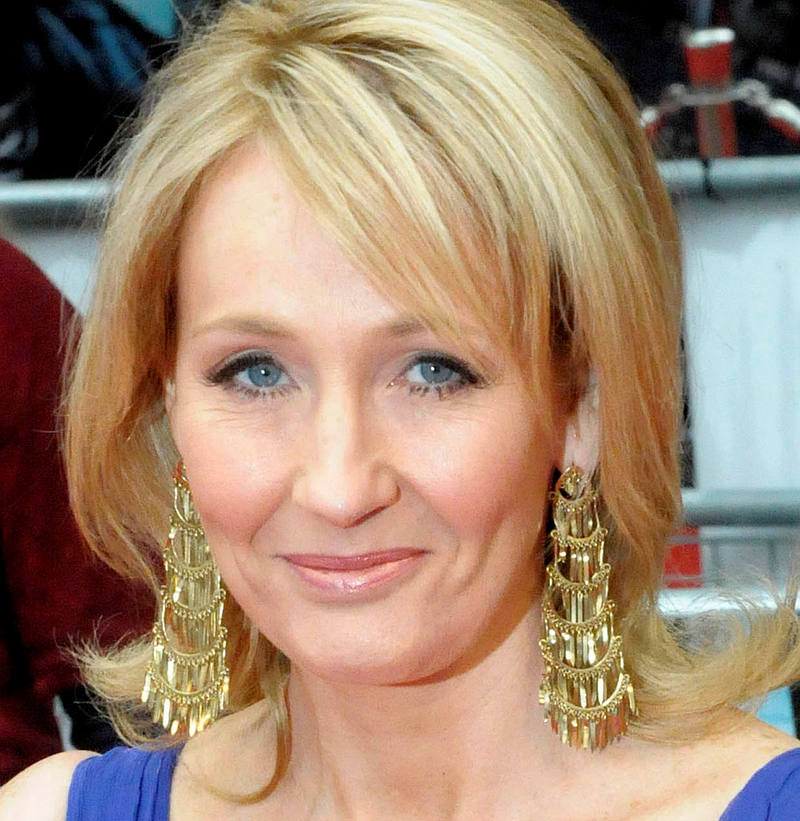
In 2020, Rowling waded into transgender politics.
Her thinking about the subject, she noted, was rooted in her own experience of growing up as a girl who wanted to be a boy—in response to her father’s yearning for a son.
She’d talked about that for years. “I was supposed to be a boy,” she notes in the 2007 documentary A Year in the Life. “I was supposed to be Simon John.”
She was given a female name, ‘Joanne’, but was dressed in blue clothes, the color marked for boys. She wanted to be a boy, to please her father. She settled on her chosen name: ‘Jo’.
Though the short form of her own name, it was a specific reference to Louisa May Alcott’s Little Women. Rowling recalls that she “met herself” in the heroine Jo March, the ‘tomboy’ who becomes a writer.
Rowling had more favorite ‘queer’ writers.
In her commentary on the transgender issue, Rowling sums up the gender journey of her early life:
“As I didn’t have a realistic possibility of becoming a man back in the 1980s, it had to be books and music that got me through both my mental health issues and the sexualised scrutiny and judgement that sets so many girls to war against their bodies in their teens.”
She read Colette, the French writer who’d called herself a “mental hermaphrodite” and had a very varied sex life from men to women to people in between. She also read Simone de Beauvoir, whose sexuality, likewise, favored variety, and who argued in The Second Sex that being a woman is a contingent and created state.
As the famous line went: “One is not born, but rather becomes, a woman.”
Rowling realized, in time, that “it’s fine not to feel pink, frilly and compliant inside your own head; it’s OK to feel confused, dark, both sexual and non-sexual, unsure of what or who you are.”
Though she did try to be a traditional female.
She married in 1992, describing it as a “violent marriage.” Her ex-husband was later interviewed. “It is true I slapped her,” he later said. “But I didn’t abuse her.”
Perhaps this was a traditional man trying to use a bit of violence to get ‘Jo’ into the mindset of a traditional wife. He might’ve preferred ‘Joanne’.
In divorcing her husband, she’d recall, a depression came over her. She had tried to be a ‘woman’ in a culturally recognized way, and failed. She’d reached the end of the gendered scripts that had been held out to her.
On a train trip to London, a boy appeared to her.
Rowling described the idea of Harry Potter as physical—and sexual? In an interview in 2000, she recalls of the magic moment:
“When it came to me, it was an absolute physical response. Whether it was my stomach or my heart, I don’t know, but something turned over. It was a feeling I’d never had before — like seeing someone attractive from across the room. It was a gift.”
In a 2001 interview with the BBC, she again discussed the moment in sexual terms.
“It was that incredibly elated feeling you get when you’ve just met someone with whom you might eventually fall in love.”
She began writing about a boy summoned into a world of wizards and witches. She recalls being puzzled at being a female writing a male protagonist. “But he just came to me fully formed,” she’d note. “I could see him clearly. By the time I thought about it, it was too late to change him.”
His character has details from her personal history.
Plot points from the Potter books intersect with her life. King’s Cross train station in London, which features in the plot, is where her parents met.
She’d given Harry her own birthday, July 31st. They each grieve a mother who had died.
Assessing such points, fans have long speculated that Harry was Rowling’s male alter-ego. The Well Read Piranha offers: “Harry Potter was, in every essence, the male version of Rowling herself during her adolescence.”
But it would be a bit more complex? Harry is the male self of a female author who grew up dreaming of being a boy.
Scholars note the Harry Potter storyline is ‘queer’.
A 2003 paper “Cinderfella: J. K. Rowling’s Wily Web of Gender” by Ximena Gallardo C. and C. Jason Smith, notes the “gender-transgressive narrative” of Rowling’s epic, for Harry Potter is a male Cinderella.
They describe the gender trouble rampant in the wizarding world. Harry is found “toting a magic wand and wearing dresslike robes,” and riding on a broom. They write: “Appearing within a traditionally feminine narrative structure, Harry, in essence, is a boy caught in a girl’s story.”
Something is ‘different’ about Harry.
He is not quite a male, or not like Ron, or even Hermoine. Though she is more on the feminist side, both are more traditionally gendered.
As Gallardo and Smith write, Rowling “feminizes Harry in ways that allow female readers to identify strongly with a male protagonist.”
He becomes something like a third sex between his male and female friend— magical and alchemical. As Gallardo and Smith put it:
“Somewhere in that ‘other’ land, between the advice of his best friends Ron and Hermoine, between the masculine and the feminine, Harry stands as a true symbol of the possibility of the Philosopher’s Stone.”
Harry’s guide is the wizard Albert Dumbledore. In 2007, Rowling made headlines by saying that the wizard who presides over her books was gay. (It was seen as shocking, but is implicit throughout the books.)
Rowling’s books are full of ‘queer’ codes.
And her name is another. She’d later say it was her publisher’s decision to present her as ‘J.K.’ rather than ‘Joanne’. She recalls being told: “We think it looks more striking and we think we’re not sure boys will want to read a book by a woman.”
She didn’t like the idea, but went along, was her story. But she seemed to really be ‘J.K.’, those “genderless initials,” as the L.A. Times notes in a 2000 profile. An androgynous presentation seems fitting. It would be odd, even, to call the author of Harry Potter ‘Joanne Rowling’.
There was a kind of transgender “coming out” drama as she was becoming famous. She told Oprah in 2015: “I started getting my picture in the press, and no one could pretend I was a man anymore.”
And then she became a woman.
When she first appeared in public, ‘Jo’ was rather ‘dowdy’, as they say. From the late 1990s into the early 2000s, she underwent a physical revision. A 2007 fan discussion calls it the “magical transformation of J.S. Rowling.”
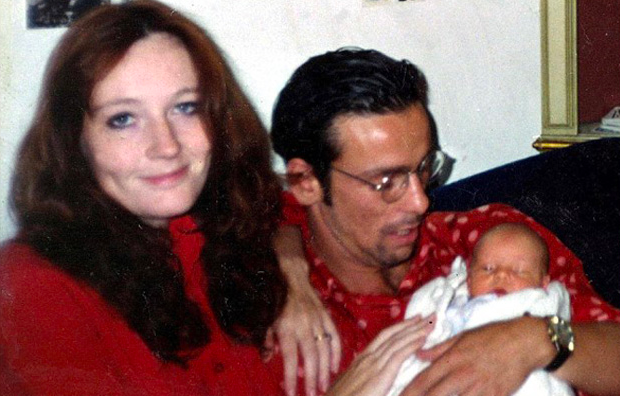
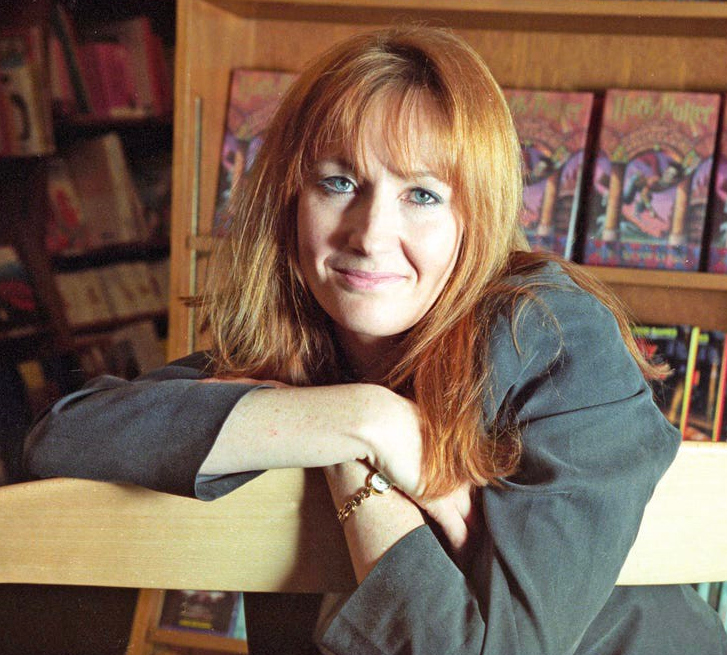
In her mid-30s, she became a woman.
In profiles after Harry Potter success, she’s often noticed shopping for feminine accessories. ‘Jo’ turned more ‘feminine’.
As her image evolved, her hair lightened to blonde, as she added bright red lipstick as a signature touch.
Then she became a redhead — the traditional hair color of witches and rent boys.
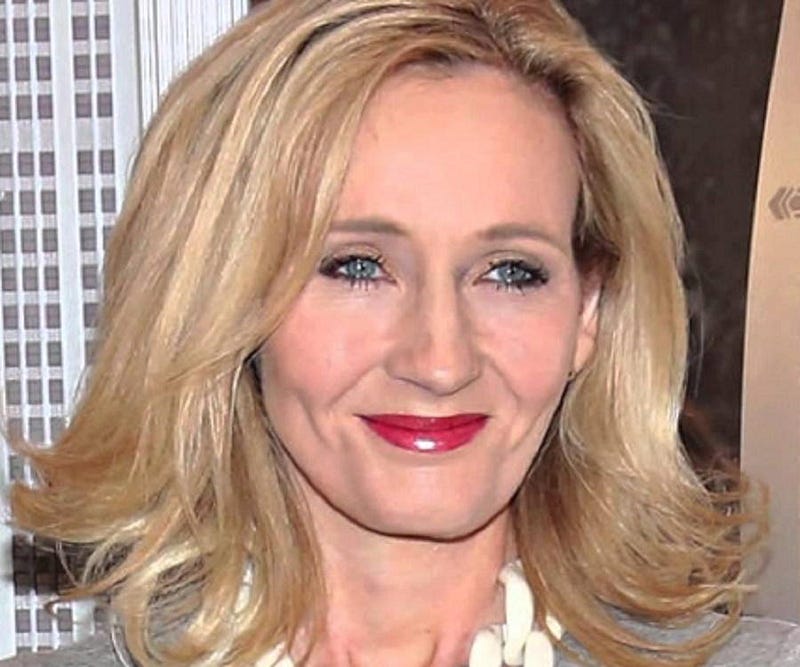
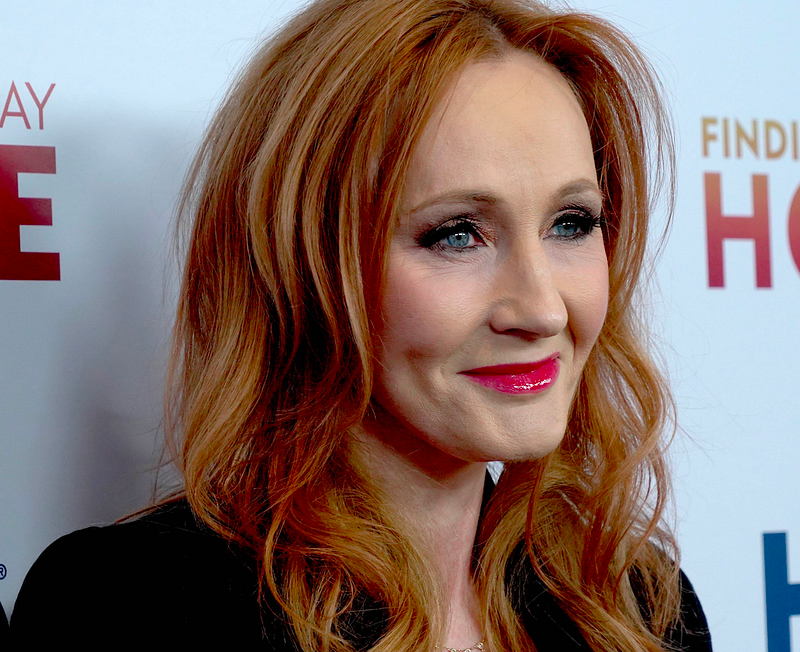
Then she started writing as ‘Robert Galbraith’.
In her post-Harry Potter novels, she began writing as a man. Some reviewers read the move as anti-feminist. A critic notes:
“In other words, one of the bestselling, most respected, wealthiest female authors in living memory has concealed her gender on every book she’s ever written.”
Rowling said she’d wanted a writing persona that was “as far away as possible from me, so a male pseudonym seemed a good idea.”
She’d also say it was an effort to let her inner man free . In 2014, she commented that “when I write a man I take certain things out and give free rein to aspects of me that would not be acceptable. To be honest, I think I’m quite blokey — at least I’m told I am, and I like writing both.”
Is that…queer? 🔶