avatar🥰Lanu Pitan🥰

Free AI web copilot to create summaries, insights and extended knowledge, download it at here

2245

Abstract

shelf life). This process destroys important nutrients like vitamins and minerals that are supposed to replenish our cells.</p><p id="fe5f">The juice is then de-oxygenated. This is to remove discolouration and off flavours. The resulting juice is then flavoured and colouring added to make it taste like the real thing. Once these are completed, the juice is ready for packaging.</p><p id="d2c5">The flavourings are usually made with the skin of the fruits, together with each company's cocktails. Each company cocktail has secret ingredients that are peculiar to them, and it is their trade secret to ensure all their juice taste the same all year round, no matter where it is sold. These companies have no legal obligation to disclose what ingredients make up the cocktails.</p><p id="b963">The companies, therefore, spend a lot of money to get their specific flavour right. They do this by hiring flavour design engineers. You now know why all your ‘Tropical Juice’ taste the same all year round.</p><div id="6b1b" class="link-block"> <a href="https://readmedium.com/are-you-selective-in-your-choice-of-fruits-fa2dfdfcfec3"> <div> <div> <h2>Are You Selective In Your Choice Of Fruits?</h2> <div><h3>You might be unknowingly packing in high sugar in your quest for fruits.</h3></div> <div><p>medium.com</p></div> </div> <div> <div style="background-image: url(https://miro.readmedium.com/v2/resize:fit:320/0*LrmW6Pmo5EoU_mdJ)"></div> </div> </div> </a> </div><h2 id="4311">What Flavour Packs Are Usually Made Of</h2><p id="77ac">I mentioned earlier that each flavour pack is specific to each company, and it is their secret ingredients that they are not legally bound to disclose. Nevertheless, <a href="https://gizmodo.com/dirty-little-secret-orange-juice-is-artificially-flavo-5825909"><b>food industry flavour packs</b></a> contain a combination of one or more of the following:</p><p id="e381"><b>Alcohol —</b> Fruit oils are usually preserved by adding alcohol to them. Fruit oils are derived from the skin of the fruits and are plentiful in citrus fruits like orange

Options

s, lemons and lime.</p><p id="9779"><b>Aldehydes —</b> are chemicals used in embalming, fungicide, insecticide and tanning products. They can be carcinogenic or toxic to the body.</p><p id="6811"><b>Decals —</b> are used generally in the plastic industry as solvents and lubricants. Decals have been linked to acne, breast pain/ enlarged breasts and abnormal bladder contractions.</p><p id="5a2e">Apart from the four mentioned above, flavour packs contain residue from insecticides and pesticide residue from orange oil sourced from countries with poor insecticides and pesticide residue, e.g. Brazil, Israel and Indonesia.</p><div id="bbdb" class="link-block"> <a href="https://www.foodrenegade.com/secret-ingredient-your-orange-juice/"> <div> <div> <h2>The Secret Ingredient In Your Orange Juice</h2> <div><h3>Do you buy orange juice at the store? If you do, I'm sure you're careful to buy the kind that's 100% juice and not made…</h3></div> <div><p>www.foodrenegade.com</p></div> </div> <div> <div style="background-image: url(https://miro.readmedium.com/v2/resize:fit:320/0*QKtEv3rPh3KoJC2B)"></div> </div> </div> </a> </div><h1 id="705c">The Takeaways</h1><ul><li>If you must take orange juice, then prepare it yourself, in the comfort of your own home. You know what you are drinking. And use only organic fruits, as these have fewer pesticides, if at all.</li><li>Taking orange juice should be minimised because of its high sugar content. It is always better to eat real fruits, as you also have the fibre with them, and this slows down sugar absorption into the bloodstream.</li><li><b>Fruits need to be combined correctly</b> — don’t mix acidic fruits (oranges/ grapefruit) with sweet fruits (mango/ melon). Also, <b>fruits and vegetables should not be juiced together</b> as it’s not good for digestion.</li><li>Those with diabetes-compromised<b> immunity</b> (such as the elderly or chronically ill) or <b>candida</b> <b>should not drink fruit juice</b> due to its high sugar content.<b> Opt for low-starch vegetable juices</b> instead.</li></ul></article></body>

Food/Wellness/Health

Is Drinking Fruit Juice Good For You?

Fruit Juice Is Marketed As A Pure And Healthy Drink, But Is That True?
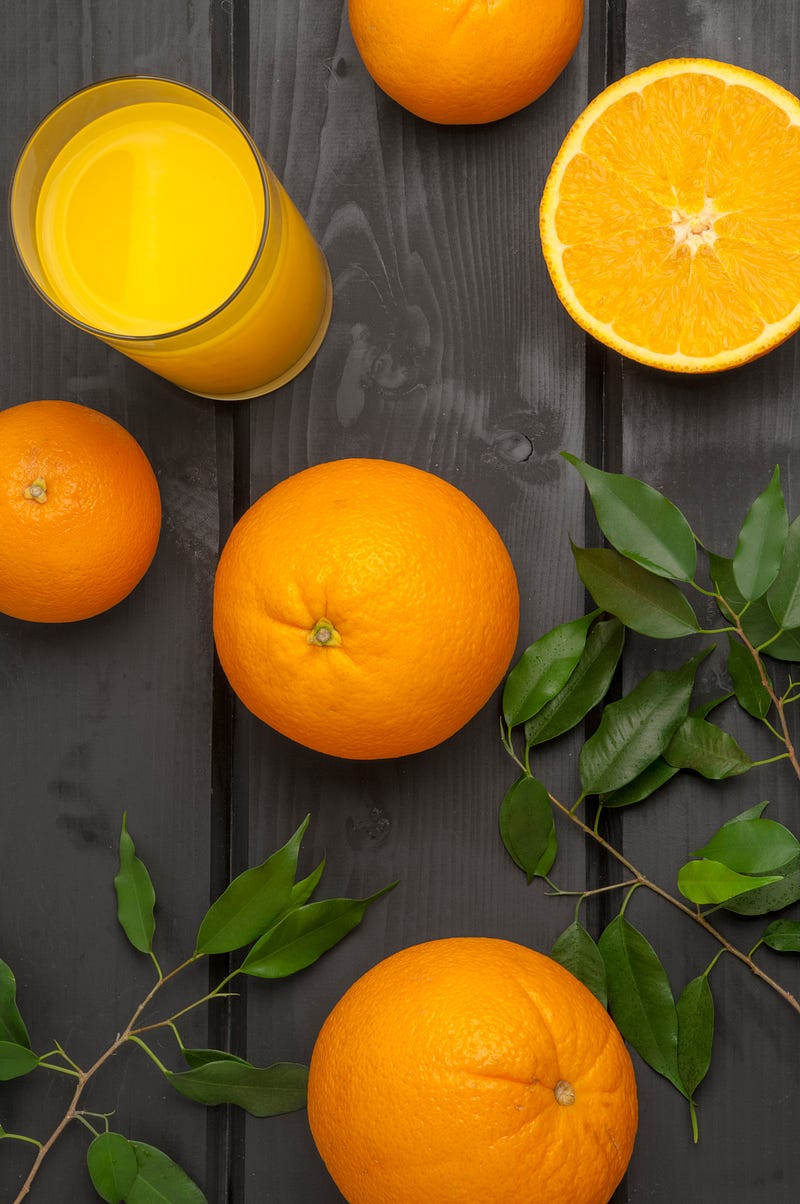
Producers often say it is 100% pure juice. What is the reality here? Photo by Aliet kitchen on Unsplash

We often see adverts claiming that orange and fruit juice is one hundred per cent whole fruit, and good for you too. Some even said taking it is tantamount to one of your recommended fruit a day. Can we trust these adverts or the producers in their claim?

The claim in these adverts jumped up the annual sales of fruit juices, oranges in particular. Indeed sales of fruit juices increase year in, and year out. It never goes down. That is the power of adverts in human behaviour.

How Fruit Juices Are Classified

Freshly Squeezed Orange/Fruit Juices — that is if you make your own directly from the fruit pressed from the juicer in your kitchen, then this is about the purest you can get. Some supermarkets have juicers in their food store/restaurants where you can order this straight from the juicer.

From Concentrate — Fruit concentrate is the sticky syrup left over after the real fruit juices have been extracted and the water evaporated.

Not From Concentrate — This is the fruit juice that has been extracted from real fruits, then pasteurised, oxidised and stored in a large aseptic tank.

Nectars — contain about 5% fruit, and are made up largely of water, syrup, preservatives and colourings.

The Real Process Of Making Fruit Juices

The juices are extracted from fruit juices, and stored in large aseptic tanks (storage can be as long as possible, some up to a year or more). It is here that the extracted juice is pasteurised (to remove pathogens and increase shelf life). This process destroys important nutrients like vitamins and minerals that are supposed to replenish our cells.

The juice is then de-oxygenated. This is to remove discolouration and off flavours. The resulting juice is then flavoured and colouring added to make it taste like the real thing. Once these are completed, the juice is ready for packaging.

The flavourings are usually made with the skin of the fruits, together with each company's cocktails. Each company cocktail has secret ingredients that are peculiar to them, and it is their trade secret to ensure all their juice taste the same all year round, no matter where it is sold. These companies have no legal obligation to disclose what ingredients make up the cocktails.

The companies, therefore, spend a lot of money to get their specific flavour right. They do this by hiring flavour design engineers. You now know why all your ‘Tropical Juice’ taste the same all year round.

What Flavour Packs Are Usually Made Of

I mentioned earlier that each flavour pack is specific to each company, and it is their secret ingredients that they are not legally bound to disclose. Nevertheless, food industry flavour packs contain a combination of one or more of the following:

Alcohol — Fruit oils are usually preserved by adding alcohol to them. Fruit oils are derived from the skin of the fruits and are plentiful in citrus fruits like oranges, lemons and lime.

Aldehydes — are chemicals used in embalming, fungicide, insecticide and tanning products. They can be carcinogenic or toxic to the body.

Decals — are used generally in the plastic industry as solvents and lubricants. Decals have been linked to acne, breast pain/ enlarged breasts and abnormal bladder contractions.

Apart from the four mentioned above, flavour packs contain residue from insecticides and pesticide residue from orange oil sourced from countries with poor insecticides and pesticide residue, e.g. Brazil, Israel and Indonesia.

The Takeaways

  • If you must take orange juice, then prepare it yourself, in the comfort of your own home. You know what you are drinking. And use only organic fruits, as these have fewer pesticides, if at all.
  • Taking orange juice should be minimised because of its high sugar content. It is always better to eat real fruits, as you also have the fibre with them, and this slows down sugar absorption into the bloodstream.
  • Fruits need to be combined correctly — don’t mix acidic fruits (oranges/ grapefruit) with sweet fruits (mango/ melon). Also, fruits and vegetables should not be juiced together as it’s not good for digestion.
  • Those with diabetes-compromised immunity (such as the elderly or chronically ill) or candida should not drink fruit juice due to its high sugar content. Opt for low-starch vegetable juices instead.
Food
Health
Wellness
Fruit Juice
Juice
Recommended from ReadMedium