avatarChristianlauer

Free AI web copilot to create summaries, insights and extended knowledge, download it at here

1690

Abstract

install and manage software locally. Similarly, DaaS outsources most data storage, data integration and data processing operations [2][3]. Read more about it <a href="https://readmedium.com/8adc912ef4b0">here</a>.</p><h2 id="e231">How does DaaS work and what does it look like?</h2><p id="f038">Tools such as talend, Data Prep and KNIME provide the user with UI through which not only Data Engineers but also Data Scientists and business users can build data processes without any programming.</p><figure id="cc88"><img src="https://cdn-images-1.readmedium.com/v2/resize:fit:800/0*Cgk2HEkweQpLocB5.png"><figcaption>Example of Google Data Prep — Source: <a href="https://www.trifacta.com/blog/data-preparation-solution-google-trifacta/">alteryx | Trifacta</a> [4]</figcaption></figure><p id="e820">These tools are often available as cloud applications and can thus be relatively easily connected to source systems and Data Warehousing solutions. In addition, the costly part of implementation and maintenance is eliminated or becomes much easier than running it yourself.</p><h2 id="ef53">A Danger for Data Engineers?</h2><p id="91fa">Will the Data Engineer now become superfluous or at least partially automated? It should be noted that such solutions enable Business Intelligence employees and Data Analysts, for example, to perform data analysis without the need for a Data Engineer. However, I think that smaller companies that do not have skilled employees will be strengthened by this. Large companies with a lot of data will probably still need Data Engineers to manage the volume of data and to quickly implement, adapt and monitor the data processes. Drag and drop solutions may ju

Options

st make their lives easier. There is also often a need for special customizations, which may require the programming expertise of a Data Engineer with Python, SQL and data architecture skills.</p><h2 id="249e">Summary</h2><p id="6d7c">All in all, it can be said that such solutions make the tasks of a Data Engineer easier and even people from outside the field can thus build data processes. For me it remains that rather small companies “replace” Data Engineers with it. Here, it also makes sense because they may not be able to afford a large team or even recruit employees from the market. But this also works the other way around, e.g. Data Engineers can be trained in the field of Data Science and develop Machine Learning models with SQL — an example is BigQuery ML or solutions like talend, alteryx and co. that combine Data Engineering with Data Science. If you want to learn how to become a Data Engineer and what how much salarey they earn, feel free to click <a href="https://readmedium.com/salary-of-a-data-engineer-d7a793b27b51">here</a>.</p><h2 id="6727">Sources and Further Readings</h2><p id="d07b">[1] Hazelcast, <a href="https://hazelcast.com/glossary/data-as-a-service/">Data-as-a-Service</a> (2022)</p><p id="e030">[2] talend, <a href="https://www.talend.com/resources/what-is-data-as-a-service/">What is Data as a Service</a> (2022)</p><p id="79d7">[3] Wikipedia, <a href="https://en.wikipedia.org/wiki/Data_as_a_service">Data as a Servic</a>e (2022)</p><p id="54ad">[4] alteryx| Trifacta, <a href="https://www.trifacta.com/blog/data-preparation-solution-google-trifacta/">A New Cloud-Based Data Prep Solution from Google & Trifacta</a> (2017)</p></article></body>

Is Data-as-a-Service killing the Data Engineer?

Should I start looking for another Job?

Photo by Christina @ wocintechchat.com on Unsplash

At first, SaaS and cloud-based Data Warehouses came along, and shortly thereafter, applications such as talend, KNIME, Data Prep and co. could also be obtained from the cloud. With these tools you can realize data integration via drag and drop, e.g. to realize ETL or ELT or even streaming — can that be a possible danger for Data Engineers?

What is Data-as-a-Service?

Let’s first define the term Data-as-a-Service (DaaS): Data-as-a-Service is a data management strategy that is using the cloud to enable storage, integration and processing of data over the network connection.
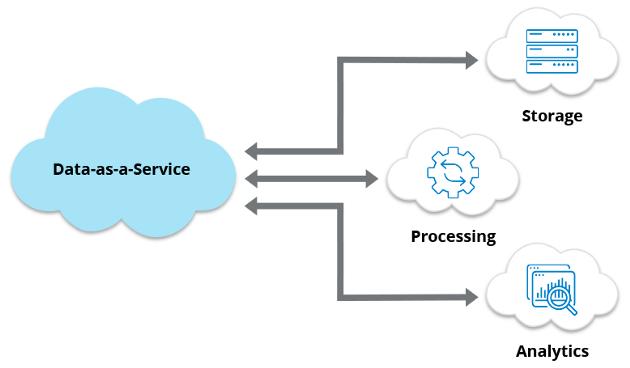
Illustration of Data as a Service — Source: Hazelcast[1]

DaaS is similar to SaaS, a cloud computing strategy that delivers applications to users over the network so they don’t have to run them locally on their devices. With SaaS, this eliminates the need to install and manage software locally. Similarly, DaaS outsources most data storage, data integration and data processing operations [2][3]. Read more about it here.

How does DaaS work and what does it look like?

Tools such as talend, Data Prep and KNIME provide the user with UI through which not only Data Engineers but also Data Scientists and business users can build data processes without any programming.
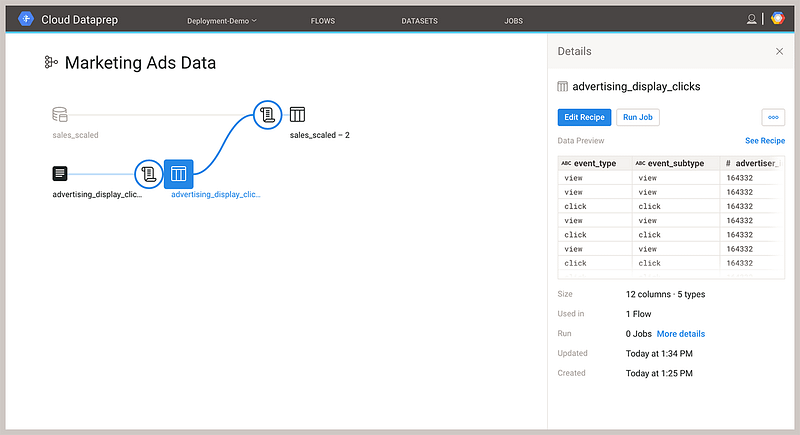
Example of Google Data Prep — Source: alteryx | Trifacta [4]

These tools are often available as cloud applications and can thus be relatively easily connected to source systems and Data Warehousing solutions. In addition, the costly part of implementation and maintenance is eliminated or becomes much easier than running it yourself.

A Danger for Data Engineers?

Will the Data Engineer now become superfluous or at least partially automated? It should be noted that such solutions enable Business Intelligence employees and Data Analysts, for example, to perform data analysis without the need for a Data Engineer. However, I think that smaller companies that do not have skilled employees will be strengthened by this. Large companies with a lot of data will probably still need Data Engineers to manage the volume of data and to quickly implement, adapt and monitor the data processes. Drag and drop solutions may just make their lives easier. There is also often a need for special customizations, which may require the programming expertise of a Data Engineer with Python, SQL and data architecture skills.

Summary

All in all, it can be said that such solutions make the tasks of a Data Engineer easier and even people from outside the field can thus build data processes. For me it remains that rather small companies “replace” Data Engineers with it. Here, it also makes sense because they may not be able to afford a large team or even recruit employees from the market. But this also works the other way around, e.g. Data Engineers can be trained in the field of Data Science and develop Machine Learning models with SQL — an example is BigQuery ML or solutions like talend, alteryx and co. that combine Data Engineering with Data Science. If you want to learn how to become a Data Engineer and what how much salarey they earn, feel free to click here.

Sources and Further Readings

[1] Hazelcast, Data-as-a-Service (2022)

[2] talend, What is Data as a Service (2022)

[3] Wikipedia, Data as a Service (2022)

[4] alteryx| Trifacta, A New Cloud-Based Data Prep Solution from Google & Trifacta (2017)

Data Engineering
Data Science
Data As A Service
Big Data
Technology
Recommended from ReadMedium
avatarKonstantin Mogilevskii
Amazon Redshift Data Sharing

Introduction

6 min read