avatarAnthony Mersino

Free AI web copilot to create summaries, insights and extended knowledge, download it at here

3219

Abstract

and <a href="https://readmedium.com/agile-leader-role-during-an-agile-transformation-c9ddd17d5393">lead the way as I outline in this post</a>.</p><p id="5ceb">Surveys of people that are using agile indicate that the main factor holding back agile adoption is company leadership.</p><p id="bbfb">If you review the annual “State of Agile” reports from VersionOne, the causes for failed projects and the barriers to agile adoption consistently point to company culture and management support (see survey results below from the 10th Annual report or <a href="https://digital.ai/resource-center/analyst-reports/state-of-agile-report">get the most recent results here</a>).</p><figure id="d822"><img src="https://cdn-images-1.readmedium.com/v2/resize:fit:800/0*xI1ziyitBxJGmYwu.png"><figcaption></figcaption></figure><p id="2f50">I don’t know if you can summarize this as the leadership not wanting to give up power and control, but it certainly indicates a lack of understanding of what it means to be “agile”.</p><p id="1ba4">Others point more directly at power and control as the underlying problem. Scaled Scrum expert <a href="https://www.craiglarman.com/wiki/index.php?title=Main_Page">Craig Larman </a>has an interesting take on this in what he calls his <a href="https://www.craiglarman.com/wiki/index.php?title=Larman%27s_Laws_of_Organizational_Behavior">4 laws of organizational behavior</a>:</p><blockquote id="1d72"><p>1. Organizations are implicitly optimized to avoid changing the status quo middle- and first-level manager and “specialist” positions & power structures.</p></blockquote><blockquote id="6d3f"><p>2. As a corollary to (1), any change initiative will be reduced to redefining or overloading the new terminology to mean basically the same as status quo.</p></blockquote><blockquote id="956a"><p>3. As a corollary to (1), any change initiative will be derided as “purist”, “theoretical”, “revolutionary”, “religion”, and “needing pragmatic customization for local concerns” — which deflects from addressing weaknesses and manager/specialist status quo.</p></blockquote><blockquote id="c6af"><p>4. Culture follows structure.</p></blockquote><p id="3388">Larman commented at a recent Meetup that he didn’t think you could convince organizations to adopt agile practices; he felt they needed an existential crisis to come to the conclusion on their own.</p><p id="050f">Did you find that agile didn’t work for your organization because of the cultural and leadership issues mentioned here? Or do you find that your organization is trying to do both — maintain tight control of the status quo and claim to be agile at the same time? I’d love to hear your thoughts.</p><h2 id="5b33">⭐️Thank you for reading. If you enjoyed this article, feel free to hit that clap button 👏 to help others find it.</h2><h2 id="0ff0">Let’s connect on Twitter or find me professionally in Linkedin.</h2><h2 id="f3e6">Leave a comment below if you have any questions, and subscribe to receive the latest updates in Agile and Scrum.</h2><div id="d934" class="link-block"> <a href="https://amersino.medium.com/subscribe"> <div> <div> <h2>Get an email whenever Anthony Mer

Options

sino publishes.</h2> <div><h3>Get an email whenever Anthony Mersino publishes. By signing up, you will create a Medium account if you don’t already…</h3></div> <div><p>amersino.medium.com</p></div> </div> <div> <div style="background-image: url(https://miro.readmedium.com/v2/resize:fit:320/0*iY9Ke0uoo0wFiJyE)"></div> </div> </div> </a> </div><p id="558e"><i>Anthony Mersino is the founder of Vitality Chicago, an Agile Training and Coaching firm devoted to helping Teams THRIVE and Organizations TRANSFORM. He is also the author of two books, <a href="https://www.amazon.com/Agile-Project-Management-2nd-Success/dp/B0BWHLF796/ref=sr_1_4?qid=1678677970&amp;refinements=p_27%3AAnthony+C+Mersino&amp;s=books&amp;sr=1-4&amp;text=Anthony+C+Mersino">Agile Project Management</a>, and <a href="https://amzn.to/1OEPoPY">Emotional Intelligence for Project Managers</a>.</i></p><h1 id="65d7">If you enjoyed this post, you might be interested in the following:</h1><div id="8c80" class="link-block"> <a href="https://readmedium.com/5-key-differences-between-agile-adoption-agile-transformation-b24049faef6c"> <div> <div> <h2>5 Key Differences Between Agile Adoption & Agile Transformation</h2> <div><h3>People frequently mix the terms Agile Adoption and Agile Transformation. Explore the 5 key differences and decide which…</h3></div> <div><p>medium.com</p></div> </div> <div> <div style="background-image: url(https://miro.readmedium.com/v2/resize:fit:320/0*FLfU6UwdGXU4aPEo)"></div> </div> </div> </a> </div><div id="5cc0" class="link-block"> <a href="https://readmedium.com/agile-leader-role-during-an-agile-transformation-c9ddd17d5393"> <div> <div> <h2>Agile Leader Role During an Agile Transformation</h2> <div><h3>This article provides the Agile Leader with a detailed look at their role in Agile Transformation and a blueprint for a…</h3></div> <div><p>medium.com</p></div> </div> <div> <div style="background-image: url(https://miro.readmedium.com/v2/resize:fit:320/0*aLfMlYpSgzZVxtMD.jpg)"></div> </div> </div> </a> </div><div id="bfee" class="link-block"> <a href="https://readmedium.com/how-to-successfully-transition-from-waterfall-to-scrum-21b6fb788e5d"> <div> <div> <h2>How to Successfully Transition from Waterfall to Scrum</h2> <div><h3>Moving from Waterfall to Scrum has a huge potential payoff. This blog outlines an approach & links to specific agile…</h3></div> <div><p>medium.com</p></div> </div> <div> <div style="background-image: url(https://miro.readmedium.com/v2/resize:fit:320/1*IbVjzrGre4TtGxBqir9vcw.jpeg)"></div> </div> </div> </a> </div></article></body>

Is Company Culture Your Biggest Agile Transformation Challenge?

Discover why company culture can be an Agile transformation challenge and what you can do to change and help your agile transformation succeed.
I’ve been exploring what makes an Agile transformation succeed as well as some of the challenges that can get in the way. Company culture is a big agile transformation challenge that many organizations face. Learn what you can do to evolve your culture and help your agile transformation succeed.

Previously I wrote about difficulties with co-locating teams as one of several agile transformation challenges.

Several people commented that they thought I missed the boat (which is likely) and that the most common reason that agile doesn’t work is that managers cannot change their command and control behaviors and create an environment where people can do their best work.

I agree. And that is why I am writing this post about company culture being an Agile Transformation challenge.

Many Leaders Don’t Understand Agile

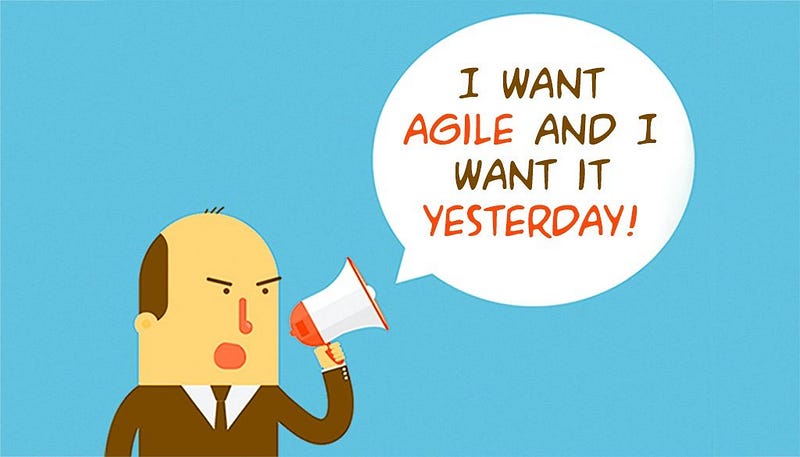
I think there is frequently a misunderstanding about what Agile and an Agile Transformation mean to an organization. In many organizations, it seems like managers think that agile means going faster.

Or they that Agile represented a way to deliver faster or eliminate paperwork or enable changing requirements on the fly. Their misunderstanding is an agile transformation challenge in itself.
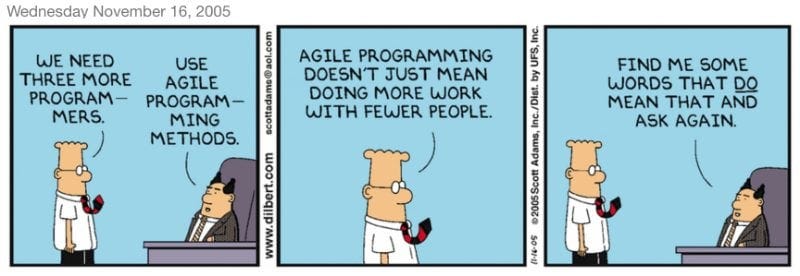
The real key to Agile is understanding the 4 Agile Values and 12 Agile Principles. They represent a mindset and way of thinking. It is that mindset that makes an organization Agile.

How Can Company Culture be an Agile Transformation Challenge?

The focus of Agile Transformation is the change in culture. Transformation goes well beyond changing the processes organizations use.

While Agile adoption may mean a process change, an Agile transformation should impact the way people think and behave. See my article detailing the differences between Agile Adoption and Agile Transformation here.

The challenge is that many managers only see the process change. They don’t associate the word agile with empowerment, trust, and self-organization.

They don’t realize that for agile to succeed in their organization, they need to practice participatory decision-making, collaboration, and servant leadership.

Managers Need to Understand and Support Agile

Managers and leaders need to first understand Agile in order to be able to support it in the organization. They need to take responsibility for their own education and lead the way as I outline in this post.

Surveys of people that are using agile indicate that the main factor holding back agile adoption is company leadership.

If you review the annual “State of Agile” reports from VersionOne, the causes for failed projects and the barriers to agile adoption consistently point to company culture and management support (see survey results below from the 10th Annual report or get the most recent results here).
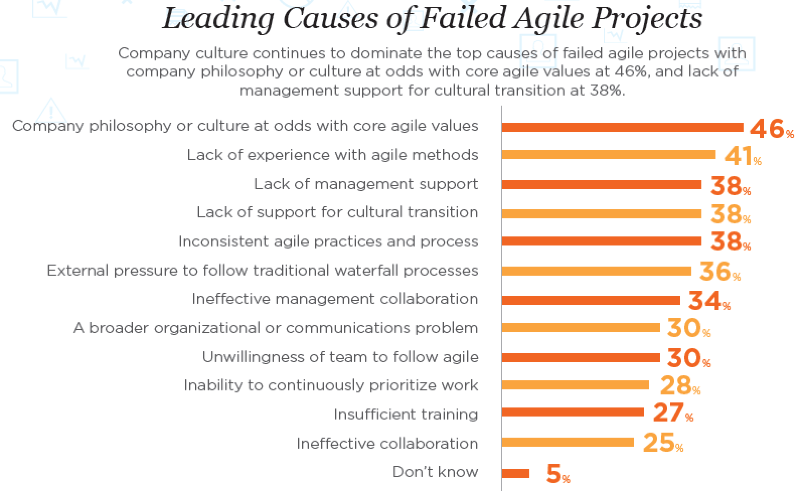
I don’t know if you can summarize this as the leadership not wanting to give up power and control, but it certainly indicates a lack of understanding of what it means to be “agile”.

Others point more directly at power and control as the underlying problem. Scaled Scrum expert Craig Larman has an interesting take on this in what he calls his 4 laws of organizational behavior:

1. Organizations are implicitly optimized to avoid changing the status quo middle- and first-level manager and “specialist” positions & power structures.

2. As a corollary to (1), any change initiative will be reduced to redefining or overloading the new terminology to mean basically the same as status quo.

3. As a corollary to (1), any change initiative will be derided as “purist”, “theoretical”, “revolutionary”, “religion”, and “needing pragmatic customization for local concerns” — which deflects from addressing weaknesses and manager/specialist status quo.

4. Culture follows structure.

Larman commented at a recent Meetup that he didn’t think you could convince organizations to adopt agile practices; he felt they needed an existential crisis to come to the conclusion on their own.

Did you find that agile didn’t work for your organization because of the cultural and leadership issues mentioned here? Or do you find that your organization is trying to do both — maintain tight control of the status quo and claim to be agile at the same time? I’d love to hear your thoughts.

⭐️Thank you for reading. If you enjoyed this article, feel free to hit that clap button 👏 to help others find it.

Let’s connect on Twitter or find me professionally in Linkedin.

Leave a comment below if you have any questions, and subscribe to receive the latest updates in Agile and Scrum.

Anthony Mersino is the founder of Vitality Chicago, an Agile Training and Coaching firm devoted to helping Teams THRIVE and Organizations TRANSFORM. He is also the author of two books, Agile Project Management, and Emotional Intelligence for Project Managers.

If you enjoyed this post, you might be interested in the following:

Agile Transformation
Agile Adoption
Agile Leadership
Leadership
Recommended from ReadMedium