
Stupid Internet Videos Are Everywhere — And They Reveal 7 Cruel Truths
I’ve come to accept what stupid videos are telling me about the nature of people and the modern economy.

“Where are we going with all the stupid videos?”
This question intrigued me, as I read S M Mamunur Rahman’s “An Entire Generation Is Looking for Shortcuts.”
In it, he writes:
YouTube, TikTok, Facebook, Instagram has [sic] already taken over human minds. We are now living in the most uncivilized era where people fart on the street and film that to make money…
Everyone is looking for shortcuts thinking that the early [sic] they can make more money, the happier they will be. So people are making stupid videos, doing live streaming, showing what is under their shirts or pants, doing objectionable pranks, and many more.
I used to think the same.
These days? I’m not so sure anymore.
#1. Intellectuals Have No Idea What People Want

I used to be a graduate student in sociology. I did play with the idea of pursuing a Ph.D., but I gave that up. I knew deep in my heart and also via research, that it wasn’t going to pay the bills.
It wasn’t going to pay the bills because people don’t care about art, beauty, and truth. No, most people don’t care about deep thoughts or having an opinion on the world.
The poets, intellectuals, and philosophers that do care, tend to project their values onto what others should care about. And we are somehow disappointed, dismayed, or disgusted that the rest of the world doesn’t give a sh*t about that.
No, the world doesn’t give a sh*t about your great ideas.
No, people don’t care about art, beauty, and truth.
A cruel lesson, but this is the truth I’ve come to accept.
#2. What Do People Truly Desire?

If there’s one thing I learned from my marketing career, it is this: People’s decision-making is driven by emotions; fear, guilt, avoidance of pain, social acceptance, and others. According to one Harvard marketing professor, 95% of consumer behavior is subconscious.
That’s why marketers try to discover consumer insights. What are consumer insights, you ask? They’re insights into the subconscious, psychological motivations that drive consumer behavior, and which the consumer is only subliminally aware of.
Marketers spend a lot of money trying to plumb consumer insights. Just take a moment to process the fact that the global market research industry generated over 70 billion US dollars in revenue in 2019, growing more than two times than compared to 2008.
So what do people really want?
People want to feel special. They want to feel like they have made it. Or that they can afford the pleasures of life. Or they want to show off to others around them. That’s why people love luxury goods. How else do you think Louis Vuitton was valued at 75 Billion USD dollars in 2021? How else does Hermes’s Kelly bag cost over five figures?
Another thing people want?
People want to laugh. People want to want to see funny cat videos. Case-in-point? The video below has 57 million views. Youtube made it possible for people to create and watch endless funny cat videos.
People want to see sexy videos. It’s funny that OnlyFans tried to distance themselves from porn and had to reverse that decision even though that’s what OnlyFans is primarily known for. How rich is OnlyFans? Since its inception (in 2016), the platform has reportedly paid out 3.2 billion US dollars to its content creators.
People want to be entertained. Netflix grew so rapidly during the pandemic precisely because people were bored. The company added 36 million subscribers in 2020 alone. As of Q3 of 2021, there were more than 213 million paying Netflix subscribers globally.
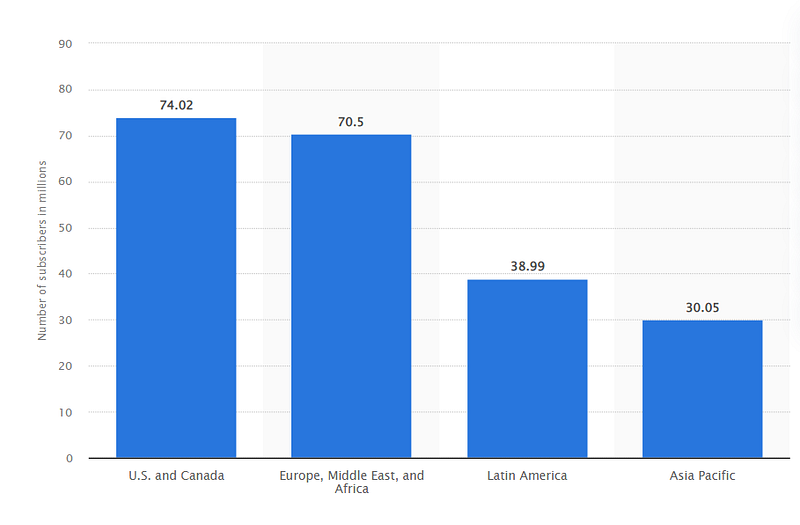
Why? Maybe because life is painful and boring otherwise. The Buddha was right — we are always chasing for more stimulation because the human mind is always dissatisfied.
#3. Marketers May Be Liars, But At Least They Understand People

One of my favorite marketers, Seth Godin, once wrote that “all marketers are liars,” or at least they are storytellers. You can check out his book here (not an affiliate link).
When I decided to quit academia and go into marketing, I did it thinking that I was “selling out.” The idea of selling things to people they didn’t need seemed objectionable and maybe even a bit unethical to me. That was what I thought marketers did.
Today, I have a more nuanced take.
I wished I had the superpower to brainwash people, but honestly, marketers are not that powerful. At most, we tell stories that speak to those unmet needs which already exist (but which consumers are only subliminally aware of).
Marketers do not brainwash, we seduce. And that is why we spend all time and money to refine our messaging and our campaigns, revising them again and again. And for what? So that we don’t lose to the competition.
If we don’t succeed in selling our product, another business is going to come and sell whatever the consumer wanted all along, all the same.
#4. Why Do Anything Else If Making Stupid Videos Pays the Bills?

I grew up in Singapore, a country which — in the words of the first Prime Minister Lee Kuan Yew — went from Third World to First within 35 years (not an affiliate link). Growing up, the narrative that had been drummed into me by my Asian parents was this:
- Study hard.
- Get into university and graduate with a degree.
- Get a good, stable job.
- If you don’t study hard, you’ll end up as a street sweeper!”
Now that I’m older, I know that it’s all about the labor market. And the labor market, like any other market, works on supply and demand.
Street sweepers are important and perform a vital function of keeping our public areas clean. Unfortunately, it’s unskilled labor that can be easily replaced or automated, hence the low value assigned to their work, despite their contribution to the public commons.
The problem with the supply side of the equation is that degrees are plentiful these days. You must have heard of “degree inflation” cheapening the value of a degree. On the demand side, we know that the money is in technology.
Entire swaths of industries are increasingly being transformed by technology. Global VC investment totaled a record-breaking 643 billion USD in 2021. A deluge of VC money is flowing into tech. All kinds of tech. Climate change tech. HR tech. Supply chain tech.
A degree is no longer the route to success. It appears that getting a job at a unicorn is the new way to be successful.
It’s not my parents’ fault. They couldn’t have imagined any of this.
#5. Automation and Technology Will Continue to Drive Change

This is not a new narrative. Jobs will be lost to — or be transformed by automation and technology. And the pace of change seems to be picking up.
A 2020 McKinsey study, based on surveys with 800 global executives, reported that the pandemic has accelerated the speed of transformation. In particular:
“- 85% of respondents said their businesses have somewhat or greatly accelerated the implementation of technologies that digitally enable employee interaction and collaboration, such as videoconferencing and filesharing
- Roughly 50% of those surveyed reported increasing digitization of customer channels, for example, via eCommerce, mobile apps, or chatbots.
- 35% percent have further digitized their supply chains, for example, by connecting their suppliers with digital platforms in supply chain management”
Consider again, that the World Economic Forum says that in 2030, 9 out of 10 jobs will require digital skills.
“Over the next 10 years, 1.2 billion employees worldwide will be affected by the adaptation of automation technologies and AI. This is equal to 50% of the world economy and will disrupt US$14.6 trillion in wages.”
A report by consultancy Oxford Economics that was commissioned Snap by goes even further. They claim that 75% of all jobs will require advanced technical skills by 2030.
Exaggerated? Biased? I don’t think so. Almost every marketing job I look at on LinkedIn requires technical knowledge. You can tell me in my comments if I’m wrong.
If you ask me, the ones who are making stupid videos today are going to have a chance of making it tomorrow when they have the last laugh at monetizing their skills.
#6. Tech Is Really Eating the World

In 2011, the technologist and investor Marc Andreessen wrote the article “Why Software is Eating the World.”
I think he was right.
You used to be able to make a good salary without technical skills. Now that increasingly looks like a pipe dream. What do you expect to get by without technical skills?
It appears to me that jobs in this tech-driven economy will increasingly split into 4 categories:
- Tech-heavy jobs: programmers, software developers, data scientists, UX/UI, web designers and developers, etc.
- Tech-literate jobs: business analysts, project managers, marketers, etc.
- Content creators in the creator economy: Youtube, Instagram, TikTok, and the next up-and-coming yet to be created social media platform.
- Freelancers and odd-jobbers in the gig economy: your Uber drivers and food deliverers, and people using freelancing platforms.
The barriers to a “real job” that pays well (category 1 and 2) keep getting harder — but in the world of content creation and odd-jobbing (categories 3 and 4), the barriers to entry are falling all the time.
Driving for Uber isn’t glamorous. At least being a Youtuber is (potentially). A recent survey in the UK reported that 17% of children want to become social media influencers when they grow up. In the United States, 86% of young Americans (aged 13–38) want to try out becoming an “influencer.”
Is it so strange that everyone wants to make stupid videos?
#7. A Life Time of Wage Slavery or the Possible Chance to Make It Rich?

I haven’t been back to Singapore in a while due to the pandemic. Still, news from Singapore shows up on my feed from time to time. Recently, a fascinating story appeared on my feed.
OnlyFans user Titus Low charged with offences linked to obscene materials
Titus Low is an OnlyFans “creator” who got on the wrong side of the law in Singapore. Someone had made a police report against him, claiming that he was “transmitting obscene materials by electronic means” — which is a criminal offence in Singapore.
For context, Singapore is a relatively conservative society, having inherited many of its laws from Victorian England as part of its colonial legacy.
The surprising thing is that Titus Low is only 22, but he can afford to drive a Lamborghini and rent a condominium apartment in land-scarce Singapore for $9000 a month (around 6500USD at current exchange rates at time of writing).
I have a “real job” and I’m nowhere close to that kind of lifestyle. The painful lesson that you and I are both taking away is this: Get a “real job” and you will most likely be a wage slave for the rest of your life. But, become a content creator and you might just have the chance to succeed.
I think many younger folks would rather make this asymmetric bet. Why play a game that is rigged against you? People are emotional, but they are also more rational than we give them credit for.
No wonder retail traders bet big on options in the entire #WallStreetBets Gamestop and AMC debacle that made financial news in 2021.
Is an entire generation looking for shortcuts or is it something else?
Maybe the joke is really on us.
The author writes on a variety of topics. His key topics are Japan, society, culture, modern work, and cryptocurrency, with the occasional fictional story, creative piece, or reflective essay. Discover his most-read stories here.
If these topics interest you, consider subscribing to receive new stories from the author via e-mail.


