
Is All Life Equal? Utilitarianism & Animal Rights
The Moral Value of Non-Humans
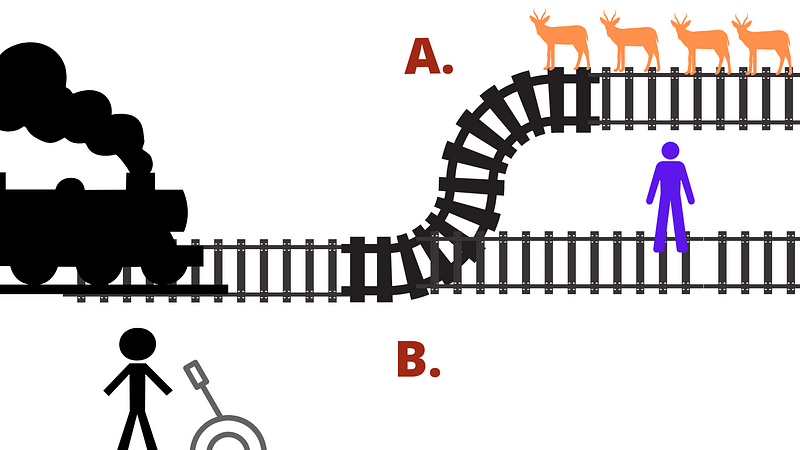
Animal Liberation
Between Glow-in-the-dark AIDS kittens, Revlon-caked rabbits, and dreamy mice with great listening skills, it is estimated that anywhere from 14 to 170 million animals are being experimented on and used for research purposes today. The protection of animals is not just a call for synthetic shoes and widespread veganism, it is a sensitive and highly debated issue about extreme, and often warrantless cruelty on animals en masse. How does modern society continue to justify these acts and where do animals fit into utilitarianism?
Animals have not enjoyed great success in seeking their refuge in the realm of philosophy. Renee Descartes ( “I think therefore I am.” before Billie Eilish) is commonly condemned as one of the root issues and for being an instrumental influence on many anti-abolitionists to follow. In Discourse and Method (1637) Descartes reasoned that animals were simply “automata” or mechanisms. Animals, because they did not have a soul, therefore could not feel pain. Though other philosophers like CS Lewis, who acknowledges animal pain but only as vastly different from human suffering, have taken softer stances this experiential distinction between humans and animals seems to often take center stage in the debate.

Popular Justifications for the Dominance of Animals:
- Might Makes Right- humans have a right to enjoy their position as the reigning champ of natural selection.
- “It Has Always Been That Way” — the domination of animals is ingrained in human culture and has become a fundamental fact of life. ( ie. “it be like that sometimes.)
- Moral Intelligence- rights can only exist among and be defended by beings who can make moral claims against one another.
- Superior Capacities- by virtue of their superior capabilities humans have a superior moral worth (yikes.)
- Divine Command — “Be fruitful and multiply, and fill the earth and subdue it; and have dominion over the fish of the sea and over the birds of the air and over every living thing that moves upon the earth” (Gen 1:26)
The Utility of Utilitarianism
Utilitarianism often used interchangeably with consequentialism, is a system of Normative ethics. Ethical systems seek to provide a guiding structure to moral dilemmas and in their ultimate, though paradoxical purpose, aspire to unite humanity through common and justified values. Utilitarianism's appeal is broadened by its simplicity, as it maintains but one principle: Utility. The principle of utility maintains that the goal of any ethical decision is to promote the most good for the most people possible.
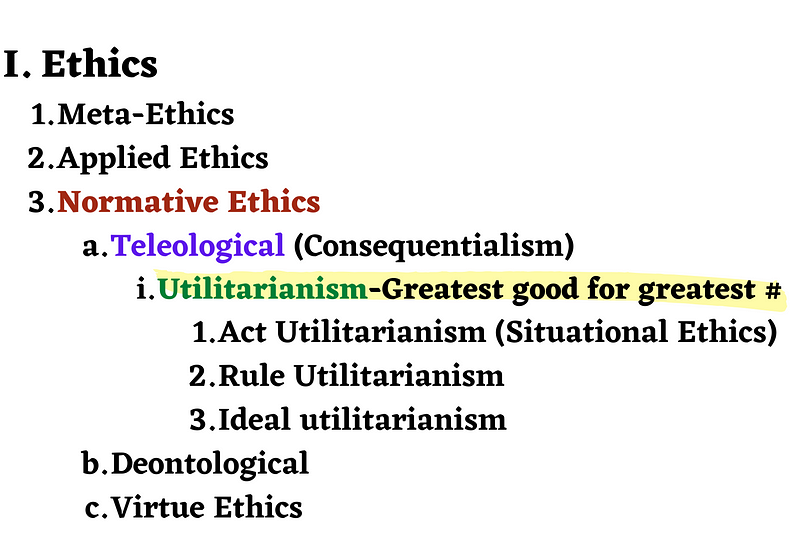
Consequentialism (teleological) stands in opposition to deontological ethics: systems of ethics that adhere to a set of rules or duties. These systems would consider the moral value of the act itself rather than the consequences of that act. This is why the terms liberation or protection are often seen in place of animal rights. While utilitarians may use their ethical system to argue in favor of legal rights for animals, the concept of objective rights stands in contradiction to the utilitarian principle. Nonetheless. approaching the issue through a utilitarian lens may provide an answer as to what rights or protection if any, animals deserve.
Four Elements of Utilitarianism
- Consequence
- Welfare
- Impartial & Equal Consideration
- Aggregation
Though utilitarianism, stands on but a single principle, there are four identifiable characteristics or “Elements” of a utilitarian system of ethics. Consequence, welfare, equal consideration, and aggregation. Each element lends to one another in an interdependent system.
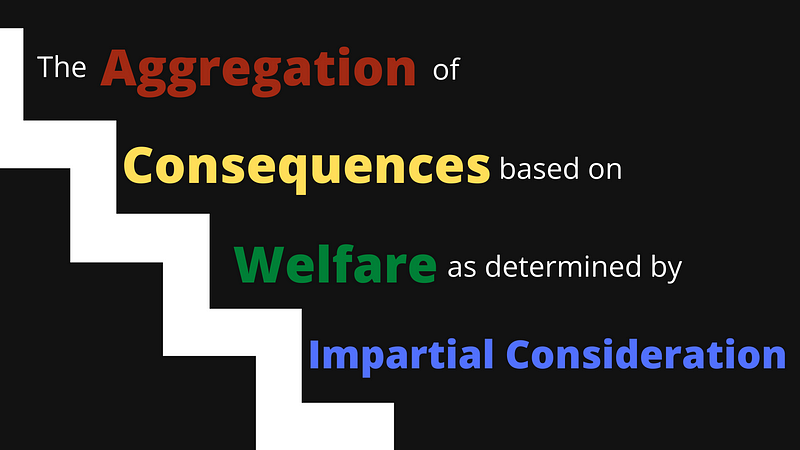
The moral value of an act is determined by its actual consequences. The value of those consequences is determined through the principle of utility: to promote the welfare or positive experience for the highest number. Welfare must be determined impartially by considering all parties equally. This all occurs due to the acceptance of Aggregation: the belief that the value of the world is determined by the sum of its parts, in this case, experiences or states of well-being. In other words, increasing the amount of pleasure on earth increases the world’s moral value. Therefore, the “good” decision is the one that promotes the most well-being possible.
Utilitarian Calculus- Due to the acceptance of aggregation, it stands to reason that the proper utilitarian should be delighted to see hundreds of millions of positive and pleasurable experiences added to this calculation through the liberation and protection of animals. But how does one justify this inter-species equality without undermining the other elements of utilitarianism?
The Well-being of Animals
Through principles like empathy and equality, it is intuitive to value the well-being of your fellow man. How might one extend this philosophy to non-humans and justify the well-being of animals as a moral principle?
Under utilitarianism, one may instinctively want to justify the reduction of animal cruelty by virtue of its effects on humans. The suffering of animal populations, after all, can contribute to the negative states and experiences in humans that utilitarianism is designed to avoid. However, the amount of pleasure brought to those empathetic to non-human animals will likely never outweigh the pleasure derived from eating meat, leather, hunting, etc.
Contemporary philosopher and noted utilitarian Peter Singer likens the oppression of animals to the justifications of slavery and racial supremacy. throughout history the persecution of certain groups has been justified by some morally irrelevant differences, most often race, religion, or geography. . As Singer sees it, if we cannot identify any morally relevant differences between humans and animals then we are no better than the slave-driver. The singer refers to this attitude of human superiority as “Speciesism.” In Singer's view, not treating all animals equally is as evil as racism or sexism. He believes that animals have moral worth because, like humans, they have the capacity to either suffer or enjoy their lives. In other words, as the classical utilitarian Jeremy Betham believed, the basis of equal moral consideration is the capacity to suffer.
Some may want to differentiate humans by virtue of their intelligence, but how is this argument to stand when there are apes who are more mentally capable than infants or the deranged? To defend animal cruelty on the basis of superior capabilities is to only support Singer in drawing the parallel to racism, what is to stop us from extending that philosophy to members of our own species with inferior capacities?
Proponents such as Singer do not approach the issue by providing justification for the moral value of animals but rather point out the lack of justification in differentiating humans from animals. In this view there is no morally relevant difference between a human and a non-human animal, therefore it should reason that they both have moral worth.
Impartial Consideration

Perhaps animals cannot be included without adding a new principal. or a caveat to the third. How are we to consider animal well-being impartially and equally when compared to human life? If a dog and a baby are both in a burning building are both their lives equal? Can the utilitarian, now including animals in his calculus, justly choose to rush to the aid of the canine before the infant?
Peter Singer attempts to respond to this objection in his infamous book Animal Liberation. He does not believe that the extension of basic equality to animals means that animals must be equal in rights or treatment. He acknowledges the many obvious differences between humans and animals.
The basic principle of equality does not require equal or identical treatment; it requires equal consideration. Equal consideration for different beings may lead to different treatment and different rights
Because Singer is a utilitarian he is advocating for equal consideration, not equal rights. However though animals may receive different treatment on a case-by-case basis, utilitarianism would still call for impartial consideration. The principle of equal consideration would dictate that we take the suffering of all beings into account impartially. The radical view that animal life and human life are fully equal in value is what scares most people away from utilitarian conclusions.
These are the type of “wrong” moral decisions philosopher Carl Cohen thinks this equality will fail to account for.
“Speciesism is not merely plausible; it is essential for right conduct, because those who will not make the morally relevant distinctions among species are almost certain, in consequence, to misapprehend their true obligations. -Carl Cohen 1986

Cohen, however, given away by his use of the term “obligations” is taking a deontological approach. A duty-based system could offer a compromise. Through identifying and ranking moral obligations a deontological system could simply assert that we have a moral duty to protect the well-being of animals save for when it conflicts with our duty to protect the well-being of other humans.
Many philosophers argue that specifically, rule utilitarianism can allow for some biased consideration for ourselves and those we have relations with, without violating the impartiality of utilitarianism. It stands to reason that this can easily be extended to animals. Just as we place higher moral value on our children than strangers perhaps we can recognize that animals indeed have moral value without being forced to equate it to our own.
The use of animals in research and experimentation may lead to great strides in science and healthcare, it may even, for now, be a necessary evil. Though it is not often the case, animal testing, done correctly and out of necessity, can lead to life-saving interventions and medications that can improve countless lives. However, cruelty, inhumane treatment, and disregard for the well-being of animals seem to be unjustifiable under any practical system of ethics. In spite of religion or preferred ethical framework, most of us should be able to agree on the moral value of preventing pain and suffering, regardless of species. While it seems like there is no proper secular justification for the exclusion of animals from our moral consideration, it remains unclear whether utilitarianism could hold the key to their liberation.
Thank you for reading!


Follow -> ⭐ Facebook ⭐ Twitter ⭐ Vocal.Media


