
Is a classic Christian song about a female God?
A look back at Amy Grant’s “El Shaddai”
I’ve been looking at odd themes of gender in Evangelical culture, typically not recognized ‘officially’. Take Amy Grant’s classic song, “El Shaddai.”
What could be odd about that? It’s sung in many a church. Aren’t Christians just praising God using an Old Testament name? Indeed, and it’s a name, interestingly, that scholars say refers to a female deity.
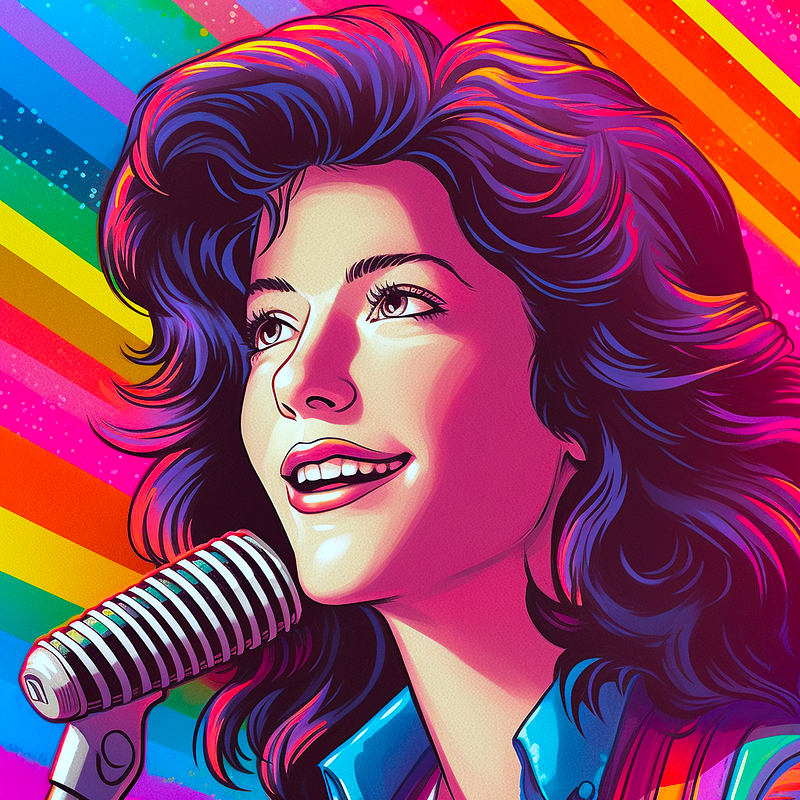
In the Old Testament, God goes by many names.
“El Shaddai” was said to mean “God Almighty,” as if the deity’s omnipotence, or maybe His power, was the quality in view.
But there’s a longtime scholarly case that the word ‘shaddai’ suggests mountains, or more to the point, ‘breasts’. The Hebrew word shad means ‘breast’. And the name ‘El Shaddai’ is used in the Bible mostly in the context of fertility and infertility.
Try Genesis 28:3, when Isaac is giving his son a marriage blessing:
“May God Almighty bless you and make you fruitful…”
In Ruth 1:21, Naomi sees her kids are dead. Old and childless, she sees herself as cursed, and uses two names of God: Yahweh and Shaddai:
“The Lord has afflicted me; the Almighty has brought misfortune upon me.”
In the early 20th century, newly discovered ancient texts kept pointing to ‘breasts’.
The suggestion was explored in a 1935 paper by the famous scholar W.F. Albright, and continued in his 1968 book Yahweh and the God of Caanan.
The idea of ‘Shaddai’ meaning ‘breasts’ was accepted by conservatives, with an odd idea that the male God was offering female consolation. The Scofield Reference Bible itself, in a note at Genesis 17:1, reports:
“Shaddai primarily means ‘The Breasted One’ and suggests God as The Nourisher, The Strength-Giver, The Satisfier, who pours Himself into believing lives.”
In newspaper archives I see regular suggestions of Christians throughout the 1960s and 1970s thinking about ‘El Shaddai’ as the ‘Breasted One’, as evoked God’s maternal side.
With the rise of feminism, there was more interest in God’s femaleness.
A broad range of points were made that can seem very startling to the Christian reader, as they’re often concealed in translation. In Numbers 11:15, for example, Moses addresses the deity using a female pronoun.
The ‘Wisdom’ of the Bible seems to be God in a female aspect. Could El Shaddai have been another female aspect of the all-powerful deity?
In February 1982, David Biale published a paper, “The God with Breasts: El Shaddai in the Bible,” that for many Bible scholars made a conclusive case that ‘El Shaddai’ did point to a feminine presence.
And on April 12, 1982, Amy Grant released her Age to Age album, which became a huge hit. Her song “El Shaddai” was a special favorite.
The songwriter was Michael Card, a Bible scholar in training.
I’m looking up his details. In 1982, he’d paused between getting his M.A. and Ph.D. in Old Testament studies. “Never did I think I would be a professional musician,” he says in a 1983 profile.
His story has odd themes of gender. From a Southern Baptist family in Nashville, he stopped attending church at age 16. He says he “began to study on his own with a 93-year-old woman in Nashville who held Bible-study classes in her home.” He went to train to be a Bible scholar at state schools. He was avoiding seminaries.
He recalls the composition of “El Shaddai” in a 1984 newspaper profile:
“It was written in ten minutes with no changes. I heard the music, knew what it should say and then sat down and wrote the words. I never expected it to be so popular, but it fills a need that people have. It ministers to people.”
His version of the song was rather feminine.
As it appears on his 1983 album Legacy, Card’s own “El Shaddai” is done in a “whispy haunting tenor voice” as the 1983 profile notes. Indeed, I’d say he was on his way to being the Klaus Nomi of the Evangelical world.
I’d also say that Michael Card accessed God as a female experience.
His cover is widely unknown to Evangelicals.
He tried re-recording “El Shaddai” in a lower register, but even with a baseball cap he couldn’t make much headway in the CCM market.
Had Amy Grant not recorded the song, it would surely be very obscure.
Michael Card went on to be a scholar of Hebrew.
He’s written many books that present scholarly information to Evangelical audiences. Did he know of the David Biale 1982 paper, or the case that El Shaddai was a female name?
I wrote to him. And he kindly replies:
“Jonathan. There is no connection whatsoever.”
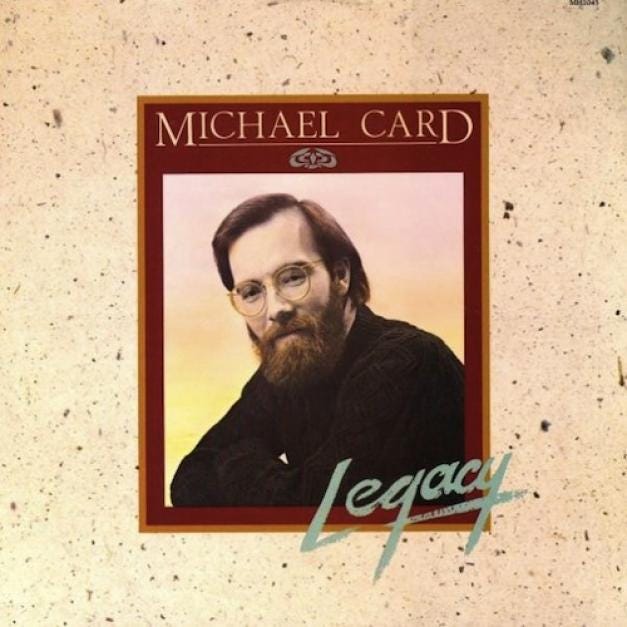
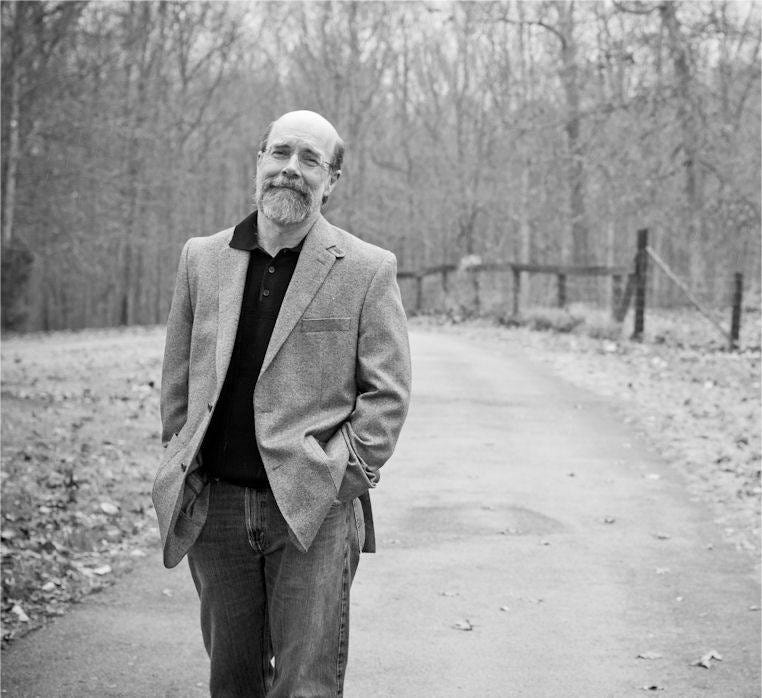
But…is that true?
As anyone can see, “El Shaddai” has no gendered language applied to God. The song is soft and intimate, and the one line with a gendered pronoun refers to a woman:
“To the outcast on her knees You were the God who really sees”
The song is not really Evangelical, in offering a deity who does powerful things, but softly and particularly attuned to female suffering.
Card says he was unaware of the female ‘Shaddai’ idea. Somehow, his song found its way to the goddess named Amy Grant. I view it as a goddess hymn—in Evangelicalism. 🔶