
Irresistible Words for Insatiable Minds
For bibliophiles and logophiles — 26 words you’ll love
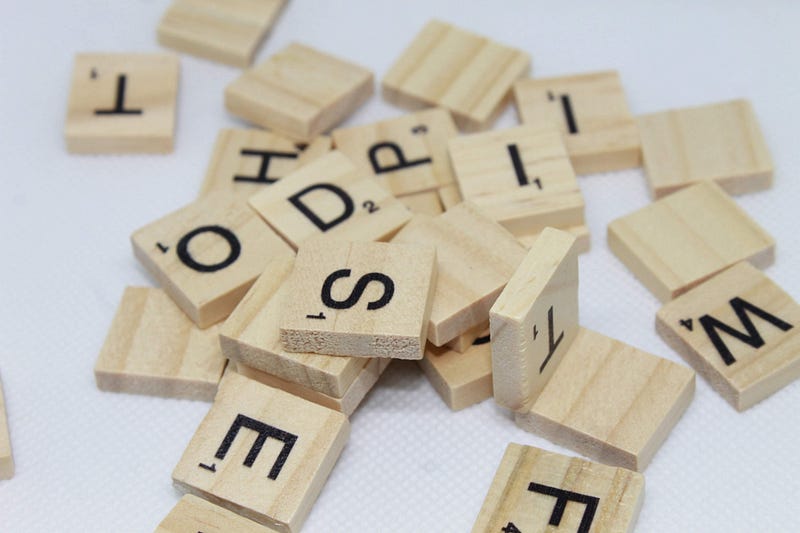
I normally don’t publish listicles — but for words associated with logophilia and bibliophilia (love of words and love of books), I make an exception. Also being inclined to dabbling in neology (a couple in the list are words I’ve invented), I’m going to give it a new name — a wordicle*.
As a child, I was both a bibliophage and a bibliobibuli (definitions are below). I read under the covers by torchlight when I was supposed to be sleeping, under the desk at school in maths, and in the shower. I’d read anything and everything, including the back of cereal packets over breakfast, and the steamy “top shelf” of my parent’s bookshelf when they were entertaining.
My love of reading evolved over time into a love of writing — and here I am. (That really would be my ideal autobiography in one sentence.) So, for all you logophiles and bibliophiles out there, I’ve compiled 26 intriguing words and their definitions — for you to add to your personal dictionaries and impressive vocabularies. The number of letters in the alphabet seemed a good place to stop, otherwise, I could have gone on forever. You’ll also find a quote reflecting each word — from Sir Shakespeare to the eminent wisdom of Dr. Seuss.
To find out more about a delectable prompt I’ve brewed up — read to the end.
Abibliophobia (noun): the fear of running out of reading material
For writers like Jeanette Winterson, it seems like abibliophobia leads to tsunduko (more on that later). No wonder she’s one of my favorite authors.
Book collecting is an obsession, an occupation, a disease, an addiction, a fascination, an absurdity, a fate. It is not a hobby. Those who do it must do it. ― Jeanette Winterson
Bibliobibuli (noun): people who read too much
… I know some who are constantly drunk on books, as other men are drunk on whiskey or religion. They wander through this most diverting and stimulating of worlds in a haze, seeing nothing and hearing nothing. — H.L. Menken
Bibliomancy (noun): the practice of telling the future by interpreting a randomly chosen passage from a book
She did not want to read this book from start to finish, or rather, she thought perhaps it did not want her to. Instead she practiced the art of bibliomancy, trusting the book to show her what it wanted her to know. — Catherynne M Valente
Bibliophage (noun): A book-eater, or devourer of books
Some books should be tasted, some devoured, but only a few should be chewed and digested thoroughly. — Francis Bacon
Bibliosmia (noun): the smell or aroma of a good book
So there you have it, a lifetime of first smelling the books, they all smell wonderful, reading the books, loving the books, and remembering the books. — Ray Bradbury
Booklore (noun): learning acquired from books as distinguished from practical knowledge
The man who does not read good books has no advantage over the man who can’t read them. — Mark Twain
Deja-lu (noun): Derived from the French verb lire, it refers to the discomfiting feeling of reading something that you get a niggling sense you’ve already read.
If déjà-vu is the disturbing feeling that something has already happened, déjà-lu is its literary cousin. (Are you having déjà-lu right now?) For this infamous author, it seems he didn’t experience any disquiet at all, pursuing déjà-lu with relish.
If one cannot enjoy reading a book over and over again, there is no use in reading it at all. — Oscar Wilde
Elucubration (noun): Reading or studying by candlelight — or in a modern context, reading by artificial light after dark. One who practices this is known as an elucubrator.
There was something so wonderfully intimate about sitting with another person like this, sharing a story, the candlelight flickering in the darkness. It was as if the rest of the world disappeared as long as the storytelling continued. — Kim Fielding
Epeolatry (noun): the worship of words
Words. I had always loved them. I collected them, like I had collected pretty stones as a child. I liked to roll words over my tongue like a lump of molten honeycomb, savouring the sweetness, the crackle, the crunch. ― Kate Forsyth
Inenarrable (adjective): beyond the power to describe
A well-known 18th-century French writer captured this idea perfectly:
Language is a very difficult thing to put into words. — Voltaire
Lethologica (noun): A psychological term for “tip-of-the-tongue” phenomenon. A feeling of temporary inability to retrieve information or the right word from memory.
…text does have subtext, which is best understood as a collective unconscious. As … a text must belong to a plane, which may take any virtual or physical form. Divorced from its plane, a text subsists in a purely subtextual state. In this state, a text is inextricably linked to all and any other text, albeit in a sort of REM state of constant motion and rupture. Yes, a text can and does dream, and when it does, it is often aphasically and lethologically. — Marcus Ian Mckenzie “The Text on the Text”
Librocubicularist (adjective): A person who reads books in bed
An ingenious way to combine two indulgent activities — reading and lounging. (I tried to find a word for a person who reads in bed while eating chocolate — but to my surprise, no such word exists. I can’t be the only one who does this — can I?)
We read in bed because reading is halfway between life and dreaming, our own consciousness in someone else’s mind. — Anna Quindlen
Linguipotence (noun): the mastery of languages
As a hawk flieth not high with one wing, even so a man reacheth not to excellence with one tongue. — Roger Ascham
Logomancy (noun): a form of divination involving the observation of words and discourse.
Writing has nothing to do with meaning. It has to do with landsurveying, cartography, the mapping of countries yet to come. — Giles Deleuze
Logomachy (noun): a dispute over or about words; a controversy marked by verbiage
A war in which the weapons are words and the wounds punctures in the swim-bladder of self-esteem …. — Ambrose Bierce
Metaforging *(noun): the process of forging metaphors in writing — related through “craftmanship imagery” to wordsmithery
As writers, we apply the furnace of our imagination to metaphors; we hammer and shape them into things of keen power and beauty. Until, like a magic sword, they’ll cut right through the heart to the reader’s comprehension. This is metaforging at work. — Melissa Coffey
Neology (noun): the use of a new word or expression, or of an established word in a new or different sense; the use of new expressions that aren’t sanctioned by conventional usage; the introduction of such expressions (neologisms) into language
When does jargon end and a new vernacular begin? Where’s the line between neologism and hype? What’s the language of the global village? How can we keep pace with technology without getting bogged down in buzzwords? Is it possible to write about machines without losing a sense of humanity and poetry? — Constance Hale
Omnilegent (adjective): Reading, or having read, everything
The more you that you read, the more things you’ll know. The more that you learn, the more places you’ll go! — Dr. Seuss
Philology (noun): the branch of knowledge that deals with the structure, historical development, and relationships of a language or languages.
How long a time lies in one little word … — Shakespeare, Richard II
Readgret (noun): the feeling of fury or sadness for putting off reading a particular book until now This famous philosopher, poet, and scientist must have had his fair share of readgret:
Read the best books first, or you may not have a chance to read them at all. — Henry David Thoreau
Scripturient (adjective): having a strong urge to write
Even when it’s sheer agony, many writers are determined to endure this serious literary malady. Here’s George Orwell on the subject:
Writing a book is a horrible, exhausting struggle, like a long bout of some painful illness. One would never undertake such a thing if one were not driven on by some demon whom one can neither resist nor understand.
Sesquipedalian (adjective): a long word, or one who is given to or characterized by the use of long words. From the Latin root, meaning “a foot-and-a-half long.”
A technique to impress other writers? Maybe not. Here’s one of history’s most brilliant thinkers, cautioning against sesquipedalian tendencies:
If you can’t explain it simply, you don’t understand it well enough. — Albert Einstein
Tsundoku (noun): An English word adopted from Japanese, it refers to the obsessive practice of buying books but leaving them unread in piles around your house
Even when reading is impossible, the presence of books acquired produces such an ecstasy that the buying of more books than one can read is nothing less than the soul reaching towards infinity… We cherish books even if unread, their mere presence exudes comfort, their ready access reassurance. ― A. Edward Newton
Vellichor (noun): A word of Welsh origin. Referring to a feeling shared by anyone who’s ever browsed the shelves of a used bookshop — a strange wistfulness combined with anticipation and serenity.
Second-hand books are wild books, homeless books; they have come together in vast flocks of variegated feather, and have a charm which the domesticated volumes of the library lack. — Virginia Woolf, Street Haunting
Wordsmithery (noun): the skill or craft of working with words
We can turn to Ernest Hemingway for further thoughts on this weighty task:
How simple the writing of literature would be if it were only necessary to write in another way what has been well written. It is because we have had such great writers in the past that a writer is driven far out past where he can go, and where no one can help him.
Wordstruck *(adjective): the state of being entranced or overwhelmed by a particular word or words. A neologism, coined by yours truly. This quote by Emily Dickinson suggests she and I may have something in common:
I know nothing in the world that holds as much power as a word. Sometimes I write one, and I look at it until it begins to shine.
Words are wondrous things. As writers, we’re lucky to get to play with and celebrate them every day. Compiling this list was a lot of fun. Tell me your favorite new words in the comments! And for those of you who enjoy wordalicious challenges, below is the Prompt.
It may be my first wordicle — but it won’t be my last.
*New words (neologisms) coined by the Author
“Wordstruck Musings”: A Prompt for Word-lovers
- Pick any word (or group of words) from this list to as a leaping-off point. Write a poem, prose poem, flash fiction, or flash essay. (Let’s keep responses to under 1200 words.) Or use any quote(s) as a prompt. Publish anywhere you like on Medium.
- List your inspirational words (if it’s not obvious in the piece itself).
- Tag 10 writers you think would enjoy this challenge.
- Tag me and link back to this post, so new players can see the list and the prompt.
Two examples of pieces I wrote while researching this list can be read here and below. Can you guess which words got me writing?
Tagging 10 fellow wordstruck writers — but anyone is welcome to play! Joe Váradi SD Stalzer Ravyne Hawke Jeff Langley Danielle Loewen Kelly Eden J.D. Harms Lennie Varvarides Jane Smallwood Timpoa
Not a Medium member? Find your voice & others you’ll want to hear. Join with my referral link.
Wordstruck Inspiration: