
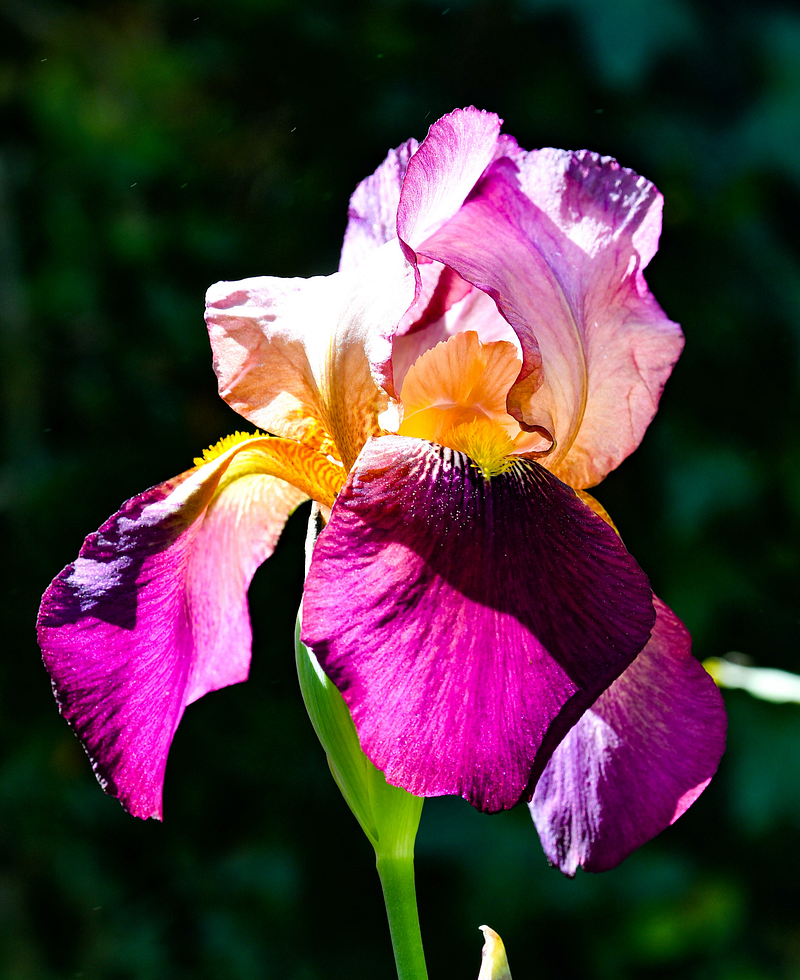
Iris Jacquesiana, a Heritage Iris from 1839
SNAPSHOTS Mini-challenge: Something Old, Something New, Something Borrowed, Something Blue
As an avid gardener, I prowl garden shops, peer behind neighbor’s fences, and get a little faint in the knees when I spot something out-of-the-ordinary. I have been known to sometimes spend an entire Saturday morning ensconced in a patio chair with a cup of tea and a little chocolate, devouring the images in those fancy bulb and seed catalogues. I share cuttings and divided clumps of bulbs with a fellow lover of exotic plants, who gets as excited as I do. We often send each other snapshots of how our flowers and succulents are progressing through the season.
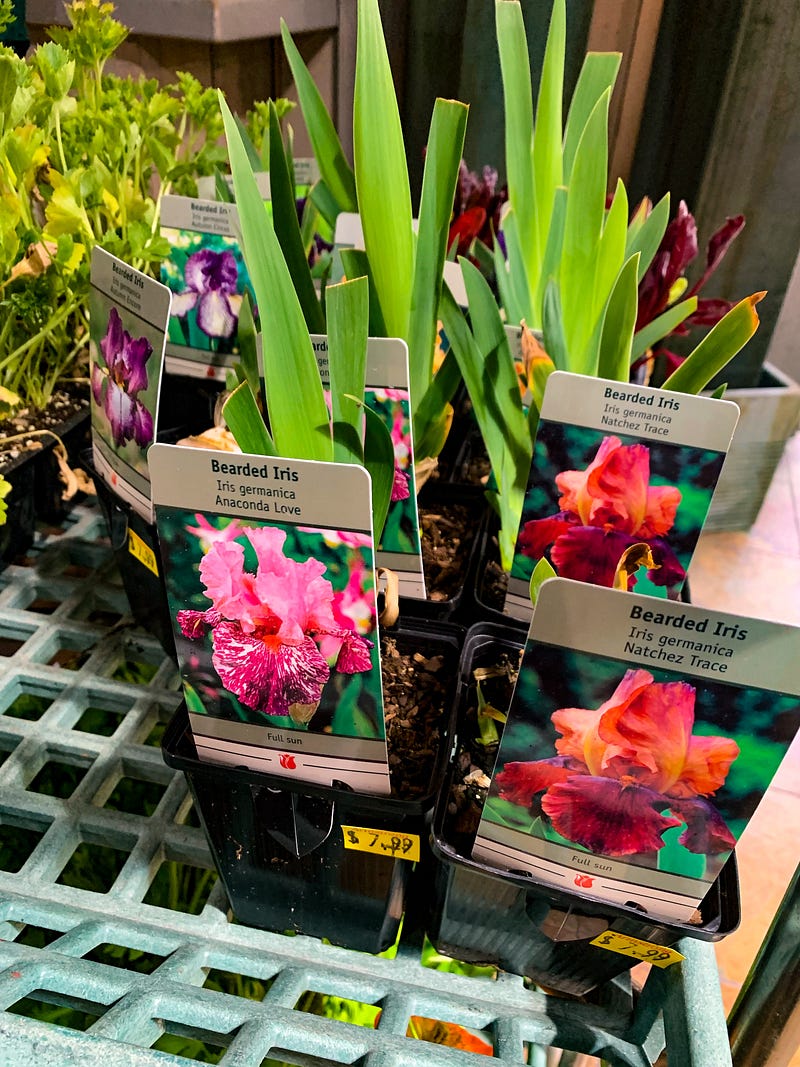
So, when I spotted a section of “fancy” iris bulbs at my local shop, I went a little crazy and bought almost all of them.
I have always loved the sweet, papery smell and feel of these delicate flowers. And the vaults and curves swirling with leopard stripes and wildly varying color schemes seem almost sculptural, like modern art, to me.
Technically, an iris is divided into “standards” and “falls.” The three petals on the top are the standards. And the three flaring wings, which tend to droop, are the “falls.” The yellow “caterpillar” fuzz is the “beard.”
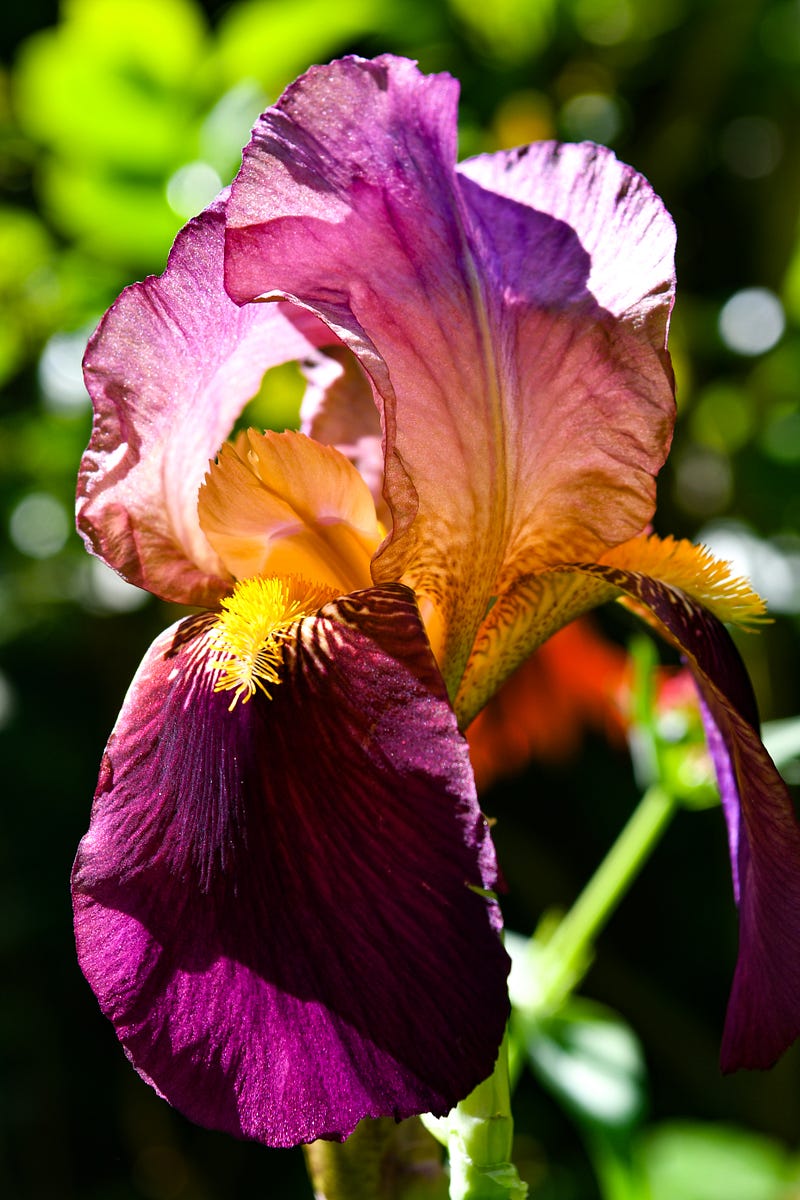
This particular variety, Iris Jacquesiana, one of my prized finds, can be dated back to at least 1839, where it was described by frenchman Jean-Nicolas Lémon in the “Annales de Flore et de Pomone” — a list of one hundred varieties which were mostly irises he had raised and named. Lémon “borrowed” the name ‘Jacquesiana’ in honour of Henri Antoine Jacques the head gardener of the Royal Neuilly Domain.
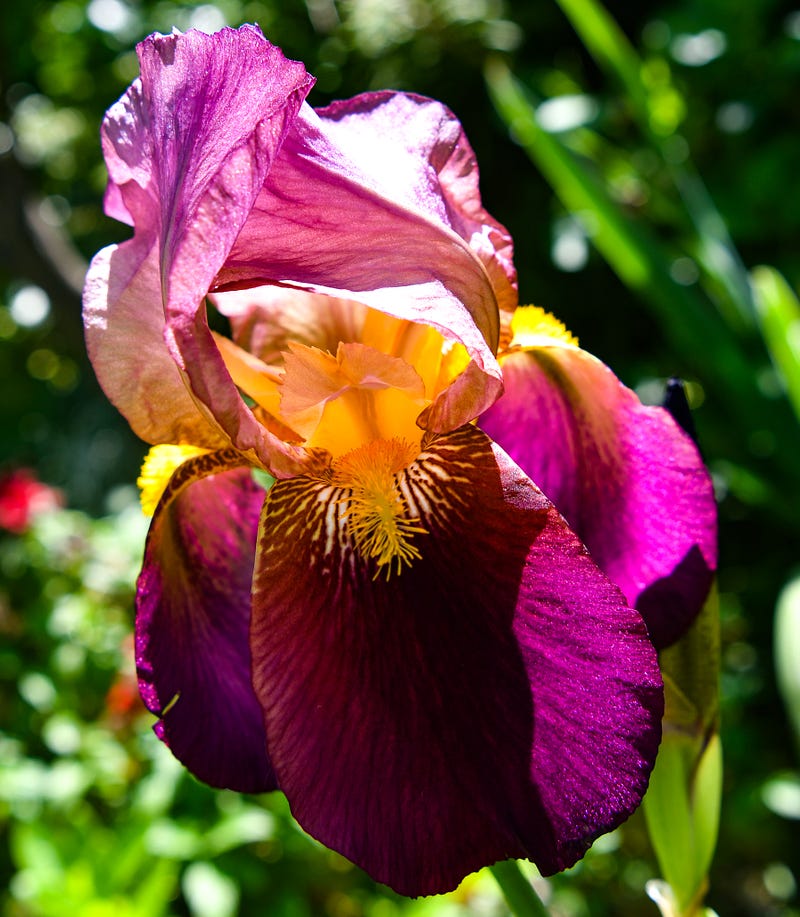
I just love this view of the Iris’ “mouth.” You really can see why they are called “Bearded Irises.”
I hope that you enjoyed these shots of this delightful iris. You might also enjoy:
Photos and story ©Erika Burkhalter. All rights reserved.