
Intersectional Feminist Transgender Vampire Film, Bit, Is More Activism Than Entertainment
This movie doesn’t just have a message, it screams it.
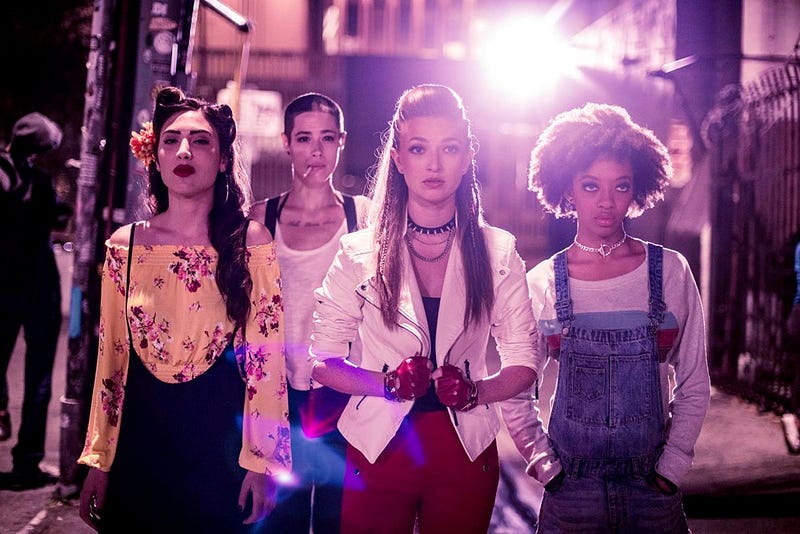
In the trailer for Brad Michael Elmore’s vampire comedy film / advertisement-for-queer-intersectional-feminism, one of the annoyingly wry bloodsuckers tells the nocturnal newbie about the first rule of the killer club she just joined: “Never turn a man into a vampire — men can’t handle power”.
If you’re wondering what kind of a film could spew such a ham-fisted, on-the-nose nod to the #MeToo movement, here’s the synopsis from IMDB:
“A transgender teenage girl on summer vacation in Los Angeles fights to survive after she falls in with four queer feminist vampires, who try to rid the city’s streets of predatory men.”
That line of dialogue is a flagrant display of self-righteous back-patting on the part of Elmore, who wrote and directed this little piece of activism-as-cinema, designed to induce zealous applause from an audience that thinks it’s sticking it to the patriarchy with unisex “I’M A FUCKING FEMINIST” T-shirts, trigger warnings, and pussyhats.
That last paragraph may seem pretty cynical, but it’s based on more than just repeated vomit-viewings of the Bit trailer. In a Vulture interview (conducted by Jordan Crucchiola, whose Twitter bio states “Being a feminist doesn’t mean you hate men, it means you can walk through walls and can never die”, whatever the damn-hell that means), Elmore makes it clear that his intent with the film wasn’t to amuse, but to lecture the world on the virtues of trans-inclusion:
But were you setting out to make something that was, just by existing, a piece of activism?
I knew what I was doing with the lead was in some way unprecedented, and unprecedented in a way that really bothered me. To me it’s like, can the world just get with the fucking program? It’s boring the fuck out of me. So yeah, it was born out of frustration, because I was tired of seeing things where the second or third lead — we’ll make trans. They’re not gonna make Spider-Man trans, ’cause they’re chickenshit. But your slasher film could just have a trans lead. Your bank-heist film can have a trans lead. It’s that simple. It’s almost dumb how simple it is.
With Bit, Elmore inverts the classic storytelling approach of “come up with a great plot and cast of characters first, then find the meaning/message second” by putting the agenda before the art, resulting in a work that bleeds SJW angst and little else. It’s a process of creative bankruptcy championed by Elmore, and, if the following excerpt from that interview is any indication, was a process that was contaminated with shrill militancy throughout its duration:
I was like, I’m just going to the source. So, the first book I got was Janet Mock’s, and I started there. I went to the basics and was like, “Well, here’s the history of gender studies!” I’d already read Scum Manifesto and shit like that. I was abreast of feminist writing and literature, ’cause I’m just a fan of writing. Actually, Becoming Nicole was one of the books I read.
Elmore was so committed to the cause of trans-inclusion at the cost of craft with this film that he couldn’t even proudly claim his right as an artist to tell this story in the first place:
How did your awareness of this debt affect the work?
I can’t pay it back, but I do my best to be honest about it. Laurel is trans in the movie, but I also knew I shouldn’t tell a trans story. I can’t do that.
It’s a poisonous idea that’s spreading throughout our culture at the moment, this concept that creators can only tell certain stories. According to this crooked social contract, if you’re an artist of one group (racial, sexual, religious, whatever), then telling the story of another group, even a very sympathetic story, is off-limits. So it’s a bizarre statement for Elmore to make; on the one hand he acknowledges the power of that rule, yet his making of the film is a clear disregard for it. But then again, let’s not pretend that today’s iteration of identity politics operates with any semblance of consistency.
I couldn’t care less about the identities of the characters in Bit — in fact, I’m all for making films that portray people and stories we normally don’t see in mainstream entertainment, trans folks included.
My problem is when filmmakers intentionally set out to make a film that caters to a specific audience and blows kisses at a trendy movement, especially one that’s so dedicated to eviscerating those who stray from that Ideals of Intersectionality even a tiny bit. Subtlety and storytelling go right out the window because they’re not important — it’s the agenda that matters. Does your film properly castigate straight white men enough? Then expect a rave review from PinkNews, Jezebel, and Vox.
As a horror fan, I’m especially cheesed by Bit, as there was a real opportunity to make a film that touches on social issues (without straight up sodomizing them like this film did) while still delivering all of the blood-soaked and suspenseful thrills that us gorehounds crave. But no, Bit instead decided to buck entertainment value to gratify a microscopic audience that cares more about fleeting cardinal virtues like “diversity”, “inclusion”, and “representation”. True horror fans couldn’t care less about identity — it’s the quality of terror and death we care about.
In What is Art?, Leo Tolstoy posits that “Great works of art are great only because they are accessible to everyone.” It can be argued that there are exceptions to this statement (especially considering this work was published in 1898), but there’s a fair amount of truth in it. English-speakers can still appreciate the beautiful melodies of songs written in other languages; non-religious people can recognize the sublimity of Michelangelo’s The Last Judgment on the ceiling of the Sistine Chapel; you don’t have to be an Italian mobster to value the themes of family and corruption in The Godfather.
So what does it say about modern mainstream cinema when the need for a master’s degree in Gender Studies increases simply to enjoy a film about college-aged SoCal vampires with the buoyant personalities of cement parking barriers?
There’s a bizarre, unintentional irony that’s pogo dancing behind the feminist battle cries of Bit; in the trailer, the rookie vampire says, “I’m going to be 18 forever”, to which her supernatural sorority sister replies, “People’ll think you’re just aging well”. Because the film is so mired in the movement du jour of intersectional queer feminism, it’s given itself a cultural expiration date that’ll arrive sooner than later.
If political propaganda isn’t renowned for its timelessness, can we really expect cinematic propaganda of this ilk to last into posterity?


