
Interesting facts about penguins — discover surprising facts!
Penguins are probably the most unusual birds that have ever inhabited the Earth. What is worth knowing about them? Below I will list the most surprising interesting facts about penguins.
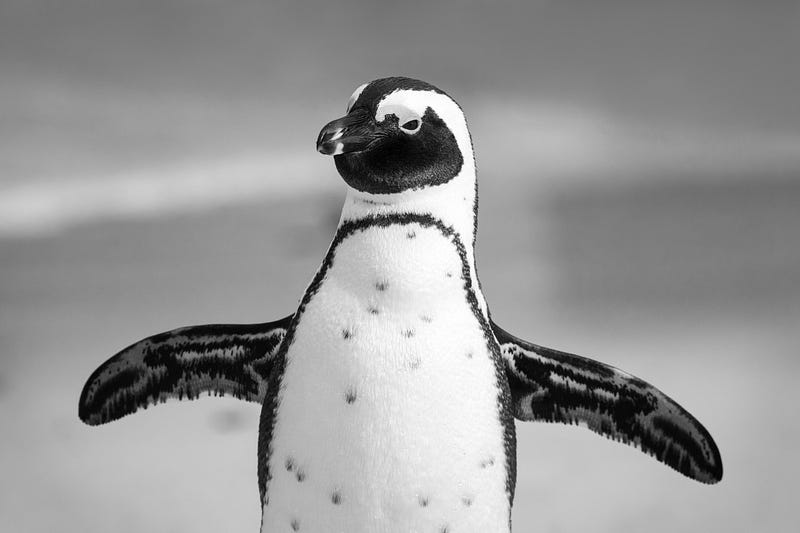
They are as beautiful as they are surprising. Nature has adapted them to live in extremely harsh conditions in which only a few species can survive. They are great travelers, caring parents, faithful partners and efficient hunters. Do you already know which animal I’m talking about?
The first penguins appeared on Earth back when our planet was ruled by dinosaurs. The earliest fossils of the birds’ ancestors are about 61 million years old, but the wide variation within the representatives of this species indicates that their evolution must have been going on for at least several million years. Despite such a long presence on Earth, the species was not named until the 16th century.
The largest modern living representative of this genus is the emperor penguin, measuring up to 130 cm and weighing up to 45 kg. At the opposite pole we have the little penguin. Representatives of this species measure approx. 40 cm and weigh 1100 g.
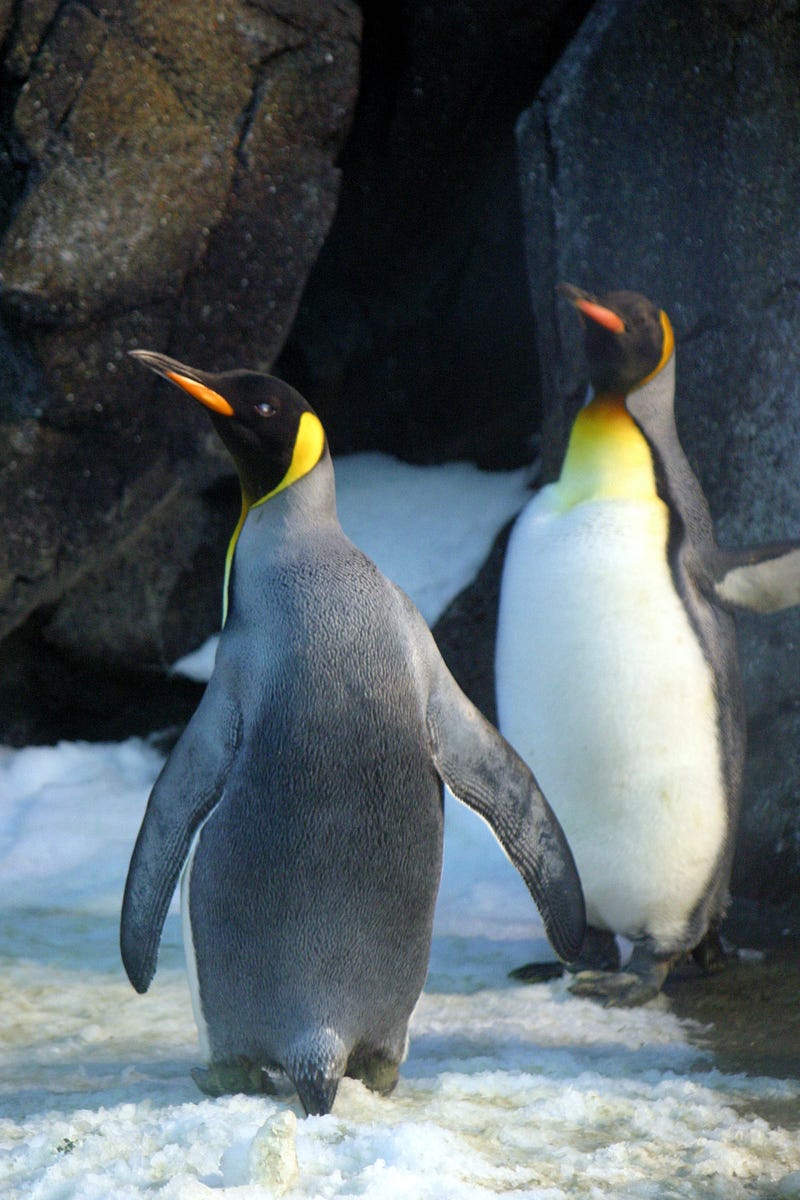
What is worth knowing about penguins?
Even this basic information about penguins may surprise many people. It will only get better further, because trivia about penguins is as intriguing as trivia about fish. What does a penguin eat? How does it move underwater, and how does it move on land? How do penguins take care of their offspring? Find the answers to these and other questions about these unusual Antarctic animals below.
- Penguins have not always been flightless. Listing interesting facts about penguins, most people will probably say: “they can’t fly”. That’s right, penguins are flightless, but it’s worth knowing that this trait is not a handicap of any kind, but a natural mechanism that these birds have developed in the course of the long evolution of the genus. When the planet’s climate began to change, evolution adapted penguins to live in completely new conditions, in which fully functional wings simply ceased to be necessary for them.
- Penguins are excellent swimmers and divers. They won’t soar into the skies on their wings, but it’s because of their wings that they can swim fast. The average speed that a penguin reaches underwater is 10 km / h. The fastest species is the white-beaked penguin. This “living torpedo” reaches speeds of up to 35 km/hr underwater. The record holder in terms of diving depth, on the other hand, is the emperor penguin. The greatest recorded depth to which this colossus has plunged is 565 meters! Representatives of this species can stay underwater for up to 20 minutes. This remarkable ability is due to a clever mechanism — when the penguin dives, its heart starts to be slower, so the body uses less oxygen.
- Penguins are skilled hunters. When hunting, this remarkable bird can catch up to dozens of fish, despite the fact that nature has not endowed it with teeth. It is aided in grasping its prey by a tongue equipped with numerous protuberances that resemble spikes. What do penguins like? In addition to fish, cephalopods also appear in their menu. In times of food scarcity, they will not disdain crustaceans.
- From time to time, penguins swallow rocks. Why they do it. Contrary to appearances, this behavior has nothing to do with feeling hungry. We already know that nature did not equip these birds with teeth. The stones help them grind their food. In addition, they act as ballast, allowing the birds to dive deeper.
- The penguin’s eyes are larger than its brain. This feature seems to suggest that these remarkable birds are endowed with excellent eyesight. This is true, but only partially. Penguins have excellent underwater vision. Their eyes show incredible sensitivity in the green and blue color range. This makes it easy for them to find their prey even in the dark depths of the sea. However, it turns out that on land they are short sighted.
- Penguins and humans have more in common than you might think. Like humans, penguins have an upright posture (they are the only birds to do so), they feel tickling and react to this nerve stimulation just like humans do and…. can suffer from depression. This is no joke. Due to mental disorders, some penguins commit suicide. To end their lives, such individuals move away from the herd for many kilometers, to a place where they have no access to food. In this way they condemn themselves to death by starvation.
- Penguins are monogamous. In a colony of thousands, they are able to find one mate, brood an egg with him and take care of the offspring. When the female lays an egg, she passes it on to the male, and she herself moves away to forage for food. Such an expedition can last up to two months. After this time, she returns to the colony and finds her mate.
- The duty of laying the eggs falls on the male for two reasons. First, the exhausted female needs to replenish her energy quickly. Second, males lose body fat more slowly than females. This characteristic means they can keep the egg warm with their bodies for a long time without access to food.
- Penguins can exhibit homosexual behavior. Before they find a suitable heterosexual partner, they happen to have relationships with individuals of the same sex. At the same time, it should be noted that this applies primarily to males and to a lesser extent to females. Previously, scientists believed that representatives of this genus do not perceive the difference between the sexes. However, the latest research proves otherwise. Homosexual relations occur in colonies where there are not enough females. To cope with high testosterone levels, male individuals enter into homosexual relationships. However, such an “arrangement” usually does not last very long. Penguins’ sexual habits were once a taboo subject. In 1911 there was a pioneering expedition to the South Pole, during which George Murray Levick took a closer look at the life of these birds. Their behavior caused quite a shock to the British doctor. In his notes he described, among other things, cases of homosexuality, sexual abuse of juveniles and…. necrophilia. The researcher was so perplexed by this that he wrote down his observations in Greek. When he returned to Britain, he published the results of his observations, but the section on the sexual habits of penguins proved too strong for the sensibilities of a time well before the sexual revolution.
- Today we know that penguins are not necrophiles at all. At least not in the sense analogous to the mechanism that controls this sexual deviation in some humans. Simply put, instinct is at work in penguins. When a male individual sees a female lying in a certain position, he begins to “automatically” copulate with her. He then does not distinguish between a dead and a live individual.
- Baby penguins quickly achieve independence. As early as two months of age, they begin to attend a “nursery”. The chicks gather into independent groups, and only return to their parents when they start to feel hungry.
- Penguins have two holidays. Each year, January 20 is World Penguin Awareness Day. April 25, on the other hand, is the date of World Penguin Day. The spring holiday is much more popular. It was established when scientists discovered that penguins from the Adela colony, after many months at sea, return to their breeding grounds just on April 25.
Cool that you made it to the end of this article. I will be very pleased if you appreciate the effort of creating it and leave some claps here, or maybe even start following me. It would be nice if you also left a tip! Thank you!


