
Intelligence in the Garden
Are you smarter than a Brussels sprout?
Most of us would have a hard time defining intelligence. Not because we don’t know what it is, but because it is so many different things.
Humans are intelligent in many different ways. The intelligence of a college professor is not the same as that of a pro athlete, a London cabbie, a video game designer, a ship’s captain, or a symphony conductor.
Psychologists, although intelligence is part of their core field of study, have argued for a century or more about how it should be defined and measured. It’s not at all clear what IQ tests measure — they predict academic performance, but far from perfectly and only for certain groups, and they certainly do not predict success in life.
We’re even worse at measuring intelligence in other species. An old song says:
A mule is an animal with long, funny ears; he kicks up at everything he hears. His back is brawny, but his brain is weak; he’s just plain stupid with a stubborn streak.
which anyone who’s worked with mules can tell you is an inexcusable slander of a very smart and charming creature.
An animal is smarter than a plant, right? Animals have brains; plants don’t.
We rate the intelligence of other species mostly according to their ability to solve puzzles or learn tricks. I suspect we underestimate their capabilities, speciesism being more or less endemic among hairless primates. Zoologists in recent years have discovered a shocking range of animals that use tools and can communicate with sounds.
But even a fairly simple animal is smarter than a plant, right? Animals have brains; plants don’t. Case closed.
Or maybe not. Could there be intelligence that doesn’t live inside a nervous system?
Buy a packet of seeds from your local hardware store. Take them out, plant them in your garden, and wait.
And wait.
And wait.
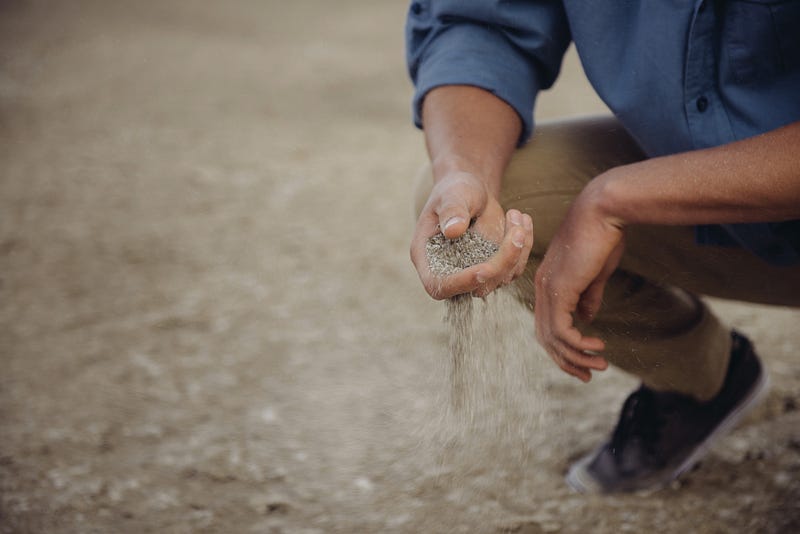
When a month goes by with nothing happening, you go complaining to the store, where you are told, “Don’t worry, they’ll sprout as soon as the ground warms up a bit.”
And sure enough, a few weeks later, here they come. You do some research on the internet and learn that this plant species doesn’t germinate until the soil has been above a certain temperature for 14 days in a row. In fact, if all your seeds had sprouted when you planted them, the seedlings would have died, because this vegetable or flower cannot tolerate the cold.
But then you ask yourself, how did they know?
How did those seeds assess the temperature and count the days of warmth? For that matter, how did they know not to sprout inside the packet? The store was surely warm enough.
Then, once they did split open and begin to grow there in the darkness of the earth, how did they know which way to grow? The shoots went up, the roots went down, so apparently they can sense gravity.
My generic definition of intelligence is “the ability to make adaptive differential adjustments in behavior in response to environmental changes.” In plain language, an intelligent organism survives by knowing when to do this instead of that.
Can we really speak of knowledge or behavior in a plant?
Behavior doesn’t seem like such a stretch. “Stretch,” in fact, is one of the primary behaviors of a plant. It stretches itself by growing, by adding new cells to certain parts of its body. The seedling stretches stem cells upward, root cells downward, and once it clears the soil, it stretches leaf cells — little solar panels — out to catch the light.
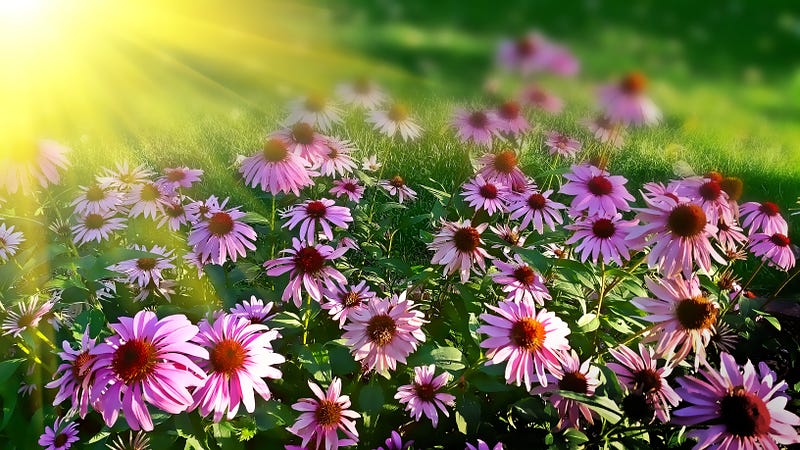
Throughout the day, a plant will turn to maximize the sunlight it collects. Watch time-lapse photography, and you’ll believe the flowers are dancing in the meadow.
In the darkness underneath, roots are stretching also, growing toward greater concentrations of water and nutrients and away from toxins in the soil.
Are we stretching if we say the plant in some sense “knows” where the sun is and where the water is?
Another kind of plant behavior can be described as choosing, specifically choosing what kind of cell to build in each part of its body. The seed must choose to build shoot cells on its top and root cells on its bottom. As it grows, new tissues will be formed: leaf, bark, climbing tendril, gripping fiber, sepal, petal, sexual devices, fruit or other seed containers . . .
Knowing where to build its body outward, and how far. A tree’s roots will grow out no farther than its branches. And while some plants (vines especially) are indeterminate in size, most stop growing upward when they reach a certain height.
What I find spooky is the knowing-when of blossoms and of fruit. In most plants, this process won’t begin until the days are just the right length. That means the DNA inside the cells, without eyes and without clocks, is counting hours of daylight. How?
The theistically inclined will glibly say it is no mystery — God tells the seed to open and the flower to bud. The mystery to me is how a rational being could mistake such dogma for an answer to the question.
Botanists have studied all these processes for generations. Their research has yielded many fascinating insights into the biochemical processes that activate and deactivate the genes directing plants through their complex life cycles, right up to the point when they “know” it’s their time to die.
I find scientific explanations comforting, up to a point. It’s nice to know there are some relatively simple-minded explanations for phenomena that seem miraculous to me.
But, though most botanists would tell me — without overt condescension — that it’s wrong to thing of any plant as “knowing” anything, I still will argue that they’re smarter than we give them credit for.
More from Edward Robson, PhD:
Imperfect Replication. to a molecular biologist | by Edward Robson, PhD | ILLUMINATION | Medium
The Sweetest Words in Any Language | by Edward Robson, PhD | ILLUMINATION-Curated | Medium