
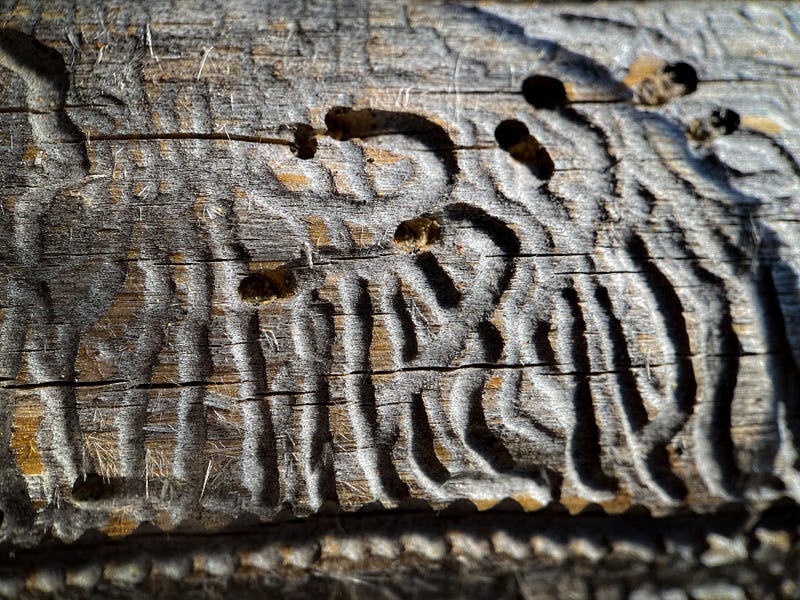
Insect Petroglyphs
Macrophotography mimics ancient art
“The imagination imitates. It is the critical spirit that creates.” — Oscar Wilde
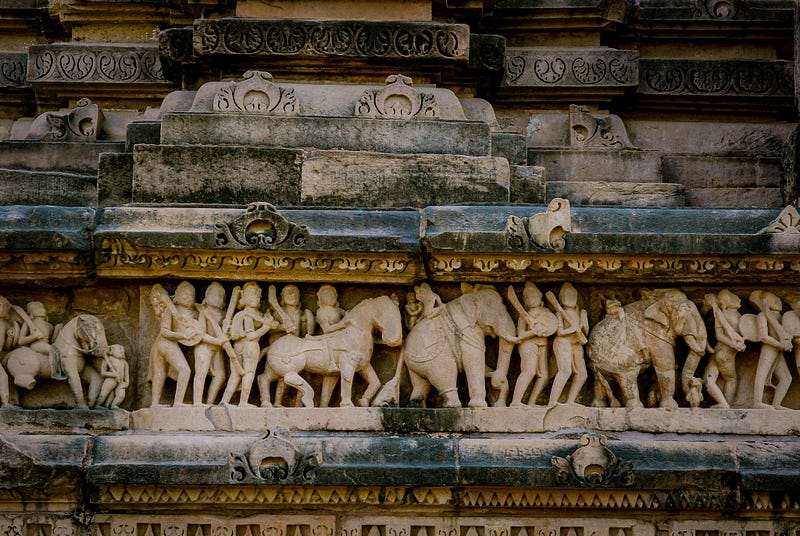
While hiking in Sedona, Arizona, I stumbled across a downed tree, completely interwoven with the artwork of many generations of insects, who have bored intricate patterns into the smooth outer layer of the bark. A natural part of the process of the tree being returned to the earth, the resultant etchings reminded me of some of the ancient temple carvings of Khajuraho, India.
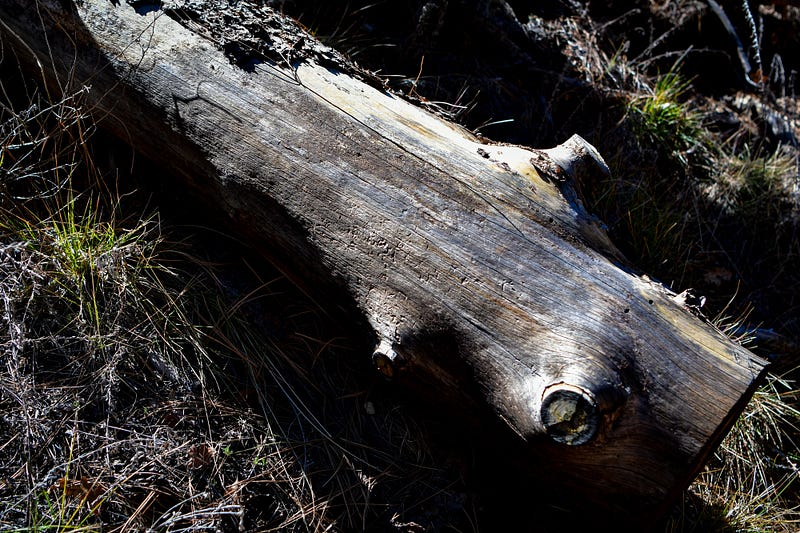
I popped on my macro lens, and a whole gallery of “Insect Petroglyphs” appeared before my eyes.
Doesn’t the photo at the top look a bit like dancing girls, arched in fluid backbends, silhouetted in candle light?
It reminded me of this scene from roughly 950–1050 A.D. from the “Main Temple Complex” of Khajuraho, India.
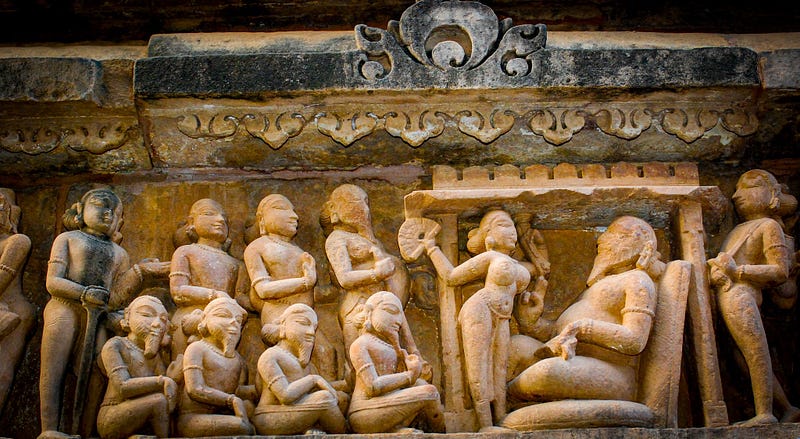
In ancient Greece, the concept of “mimesis” described the idea that the creation of works of art were inspired by the natural world. Aristotle also defined mimesis as the perfection, or imitation, of nature.
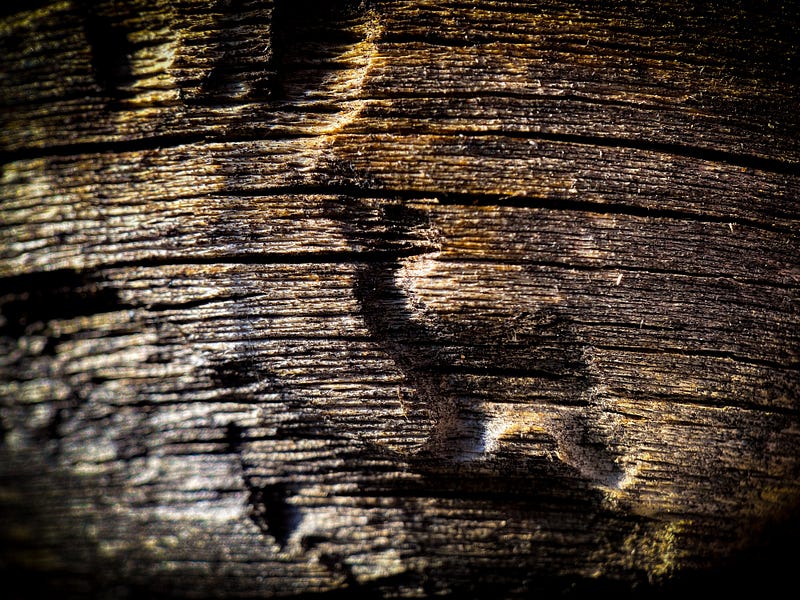
Doesn’t this one remind you of lightening, slashing down across the desert floor?
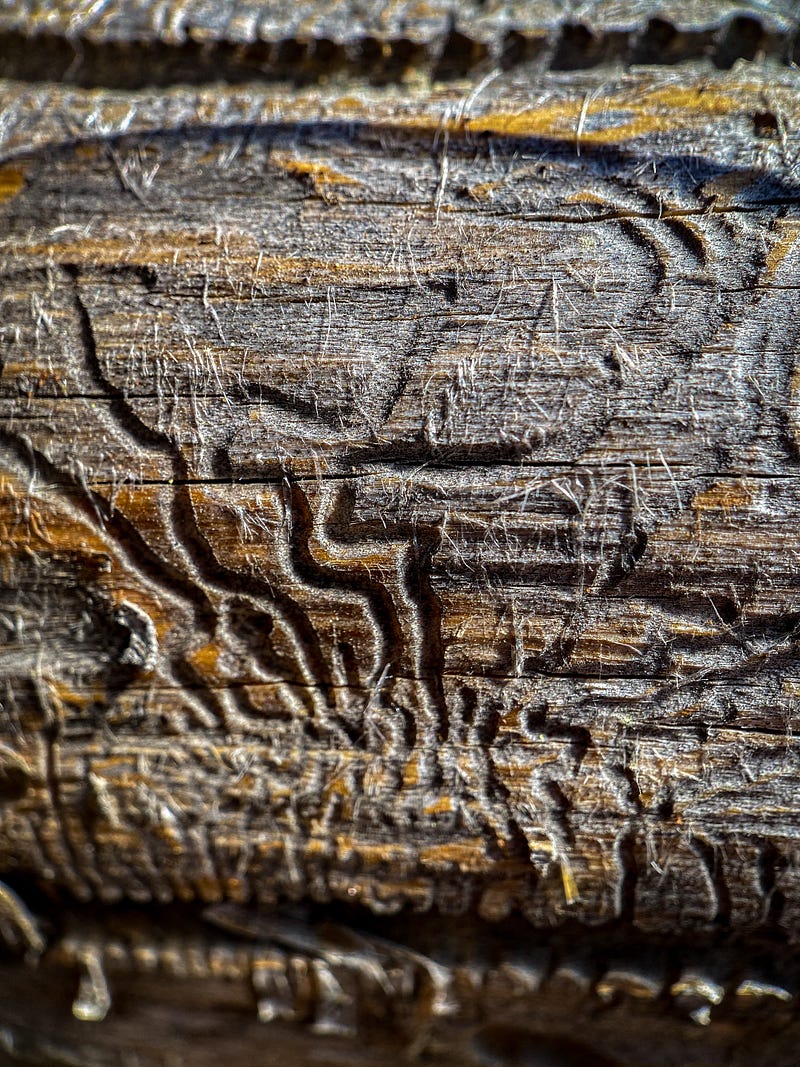
And, can you see the silhouette of a rabbit in this photo?
And this one looked, to me, like two lovers, hand-in-hand, running.
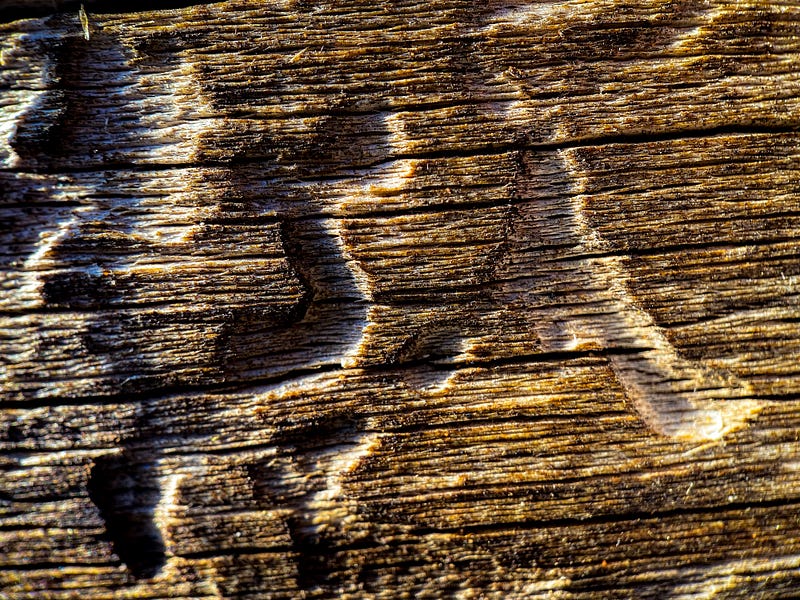
I immediately remembered this image, again from Khajuraho, India, when I blew the next image from “the insects” up to view it on my computer. Something about the linearity amongst fluidity struck me about both pieces of art.
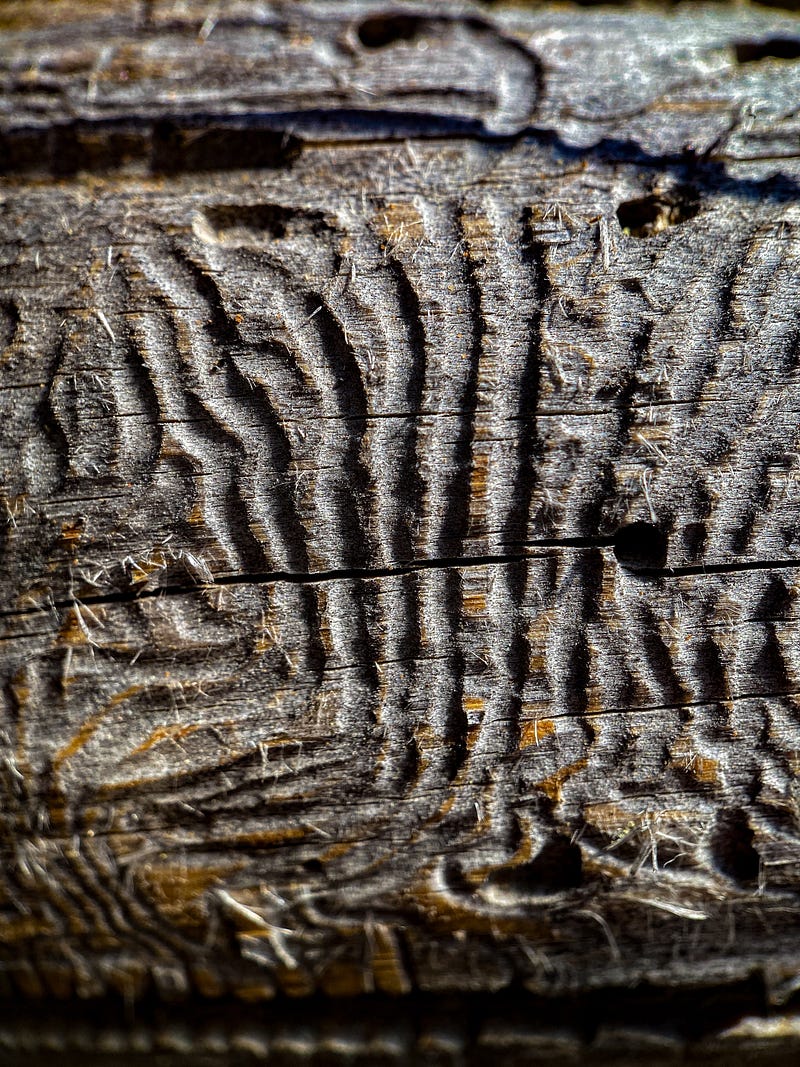
The photo, above, could also be symbolic of the infinite branching of tree roots, burrowing their way underground into the network of bacteria and fungus which provide a “telephone line” to the surrounding trees.
And the split about a third of the way down, accompanied by an image a bit more complex and curved than in the top half of the frame, tied these two photographs together for me:
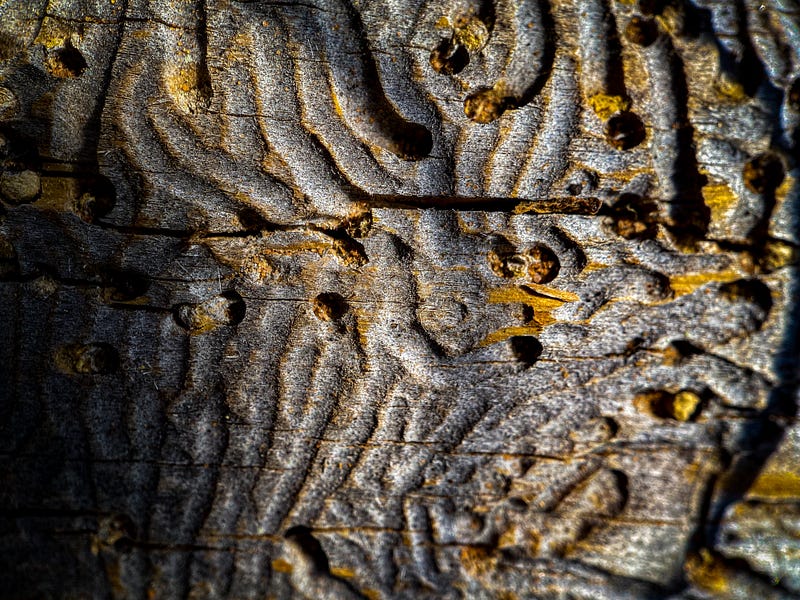
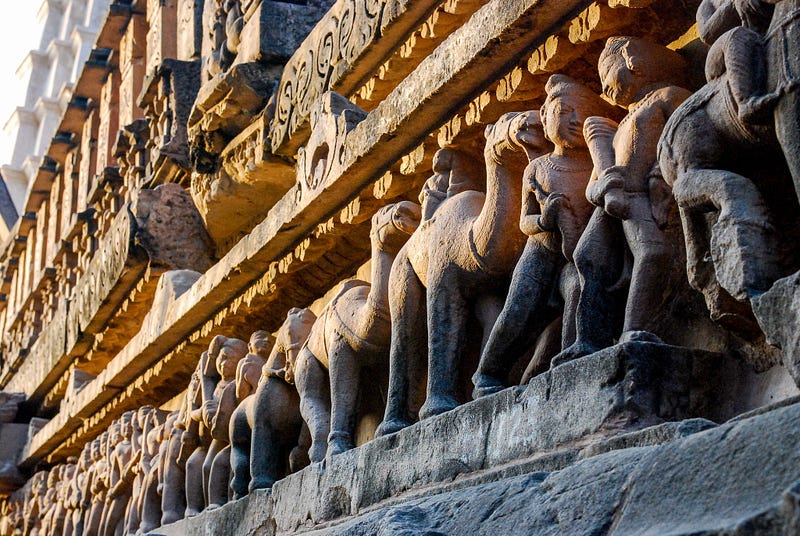
And, I am not even sure how to explain why these next two images feel similar to me, other than the movement within the frame.
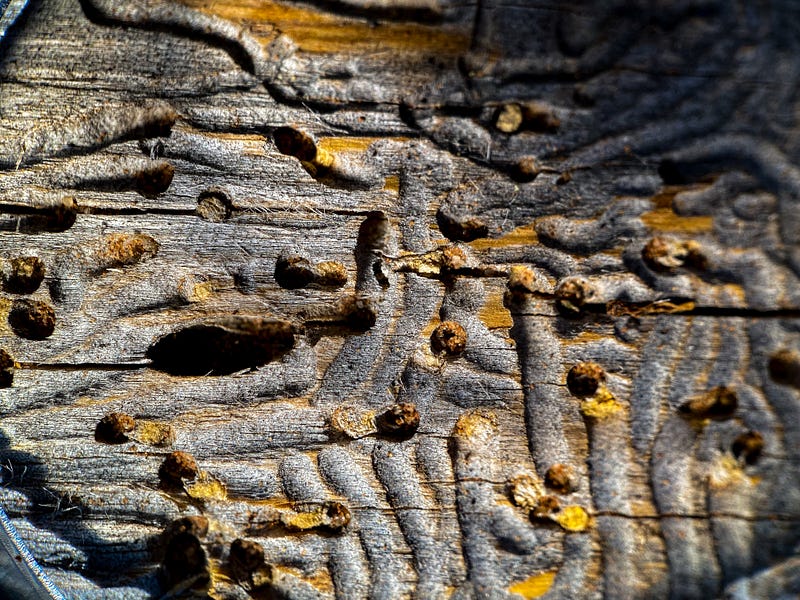
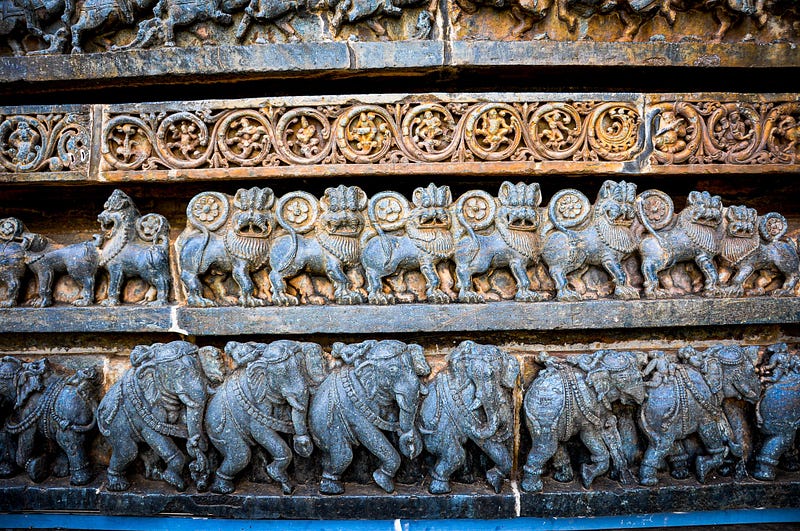
The most important moments in life, the moments when you can look at the world around you with “fresh eyes,” often appear at the most unexpected times. Being able to catch a glimpse of the world of the very small, juxtaposed with the world of humanity, can offer moments of enlightenment and a deeper understanding of the origins of art.
My greatest wish for you is that you take a moment, today, to take a sideways glance at something in nature that you might not ordinarily notice — and that you begin to see the patterns in art, nature, spirit and “universal consciousness.”
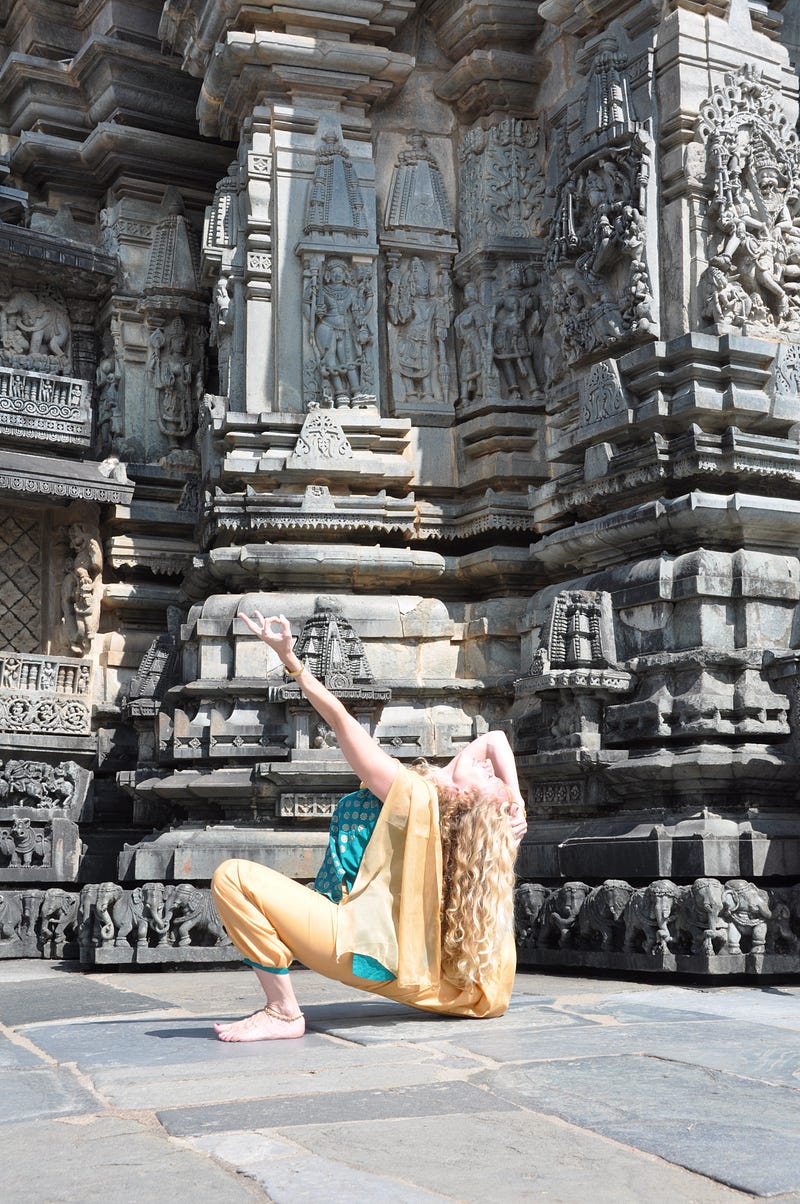
Erika Burkhalter is a yogi, neurophilosopher, cat-mom, photographer, and lover of travel and nature, spreading her love and amazement for Mother Earth’s glories, one photo, poem or story at a time. (MS Neuropsychology, MA Yoga Studies).
Story and photos ©Erika Burkhalter


