
Infamous Female Killers — Pistol-Packin’ Mamas And Their Crimes
Bonnies without Clydes defy stereotypes in 16 bizarre true crime tales
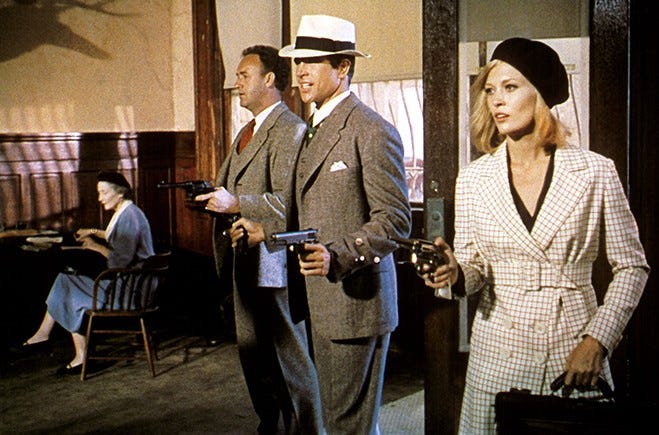
It’s too bad the FBI didn’t launch its Ten Most Wanted Fugitives list until 1950. An earlier start might have allowed the bureau to tap a few of the female killers in this sparkling collection of true crime tales, most about murders committed in the Cleveland area in the late 19th or early 20th century.
It may or may not be true, as John Stark Bellamy II writes in the preface to Women Behaving Badly, that “there is simply no comparison in cunning, quality, and sheer entertainment value between the shallow, predictable murders of men and the complex, richly nuanced slayings by women.” But this book makes clear that Hollywood does an injustice to female killers when it stereotypes them as gun molls, action heroines, or sex-obsessed stalkers.
The 16 tales in the collection deal chiefly with Bonnies without Clydes, or women who took the initiative in crime instead of serving as men’s foils. They were fond of using poison as a weapon.
“Poisoning is generally furtive, an ideal quality for someone confronting an adversary of superior muscular strength of social power,” Bellamy writes. “No messy hand-to-hand combat, knowledge of firearms, or knife-fighting technique is required. Poison is easily acquired, hidden, and disguised: many lethal poisons have nonhomicidal uses and are part of the fabric of everyday life, as any amateur gardener or pest control professional can attest. It can be stealthily administered and is difficult to detect — as many a delayed exhumation has shown.”
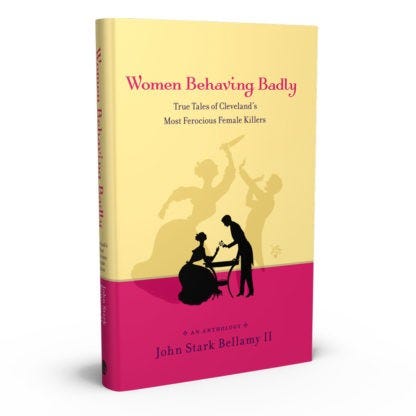
One of the most chilling stories in Women Behaving Badly recalls the fatal 1919 stabbing of Lakewood, Ohio, printer Dan Kaber by assassins his wife had hired. It remains “the only homicide in the history of the world in which a grandmother, mother, and granddaughter were indicted for the same first-degree murder.”
In another tale Bellamy focuses on Velma West, who along with three other inmates escaped in 1939 from a women’s prison, where she was serving time for smashing her husband’s skull with a clawhammer. Captured in Dallas, West went back to the Marysville Reformatory and implied that her murdered spouse had been too weak to live with her:
“He couldn’t take it. I hit him playfully on the head with a hammer one night and that was that.”
A third tale reconsiders the sadistic 1950s housewife Mary Barger, who had help from a 16-year-old niece when she tortured her brother-in-law’s two daughters, who were living with her while their father served in the Air Force.
Bellamy tells his stories with an infectious zeal for his subjects’ audacity and an admiration for the prosecutors who matched wits with them, traits that in this and earlier books have established him as a consistently enjoyable historical true crime specialist. He avoids the clichés and portentous tones of shows like 48 Hours — which regularly describe victims “beautiful” lovers of life who “always had a smile” — and leaves the impression that he would shudder at the word “closure.” Just when you’re convinced that only the dimmest shield-wearer would have seen the 1905 death of Minnie Peters as a “suicide,” he writes:
“But before you dismiss Cleveland police chief Fred Kohler as an utter moron, consider this: He may have been right about Minnie killing herself.”
Without special pleading, Bellamy also shows a keen sympathy for the horrific circumstances that could drive women to crime. He notes rightly that some of his subjects might have had “a happier fate if they had lived in a more enlightened age.” Although he doesn’t say so directly, at least a few of the women in his book might have avoided tragedy had they lived in times of safety nets like unemployment insurance, rape-crisis hotlines, and shelters for abused women.
Perhaps the most poignant story in Women Behaving Badly involves Anna Kempf, a Hungarian immigrant who faced eviction from her home after being abandoned in 1928 by a husband who left her with three young daughters to support.
Kempf had spent months visiting private and public welfare organizations, pleading vainly for financial help, and had tried unsuccessfully to place her children in an orphanage to keep them off the streets. The news that she was about to lose her job seems to have been the last straw: Kempf tried to kill herself and her children by dishing up bowls of chocolate ice cream laced with rat poison. Her youngest daughter died, and Kempf was indicted for first-degree murder.
But Kempf’s heartbreaking plight so struck the public that one prospective juror, upon receiving his jury-duty fee from the court clerk, said loudly: “Have this cashed for me and give the money to Mrs. Kempf to buy Christmas presents for the other two girls.” A judged sentenced her to probation and “took the opportunity to criticize the social service organizations that had so signally failed to help Anna Kempf in her hour of desperate need.” Stories like Kempf’s may have a Cleveland setting but speak to universal themes that give this book relevance beyond the Midwest.
Among the women who became fugitives, only Mabel Champion had the last laugh on the law. Champion kept a four-inch stiletto in her purse and was wearing eight large diamond rings when, at a crowded restaurant in Cleveland’s theater district on a summer night in 1922, she pulled out a .38-caliber Colt revolver and shot a carnival promoter who had questioned her virtue.
“I did what any woman would do,” she explained to reporters. “I shot Edward O’Connell because he insulted me.”
Champion received a 20-year sentence, but after serving less than two years, Champion tucked a crude dummy into her prison bed and walked out of the Marysville Reformatory forever. A nationwide dragnet failed to find her. While writing this book, Bellamy envisioned her laughing her low Texas belly laugh at the baffled lawmen “who couldn’t keep this sensational Jazz-Age baby tied down.” Perhaps she even felt insulted that the FBI never chose, however belatedly, include her on its “most wanted” list that made its debut decades after she struck.
Do you also enjoy reading about notorious pets? You might like “5 Good (But Slightly Hair-Raising) Books About Bad Pets.”