
5 Good (But Slightly Hair-Raising) Books About Bad Pets
Could you live with a pet that hid food the USB port on your laptop?
Good pets tend to make for dull books. Their sweetly endearing antics lack the drama or comedy of animal behavior that — by threatening life or limb — propels a story forward. The authors of these books found heaven in living with a pet that sometimes made life hell.
Featherhood: A Memoir of Two Fathers and a Magpie (2021)
By Charlie Gilmour
“What is it like to have a meat-eating bird gazing intently at your penis? It is unnerving.”
Charlie Gilmour had that quite reasonable thought after he adopted a young magpie that liked to balance on the rim of his bathroom sink and watch as he urinated, showered or brushed his teeth. The bird had plummeted to the ground in southeast London and somehow made its way to the home of the author, a writer in his 20s, and his set-designer fiancée, Yana.
A more practical man might have given the magpie, which the couple named Benzene, to a wildlife rescue service. But Gilmour had an impractical streak as wide as the Thames, which had shown itself years earlier when he ended up in prison after taking part in a student protest that went catastrophically awry. Benzene left beak marks in the butter, hid bits of food in the USB port of a laptop, and — astonishingly — snatched the contact lenses from a visitor’s eyes.
Why Gilmour kept the outlaw magpie — and what he gained from it — involves several narrative strands elegantly interwoven in this memoir. One thread centers on the disappearance, when he was six months old, of his biological father, the dissolute British poet Heathcote Williams. Another strand involves his mother’s subsequent marriage to Pink Floyd’s David Gilmour, and a third, his fears about whether he can adjust to fatherhood after his marriage to Yana. The endearing Benzene flutters throughout the stories and turns this book into an inquiry into whether people, like wounded birds, can learn to fly.
Ring of Bright Water (1960)
The Rocks Remain (1963)
Raven Seek Thy Brother (1968)
By Gavin Maxwell
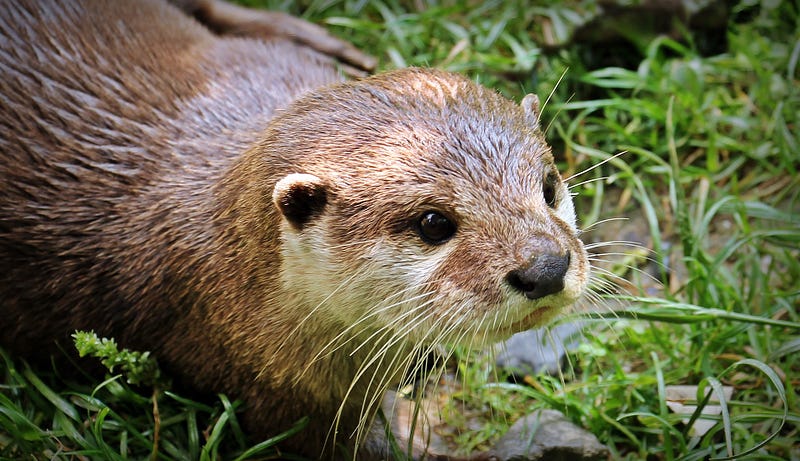
Gavin Maxwell lived for two decades in a remote lighthouse keeper’s cottage on the northwest coast of Scotland, sharing his home with alternately playful and savage otters.
In three classic memoirs he invests the otters with more personality than the main characters of many novels. His first otter came home with him from a trip to the Iraqi marshes and had to be kept away from the lure of open water, but otherwise was “no more trouble than dog, and infinitely more interesting to watch.” After its death, Maxwell took in two others, from West Africa, that proved no less captivating but vastly harder to support.
The otters had to be fed live eels imported from London, and they laid waste to the sparse furnishings of his cottage. One bit off two fingers of a teenager hired to help with their care, and both had to be separated from visitors — and each other — in pens.
Yet Maxwell refused to allow the otters to be adopted by strangers who might kill them if they proved too hard to handle, and he later took in others. His first and sunniest memoir of the otters, Ring of Bright Water, sold more than two million copies and was adapted for a movie. Its two sequels, The Rocks Remain and Raven Seek Thy Brother, have a progressively darker tone. Maxwell lost the privacy that had drawn him to the West Highlands when his fame as an author attracted fans who trained binoculars and telescopes on his cottage. Then came an escalating cascade of crises: a serious illness, a wrecked boat, an ill-conceived marriage and hasty divorce, a near-bankruptcy brought on by recklessly spending the fortune his books made, and signs that the otters he’d had the longest were faring poorly. A fire that destroyed his cottage delivered the final blow.
Maxwell’s great achievement in the Ring of Bright Water trilogy is that, amid the disasters, he retains an exceptional ability to evoke the beauty not just of the otters but of the Scottish Highlands. Contemporary environmentalists rightly fault his efforts to domesticate wild animals, but his honesty about his failings adds to the poignancy of these remarkable books.
My Family and Other Animals (1956)
By Gerald Durrell
At the age of 10, Gerald Durrell left England and moved with his widowed mother and high-spirited siblings to a pink villa on the sun-splashed Greek island of Corfu. He recalls their adventures — with considerable hilarity — in a fictionalized account of their multiyear sojourn, which inspired the PBS series The Durrells in Corfu.
Among the delights of the pink villa was a garden that young Gerry saw as a magical realm, a “multicolored Lilliput” teeming with creatures that flew, hopped, scuttled, crawled, and slithered among olive trees and bougainvillea. Each day he recorded the species’ progress in a diary he kept up when the family moved to other villas that brought further discoveries. He took an adolescent’s keen interest in mating rituals and spent hours squatting in the heather watching male tortoises compete for the favors of a female. He writes:
“The actual sex act was the most was the most awkward and fumbling thing I had ever seen. The incredibly heavy-handed and inexpert way the male would attempt to hoist himself onto the female’s shell, slipping and slithering, clawing desperately for a foothold on the shiny shield, overbalancing and almost overturning, was extremely painful to watch; the urge to go and assist the poor creature was almost overwhelming, and I had the greatest difficulty in restraining myself from interference.”
Some of Durrell’s finds became his pets, including a gecko he named Geronimo for its assaults on the insect life in his bedroom and a downy owlet called Ulysses that took up residence in a basket. Terror reigns after he smuggles a female scorpion and its babies into the family home in a matchbox that his brother Larry opens.
No less memorable are Durrell’s Homo sapiens, particularly his mother, whose proper British manners face daily tests from a brood determined to outwit her. Durrell drolly suggests his tone and theme when he writes in his preface: “As my brother Larry rightly points out, we can be proud of the way we have brought her up; she is a credit to us.”
Janice Harayda is a former vice-president of the National Book Critics Circle. She tweets at Janice Harayda.
Looking for good children’s books about animals? You might enjoy:


