[Industry Talk Time] BHP Group Makes Deal With Unions At Chilean Copper Mine
Going into this weekend there was a story that just barely slipped by in the world of international business news…

And it’s kind of a big deal: the world’s largest metals miner BHP Group reached a preliminary agreement with Chilean unions to stop a worker’s strike at the company’s Escondida copper mine.
Many of the specific details about the agreement have not been disclosed publicly, yet, but a statement from BHP Group was released to the public after the preliminary deal was reached. Here’s what they told us:
“It was agreed to extend the mediation for an additional day in order to finalise and sign a new collective bargaining agreement once it has been ratified by its members. The company continues to operate normally.”
That last part — “The company continues to operate normally” — is a key point to know about developments in the global copper markets right now.
The Escondida copper mine is the world’s largest producing mine for the red metal. While BHP Group, and other global miners, have massive operations in Chile, the Chilean copper miner Codelco is considered to be the world’s largest producer of copper. Chile hold’s the largest reserves of copper concentrate in the world.
And that’s why it is a big deal. Enough said.
But it’s also important to know more about BHP Group, such as the company’s global mining operations and how geopolitical shifts are changing the miner’s playbook. Read more about the latest news stories for BHP Group below.

BHP Group Demonstrates Future ESG Leadership in the Mining Industry
BHP CEO Mike Henry shared insights about the company’s Environment, Social, Governance (ESG) strategy at the 2021 Fidelity Sustainable World Summit. He was asked about the impact on the communities and stakeholders and how their managing the trade-offs between production and maintaining their ESG standards.
Not only was ESG a driving topic for all industries at the end of 2019, but BHP’s rival Rio Tinto was slammed by the global public for its mining blunder in Papua New Guinea in 2020, as well as ongoing disputes over financing issues in Mongolia’s Oyu Tolgoi copper mine in 2021.
This is a sign of the times for the global economy as miners like BHP group must produce metals while taking a more sustainable and environmental focus on their operations globally.
There are basically three main commodities in this future facing commodities space: copper, nickel and potash. The former two are both metals directly related to metal mining and stainless-steel production, while the latter is primarily used as a source of fertilizer.
“We’ve needed to demonstrate ESG leadership over time. Not only do we need to be aware of what the needs of today are; we need to be able to look into the future and gauge how societal expectations are likely to change.”
The newest CEO of BHP couldn’t have arrived at a more critical time for the world’s largest metal miner. Mike Henry was officially transitioned into CEO of BHP Group in November 2019 when it was announced that he would succeed then-CEO Andrew Mackenzie.
Mike Henry assumed the role of CEO on January 1, 2020, as the former CEO of BHP told the public on his way out the door,
“Fresh leadership will deliver an acceleration…that will come from BHP’s next wave of transformation. Choosing the right time to retire has not been an easy decision, however the Company is in a good position. I am confident Mike and BHP will seize the many opportunities that lie ahead.”
Little did anyone know what really lied ahead for the company: the global outbreak of COVID-19.
But before the global pandemic it was becoming well known to the public that Mr. Henry was “fully committed” to BHP’s climate change action plan and sustainability strategy. This was indicated by merger talks with Australia’s Woodside Petroleum for BHP’s oil and gas assets in the Gulf of Mexico and Western Australia.
Not only is this about lowering the company’s GHG emissions and carbon footprint, as the name of the game since the Financial Times Mining Summit on October 8, 2021, has been about the company’s push to explore and produce future-facing commodities.
No wonder CEO Mike Henry has treaded carefully when discussing the nature of the company’s expansion into future facing commodities — copper, nickel and potash. The concept is still new to most people in the global economy and public sectors.
It has already become synonymous in global business news with “tougher jurisdictions” that are associated with geopolitics and the global economy. Nevertheless, Mr. Henry told the FT Mining Summit in 2021 that BHP Group wants half of its revenues to come from the production and exports of these future facing commodities by 2030.
This implies that that the company will have to venture out to new areas containing the copper, nickel and potash production capabilities desired for such results.
“We will be led by what’s happening in the world around us. For the world to de-carbonize it’s going to need a lot more metals, so something like two-times as much copper in the next thirty years…four-times as much nickel…two-times as much steel, and I think that’s an underappreciated fact.”
It’s already known that the company has valuable production assets in Chile and Ecuador. So, what’s uncertain at this point is how the company plans to expand into other places, for instance the Democratic Republic of Congo (DRC), where some of the world’s largest copper mines are available. To this point, geopolitical trends are likely to have an impact on BHP Group’s strategy to produce more copper, nickel and potash.
BHP Group intends to produce more metals while adhering to ESG practices and GHG emissions reductions. That’s why the company believes producing future facing commodities is not only a more profitable venture but also a sustainable option going forward.
With the global mega-trends listed above, it’s not hard to tell that BHP Group’s strategy to search for future facing commodities is a redefining concept about industry and environment — hence, the focal point of the company’s sustainability strategy.
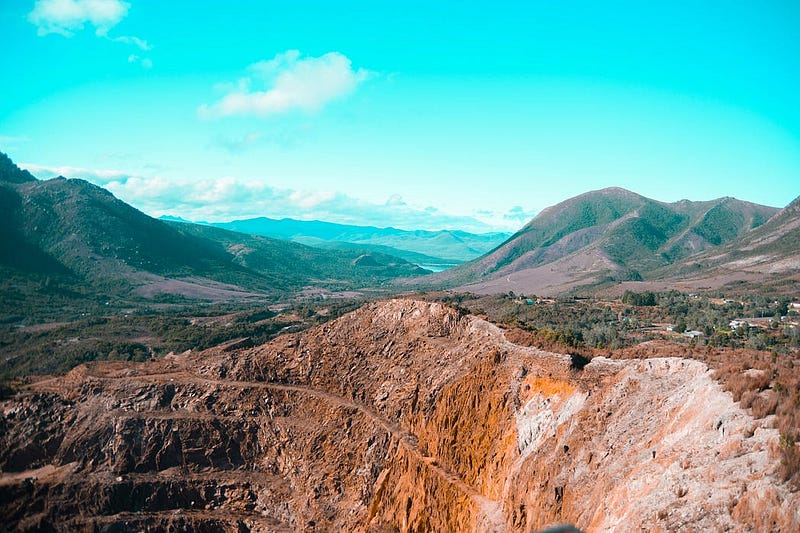
BHP’s Labor Disputes Are Likely To Hit Bottom Lines Hard
It was reported by Proactive Research that the impact from labor disputes will affect operating costs for some of BHP’s coal mines in Australia.
The issues of this case revolve around the Fair Work Legislation Amendment Bill introduced by the Albanese Government to ensure equal pay and working conditions for employees at BHP’s coal mines in Queensland.
BHP in turn has sought to have the bill’s proposal changed to meet current obligations facing BHP and the mining industry in Australia.
For example, BHP Minerals Australia president Geraldine Slattery stated:
“We remain deeply concerned that this bill will create further uncertainty and complexity for no gain in productivity, reduce the ability of Australian industry to successfully compete in the global arena and ultimately increase costs for businesses and consumers at a time of already high inflation.”
One of the main proponents of the this legislation are powerful unions in Australia, such as the Construction, Forestry, Maritime, Mining and Energy Union (CFMMEU). The union used their legal capabilities to target BHP’s action toward employees on Christmas Day and Boxing Day in 2019.
There was a crucial deadline earlier this year in the lead up to these national holidays in Australia and Canada, since BHP Group was under pressure after losing a court decision over this labor dispute, where a judge ruled that the miner must engage with employees before requiring them to work during holidays.
According to Michael Michalandos, industrial relations and employment lawyer for Baker and McKenzie, the legislation in the Fair Work Act clearly sets the tone for how employers should engage with employees about working during public holidays. He told reporters:
“The court made it quite clear that employers have to notify employees that they do have the option to either accept or reject a request to work on a public holiday.”
Nevertheless, BHP won the initial labor dispute against the CFMMEU based on what the miner argued were obligations by the employees to fulfill their permanent jobs statuses in Australia. CFMMEU filed for an appeal against this decision.
At the same time, a spat over coal royalites is playing out between the world’s largest miner, BHP Group, and the Australian government. This case about coal royalities is about mining prospects in Queensland, New South Wales (NSW), Australia. It’s an extensive story, so I will only introduce the most relevant actors and how their interests are at stake.
According to the Queensland Resources Council (QRC), the latest regulations put forth by the Queensland government to increase taxes on coal mining royalties in NSW has put a major amount of coal mining investments at risk for Australia’s economy. Speaking officially on the matter, Ian Macfarlane of the QRC called the new regulations on Queensland coal royalties “over-taxed and uncompetitive”, noting that investments of up to $103 billion-$142 billion in coal mining could be affected if the regulations stands.
The Queensland government has attributed their decision to increase taxes on coal mining royalties — also known as carbon exports windfall-profits tax (CEWT) — to commodity prices being driven to dangerously high prices as a result of the Russia-Ukraine conflict.
In defense of Australia’s treasury office, Director of the Climate Energy Finance Tim Buckley said that the regulations were set up with the Australian people in mind, which would avoid the possibility of a Pandora’s box scenario for corporate interests to supersede effects to the standards of living on Australians.
Here’s what Buckley said about the regulations in a report covering CEWT:
“It’s not a windfall gain that [miners] had anything to do with…It was entirely due to war profiteering using public assets…It’s a sort of Pandora’s box that opens up.”
Other government officials of NSW came out in staunch support of the coal royalty tax rate increases, such as the Greens MP Sue Higginson, who basically said that the Australian government was not doing enough to combat corporate interests as the profits from coal mining and other commodity-based investments from corporations are skyrocketing.
For example, she asserted that:
“Once again allowing the profits from fossil fuels to slip through their fingers…We should be increasing royalties right now, commensurate with record prices, then we could use those profits to escalate investment in renewable energy projects that would save us from being at the mercy of instability in the global fossil fuel market.”
It has been confirmed by several sources that BHP Group has decided to stop coal production investments at its Queensland operations in response to this new regulation targeting coal royalties. The QRC has defended BHP Group’s stance in lockstep with the alleged devastation it would be causing to Australia’s economy. The world’s largest miner even announced on 21 February 2023 that it would sale two of its mining operations for metallurgical coal at Daunia and Blackwater in Queensland.
The Daunia and Blackwater mines are part of the Bowen Basin where the BHP Mitsubishi Alliance (BMA) has joint-stakes is several coal mining operations. Without citing anything about the coal royalty tax rates, BMA asset president Mauro Neves declared that the decision by the alliance to sale off the mines were based on a strategic focus to elevate its interests in higher quality coal assets with lower emissions.
This didn’t convince the QRC’s Macfarlane, indicating that:
“The two mines would struggle to compete for capital under its current global investment plans, which is why the Queensland government should be doing whatever it can to attract investors, not scare them off with the world’s highest royalty tax rate.”
The BMA’s decision also got the attention of Mining and Energy Union Queensland president Stephen Smyth. He called on BHP Group to avoid any “cut and leave” scenarios which would cause Queensland communities to suffer from the company’s failure to continue its operations. This dispute between BHP Group and the Queensland government is an ongoing issue about the coal mining industry’s future, and it has global implications for energy security.

Legal disputes over labor laws, meanwhile, are revealing how critical some of the world biggest producers’ mining projects in Australia are to future bottom lines. Not only BHP Group, but also Chevron who is battling workers’ strikes at the company’s LNG facilities. And then of course, the latest union deal to be made between BHP Group and Chilean copper mine workers.
One way to successfully track the company’s progress on ESG frameworks, would be to look at how those investments in Energy Transition and Clean Energy Technologies are being spread out for domestic production versus other global energy production investments.
This dilemma is at the core of the global mining industry today. To know more about the global market trends, have a look at some of the latest mining and energy news stories published in Areas & Producers this week:
- Newmont Recieves Full Regulatory Approval To Acquire Newcrest Mining. The acquisition of Newcrest Mining Ltd by global mining giant Newmont Corp is officially in the books. The company recieved the regulatory approvals from Papua New Guinea and The Philippines to go ahead with the massive acquisition for Newcrest Mining.
- NextDecade Begins Construction Work For Rio Grande LNG Export Project In Texas. One of the biggest of these LNG projects in the United States is NextDecade’s Rio Grande LNG export project, located in Brownsville, Texas. According to a report by LNG Prime, NextDecade kicked off this grand LNG project during a groundbreaking ceremony at the construction site on 6 October. In other words, this LNG export project is shovel-ready.
Sign up for The Weekend Brief newsletter by Areas & Producers: A weekend guide to international issues and global markets. You can also have a look at the Industry Talk Time about the Bunge-Viterra merger in last week’s newsletter.
By signing up, readers would receive all of the weekly content and updates from Areas & Producers on the subjects of investing, tech, mining, energy, EVs, AI and world. Sign up for the newsletter and instantly receive the content, to the e-mail inbox provided, every Saturday and Sunday.