India, The Superpower of 21st Century
How a South Asian country is on its path to becoming a superpower, leaving behind the past with science, technology, economics and military going to be key areas of focus.
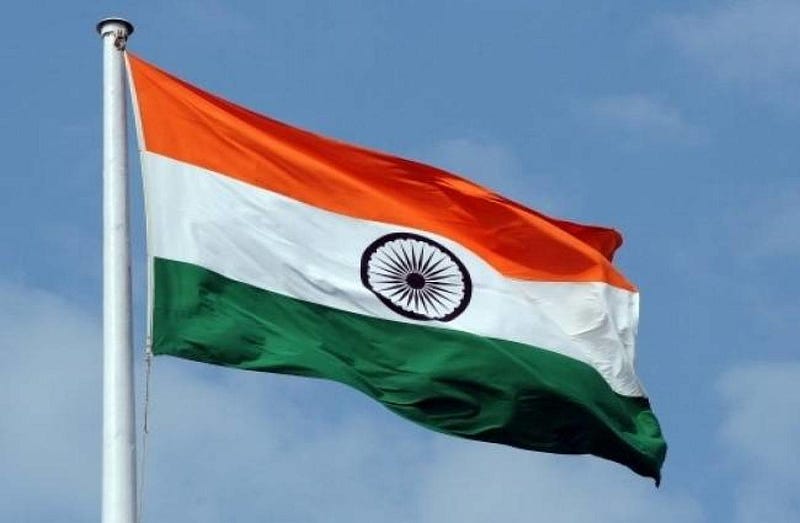
We are celebrating our 74th anniversary of Independent India on the 15th of August, rising from the ashes of colonial brutality and moving through hardships like emergency and fighting continuous wars with its neighbours.
India has seen a lot in the last century. The colonial past and brutal partition between India and Pakistan were one of the cruelest acts that shaped India. Imagining a divided India was impossible in the 1930s, but sadly it became unavoidable by 1947.
The 21st century began for India, with the victory of the Kargil war and a dawn of new opportunities waiting for it, after the sad years of 20th century.
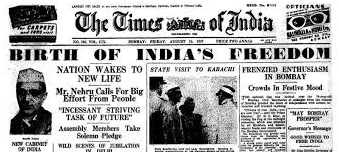
India was just a poor, malnourished, young nation with very few resources just enough to fill a very small population of it. The Rich and Prosperous plains of Punjab and Sindh are now no more with India. The amount of wealth British looted for two centuries, made us go back by half a millennium. India did not have a proper army nor did it have the electricity to provide for all its citizens. What India could cherish was only its golden medieval age and rich past.
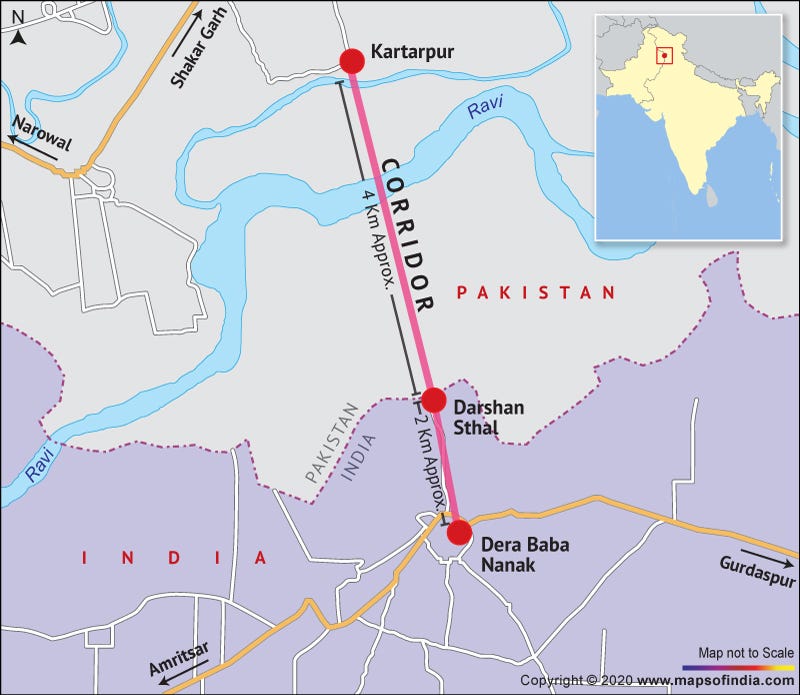
Pakistan was divided on religious basis from India, even though there were very few factions which supported the partition. Jinnah and Gandhi by the partition meant a US-Canada like relationship between both the nations. Sadly, both the leaders passed away before one year after the partition. The Relations between both the states stands lowest. Jinnah would have cursed himself for the Partition if he was alive seeing the present state of India and Pakistan. We fought 4 wars for four different agendas for no reason, yet are still playing border proxy wars and cat and mouse games every day. Despite this, there are two trains running between the two nations, a bus service, everyday flag parade, charity service, SCO and SAARC cooperation and cross-border pilgrimage tourism i.e. Kartharpur Sahib Intl Corridor.
India, since independence tried to gain international attention through its policies and international agendas. India today stands a strong nation among the G4, G20 and the BRICS. Pointing out the latest inclusion in the SCO will also benefit both India and Pakistan equally to break the ice and start talking once again. BSF and Rangers have opened up new military hotlines too. India is trying to seek permanent membership in the UNSC along with three other nations. The good news we have is that India has been elected to the UNSC, in the term 2021–22.
India was successfully able to conduct Green Revolution, White Revolution, IT revolution, Pink Revolution and Blue revolution which made India self-sufficient in food production. Still, corruption and bad environmental conditions cause crop failure and rotting of food grains in Silos and Granaries of India. India is the second-largest producer of Rice and wheat. It is also a leading producer of pulses, vegetables and fruits.
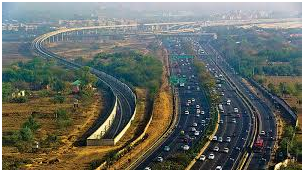
Now all major cities of India are connected by Vajpayee’s dream project — Golden Quadrilateral.
India’s biggest success rides on diplomacy which had begun ever since Nehru came into power, thrives because of world-renowned leaders like Dr Manmohan Singh. The India which Narendra Modi was handed in 2014, was best of its form ever since Independence. Modi was successful in carrying the legacy forward where he made one to one connections with the Head of states. We were successfully able to balance the western and eastern blocs up to an extent.
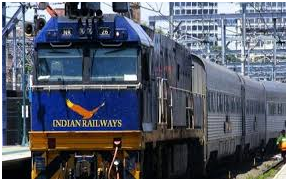
India is now turning out to be one of the most investor-friendly and business-friendly destinations after the economic reforms of 1991. From a job stricken nation to job surplus nation, India has transformed well in advance exponentially. Indian Railways, the heart and soul of India, boasts to be the largest employer in the world. India is also one of the fastest-growing big economies in the world. India is now the fifth-largest economy in the world at $ 2.98 Trillion Nominal. Modi dreams that India will be a $5 trillion economy by 2022.
India will also lead the world in space research in upcoming years, after consistent progress in all fields of space exploration. We also hold the record for the cheapest Mars Orbiter Mission and the only country to send the largest number of satellites in a single launch. India is also on the path on building its own GPS so that it no longer needs to rely on the US and Europe for the same. India sent its second moon mission- Chandrayan II which had Vikram Lander and Pragyan Rover. Gaganyaan will take Indians on board to space.
Civil Nuclear Deal signed with the United States was a diplomatic victory of India despite being seen as strong Russian ally throughout the eyes of the western world. Later Obama and Dr Manmohan Singh established personal relationships, which Modi and Trump are taking forward. India now looks to be a member of the Nuclear Suppliers Group (NSG).
India is one of the most favoured tourist destinations of the world, leading on the front is Kerala with the largest number of tourists, followed by Goa, UP, Jammu and Kashmir, etc.
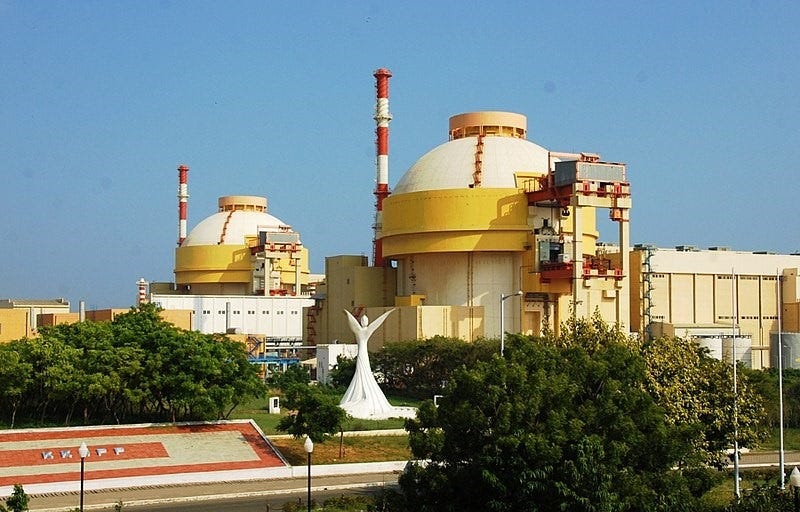
India now has the world’s 4th strongest military and the 4th largest manpower. It has 110–120 nuclear arsenals, long-range ballistic missiles which are able to carry nuclear warheads, also 22 working nuclear reactors and several undergoing construction. India is one of the very few countries to use nuclear submarines and aircraft carriers for war. The country has also ordered 36 Rafale aircraft jets from France and S400 air defence systems from Russia. India is one of the very few countries who has military ties with both Russia and the US. The military was also successful in testing an anti-satellite weapon which can destroy enemy satellites.
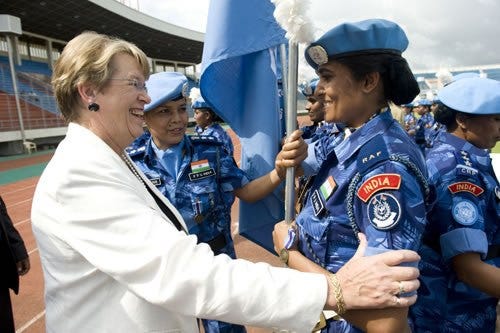
India is known for lending a helping hand for countries all across the globe. India contributes to the world’s 4th largest UN peacekeeping force. Also, India is one of the main contributors to the UN regular budget. India has also helped various countries in launching their satellites on Indian Launch vehicles and also encourages other countries for bilateral military operations and drills in its territory. India also gives financial aid to Afghanistan, Bangladesh and Nepal. Also, refugees were provided with food and aid supplies.
Recent natural disasters have proved that India can stand on its own feet and is setting a model on progressing without hurting the environment. India has started to invest heavily in solar power projects. CIAL, the world’s first fully solar power airport which also won the UN Champion of the Earth award and TTD temple the world’s largest solar kitchen. Tamil Nadu leads in wind power while Gujarat leads in solar power. India still has a long way to go to when it comes to renewable energy master plans.
India is facing a hard time dealing with the covid-19 pandemic. Despite all odds, all state governments, the central government and people are working together in fighting the virus and its spread. Vandebharat Mission was successful in bringing back stranded Indians abroad. Also, quarantine rules are placed for people coming from abroad as well as from other states. The govt has announced a lot of relaxations in taxes and a lot of other business incentives. The poor will give be granted free ration as well.
The saddest part of COVID-19 in India was migrant workers stranded across the country and the condition of the Indian economy. Relief and stimulus packages have been announced in order to stimulate demand as well as to enable MSMEs to catch up in the market.
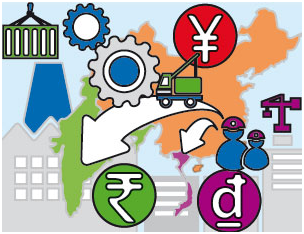
‘Make in India’ initiative allows MNCs to manufacture in India and export their products across the Globe. Apple, Qualcomm, Samsung, and Xiomi are fore front in Atmanirbhar Bharat initiative.
Challenges ahead
Having credible achievements doesn’t make India a strong superpower to face it all. It also faces a lot of problems, which are mainly given less priority by the governments and the citizens. Unemployment, fiscal deficit, malnourishment, increasing crimes, budget constraint, overpopulation, illiteracy, inadequate infrastructure, youth empowerment, religious fanatics, poverty, education, skill development, inflation etc are all yet are big hurdles for us. The internal and external terrorism has been affecting entire South Asia including India. Challenges in neighbourhood countries still remains a matter of concern.
India will have to make significant progress in the 21st century to compensate for its inability for what it couldn’t achieve in the 19th and 20th century.
Also read
I have started a Telegram Channel which will contain the record of all my articles. Follow my personal blog for behind the scenes and informative content.


