avatarAvi Kotzer

Free AI web copilot to create summaries, insights and extended knowledge, download it at here

3823

Abstract

body of the young woman was pulled out of the River Seine at the <a href="https://en.wikipedia.org/wiki/Quai_Fran%C3%A7ois_Mitterrand">Quai du Louvre</a> in Paris around the late 1880s. Suicide was listed as the official cause of death, as the body did not show any signs of violence. Her age was estimated at around 15 or 16.</p><p id="0b4c">Supposedly a pathologist at the Paris Morgue became so obsessed with her beauty and tragic story (probably made up in his own mind) that he was inspired to make a wax plaster cast death mask of her face. No one knows if the smile was already there or if it was nudged into existence by that (creepy? romantic? Take your pick!) pathologist.</p><p id="cee9">At the time, the Paris Morgue was open to the public and functioned as a sort of “Ripley’s Believe It Or Not” local and tourist attraction. So mystery girl’s body was seen by hundreds of people, and thus a legend was born and that legend was dubbed <b><i>L’Inconnue de la Seine</i></b> (The Unknown Woman of the Seine).</p><p id="85e8">In the following years, numerous copies of the death mask were made… and trended so much that they even became a chic thing to own in Parisian Bohemian society. Albert Camus and others compared her enigmatic smile to that of the Mona Lisa, inviting numerous speculations as to what clues said smile could offer about her life and death.</p><p id="70f6">Critic <a href="https://en.wikipedia.org/wiki/Al_Alvarez">Al Alvarez</a> wrote the following about this <i>inconnu</i>:</p><blockquote id="db7f"><p>“I am told that a whole generation of German girls modeled their looks on her… The Inconnue became the erotic ideal of the period, as Bardot was for the 1950s.</p></blockquote><p id="aa5d">Here’s an interesting factoid you can use to win bar trivia games if you’re ever playing one in France. The face of <i>L’Inconnue de la Seine</i> was used as a model for the head of the first-aid mannequin <b>Resusci Anne. </b>The mannequin was first used in 1960 in French CPR courses. I’m not convinced of their likeness, but you can be the judge… as long as you’re not the jury or the executioner.</p><figure id="43bb"><img src="https://cdn-images-1.readmedium.com/v2/resize:fit:800/1*VMUNSovOwJxk8cvpsizAmQ.png"><figcaption></figcaption></figure><p id="c4b6">Some have said this is “the most kissed face” of all time. I know what you’re thinking. This poor dead girl gets more action than you and I combined!</p><p id="d334">And here’s an interesting factoid you can use to win bar trivia games in the United States: The chorus refrain, “Annie, are you OK?” in Michael Jackson’s <a href="https://en.wikipedia.org/wiki/Smooth_Criminal"><i>Smooth Criminal</i></a> was inspired by Resusci Anne. That’s because CPR trainees are taught to say “Annie, are you OK?” when practicing resuscitation with her.</p><h2 id="debe">Known unknowns</h2><p id="0b64">Here are a few other <i>inconnus</i>:</p><p id="c9ec"><b>The Inconnu Art Group</b> (later the <b>Inconnu Independent Art Group</b>) is a plethora of Hungarian artists from the communist and post-communist eras. According to the Open Society Archives, “Inconnu group’s career was profoundly shaped by the underground artistic trends of the 1970s, later turning towards the politics of the dissident groups of the 1980s.” The group’s original members were Bokros Péter, Molnár Tamás, Csécsei Mihály, Mészáros Bánk, Letenyei József, Sipos Mihály, Kopács Kovács Miklós, and Morva Ibolya. The Hungarian government actually organized a manhunt for some of them in the 1980s. You can see some of their artwork <a href="http://www.inconnu.hu/">here</a> and <a href="https://artpool.hu/Commonpress51/inconnu1.html">here</a>.</p><p id="5f34"><b>Les Inconnus</b> is the name of French comedy trio made up of humorists Didier Bourdon, Bernard Campan, and

Options

Pascal Légitimus. They are best-known for their early 1990s sketch comedy television show.</p><p id="c710">▹ The <b>Inconnu</b> is also a sect of elders in the role-playing game <i>Vampire: The Masquerade</i>.</p><p id="a430"><b>Sir Gingalain</b>, also known as <i>Le Bel Inconnu</i> (The Fair Unknown), is a character associated with the legend of King Arthur. This knight’s nickname differs depending on the version and language. Appropriately enough, he’s the main character of the poem <i>Le Bel Inconnu</i>, composed by medieval French author <a href="https://archive.org/search.php?query=%28%28subject%3A%22Beaujeu%2C%20Renaud%20de%22%20OR%20subject%3A%22Beaujeu%2C%20Renaud%20d%2E%22%20OR%20subject%3A%22Beaujeu%2C%20R%2E%20d%2E%22%20OR%20subject%3A%22Renaud%20de%20Beaujeu%22%20OR%20subject%3A%22Renaud%20d%2E%20Beaujeu%22%20OR%20subject%3A%22R%2E%20d%2E%20Beaujeu%22%20OR%20subject%3A%22Beaujeu%2C%20Renaud%22%20OR%20subject%3A%22Renaud%20Beaujeu%22%20OR%20creator%3A%22Renaud%20de%20Beaujeu%22%20OR%20creator%3A%22Renaud%20d%2E%20Beaujeu%22%20OR%20creator%3A%22R%2E%20d%2E%20Beaujeu%22%20OR%20creator%3A%22R%2E%20de%20Beaujeu%22%20OR%20creator%3A%22Beaujeu%2C%20Renaud%20de%22%20OR%20creator%3A%22Beaujeu%2C%20Renaud%20d%2E%22%20OR%20creator%3A%22Beaujeu%2C%20R%2E%20d%2E%22%20OR%20creator%3A%22Beaujeu%2C%20R%2E%20de%22%20OR%20creator%3A%22Renaud%20Beaujeu%22%20OR%20creator%3A%22Beaujeu%2C%20Renaud%22%20OR%20title%3A%22Renaud%20de%20Beaujeu%22%20OR%20title%3A%22Renaud%20d%2E%20Beaujeu%22%20OR%20title%3A%22R%2E%20d%2E%20Beaujeu%22%20OR%20title%3A%22Renaud%20Beaujeu%22%20OR%20description%3A%22Renaud%20de%20Beaujeu%22%20OR%20description%3A%22Renaud%20d%2E%20Beaujeu%22%20OR%20description%3A%22R%2E%20d%2E%20Beaujeu%22%20OR%20description%3A%22Beaujeu%2C%20Renaud%20de%22%20OR%20description%3A%22Beaujeu%2C%20Renaud%20d%2E%22%20OR%20description%3A%22Renaud%20Beaujeu%22%20OR%20description%3A%22Beaujeu%2C%20Renaud%22%29%20OR%20%28%221165-1230%22%20AND%20Beaujeu%29%29%20AND%20%28-mediatype:software%29">Renaut de Beaujeu</a>.</p><p id="fb71">Now, I know that most of the <i>inconnus</i> I’ve discussed today are either proper nouns (names) or foreign words — or both. But there is still a case to be made for that ugly old fish I started off with. Which makes me wonder why the editors of the Spelling Bee decided that <i>inconnu</i> is<i> </i>a <a href="https://www.merriam-webster.com/words-at-play/dord-a-ghost-word"><b>dord</b></a><b>.</b></p><p id="c1e3">You can check out my previous entry on another <b>dord </b>here:</p><div id="8cd6" class="link-block"> <a href="https://readmedium.com/urticaria-1609e1d44977"> <div> <div> <h2>Urticaria</h2> <div><h3>I’m itching to tell you more about this word</h3></div> <div><p>medium.com</p></div> </div> <div> <div style="background-image: url(https://miro.readmedium.com/v2/resize:fit:320/0*60TSL9mRK0XGdp1X)"></div> </div> </div> </a> </div><p id="2d0a">*What the heck is a <b>dord, </b>you ask? Here’s the answer:</p><div id="33f3" class="link-block"> <a href="https://www.merriam-webster.com/words-at-play/dord-a-ghost-word"> <div> <div> <h2>'Dord': A Ghost Word</h2> <div><h3>One of the questions people like to ask lexicographers is this: Can you sneak something into the dictionary? Can you…</h3></div> <div><p>www.merriam-webster.com</p></div> </div> <div> <div style="background-image: url(https://miro.readmedium.com/v2/resize:fit:320/0*xDzplu4q8kcGQjjs)"></div> </div> </div> </a> </div></article></body>

Inconnu

Don’t be a stranger to this word
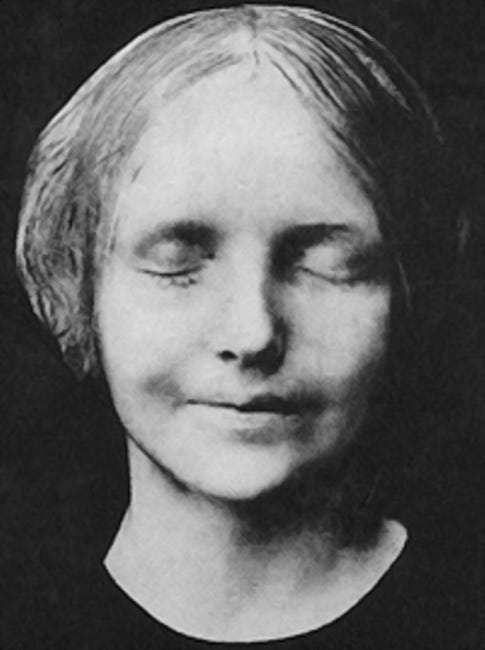
Credit: wikicommons, public domain

Today’s New York Times Spelling Bee letters:
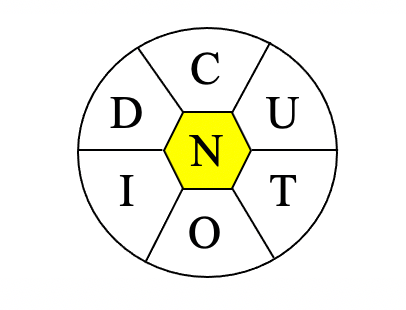
Art: Iva Reztok

C, D, I, O, T, U, and center N (all words must include N)

Merriam-Webster says…

Credit: merriam-webster.com

Silly little dictionary! Don’t you know that inconnu can’t possibly be a word if the New York Times says it ain’t?

For further fascinating facts, check out the Spelling Bee Master.

What’s your favorite dord* from today’s puzzle?

My Two Cents

The photo at the top of the article shows a death mask created in the late 1800s. More about that later, but I thought it might attract more attention than this photo:
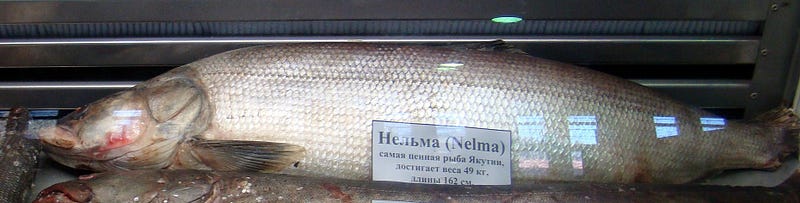
Photo by Dr. Leonid Kozlov

They are both related to today’s daily dord*. As is King Arthur. And a Hungarian art group. How? Read on to find out. In this case I’ll apply the old idiom of “age before beauty” and, since that fish certainly looks old and ugly, it gets to bat lead-off.

Stenodus nelma

That is the scientific name of the fish, also known as nelma (duh!), heefish, siifish, connie, or… inconnu.

Why inconnu?

Well, when Scottish explorer Alexander Mackenzie was exploring Canada with his voyageurs —or French Canadian fur traders — in the 19th century, they ran into this fish which they did not know, and promptly decided to call it the “poisson inconnu” (unknown fish).

How we didn’t end up with hundreds of different species called inconnu is beyond me.

Stenodus nelma is an anadromous whitefish, which is a fancy way of saying it swims rivers upstream from the sea in order to breed. In fact, it’s been known to migrate hundreds of miles to spawn. Now there’s a horny and desperate fish for ya!

This little guy is actually a big fella, topping off at around 59 or 60 inches (150 centimeters for those who read metric) in length and weighing up to 55 pounds (25 kilos).

Inconnus have a distinctive underbite and are usually silvery in color with a green, blue, or brown back. They live in the delta of the Mackenzie river, which is not a coincidence, since the river was named after the Alexander mentioned earlier. But their range is wide, going as far as the Arctic and sub-arctic regions of northwestern North America and even Siberia.

Inconnus can live long for fish in the wild (told ya!), maturing as late as 10 years of age, and they may spawn only once every 2 to 4 years.

Beauty and the men acting like beasts

Now let’s talk about the girl in the photo at the beginning of the article. Or her death mask, in any case.

The urban legend is that the body of the young woman was pulled out of the River Seine at the Quai du Louvre in Paris around the late 1880s. Suicide was listed as the official cause of death, as the body did not show any signs of violence. Her age was estimated at around 15 or 16.

Supposedly a pathologist at the Paris Morgue became so obsessed with her beauty and tragic story (probably made up in his own mind) that he was inspired to make a wax plaster cast death mask of her face. No one knows if the smile was already there or if it was nudged into existence by that (creepy? romantic? Take your pick!) pathologist.

At the time, the Paris Morgue was open to the public and functioned as a sort of “Ripley’s Believe It Or Not” local and tourist attraction. So mystery girl’s body was seen by hundreds of people, and thus a legend was born and that legend was dubbed L’Inconnue de la Seine (The Unknown Woman of the Seine).

In the following years, numerous copies of the death mask were made… and trended so much that they even became a chic thing to own in Parisian Bohemian society. Albert Camus and others compared her enigmatic smile to that of the Mona Lisa, inviting numerous speculations as to what clues said smile could offer about her life and death.

Critic Al Alvarez wrote the following about this inconnu:

“I am told that a whole generation of German girls modeled their looks on her… The Inconnue became the erotic ideal of the period, as Bardot was for the 1950s.

Here’s an interesting factoid you can use to win bar trivia games if you’re ever playing one in France. The face of L’Inconnue de la Seine was used as a model for the head of the first-aid mannequin Resusci Anne. The mannequin was first used in 1960 in French CPR courses. I’m not convinced of their likeness, but you can be the judge… as long as you’re not the jury or the executioner.
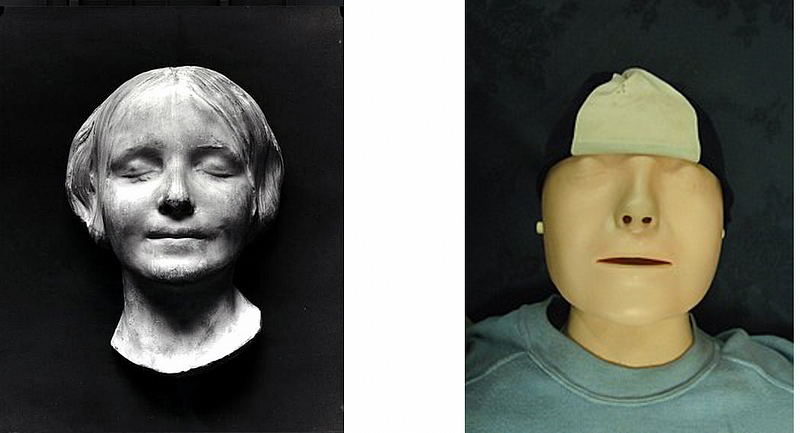
Some have said this is “the most kissed face” of all time. I know what you’re thinking. This poor dead girl gets more action than you and I combined!

And here’s an interesting factoid you can use to win bar trivia games in the United States: The chorus refrain, “Annie, are you OK?” in Michael Jackson’s Smooth Criminal was inspired by Resusci Anne. That’s because CPR trainees are taught to say “Annie, are you OK?” when practicing resuscitation with her.

Known unknowns

Here are a few other inconnus:

The Inconnu Art Group (later the Inconnu Independent Art Group) is a plethora of Hungarian artists from the communist and post-communist eras. According to the Open Society Archives, “Inconnu group’s career was profoundly shaped by the underground artistic trends of the 1970s, later turning towards the politics of the dissident groups of the 1980s.” The group’s original members were Bokros Péter, Molnár Tamás, Csécsei Mihály, Mészáros Bánk, Letenyei József, Sipos Mihály, Kopács Kovács Miklós, and Morva Ibolya. The Hungarian government actually organized a manhunt for some of them in the 1980s. You can see some of their artwork here and here.

Les Inconnus is the name of French comedy trio made up of humorists Didier Bourdon, Bernard Campan, and Pascal Légitimus. They are best-known for their early 1990s sketch comedy television show.

▹ The Inconnu is also a sect of elders in the role-playing game Vampire: The Masquerade.

Sir Gingalain, also known as Le Bel Inconnu (The Fair Unknown), is a character associated with the legend of King Arthur. This knight’s nickname differs depending on the version and language. Appropriately enough, he’s the main character of the poem Le Bel Inconnu, composed by medieval French author Renaut de Beaujeu.

Now, I know that most of the inconnus I’ve discussed today are either proper nouns (names) or foreign words — or both. But there is still a case to be made for that ugly old fish I started off with. Which makes me wonder why the editors of the Spelling Bee decided that inconnu is a dord.*

You can check out my previous entry on another dord* here:

*What the heck is a dord, you ask? Here’s the answer:

Spelling Bee
Language
Animals
History
Fashion
Recommended from ReadMedium