
Why Loners Might Save The Human Race One Day
If you’ve always thought you were unimportant because you’re antisocial, think again.

Are you a loner?
Did you feel like an outcast and a bit of a loser in high school because you don’t really like people?
Did Alley Sheedy’s character in The Breakfast Club hit a little too close to home?
If you’ve always felt like an unimportant outsider, take heart. Science wants you to know something.
According to a study by Princeton University, human outsiders are not alone. It’s not just humankind that produces loners.
But in the natural world, it’s called being “Out of sync” with the rest of the population. And now that they’re looking for them, scientists are finding loners everywhere.
I kind of like that; I’m not different. I’m just out of sync.
And believe it or not, scientists discovered this by studying mold
Dictyostelium discoideum is the cellular slime mold researchers studied to determine that evolution selects for loner behavior. It’s a truly fascinating organism, I encourage you to click the link provided to learn more about it.
It seems when faced with famine, this particular amoeba unite to form swaying towers of slug-like creatures with slimy tops. The slimy top sticks to passing insects, and the spores take a ride to greener pastures while the rest of the tower is left behind to die.
While at a conference addressing this phenomenon, a researcher noticed a few stragglers left behind, some that didn’t heed the chemical call to action. When she asked about this behavior, the speaker chalked it up to a biological error, thinking it was just some defective cells in the group — the inevitable few defects in the millions.
However, when studied further, these loners didn’t seem defective at all.
They ate and grew and reproduced. They made the same tower-like growth when faced with a food shortage and each time a colony emerged from the stragglers, even though most of the offspring acted socially, there were still some strays that stayed behind.
The offspring developed in the same way the main group had. There wasn’t anything wrong with them.
So they asked themselves, what if this behavior had a purpose, what if it’s not a mistake?
Over years of research, scientists tried to create the optimum conditions to have the most individuals participate in the tower. But even in the most coercive conditions, a few loners always hung back.
Slime mold collected from the wild consisted of up to 30% loners — many more than expected.
They also found that this loner gene wasn’t a random choice or mistake but a genetic trait with a purpose.
The loners exist as an insurance policy for the group

Loners keep going when a social collapse happens from disease or some other mitigating factor since they live on the group’s periphery. Because they’re genetically sound, they ensure the entire population won’t get wiped out if the majority becomes damaged.
Paradoxically, it’s the loner carrying the social gene that preserves the group’s social tendencies.
You don’t have to look any farther than how Covid has affected the world to see this insurance policy in action. Introverts and loners are far more likely to stay in during lockdown and avoid crowds. We’re the ones not taking chances, staying out of public spaces, keeping to ourselves, naturally following the rules that help halt the virus.
Introverts are the natural key to defeating the virus in several ways. We like to stay away from other people, which means:
- We naturally disrupt the chain of infection.
- We’re less likely to pass it on if we get it.
- We’re less likely to want to participate in risky behavior for spreading/catching.
- We’re more likely to stay away from people (extroverts who need constant contact with people) who will be natural carriers/spreaders.
When we reproduce, our children will still have all of the social qualities needed to carry on the human race as some of them will be more social than others. Not all of our children will be as antisocial as their loner parents.
People who are so social that they can’t bear to be away from crowds and other people are more likely to get the virus and die off.
Introverts to the rescue!

So if you were that loner emo kid in high school, take heart! You are the literal future of the human race!
Boy, I bet there are a few people who owe you an apology and a thank you!
I was that kid, and I’m still a social misfit who likes to be alone- so in your face, “in crowd”!
Here are a few famous loners from movies. (Click this link if you want to see the full list of “50 Coolest Movie Loners” from GamesRadar):
- Edward Scissorhands (Edward Scissorhands)
- Andy Stitzer (The 40-Year-Old Virgin)
- Phil Connors (Groundhog Day)
- Willy Wonka (Willy Wonka & The Chocolate Factory)
- Carrie White (Carrie)
- The Narrator (Fight Club)
- Wall-E (Wall-E)
Some of these loners are funny, some are bizarre, and one is downright terrifying, but all of these movies are fun to watch!
Here are some examples of loners in the wild:
- Wildebeest: A small herd, always skips the great migration.
- Locusts: Some will separate from a swarm and go back to being lone grasshoppers.
- Bamboo: A few will flower a few days before or after the rest of the species.
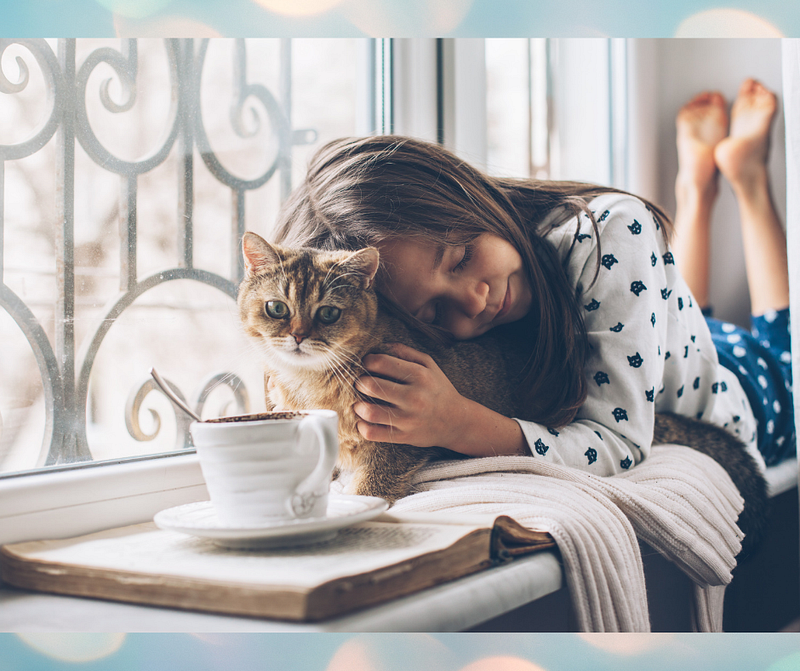
Just like the other loners of the earth, your unique purpose is to set yourself aside from the pack as part of a social insurance policy. Your antisocial impulses are actually part of the most important social task there is. You must be unsocial in case society breaks down enough to need your social DNA.
It all makes sense now!
So take heart! That quality that may have always made you feel like an unwanted outsider is really a superpower in disguise!
Thanks for reading!
Also, don’t forget to check out more great writers on Illumination. Or better yet, share your voice, experience, and wisdom and come on board as a writer, you’re always welcome at Illumination!
If you’d like to read more by me, here are a few more:
If you want to be a writer but don’t know where to start? Check out my book on Amazon: How To Be Wise AF: A 30-day journalling adventure to your inner Guru to help you get started. Using articles with special prompts, you’ll write 30 pieces of your own in 30 days — a whole self-help book, and be well on your way to doing exactly what I’m doing here on Medium!