
In Which Reality Gets Too Real (Estate)
Fear and loathing when the lease renewal arrives
If there’s anything to freak out a certain income-level (translation: poor) New Yorker, or San Franciscan or Londoner for that matter, it’s getting the lease renewal. And this holds true even for those of us blessed creatures who hold the lease to a subsidized apartment, aka rent-stabilized or, much more rarely, rent-controlled.
Because property owners in these cities only vaguely resemble actual humans.
Property owners in cities like New York or San Francisco are actually two-dimensional avatars of unchecked greed. And for those who want to huff and puff about people who, through hard work and smart investing, manage to own two or three properties, allow me to remind you of this hard-working small-time property owner who is now doing four years in the penitentiary for diverting gas lines to avoid fines from ConEd.
The resulting explosion killed two people. See? Unchecked greed.
This leads me to the rider which was quietly tucked in along with the other papers requiring signatures in order to renew the lease on the apartment I’ve called home for 18 years. By signing this innocuous piece of paper I “agree to and acknowledge” that our rent-stabilization status will be eliminated in four years when this building is no longer part of the notorious J-51 tax abatement program.
That horrible shriek you heard last night followed by the heart-rending groan? That was me. Sorry I woke you.
Ok, yes, yes, it’s four years off and you know what? That’s nothing. Four years was endless when I was 14 years old, gazingly longingly at graduation from high school and freedom (yeah, I sure was in for a surprise on that one). Four years has to be even longer for a twenty-year-old six months into a four-year prison term. But four years is nothing to me. Hell, I feel like I met AleXander four years ago and it’s been nearly TEN.
So this determined tenant is taking action and taking it today
Fortunately, New York City abounds with bloody socialists and there are numerous tenants’ rights organizations armed with pro bono attorneys and buckets of righteous indignation. Most of these specialize in keeping people from being evicted, however, judging from the number of people sleeping outdoors in this city one does have to question their effectiveness. But they’re going to find me on their stoop first thing Monday regardless.
And there’s always the Google.
According to my online research which went into high gear last night and is still going forward at an impressive clip, the property owner is responsible for making it clear on the original lease and every subsequent renewal that this unit is slated to be eliminated from rent-stabilization in 2024 when the building loses its tax abatement. All I have to do now is find that original lease. Yeah. I know (Writing this is so much more satisfying than digging through the several places where I’m sure I put that sucker).
Who gets to sleep indoors anyway?
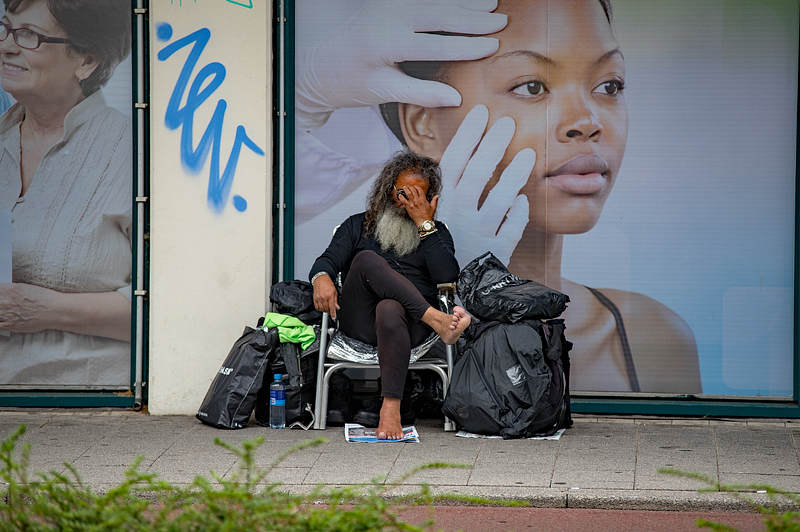
I’ve read that there is virtually no homeless problem in some developing countries because anyone can slap up four pieces of tin, throw a roof on it and have a “home”. The closest corollary here is refrigerator boxes and milk crates with a lot of blankets. That’s home for too many people in New York and other wealthy cities.
My dad grew up in the kind of poverty we seldom see in this country anymore. He and his brothers didn’t get new shoes in the summer because their feet would grow too fast and the family would have to come up with the money for new shoes again in the fall. Who needs shoes when it’s summertime anyway?
But working as a car mechanic at the local Ford dealership he was able to buy a four-bedroom house with a full backyard and a driveway. That house cost $12,000 when he bought it in 1967 and now lists for $136,000 which in today’s market is a steal. My best friend here in New York managed to buy a junior one-bedroom in a coop building for $400,000 six years ago and that was considered a killer bargain.
Buy! Don’t rent.
I’ve been hearing that since I left home and moved into my first rental apartment which was above an upholstery shop on the west side of Cleveland and cost us $100 a month. I get it. Equity. Building wealth. Not putting all those thousands of dollars into the bank account of the landlord. Sounds like the way to go but I have my doubts.
People don’t own property. Property owns people and I don’t think I want to be owned by four rooms that gobble up my money at every turn. When something doesn’t work or goes wrong with the plumbing or heating or whatever in my rented apartment, the super comes and fixes it. When that happens in my friend’s admittedly lovely little place over on 1st Avenue, he has to call the plumber or contractor and arrange to have whatever it is fixed and then he has to pay them. Of course, six years down the road his place is now worth nearly $100,000 than it was when he bought it but, keep in mind, he’s staring down a thirty-year mortgage.
So instead of saving for a down payment to buy property, I signed on the dotted line of a number of promissory notes that got me a BA from Columbia University. And, yes, I’m still paying off that student loan debt hence the dire need to keep this rent-stabilized apartment.
Having talked myself around in a complete circle now, I guess there’s no putting off the inevitable. It’s time to find that original lease and then make plans to go, hat in hand, to the commies, er, I mean the tenants’ rights advocates.
I sure hope your day is going better than this!
© Remington Write 2020. All Rights Reserved.