
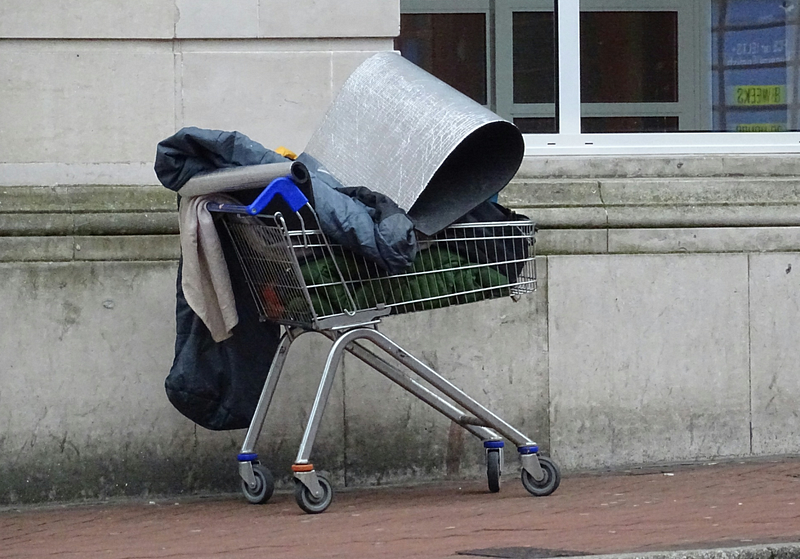
Is Shelter a Right or a Commodity?
Who says everyone gets to sleep indoors?
The world doesn’t owe you a living, you know?
Daddy used to bark that over dinner where he’d complain about all the jerks he had to deal with day in and day out down at the local Ford dealership where he was a mechanic.
The saying always puzzled me because I wasn’t aware that there were a lot of people who didn’t have a hard-working Daddy like ours who put that big old sturdy roof over our heads and made sure the kitchen was filled with good food. He knew that and was trying to get us ready for the cold reality out there waiting for us to turn 18.
Estimates of the unsheltered in this city of 8,000,000+ vary but on any given night there are more people sleeping out on the streets than lived in the little town I grew up in back in Northeast Ohio.
Thousands of people line sidewalks, sheltered by cardboard windbreaks, huddled under dirty blankets. They don’t fit any tidy category. There are the drunks, the mentally unstable, the “urban nomads” with their dogs and cell phones and guitars, the young, old, black, white, and everything else up and down any spectrum you choose.
Shelter in this part of the world is a commodity. If you can’t afford it you sleep out on the street or in, gods help you, in a city shelter.
But should things like shelter, food, and decent health care be commodities that require outlays of capital and so make some people very, very wealthy? In Democratic Socialist countries, the answer is a resounding NO.
As the gap between the wealthy and the rest of us yawns wider and wider all the time with more of us falling into that gap without resources, there is a louder and louder insistence that capitalists stop making obscene amounts of money by providing the basics of human existence.
That would seem to mean that, yes, people should be guaranteed a place to sleep in out of the elements. People should be assured of decent food, clean water, and access to good health care.
We went to the Bronx zoo last week (on Wednesday when it’s free; take that you capitalist animal-keepers!) and I watched as lemurs repeatedly reached over and took food away from each other.
No social contract there. But we’re not like that, right? But, yes, we are and we have been for a very long time. Remember, only a blink of geological time ago, men would arm themselves and go steal other men’s goods, wives, horses, land, and favorite shirts. So, we are making some progress although it takes ignoring the evening news to believe that.
Ever so slowly some groups of people (aka nations) have been coming to the counter-intuitive realization that when everyone sleeps indoors and when everyone has enough to eat and when everyone can go to the doctor before they’re about to keel over and die, their entire society benefits. How radical is that?
This particular group of people I had the dubious luxury of being born into seem to have a tougher time accepting this truth and it may take us many more generations of misery and hardship and Donald Trumps to get our shit together (as the young people say).
Something about being a nation based on crap like Manifest Destiny and Rugged Individualism is slowing us down but we’re heading in the right direction.
Whether we make it before we manage to make the planet unlivable is a question for another essay. Or twenty.
© Remington Write 2019. All Rights Reserved.


