
SMALL BUSINESS
In Support of Newcomer Start Ups
Opportunities for friendship and awkwardness abound
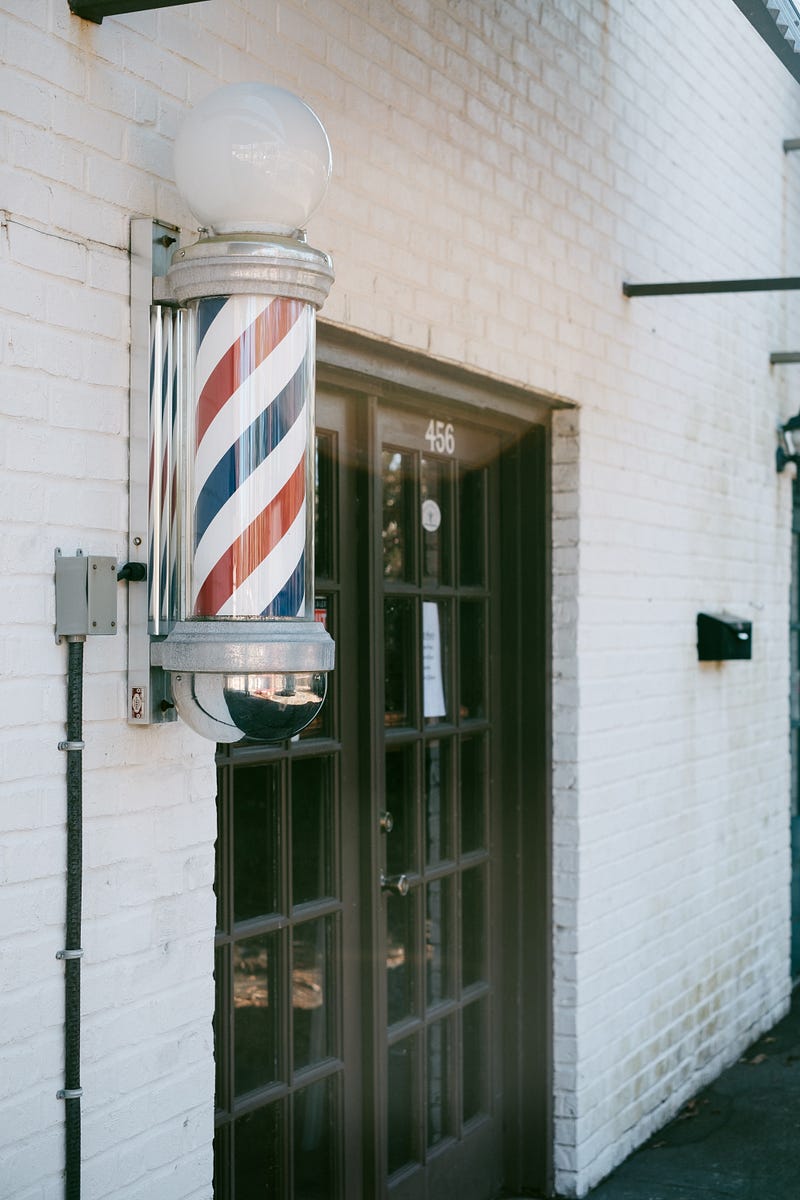
If the American Dream is the prevailing myth of self realization, then self employment and free enterprise are its handmaidens. When newcomers arrive to start a new life, they don’t do so in the pursuit of mere survival. They seek to live out their own Horatio Alger[1] story. The possibility of leapfrogging up one socioeconomic class in your lifetime has been said to be the “purpose” of America. It is in this spirit of becoming that newcomers start businesses.
As one who pursues his own transformative life experience, I feel I should encourage the same in others. Even doubly so, for newcomers. The populace is not well served when a member of the community or country is struggling regardless of their longevity of citizenship. I deeply respect the spirit of self-sufficiency in all entrepreneurs and believe in showing small business my financial support.
Supporting small business doesn’t just alleviate poverty and create wealth. It should also lessen the grip of corporate fascism on our lives and reinforce our consumer freedom. I am also personally fatigued with our every main street and shopping mall being festooned with the same corporate logos and chain stores. The remedy to this lies in the support of small business. Still, the failure rate for new businesses is high. We never know if our purchase might be a difference maker for continued survival.
In 2003, I was hired to operate a community center in a diverse neighbourhood. I was aware that the newcomer community had not felt included in the day to day operation or services offered. I was tasked with changing that. With this in mind, I set about making the effort to create a welcoming environment. I started attending public meetings to break the ice with community leaders. I joined stakeholder advisory committees and began filling job vacancies with youth from the community. It was during this assignment that I met Ali.
Ali’s employer had the cleaning contract for our facility. We would meet in passing on his shifts and exchange pleasantries. As time went on, we developed a rapport and had coffee together. From these visits, he shared that he came from Somalia, was married with a family and, aside from his job in our facility, had a hand in several small businesses including a hair salon. I listened with interest, expressing my support and asked him to bring his business cards next time.
There were some performance issues with Ali’s employer that our property manager alerted me to. He said the company had been given specific performance benchmarks to meet in order to be eligible for a renewal of their contract. As Ali was the employee of a contractor as opposed being a direct hire, I was advised not to communicate with him on matters germane to the contract. Instead I was to route all related comment through my building manager who would then raise these issues with Ali’s supervisor.
Still, as many of our facility’s clients were East African, I carefully cultivated my relationship with him. I was conscientious of how the appearance of termination of a contract with a company composed of East African employees would be viewed in my service area. I felt that by generating goodwill, it might result in improved service that might save his company’s contract and preserve Ali’s job.
In a meeting between our employers to discuss contract and performance expectations, he passed me a few business cards for his salon. The name of the business on the card was “Afro Cuts”. I asked if his salon cut both men’s and women’s hair. He replied in the affirmative. I confirmed his hours of business and said that the next time I needed a haircut, I’d pay him a visit.
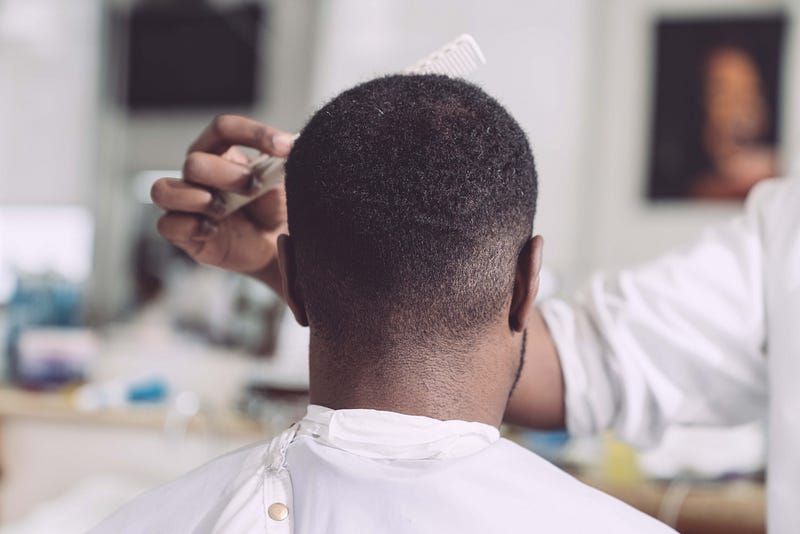
About six weeks later, I decided it was time for a haircut and looked around for Ali’s business card. I didn’t recognize the address or street name. I looked up the location. It was in an industrial park I was unfamiliar with.
There were just a few cars in the parking lot. The industrial park complex was made up of identical units, most of which looked vacant or closed. I drove around and eventually found his unit number. There was no identifying signage save for a paper in the window that looked like a photocopy of the logo on the business card. The lights were off.
I peeked in the front window. There were ceiling tiles stacked in one corner and a few barber chairs. The sinks were not hooked up yet. There was no one visible inside. As I walked in the unlocked door, Ali greeted me warily as though he wasn’t expecting me.
I asked if this was a good time to get a haircut.
He shrugged, mumbling, “Yeah, sure”.
I took my coat off and sat back in the barber chair. “I’d like a trim on the sides”.
He looked at me askance. “Is that done with scissors?”
Not knowing how to respond, I said “Yes.”
“Well I just have these clippers and trimmers for Afros.”
It suddenly dawned on me that he had never cut white people’s hair before.
“Do your best,” I said hesitatingly.
As he cut my hair, I made vague attempts at small talk that went nowhere. There was no radio or background music. The silence was deafening. After the trim, he brushed off the back of my neck and began to sweep away the shorn hair. We avoided eye contact with great determination as though something unmentionable had taken place.
He gave me a close approximation of what I asked for but I don’t remember being shown what it looked like in the mirror. I paid him his posted rate for a man’s haircut and what I felt was a generous tip.
As I got up to put my coat on, I wished him success in his business and said I’d look forward to seeing him at work. I may have mumbled something about passing around his business cards.
Despite my hopes, this was no We Are The World moment. Instead, I felt like I’d crashed a party I wasn’t invited to.
I left feeling awkward and embarrassed. On the drive home, I began questioning myself and was sure I confirmed every crazy white person stereotype. Rachel Dolezal, eat your heart out!
My family and I took the following week off for March Break. When I returned, our property manager took me aside. He told me that the cleaning contract for the building was not being renewed. Ali’s company had removed their equipment and a new company was awarded the contract.
I never saw Ali again.