avatarTim Ward, Mature Flâneur

Free AI web copilot to create summaries, insights and extended knowledge, download it at here

4078

Abstract

ch one including a bulls eye (below right).</p><figure id="eb57"><img src="https://cdn-images-1.readmedium.com/v2/resize:fit:800/0*qFKYbqCviIF-7Vj0.jpeg"><figcaption></figcaption></figure><figure id="2c03"><img src="https://cdn-images-1.readmedium.com/v2/resize:fit:800/0*GCA7f-Kh5SPVwcq-.jpeg"><figcaption></figcaption></figure><figure id="e774"><img src="https://cdn-images-1.readmedium.com/v2/resize:fit:800/0*OSZFy_ZErwQyS9x8.jpeg"><figcaption></figcaption></figure><figure id="1dcc"><img src="https://cdn-images-1.readmedium.com/v2/resize:fit:800/0*z8F1vC54o73n2aMG.jpeg"><figcaption>Scenes from Mozart Haus.</figcaption></figure><p id="ba95">One target-practice drawing is clearly of Mozart’s older sister at the piano — exactly the same as she looks in the family portrait. Another shows — there is no delicate way to describe it — a man licking another man’s bottom.</p><p id="a7dc">Now, much has been made of Mozart’s “potty humor.” In fact, there is a whole <a href="https://en.wikipedia.org/wiki/Mozart_and_scatology">Wikipedia</a> entry about Mozart’s scatology. His personal letters are full of rude phrases. One describes the aristocrats attending one of his concerts as “the Duchess Smackarse, the Countess Pleasurepisser, the Princess Stinkmess, and the two Princes Potbelly von Pigdick”. Mozart also wrote copious scatological musical compositions that he and his friends used to sing when out getting drunk.</p><p id="3e26">The Wikipedia article says psychologists of later generations had a field day diagnosing Mozart with everything from Tourette’s Syndrome to “infantilism.” One frequent vulgar expression in his letters — including letters to his sister — was “lick my ass.” This was the cause of consternation amongst those eager to posthumously analyse the young genius. But, saner heads have prevailed. They point out a better translation of “lick my ass” would be the British insult “kiss my arse.“ If one person says it, it’s a mental disorder. If everyone says it, it’s just funny.</p><p id="57b7">The folklorist and cultural anthropologist <a href="https://en.wikipedia.org/wiki/Alan_Dundes">Alan Dundes</a> suggested that interest in or tolerance for scatological matters is a specific trait of Germanic culture, one which is retained to this day: <i>In German folklore, one finds an inordinate number of texts concerned with anality. Shiße (shit), Dreck (dirt), Mist (manure), Arsch (ass), and other locutions are commonplace. Folksongs, folktales, proverbs, folk speech — all attest to the Germans’ longstanding special interest in this area of human activity.”</i></p><p id="0f71">This made so much sense to me! (and not just because of my own potty mouth). You see, travelling around Austria, from time to time I’ve run into some pretty hilarious earthy humor. Here’s my two favorite examples:</p><figure id="257a"><img src="https://cdn-images-1.readmedium.com/v2/resize:fit:800/0*9K1fWBwSWx3vYr_W.jpeg"><figcaption></figcaption></figure><figure id="8528"><img src="https://cdn-images-1.readmedium.com/v2/resize:fit:800/0*VcZ0kb5uVahyRxTy.jpeg"><figcaption></figcaption></figure><figure id="00e9"><img src="https://cdn-images-1.readmedium.com/v2/resize:fit:800/0*jnePL3N_doxVDiSm.jpeg"><figcaption>In Austria, there’s nothing as funny as a man peeing.</figcaption></figure><p id="649d">Another expert quoted in Wikipedia pointed out that scatological humor and foul language were common in Mozart’s time and place because “people lived under a system of hereditary aristocracy that excluded them from political participation. The vulgarity of scatological popular theatre was a counterpoint to the refined culture imposed from above.” I liked that idea: foul language was a means of striking back against the Empire. Give ’em <i>shiße, </i>Mozart!</p><p id="06cf">Touring Salzburg’s hilltop fortress, I learned that the independent state of Salzburg was ruled for 500 years, until 1816, by a series of prince-archbishops who weilded absolute secular and spiritual control. They put down any political uprisings ruthlessly. The castle not only

Options

defended against invaders, it was also was a constant reminder to Salzburg’s citizens not to step out of line. A tour of the fortress includes the dungeon where political prisoners were incarcerated, and various methods of torture and humiliation. Mozart lived in such an autocracy.</p><p id="d194">The prince-archbishops have all turned to dust in the burial chambers of Salzburg’s cathedral. Only historians and the tour guides remember their names. The city today is world famous not for these autocrats, but for its potty-mouth, genius son, the man everyone knows, whether or not they go to concerts or listen to classical playlists.</p><figure id="3e55"><img src="https://cdn-images-1.readmedium.com/v2/resize:fit:800/0*MX80J924UClOmwGh.jpeg"><figcaption>Bust of Mozart in one of Salzburg’s parks where he used to walk and compose.</figcaption></figure><p id="a20e">Did you miss any of my previous stories about Austria? Here they are. If you want to read them in chronological order, start at the bottom and work your way up. Enjoy!</p><p id="6c88">P.S. — for the next few weeks Teresa and I will be in Mongolia! Stay tuned.</p><div id="e69d" class="link-block"> <a href="https://readmedium.com/the-gobsmacking-grossglockner-high-alpine-road-d2e7f250559d"> <div> <div> <h2>The Gobsmacking Grossglockner High Alpine Road</h2> <div><h3>Austria’s biggest thrill ride</h3></div> <div><p>medium.com</p></div> </div> <div> <div style="background-image: url(https://miro.readmedium.com/v2/resize:fit:320/1*bQRvkLwzrKhKViaDhjYiuA.jpeg)"></div> </div> </div> </a> </div><div id="eb3e" class="link-block"> <a href="https://readmedium.com/tyrols-folk-polka-palooza-parade-8c1c6efe2bbc"> <div> <div> <h2>Tyrol’s Folk-Polka-Palooza Parade</h2> <div><h3>Whole lotta lederhosen</h3></div> <div><p>medium.com</p></div> </div> <div> <div style="background-image: url(https://miro.readmedium.com/v2/resize:fit:320/1*[email protected])"></div> </div> </div> </a> </div><div id="6adc" class="link-block"> <a href="https://timward-changermakers.medium.com/mountains-of-surprises-d20bfbf5f02f"> <div> <div> <h2>Mountains of Surprises</h2> <div><h3>Shocking secrets of Austria’s western alps.</h3></div> <div><p>timward-changermakers.medium.com</p></div> </div> <div> <div style="background-image: url(https://miro.readmedium.com/v2/resize:fit:320/1*[email protected])"></div> </div> </div> </a> </div><div id="3c09" class="link-block"> <a href="https://readmedium.com/exuberant-innsbruck-e2c79763dae8"> <div> <div> <h2>Exuberant Innsbruck</h2> <div><h3>A city with a beautiful soul</h3></div> <div><p>medium.com</p></div> </div> <div> <div style="background-image: url(https://miro.readmedium.com/v2/resize:fit:320/1*[email protected])"></div> </div> </div> </a> </div><div id="bf3b" class="link-block"> <a href="https://readmedium.com/innsbruck-up-and-down-89848a1bbbf0"> <div> <div> <h2>Innsbruck, Up and Down</h2> <div><h3>Two ways of looking at Austria’s most charming city</h3></div> <div><p>medium.com</p></div> </div> <div> <div style="background-image: url(https://miro.readmedium.com/v2/resize:fit:320/1*[email protected])"></div> </div> </div> </a> </div></article></body>

Mature Flâneur

In Salzburg: Mugged by Mozart

Amadeus ambushes us in his hometown.
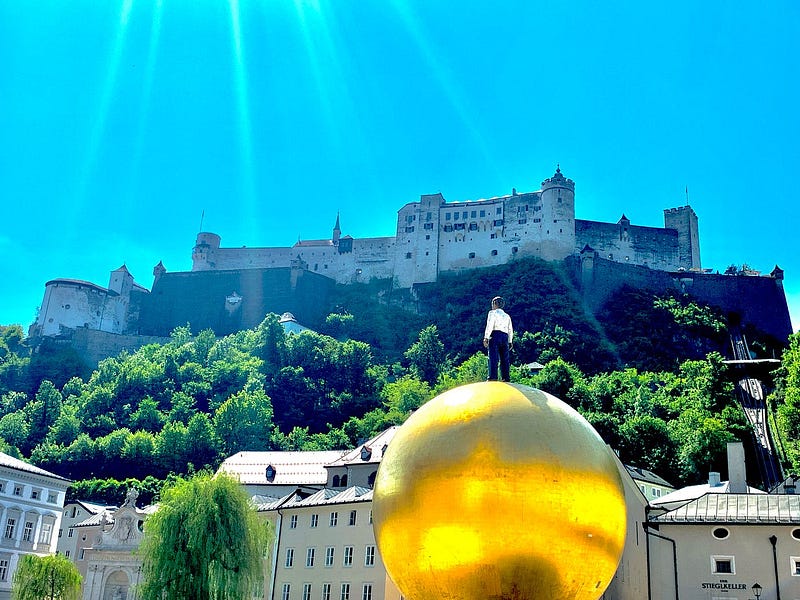
Fortress Hohensalzburg, with massive “Mozartkugel” (Mozart ball) in the foreground. This recent artwork is dedicated to candy maker Paul Fürst, who in 1890 invented a gold-wrapped marzipan ball featuring the face of Wolfgang Amadeus Mozart. It’s the most famous confection in Salzburg. All photos in this story by Tim Ward

After three weeks in Austria, Teresa (my beloved spouse) and I arrived in Salzburg, our final destination. We’ve been all over the Tyrollean Alps, and so hitting this Baroque masterpiece of a city was, frankly, a bit sad for us. Salzburg straddles two limestone hills which are the gateway to the Alps, but also, for us, the exit ramp. Looking west from the hilltops, we could still see snow-white peaks in the distance. Looking east, the landscape looked distressingly flat. I was, I admit, a bit mopey at leaving the Alps. Stupid Salzburg, with its spectacular hilltop fortress castle and the gaily decorated streets of the old town.
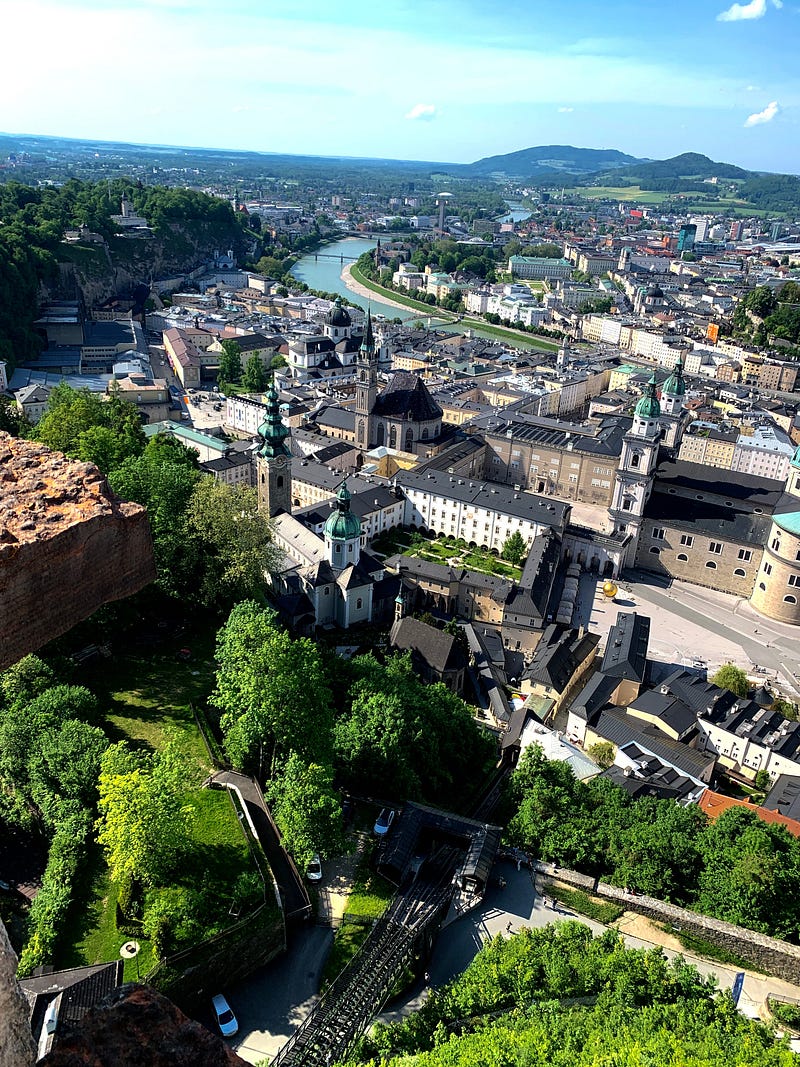
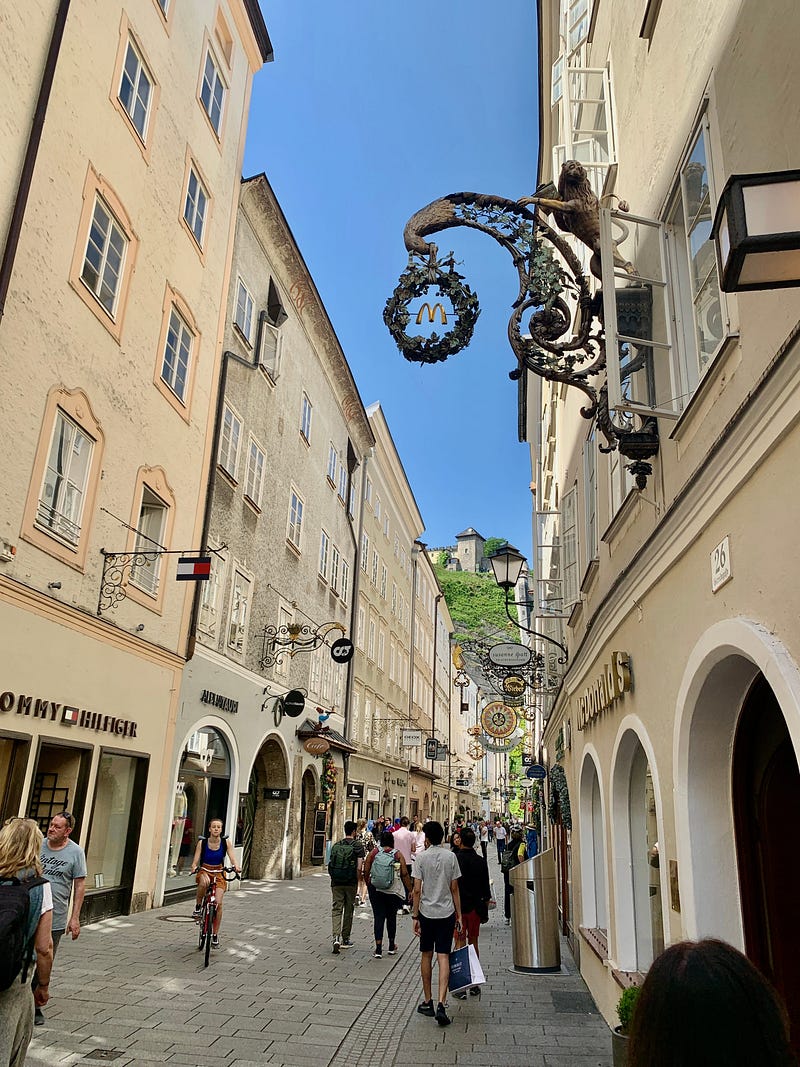
Salzburg’s old town.

Then, our very first morning we went out for a stroll through one of the gardens in town, and bam, we were ambushed by Mozart. There was a sign pointing the way to a free classical music concert by an orchestra called the “Amadeus Ensemble” in the grand building next to the park at 11:00 a.m. It was exactly 11:00 a.m. We raced up the massive marble staircase. An usher shushed us, but opened the massive wooden doors a crack so we could slip in. We found ourselves in a spacious, dazzling room with a two-storey-high ceiling, a massive glittering chandelier, elaborate crown molding, and gold leaf highlights on the marble and cream white walls. The room was Baroque beyond repair: a perfect setting for music that was born in salons just like this.
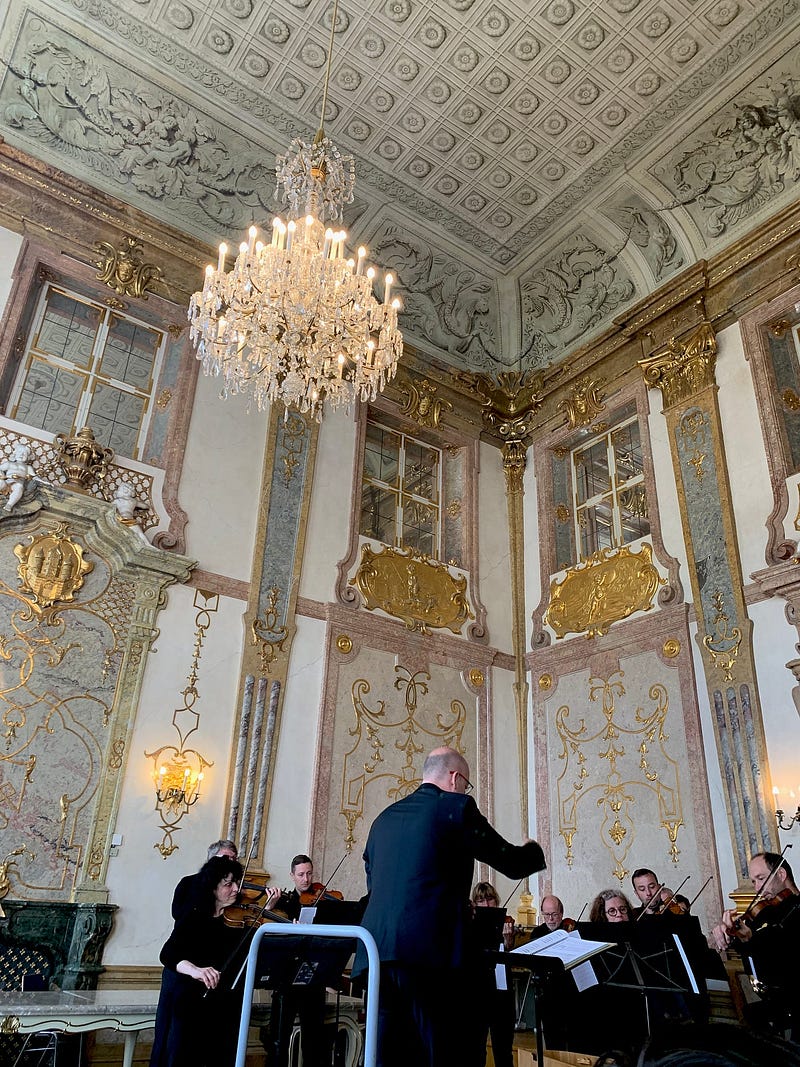
We waltzed right in as the music started. I have to say, Teresa and I do not listen to classical music. I’ve not been to a concert in decades, despite my mother’s best efforts when I was a teen and she dragged her family regularly to Ottawa’s National Symphony Orchestra. I think her spirit would have soared to see Teresa and I so enraptured. Perhaps it was the setting, but we could really sense the grandeur of music, and felt ourselves getting swept away. Well, for awhile at least. It’s hard to stay focused for an hour and a half when one is habituated to listening to three-minute tunes on Spotify. Maybe listening to symphonies would be a good cure for our fragmented, short attention spans? (Note to future selves: mo Mozart on the playlist).

On our way out of the concert, we noticed the building where it was held was called the Mozarteum. One of the main squares in the old town was Mozart Platz, and even our hotel was called Hotel Amadeus! Mozart was present on every street in town. Heck, the most famous candy in the city is the Mozartkugel — a gold wrapped ball of marzipan with a picture of Mozart on it.

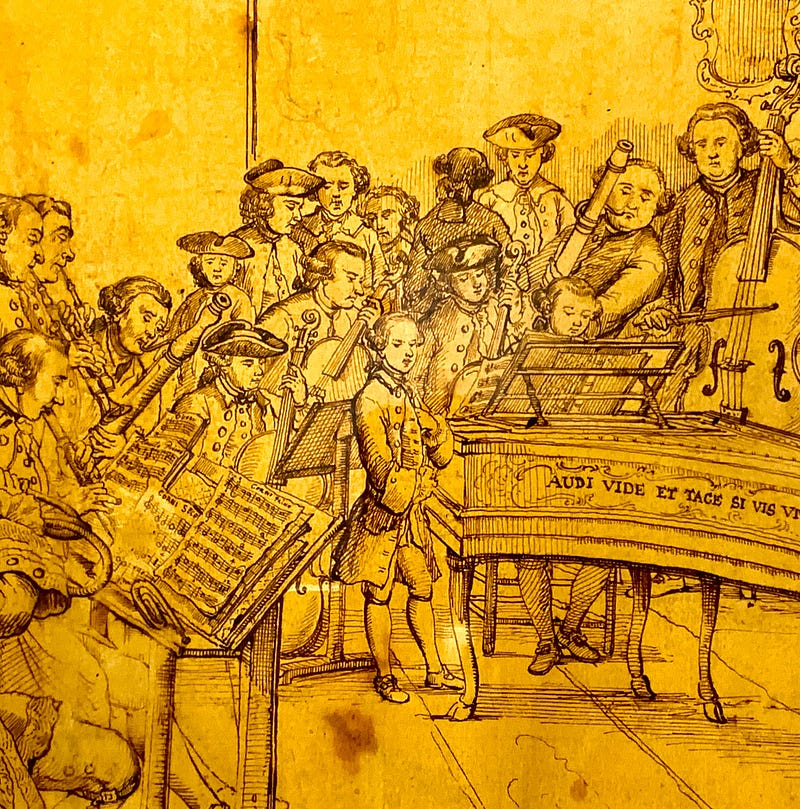
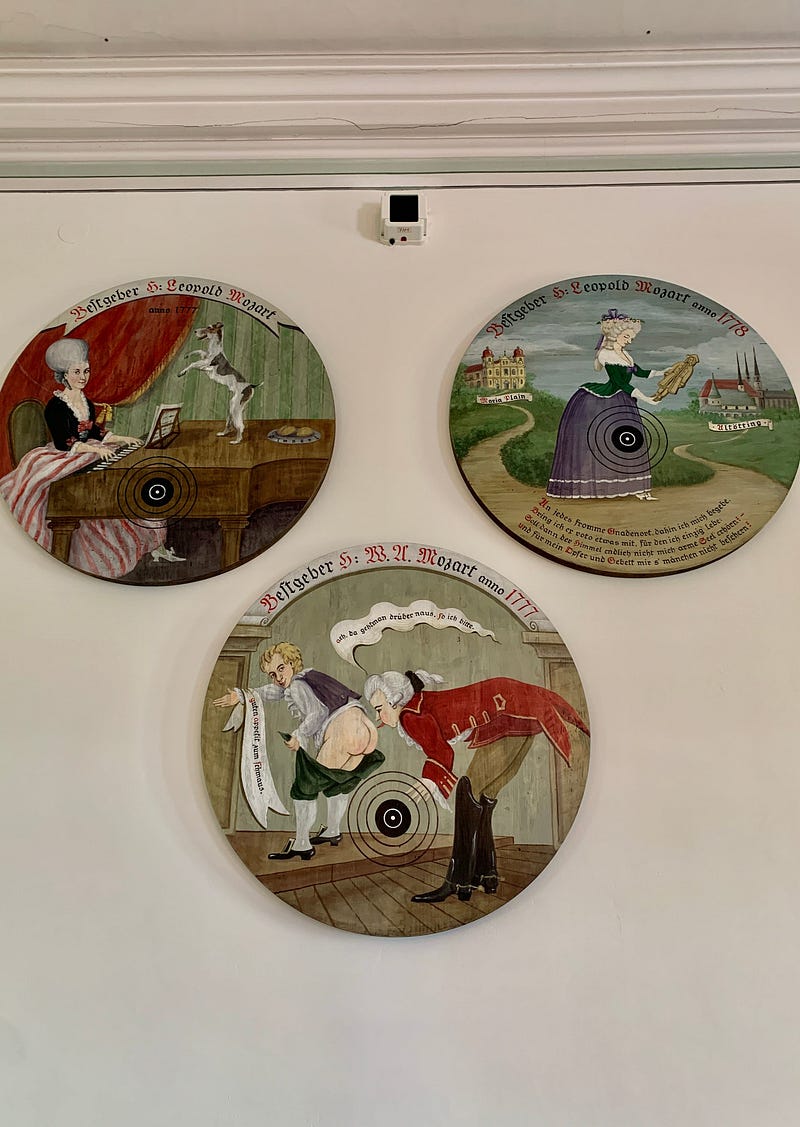
After the concert we stumbled upon Mozart Haus — where the young genius and his family lived for many years. How cool, to walk the floorboards where Mozart walked. We saw the harpsichord he played, music scores penned in his own hand, his family portraits, and then, bizarrely, mounted on a wall, a set of three crude paintings Mozart had commissioned as a young man for target practice — each one including a bulls eye (below right).
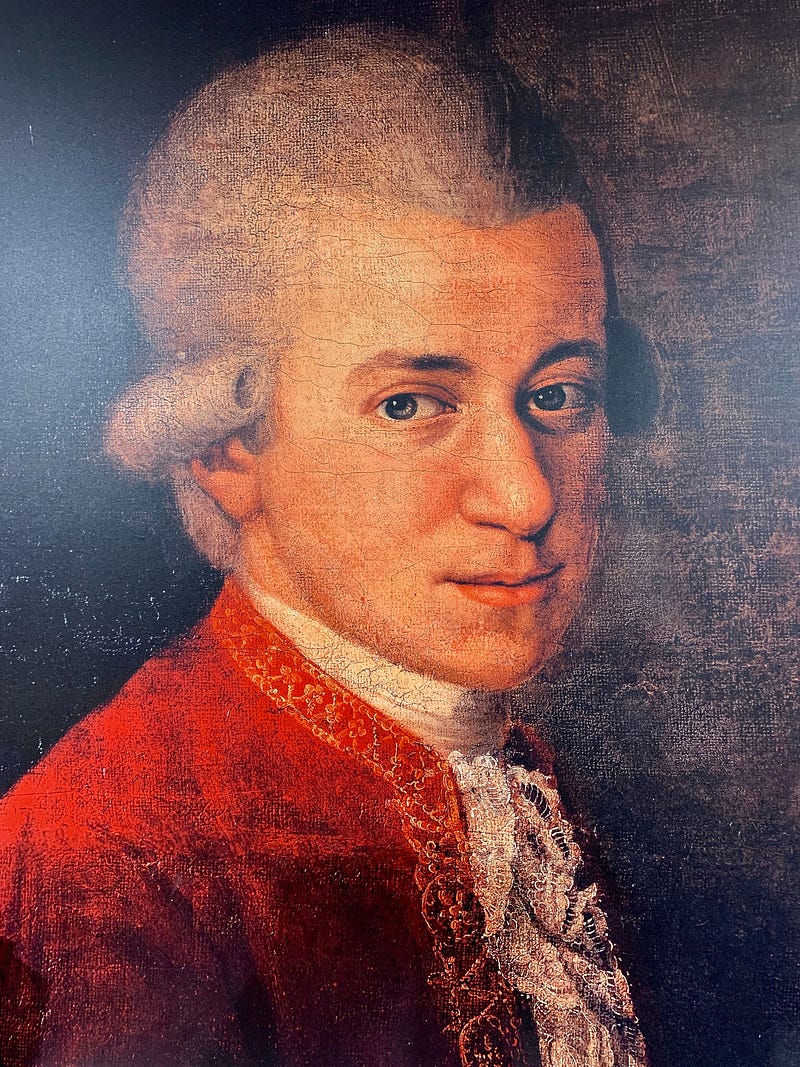
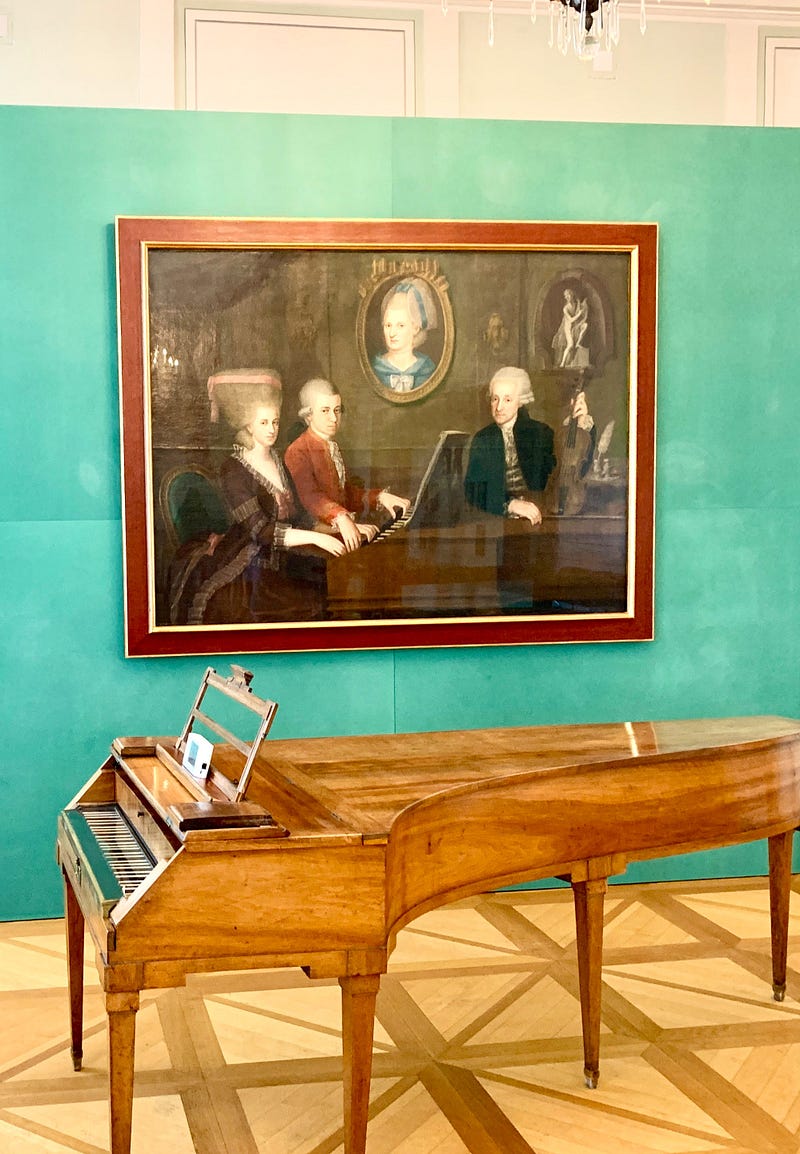
Scenes from Mozart Haus.

One target-practice drawing is clearly of Mozart’s older sister at the piano — exactly the same as she looks in the family portrait. Another shows — there is no delicate way to describe it — a man licking another man’s bottom.

Now, much has been made of Mozart’s “potty humor.” In fact, there is a whole Wikipedia entry about Mozart’s scatology. His personal letters are full of rude phrases. One describes the aristocrats attending one of his concerts as “the Duchess Smackarse, the Countess Pleasurepisser, the Princess Stinkmess, and the two Princes Potbelly von Pigdick”. Mozart also wrote copious scatological musical compositions that he and his friends used to sing when out getting drunk.

The Wikipedia article says psychologists of later generations had a field day diagnosing Mozart with everything from Tourette’s Syndrome to “infantilism.” One frequent vulgar expression in his letters — including letters to his sister — was “lick my ass.” This was the cause of consternation amongst those eager to posthumously analyse the young genius. But, saner heads have prevailed. They point out a better translation of “lick my ass” would be the British insult “kiss my arse.“ If one person says it, it’s a mental disorder. If everyone says it, it’s just funny.

The folklorist and cultural anthropologist Alan Dundes suggested that interest in or tolerance for scatological matters is a specific trait of Germanic culture, one which is retained to this day: In German folklore, one finds an inordinate number of texts concerned with anality. Shiße (shit), Dreck (dirt), Mist (manure), Arsch (ass), and other locutions are commonplace. Folksongs, folktales, proverbs, folk speech — all attest to the Germans’ longstanding special interest in this area of human activity.”

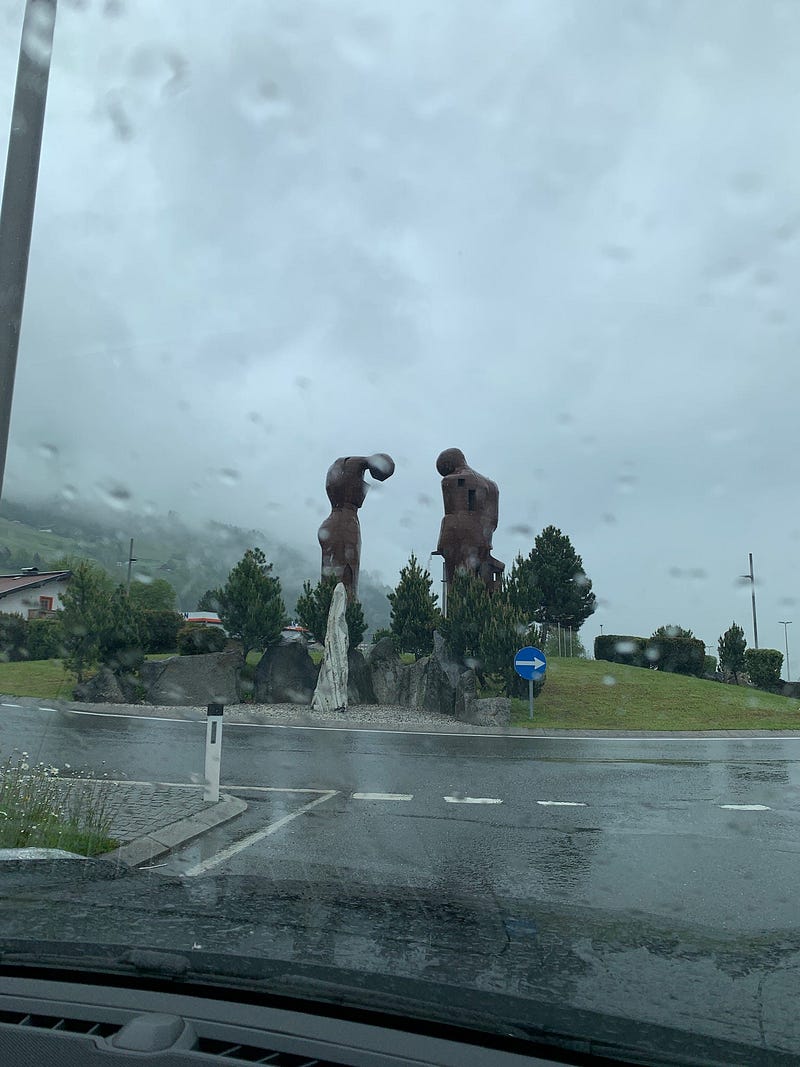
This made so much sense to me! (and not just because of my own potty mouth). You see, travelling around Austria, from time to time I’ve run into some pretty hilarious earthy humor. Here’s my two favorite examples:
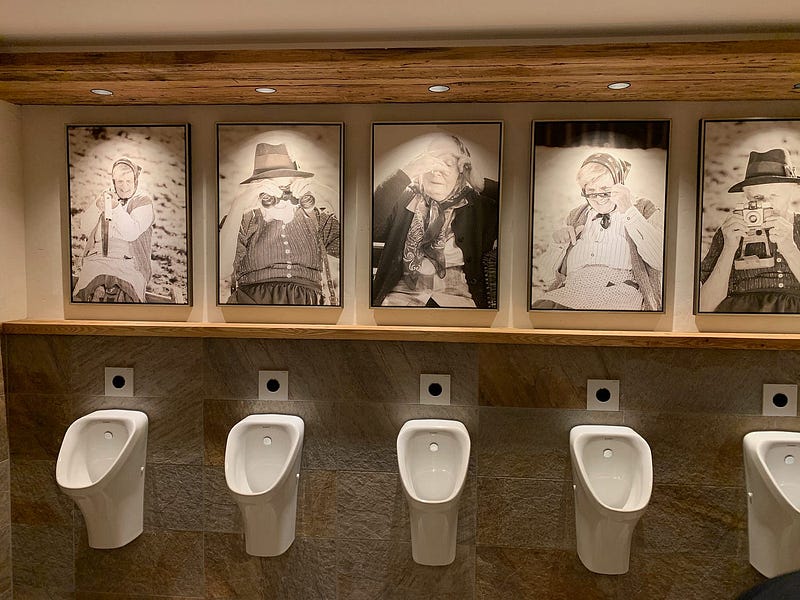
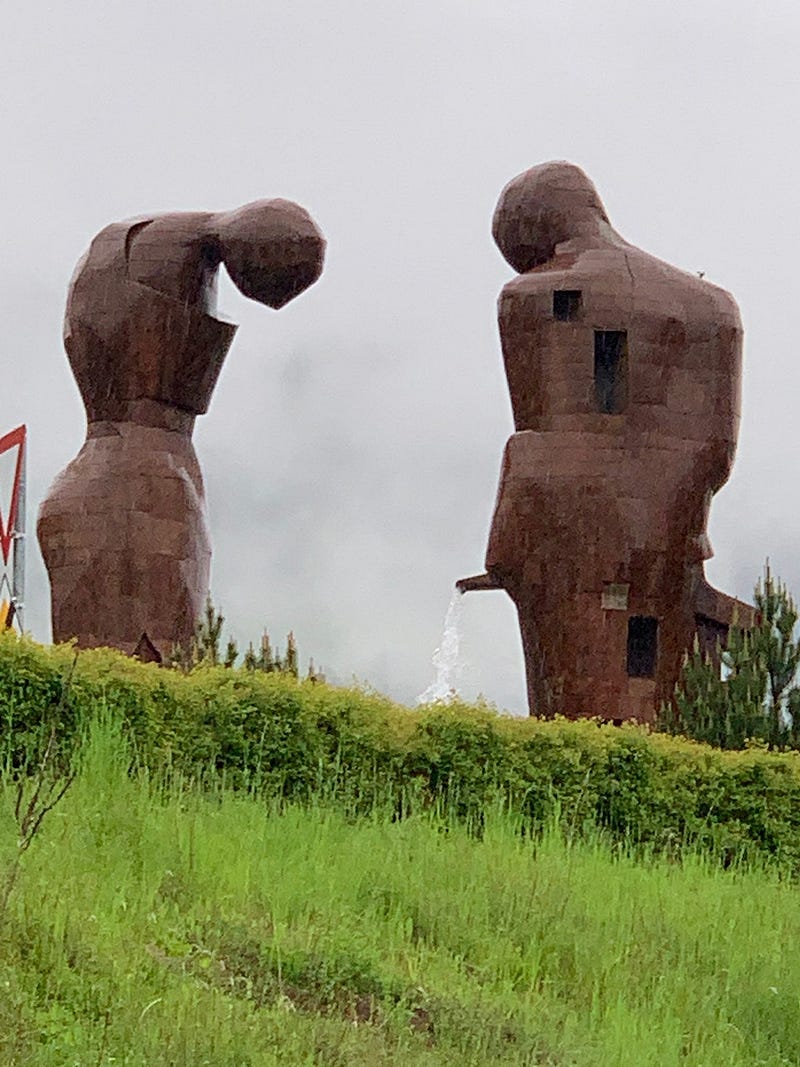
In Austria, there’s nothing as funny as a man peeing.

Another expert quoted in Wikipedia pointed out that scatological humor and foul language were common in Mozart’s time and place because “people lived under a system of hereditary aristocracy that excluded them from political participation. The vulgarity of scatological popular theatre was a counterpoint to the refined culture imposed from above.” I liked that idea: foul language was a means of striking back against the Empire. Give ’em shiße, Mozart!

Touring Salzburg’s hilltop fortress, I learned that the independent state of Salzburg was ruled for 500 years, until 1816, by a series of prince-archbishops who weilded absolute secular and spiritual control. They put down any political uprisings ruthlessly. The castle not only defended against invaders, it was also was a constant reminder to Salzburg’s citizens not to step out of line. A tour of the fortress includes the dungeon where political prisoners were incarcerated, and various methods of torture and humiliation. Mozart lived in such an autocracy.

The prince-archbishops have all turned to dust in the burial chambers of Salzburg’s cathedral. Only historians and the tour guides remember their names. The city today is world famous not for these autocrats, but for its potty-mouth, genius son, the man everyone knows, whether or not they go to concerts or listen to classical playlists.
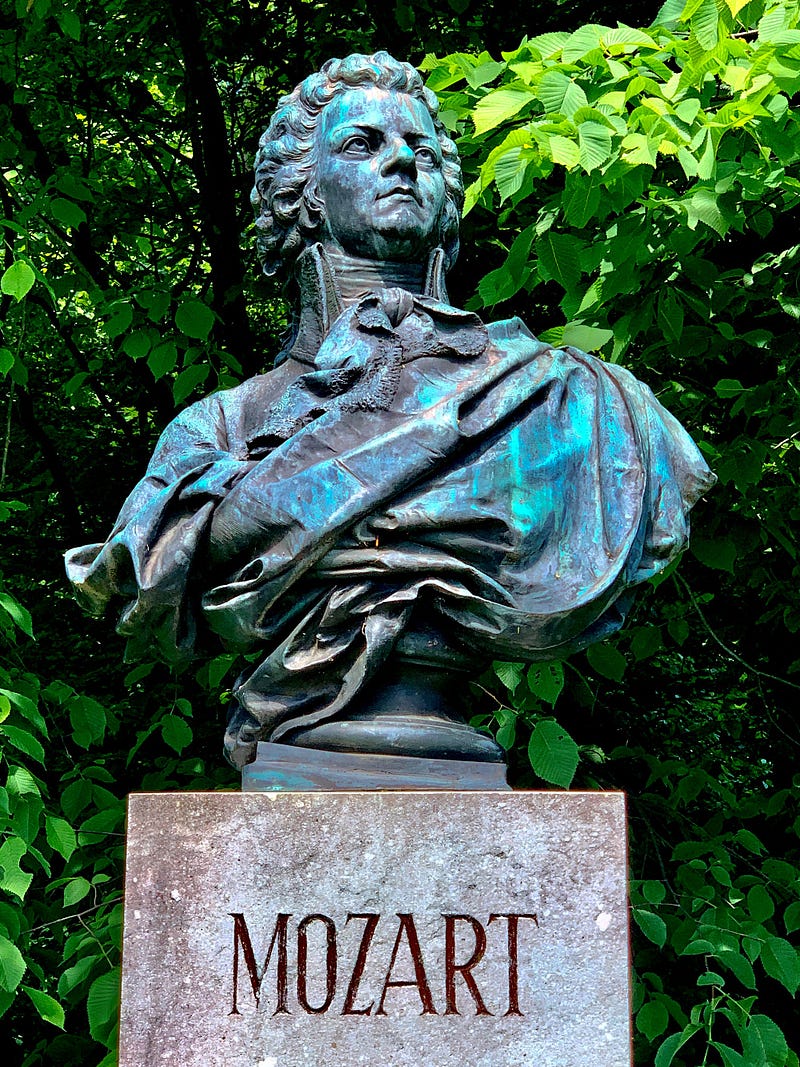
Bust of Mozart in one of Salzburg’s parks where he used to walk and compose.

Did you miss any of my previous stories about Austria? Here they are. If you want to read them in chronological order, start at the bottom and work your way up. Enjoy!

P.S. — for the next few weeks Teresa and I will be in Mongolia! Stay tuned.

Salzburg
Mozart
Austria
Globetrotter
Flaneur
Recommended from ReadMedium