
Mature Flâneur
Tyrol’s Folk-Polka-Palooza Parade
Whole lotta lederhosen
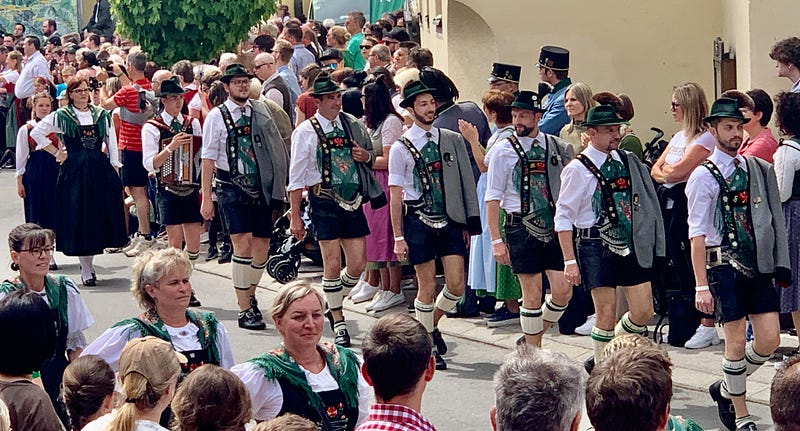
I love a parade. I’m less crazy about men in lederhosen — the traditional embroidered leather shorts of Tyrol. I guess it’s the suspenders that make them seem like kid’s shorts on a grown man. If you see one person wearing lederhosen out of context — say, in Paris or Texas — that looks very weird. But, I can now assure you with confidence, if you see 1,000 men in lederhosen combined with the rest of their traditional garb marching alongside 1,000 women wearing embroidered fancy dirndl, it looks mighty impressive. Especially when accompanied by the music of dozens of marching bands.
That’s where I found myself, by the happiest of accidents this past weekend, on May 3, the final day of Gauder Fest 2023.
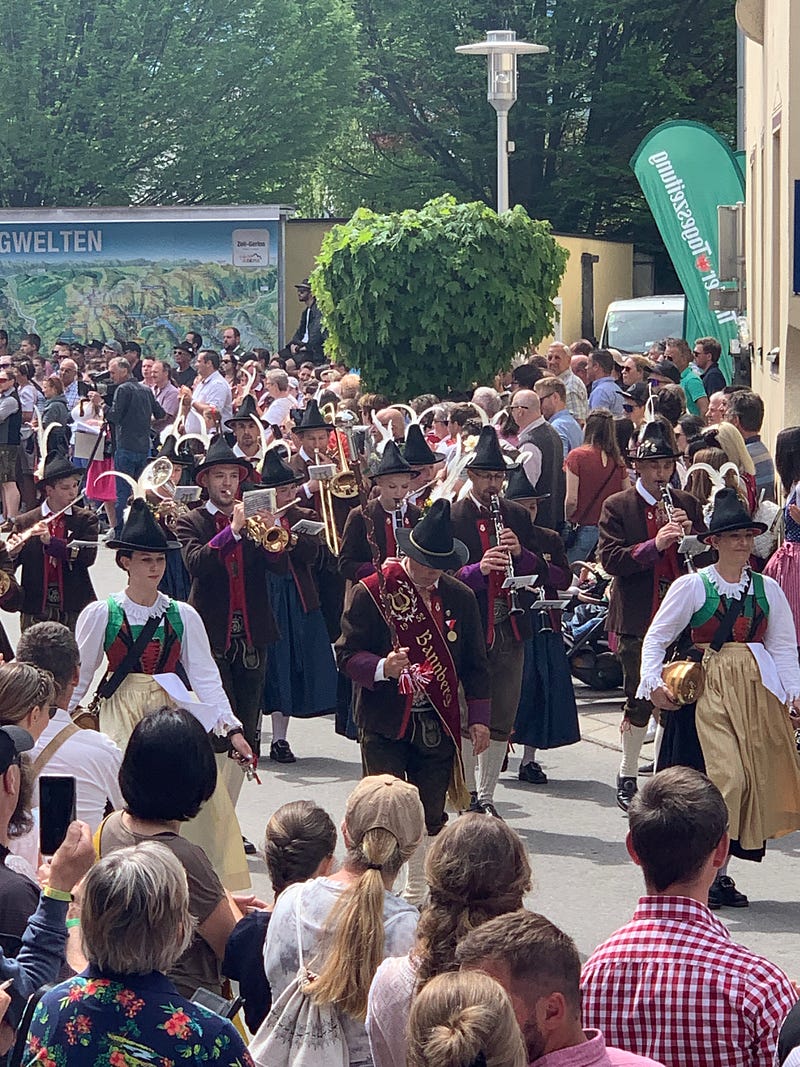
Teresa and I had arrived the evening before to stay in a sweet chalet on a mountainside above the little town of Zell am Ziller. Driving in along the green Ziller Valley, surrounded by snow-capped mountains, we had no clue that we were arriving in the middle of the single biggest annual costume-music-livestock-beergarden festival in Tyrol. Imagine a cross between Octoberfest, Jazz-fest, a county fair and a Renaissance festival, with accordion and Ompa-pa-pa music everywhere and you get the idea. It’s a Folk-Polka-Palooza.
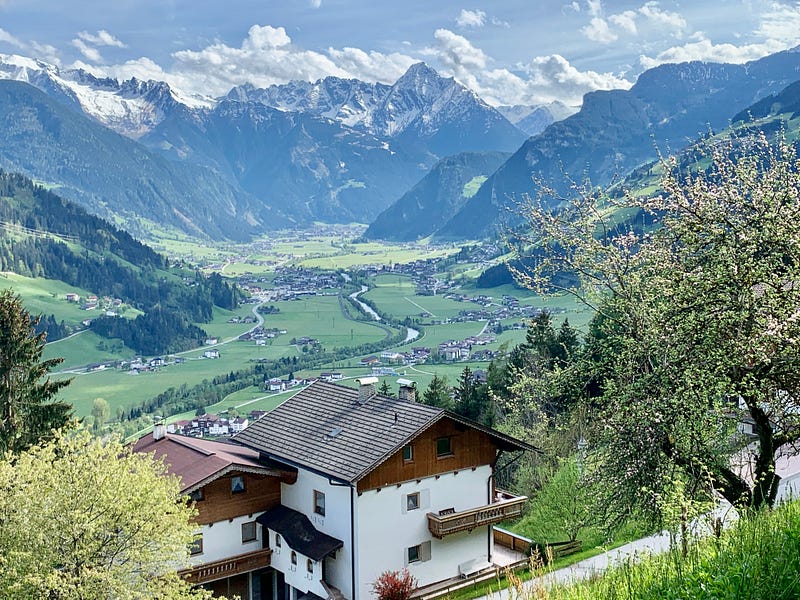
From our balcony, we could see all across the valley, including the fairground that was packed with people. Music wafted — no, blasted — from the loudspeakers right up the mountainside. The band was yodelling, I kid you not. Our guesthouse host told us, sorry, the music would go on all night. But, he added, we were lucky because the big event of the weekend was coming up Sunday — the next morning. Right after church, more than 2,000 costumed Tyrolleans would assemble in a field on the far side of the valley and then parade right through town: brass bands, dance troupes, winners of the livestock competitions, horses pulling beer barrels, historical costume societies and more!
They came from all over, he told us — not only from Austria, but also from South Tyrol (part of Italy), and even ethnic Tryolleans from neighboring Slovenia. This early May gathering was the biggest folk event of the year. The parade itself would last at least 90 minutes.
I was as excited as a kid. I could hardly wait for morning. Teresa…not so much. The forecast was for warm sunny weather, and for my beloved, standing in a crowd under the hot sun for ninety minutes? Nope. Not even the promise of a thousand men in leather shorts could entice her. Fortunately, she loves her alone time as much as I love a hike in the hills, so we agreed I’d hike down for the parade, scope out the fairgrounds, and then we would come back together in the cool of late afternoon, when the crowd would be thinner.
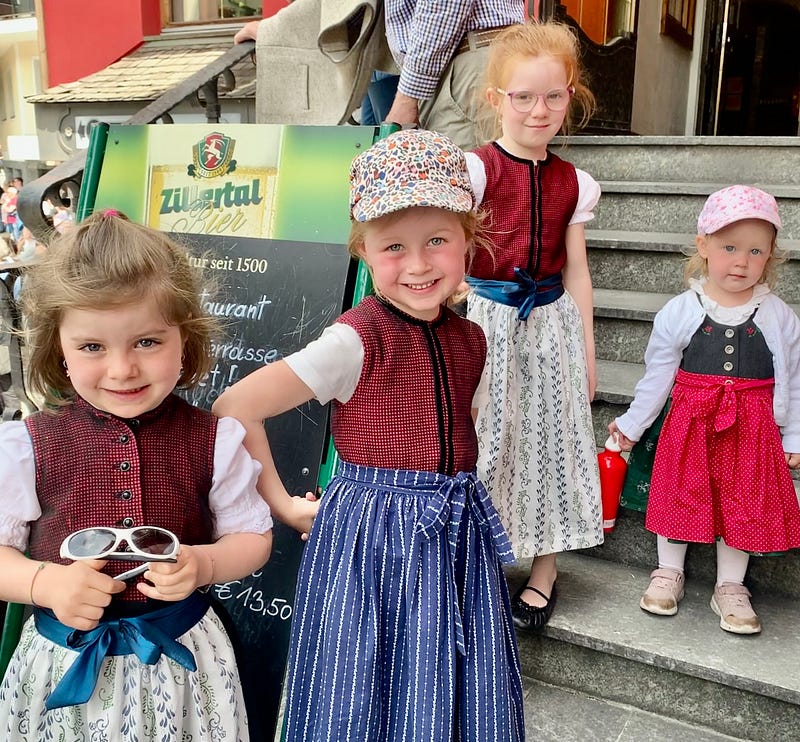
And so at 11:00 am, I had found a place on a stairway beside the parade route right in the center of Zel am Ziller. It was lined with expectant spectators, many of them also in costume, like these adorable sisters and cousins in matching dresses who were standing next to me with their mothers:
Suddenly, a loudspeaker boomed from a balcony across the way and the master of ceremonies announced the parade had arrived from across the valley! Around a bend in the road, the first ceremonial figures appeared on horseback, and then this big fellow, below, riding on a massive barrel of beer and wearing a garland crown and cape. This was Gambris, the Beer King of the Festival:
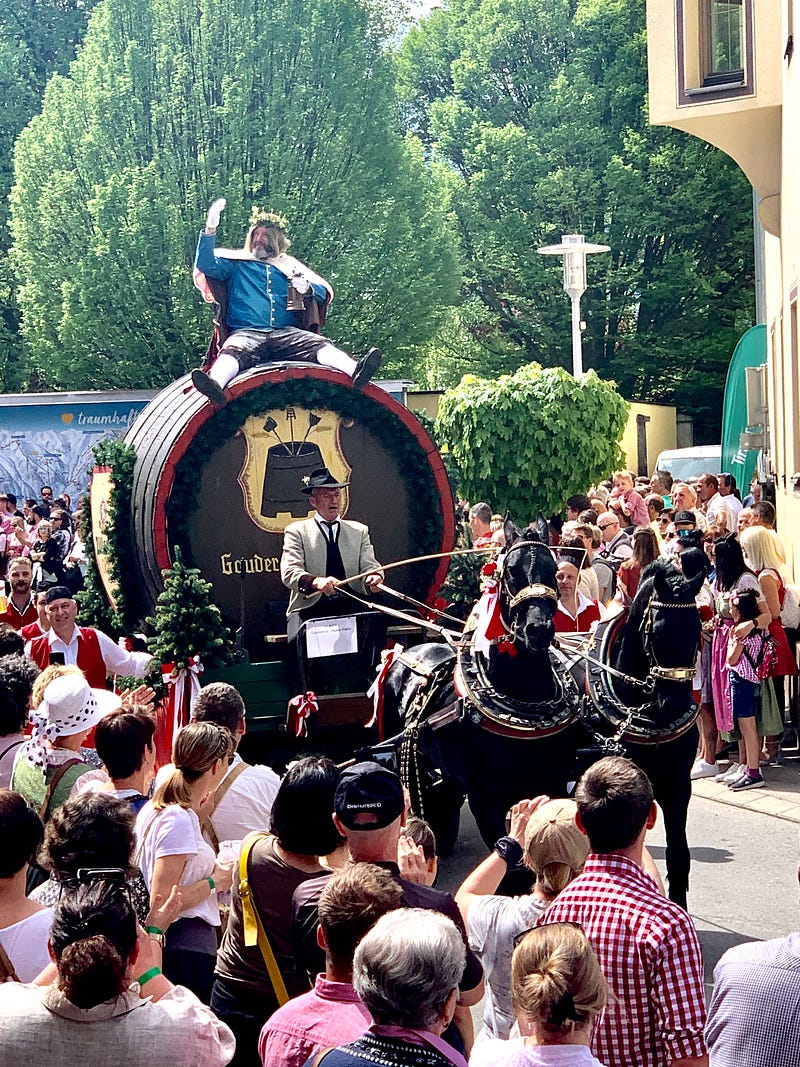
While much of any parade is pretty predictable, I saw things marching past that I’ve never seen before in a parade in my 64 years on the planet. For example:
A Maypole Dance:
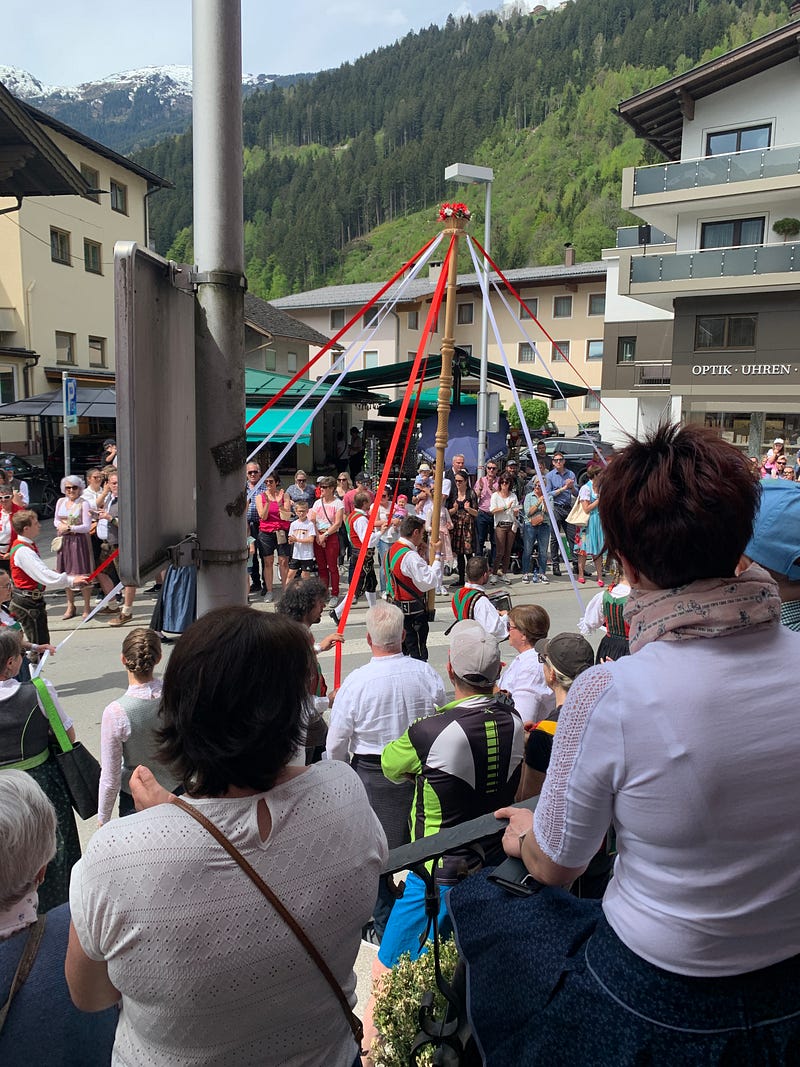
This was one of several dance troupes that not only marched past, but stopped in front of the Master of Ceremonies and did a little routine. I liked the lederhosen-wearing troupes best because their dance moves involved some fast foot-and-thigh slapping that made a distinctive leathery sound on the old lederhosen.
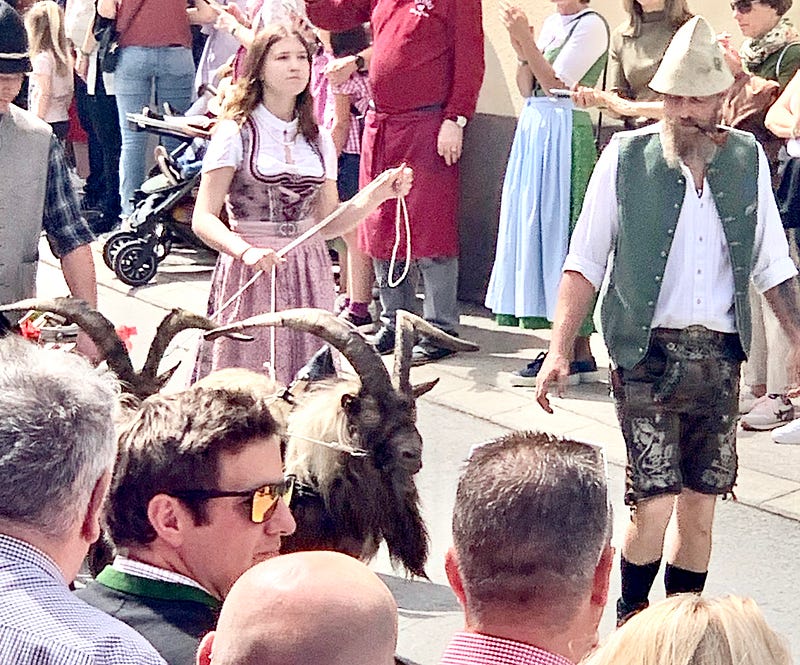
Prize-winning goats. These actually look like wild ibex, but smaller. So I suspect they are some relatively recently domesticated hybrid. I could smell them and the other dozen goats in the procession coming before I even saw them, and their presence lingered long after they rounded the next bend — like feta cheese left in a hot car for a week.
Farmer-soldiers with their weapons. There were several large community folk-groups parading in traditional costume. Each one carried an antique rifle or farm implement such as a scythe or pitchfork. Others shouldered ancient but vicious-looking home-made weapons of war — maces and studded clubs. This bizarre equipment comes from the traumatic periods in history when Tyrolleans fought invading armies — Bavaria from the north, Italians from the south, and most famously, Napoleon’s French forces. The latter were even defeated, for a time, by the citizen militias of Tyrol. It’s an episode immortalized with great pride in numerous statues and monuments throughout the region.
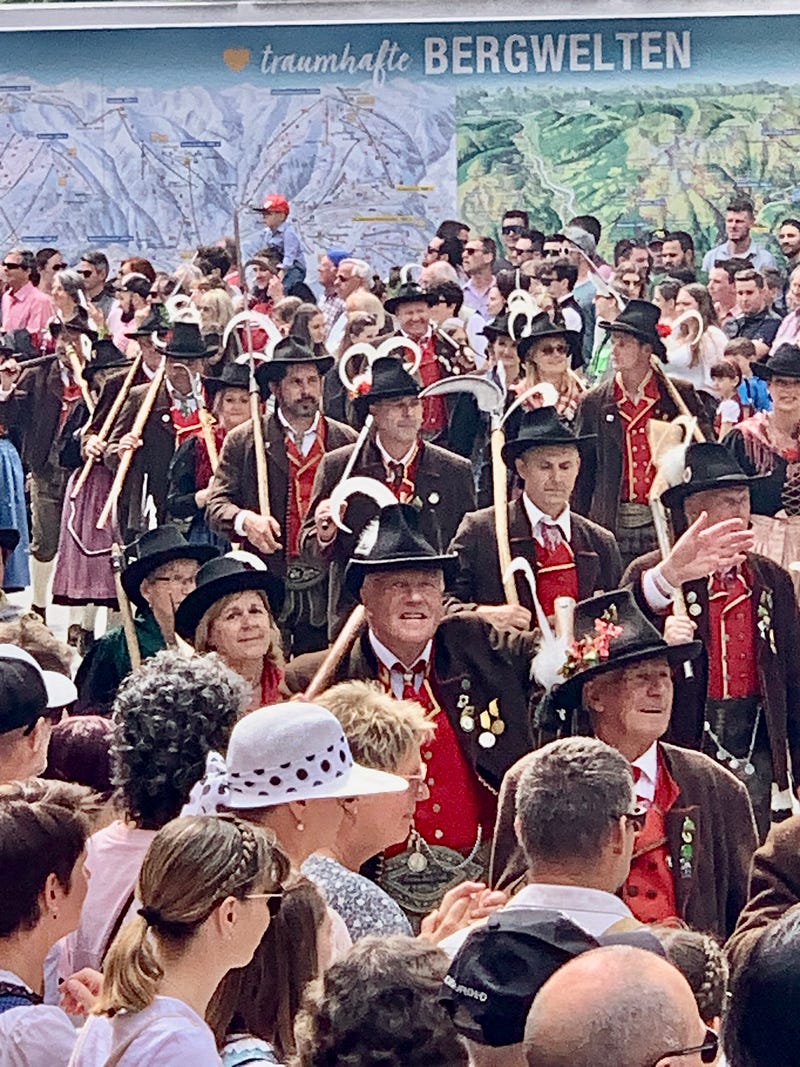
Don’t make the mistake of thinking it was only the men of Tryol who defended their mountain homes. Costumed women were also swinging some deadly heavy metal as they marched, in memory of the grandmothers past who fought for Tyrol. I was especially fond of the woman with the mace and matching purse (below left).
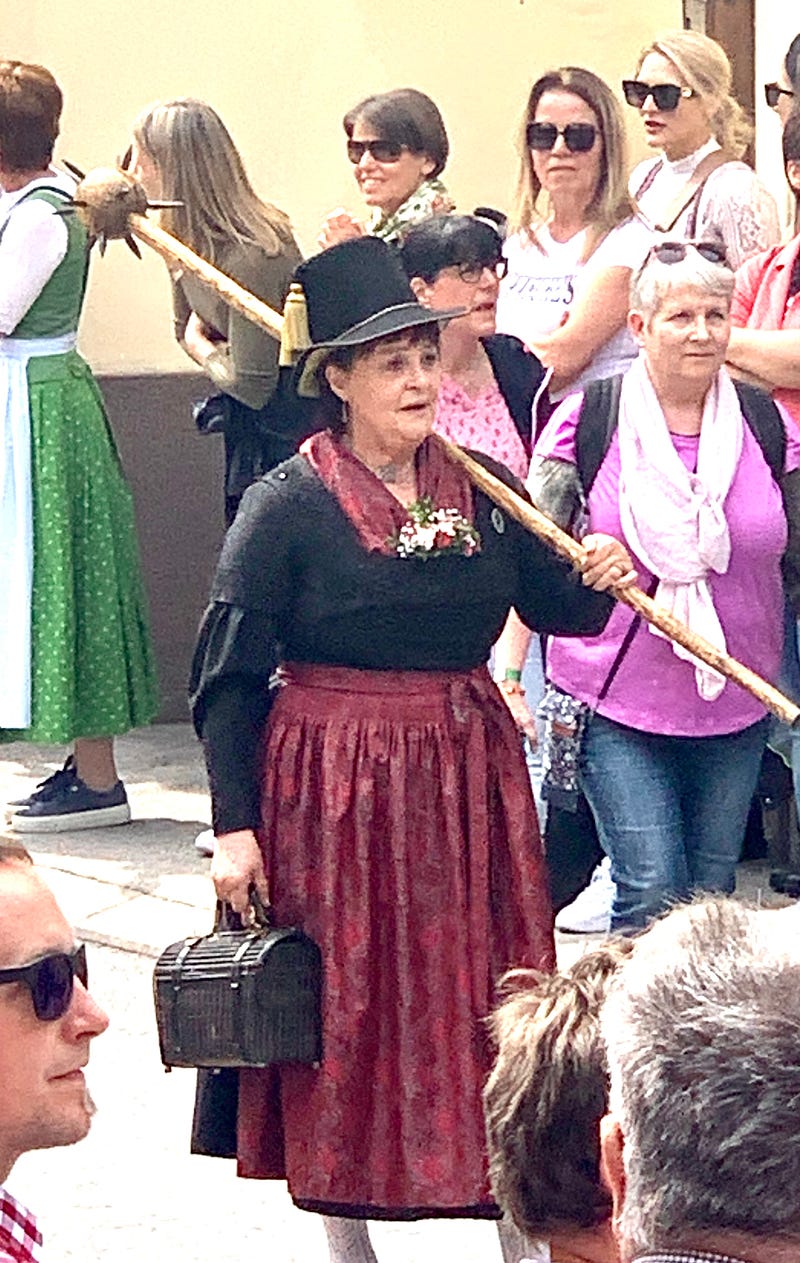
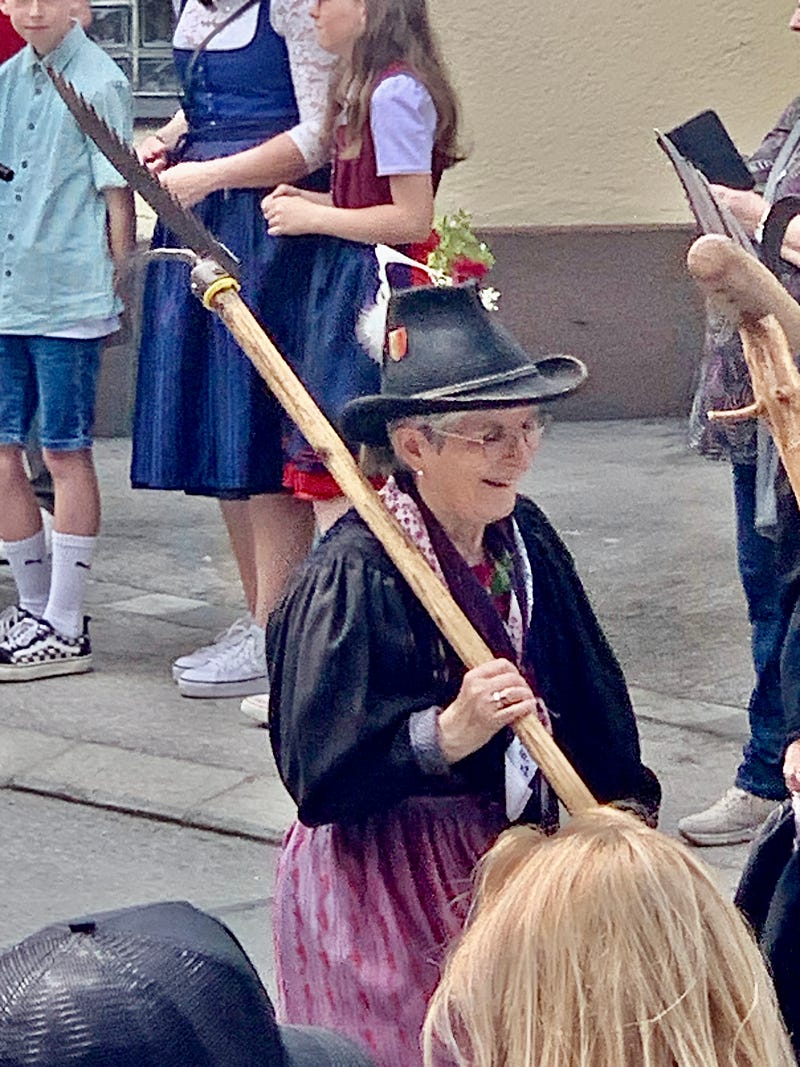
Schnapps-mädels. As expected, there were numerous brass bands, each Ompah-pa-ing loudly as they marched by. But, unexpectedly, at the front of almost every band marched a single row of costumed young women who were not playing instruments. Instead, each sported a small wooden keg, worn like a purse with a strap. In their free hand, each women brandished three or four tiny silver cups and a little white cup-cleaning cloth. They were packing schnapps! I imagined (no research!) the tradition must have arisen from the time when bands marched with troops into battle, and that the liquor was applied keep the brass-players’ embouchures lubricated in case their mouths got dry. The bigger the band, the more schnapps-mädels had to march with them.
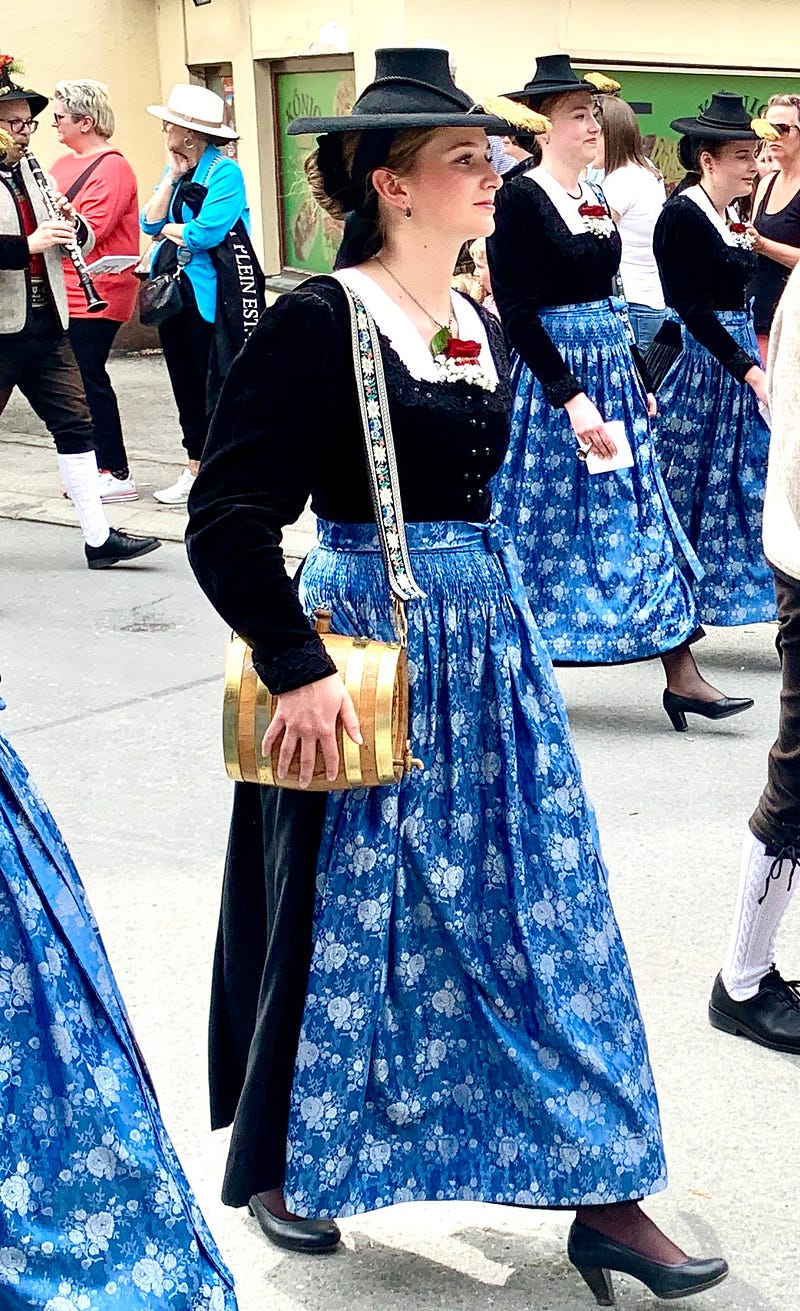
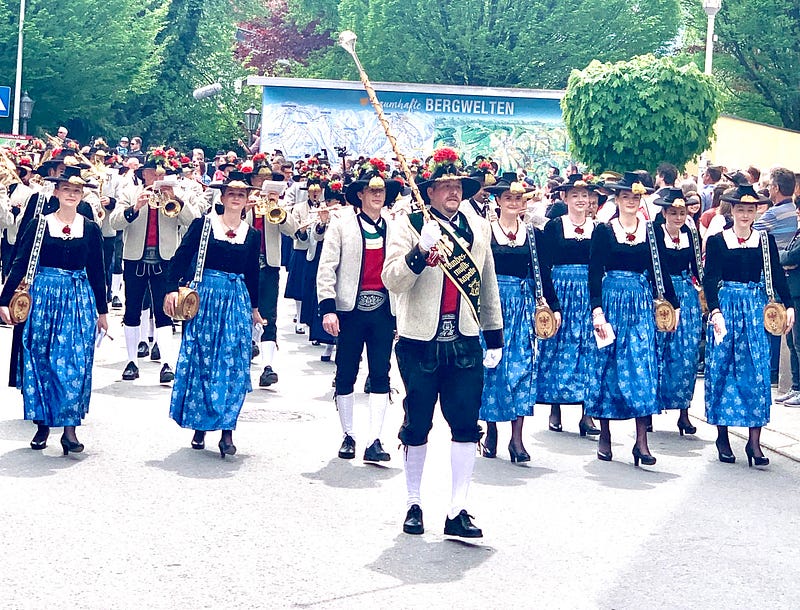
After the march was over, I ran into a couple of schnapps mädels in the crowd dispensing liquor to whoever asked for one euro a shot. I paid up, and they gladly filled a silver cup, plus one for each of them, and posed for a picture with me. Prost!
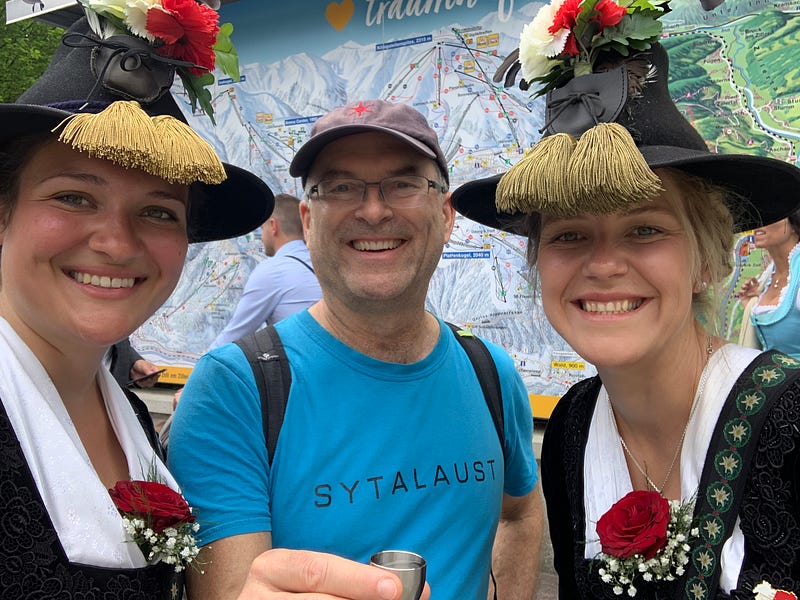
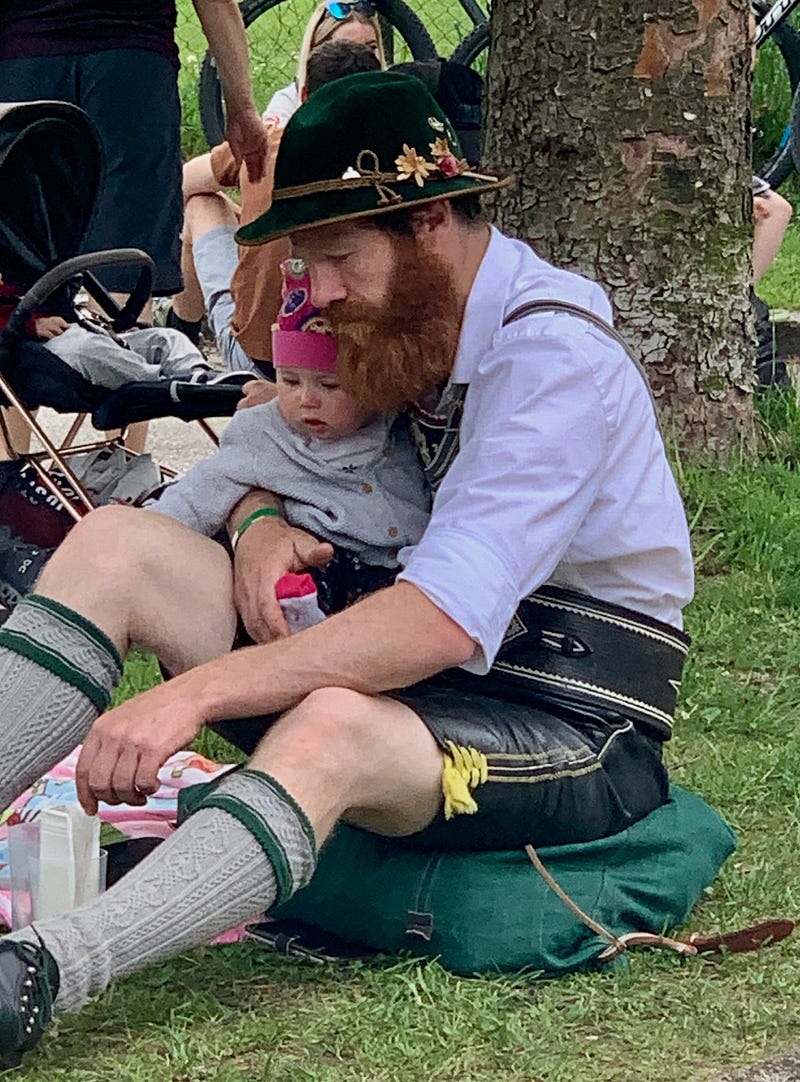
When the parade wound down, I walked back up the mountainside and got Teresa. We drave down and wandered through the craft market, the beer garden, and the festival grounds. The band was still hot, though, and perhaps fifty costumed people were polka-ing in front of the stage like there was no tomorrow. A lot of beer was being consumed, but everyone was good-natured and jolly, even after a wild four-days-long party. Well, I guess a few needed soothing…and maybe a change of diaper.
I later learned from this useful article (below) that Gauderfest came from the Tryollean tradition of parish fairs at the end of winter, when people would come down from their mountain homes to attend holy mass and visit the market in the valley. The Gauder parish fair in Zell am Ziller was especially popular. Records show Venetian traders mentioning it as far back as 1428. So the festival is at least 600 years old — older than the discovery of the Americas — and possibly much older. Since early days, the village brewery on the Gauder estate opened its doors to the thirsty visitors on the first weekend in May to coincide with the fair, and this is where the name Gauderfest originated.
I would add that the presence of a May Pole in the parade indicates that even before Tyrolleans were Christianized, I bet their pagan ancestors camed down from the hills at the end of winter and celebrated the rites of spring with beer, music, and a one big, long party.
Did you miss one of my earlier stories about Austria’s Alps? Here they are:


