
Father’s Day | Memoir | Family | Daughter | History
We Called Him “The Gazelle”
In Memory of My Father

Fathers can be wonderful, not always wonderful, aggravating but lovable. My Father was all of these. I miss him. He was wonderful more often than not and always loved.
Raymond August Wagner, aka The Gazelle
He was born Raymond August Wagner on September 4, 1904 in Denver, Colorado. He was ok with Raymond. He hated August, his maternal Grandmother’s name. He didn’t go for “Ray” but never complained when caring friends called him that. The family never called him “Ray.”
My friend Sharra and I called him “The Gazelle.” (Read how he got that nickname in this story.)
Surprisingly, he quite liked the name and responded when we asked, “Gazelle, will you play croquet with us?” Usually the answer was “yes.” And we’d all play croquet. He played to win and sometimes he did. Sometimes one of us did. (Most fathers in the 1940s and 50s didn’t play croquet or Parcheesi with their children.)
“Gazelle, please, please, can we go to Dairy Queen tonight? And can Sharra come too?” I can’t remember that he ever said “no” — unless my Mother said “no.”
“Will you play a board game with us?” He’d reply, “Yes, but not Monopoly. How about Parcheesi?” We always agreed to whatever game he suggested because playing with him was so much fun. And never argued about Monopoly which we loved.
I still have his Parcheesi game. It’s older than I am. The board is worn, the die unreadable, and the dice cups tattered. I taught the grandkids to play Parcheesi with their great-grandfather’s Parcheesi game.
Eventually I got them a new one. But Andrew, the youngest grandchild, would say, “Grandma, can we play with your Father’s Parcheesi game. It’s more fun than the new one. (The new one is identical to the original, just not worn and tattered.)
My Father was 39 when he and my Mother decided to adopt me, an infant from the Colorado State Home for Dependent and Neglected Children. She was 32. I was their only child.
In an era when many dads were a bit distant from their children, if not foreboding, my Father responded to kids.
I was a bit frightened of Sharra’s father, Mr. D’Amico, although I think he liked me. Long before Pizza Hut, I always got invited when Mr. D’Amico decided to make pizza from scratch. I was often included on family outings to a drive-in movie theater, and even to McGraw’s Ranch where we’d stay overnight and ride horseback.
Nothing scary about Mr. Wagner. He liked children. Children liked him.
He taught Sharra’s little brother to play chess. My Father wanted a partner, since chess and I didn’t play well together. Many years after he had died, and we’d all grown up and had kids of our own, Peter asked me if I remembered when my Father taught him how to play chess. How could I forget?
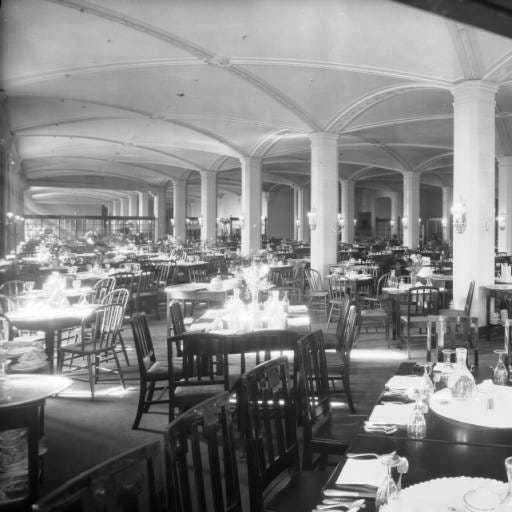
If we asked, my Father would take Sharra and me to lunch at the Denver Dry Goods Tea Room. I’d call him at his office in the morning. He’d say “yes.” The two of us would get all dressed up, get on the bus for downtown, and be taken out to lunch. We could order anything we wanted. He treated us like princesses.
Lawyers, journalists, and businessmen like Sharra’s Father who owned the Baldwin Piano Company had a special table in the Denver Dry Goods Tea Room. They ate lunch there everyday.
Recently a post about the Tea Room appeared on Facebook with a listing of favorite foods, including the coconut cream pie. My father loved that pie! Someone floated a rumor that Raymond had coconut cream pie everyday.
Julia waited tables at the Denver Dry Goods Tea Room, including the men’s lunch table. When she retired, my Father raised money for her from the men at the table. He argued that waitresses didn’t make much money, and she would need more now that she was retired.
My Father was kind and generous, helping wherever he could. If our elderly neighbors hadn’t put their car in the garage which involved driving down the block, around the corner and then up the alley, he’d do it. If their walk needed shoveling in the winter, he’d shovel.
If cousins had a dilemma and were afraid to tell their scary fathers, they’d come to our house to talk it over with Uncle Raymond. When I think about his love for children and young people, my heart is sad that he died before my son Stephen was born. Stephen missed having the greatest grandfather ever!
My Father’s Grandparents: Colorado Pioneers
My great-grandparents, Anna and Herman Wagner, came to Colorado during the Gold Rush in 1859 when Colorado was still part of Kansas Territory. They had immigrated to Ohio from Germany. Herman crossed the Overland Trail by himself first to check it out, hoping he’d get rich panning for gold.
Herman didn’t get rich. But he liked Colorado so much he decided to stay. Herman wrote to Anna that she should come to Auraria (Denver’s original name). Herman built a small cabin for his family where the University of Colorado at Denver is now. Anna joined a wagon train to follow the Overland Trail to her new home.
That little cabin is on a diorama depicting Denver in the 1860s. My Father would take me to the old Denver History Museum to see the miniature Wagner cabin. It had been reconstructed by WPA artists and historians in the 1930s. We’d walk all around the diorama. My Father would spot the cabin: “MaryJo, here it is. This is the Wagner cabin.”
Herman returned to his trade of making leather goods when gold panning turned out less lucrative than promised. Anna was pregnant with my Grandfather, Harry Ulysses Wagner when Herman rode his horse into the mountains to sell boots and saddles to miners. He contracted pneumonia and died.
Not long after, Anna left Auraria with her children to work the homestead land that Herman had applied for in 1862. She had inherited 160 acres in Herman’s name and 160 acres as his wife. Having this land would be her escape from raising children in rough and tumble early Denver rife with drunks, brawlers, and prostitutes.
She and the children farmed, including growing cucumbers she sold to the Kuner Pickle Company. (Kuner’s still sells canned vegetables in Colorado grocery stores.) She raised cattle, branding them W7, W for Wagner, 7 for her children. My Father cherished the document registering his grandmother’s cattle brand. (Of course I still have it!)
Colorado is dry so Anna and the older boys built an irrigation ditch which they shared with neighbors. The Wagner Lateral Ditch is still used today, located in what is now Lakewood.
Eventually she and the children built one of the first brick houses in Denver. After the Great Fire of 1863, the city passed an ordinance that all houses must be built with brick. The family has always bragged that the Wagner house was the first brick house in Denver.
I’ve never been able to prove that, but nice to think it’s true. The house still stands at the SW corner of 6th and Raleigh. Unfortunately it’s hard to see as the cement wall on the West 6th Avenue freeway blocks the view.
The house brings me back to my Father.
When I was a child, a couple times a month after church, my Father would take us to visit Aunt Matt who still lived in the house. (Her husband, Philip, Anna and Herman’s oldest son, had died.) I’d get cookies and lemonade while the adults drank their coffee. The grownups would chat, and I’d amuse myself reading Arizona Highways.
My Father, his older brother, and their parents sometimes lived in this house It was my Father’s address while he was at Harvard. He had followed his father Harry and his brother Harold to Cambridge. How? I have no idea as the family didn’t have a lot of money. Nor did my father have outstanding grades.
Oh, but my Father was proud of graduating from Harvard. Not the bragging kind of proud but a happiness kind of proud. We had Harvard coffee mugs, Harvard demitasse cups, Harvard dessert plates for company, and 2 Harvard captain’s chairs. My Father had 3 or 4 Harvard neckties. Two coffee mugs remain. I have one. Stephen has the other.
Luckily I was a girl with no brothers and of college-age before women were admitted to Harvard. I would never have been admitted, much less gotten a scholarship. I spared my Father the disappointment of not having a child go to Harvard.
Raymond Grows up
After graduating from college, he returned home and attended law school at the University of Denver. He and Harold would practice law together. Sadly, my Father wasn’t very successful as a lawyer. He specialized in pro bono work for old ladies who couldn’t afford to pay an attorney to write their will.
Harold, on the other hand, died a wealthy man.
I’ve often thought about why my Father didn’t succeed as a lawyer. Maybe because charging people for services rendered was hard. He didn’t like asking people for money.
But that’s not the only reason. He had wanted to be a college professor teaching English literature. His Mother insisted on law school. After all, Harold had gone to law school.
He loved books of every kind: novels, non-fiction, biography, 18th and 19th century poetry. He read magazines: Saturday Evening Post, LIFE, TIME, Reader’s Digest. He could remember long pieces of poetry: Longfellow’s, “Paul Revere’s Ride”; Coleridge’s “Rime of the Ancient Mariner.” He was happy to recite when asked.
He could also sing songs from Gilbert and Sullivan’s Mikado and make us all laugh. “Gazelle, sing ‘Three Little Maids from School are We.’” He would sing. We would laugh and ask him to sing it again. He loved jokes, riddles, and puns. He loved words and names, dictionaries and encyclopedias.
He could play two pieces on the Baldwin Acrosonic piano, he’d given me on my 10th birthday. Of course he had purchased it from Mr. D’Amico, Sharra’s father, one his Denver Tea Room lunch buddies.
By ear, he played the “St. Louis Blues,” written by W.C. Handy and made famous by Bessie Smith in 1925, and Schubert’s “ Serenade.” No one ever thought it odd that he could only play two tunes and that one was blues and the other classical. These were Raymond’s pieces.
Only the Schubert “Serenade” was played on the church organ at his funeral. In a Methodist church in 1965, one would hardly choose a blues tune with its suggestive lyrics. (Click to read the story of losing my father.)
A staunch Protestant, he was deeply attached to First Plymouth Congregational Church, having attended since a little boy. Eventually leaving First Plymouth Congregational Church for Park Hill Methodist Church would be traumatic.
First Plymouth had merged with First Congregational Church, the church Anna and Herman had helped build in 1864. The Wagners had always belonged to First Congregational and then Plymouth. My Father met my Mother at a First Plymouth young people’s group. I was baptized at First Plymouth.
When The Board of Trustees, of which my Father was a member, decided to move the church to a new location and sell the old building, my Father voted “no.” The move would cost too much money, involve borrowing, and move the church out of Denver to an Englewood address.
Now to find a new church. When he found a church similar to the Congregational Church, and it offered a membership card, he was on board. My Father liked the church, the minister, and the location. And having a membership card added a special touch. We became Methodists.
He loved the Colorado mountains and hiking in Rocky Mountain National Park. We hiked together while my Mother and my Grandmother waited at a picnic table. I walked faster than my Father so he gave me a whistle in case I got lost or fell down. He hated camping.
He also loved driving too fast up over Trail Ridge Road (elevation 11,500 feet), especially when an East Coast friend from his days at Harvard was visiting. My Father got a kick out of scaring his college buddies. I can still hear my Mother: “Raymond, slow down!”
He liked road trips. We went often to Yellowstone and the Tetons where he and I did more hiking. We drove to Washington, New York City, Boston, Montreal, and Quebec, and as far north as Edmonton, Alberta.
He and I climbed the steps of the Washington Monument, took the elevator to the top of the Empire State Building.
If a monument, a building, or a trail had a top , we climbed up. If a bottom, down we went — except for the floor of the Grand Canyon. That 9.5 mile hike was a bit much. Too much waiting at the picnic table for my Mother and my Grandmother.
These road trips included encounters with the Kansas State Patrol and the Illinois State Patrol.
On one of these trips, he avoided a speeding ticket in the middle of Kansas. According to him, he didn’t get a ticket because he showed the officer his membership card to Park Hill Methodist Church. Who knows what the “real” reason was.
Another trip would take us from Denver to Boston, via Chicago where my Father couldn’t find the way off the highway going around Chicago. The map and our trusty TripTik from AAA weren’t any help.
Soon the red lights blinking in rear view mirror and the siren caught my Mother’s attention. “Raymond, pull over. A State Trooper is following us.”
“Sir, can I please see your driver’s license, car registration and proof of auto insurance?” My Father handed them over along with his membership card to Park Hill Methodist Church.
Realizing that he hadn’t stopped a drunk driver, the officer was perplexed. “Mr. Wagner, you seem to be slowing down and then speeding up, changing lanes frequently. Is something wrong?”
“We’re lost,” my Father replied. “I can’t figure out how to get out of Chicago. We’re going to Boston.”
The officer answered, “Sir, I’m going to back my cruiser up to just in front of your car. As soon as you see my flashing lights and hear the siren, I want you to follow me as close as you can. When I turn off my lights and the siren, it means you’re out of Chicago and on your way to Boston.”
And that’s how a little girl, her grandmother, and her parents finally got out of Chicago.
Despite his nickname, “Gazelle,” and his love for jokes, my Father was formal. We teased him that he’d wear a necktie to empty the garbage. Along with a book, he got a new necktie every birthday, every Christmas, every Father’s day.
Disagreeing with My Father
Much as I adored my Father and was devastated when he died suddenly at 61 years old, it wasn’t all merriment between us. (Read that story about grief and trauma.)
We didn’t just argue, we screamed at each other. We screamed so loudly that my Mother dashed all over the house closing the windows so the neighbors wouldn’t hear.
Sometimes it felt like we disagreed about everything. I don’t remember what we argued about except my going off the graduate school. (That traumatic story is here.)
Despite all the arguments, my Father was my defender. I was the light of his life. When I didn’t get the position of Editor of the East High School Spotlight, he wasn’t just disappointed for me. He was outraged. He thought I should have been chosen.
When I got second place in the Wolcott Speech Contest for Girls, he was outraged again. Of course I was the best. How could some other girl have gotten this prize. I saw this “girl” at my 50th high school reunion. Barbara could barely speak and clearly had Alzheimers or something similar. I thought of my Father.
Sometimes I rant about my father, blaming him for my supposed dysfunctions. And we do inherit “stuff” from our parents who inherited “stuff” from their parents. But in the end, 55 years later, I miss The Gazelle. Some days I grieve for him.
I’ve done many things he wouldn’t have approved of: divorce, graduate school, leaving Denver for so many years, becoming a feminist.
I’m sure he’s shed tears in heaven that I am a Democrat. He was a staunch Republican and would grieve at the state of the Republican Party today. He died before we could argue politics.
But I know he’d be proud that I’m writing. He’d enjoy reading my stories and keep himself busy correcting typos, mistakes in punctuation, and other perceived errors — and we’d argue all over again.
Gazelle, I love you forever.


