
In Ireland I See Dead People
Roaming the Emerald Isle in search of some Irish luck and a long-forgotten ancestor
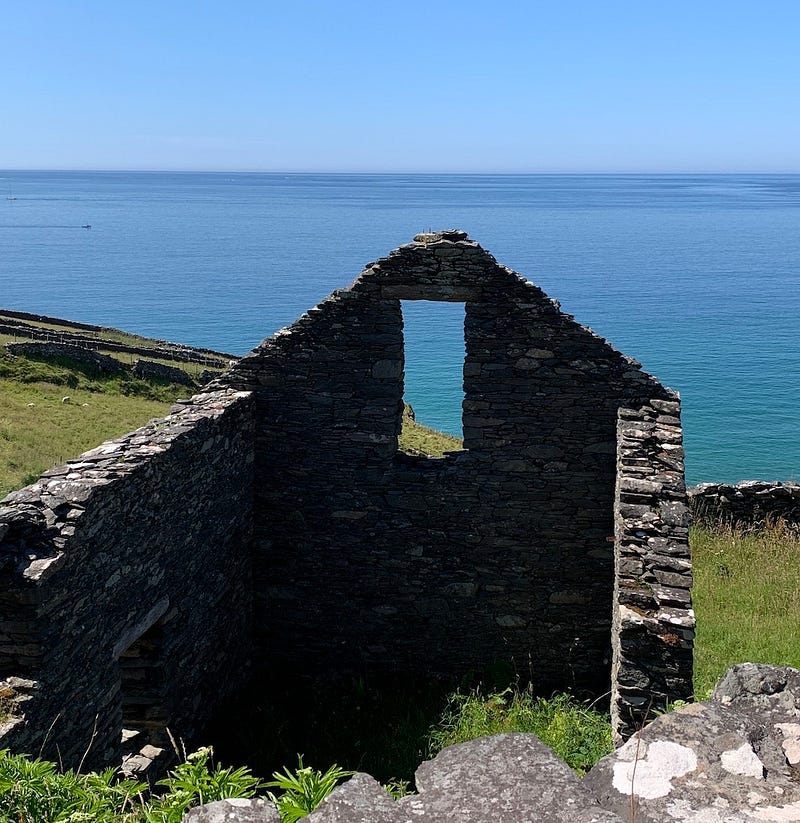
Has a place from your ancestral past ever called to you? Ever since I was able to make out the name of an Irish village — Colligan — on my great-great grandmother’s 1881 gravestone, Ireland has been patiently waiting for me.
When we land in Dublin, the first thing we notice is the cool, fresh air that offers respite from the summer’s sweltering heat wave. There’s a liveliness in the city evident in the cheerful people who soak up the uncommonly fabulous weather. We are happy to be spending 10 days soaking it up too.
But there’s only one person I’m hoping to connect with, and the last time she stepped foot in Ireland was ~170 years ago. It would take me a tiny fraction of those years doing start-and-stop genealogy research to gather enough clues to make for a productive visit to the Emerald Isle. Yet, when we finally arrive, I’m not sure if the puzzle pieces I’d gathered would offer the insight I hoped for.
The Puzzling Pieces of My Only Known Irish Ancestor
The first time we met was on a census record from 1870: Ellen, born in Ireland, wife of the head of household, occupation of keeping house, and cannot read or cannot write. Like most women of that era, she had to take the name of the man she married, so until more clues came my way, I didn’t know her name at birth.
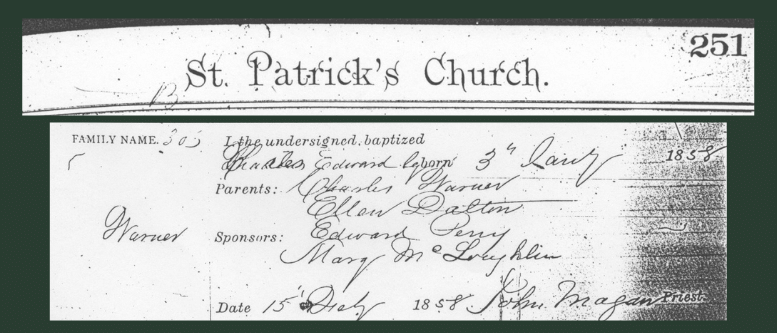
After a distant cousin told me Ellen’s maiden name, the hunt would continue across reels of microfilm. Then one day in the 1990s, my Irish ancestor ventured out of hiding when she jumped off of the page of her son’s baptismal registry so I would see her name: Ellen Dalton. (I swear she guided my hand to a random stop while I was scrolling.)
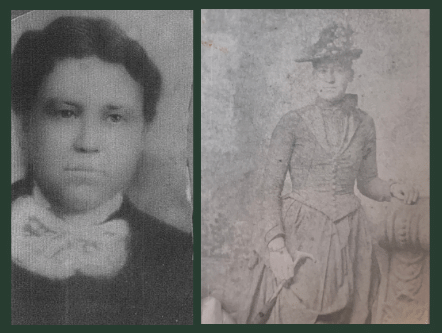
Then during a visit back to Florida, my grandmother showed me an old photograph passed down to her. As she unwrapped the large portrait that had been broken in half, she declared, “That’s my grandmother Ellen.” Finally, I had a face to put with the name. My grandmother never met her grandmother in the flesh, but Ellen’s ghost, it would seem, did not want to be forgotten.
It would take new technology and the birth of the internet to learn more. A few of us DNA matches would find each other and piece together a family of siblings from County Waterford, a couple of whom stayed in Ireland and the few who immigrated to the midwestern US.
A descendant of a sister named Alice was in possession of a letter sent from a brother Edmond back in Ireland. In it, he chided her that no one showed up to poor Ellen’s funeral “but her own little family.”
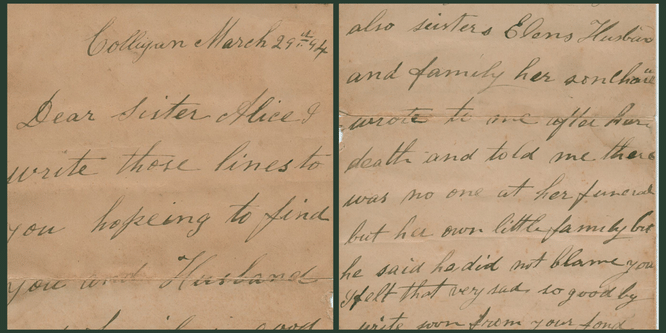
The letter made me wonder what happened that Ellen’s life would have ended on such a sad note — and what I might learn when I visited her native land.
Assembling the Pieces
I didn’t have much to go on besides the family stories passed down and the ancestral clues left behind. From this I could stitch together a loose narrative:
Ellen left Ireland in the 1850s following the Great Famine. As a young “spinster”, she was in good company since female “domestic servants” were in great demand. She likely landed in New York, eventually making her way to Illinois.
Somewhere along her journey, by the spring of 1857 she met a man named Charles Warner. He would father her first-born son, my great-grandfather, also named Charles. The baby is born in early January of 1858, and baptized six weeks later at St. Patrick’s Church in Chicago, whose records miraculously survived the Great Fire of 1871.
Two years later Ellen Warner and her toddler son are living in rural Illinois where she is a domestic on a farm. Two years after that, she marries a man named Dennis Keefe in a nearby town. Her son Charles would take the surname of his step-father, whom he would later describe as “mean”.
Though Ellen and Dennis would go on to have several children, when their daughters grow up to marry, oddly they use the surname Lee instead of Keefe. Perhaps they wanted to distance themselves from being dirty “No Irish Need Apply” immigrant stock — or perhaps it was a symbolic choice to reject their “mean” father.
While DNA has all but confirmed the story of Charles Warner, the plot points of Ellen’s life remain a big mystery:
- Was she married and widowed, or did she pose as such to protect her reputation?
- Did she then marry an abusive man who made her family miserable, or was the “mean” father an unfair rumor that got passed down?
- At the end of her life was she estranged from her siblings, or did communication and transportation of the era make it impossible for them to attend her funeral?
And would a visit to her village in Ireland hold any answers?
Ireland, Summer of 2022
A prominent feature of our trip is the music that scores the scenery at every turn. It emanates from the buskers on street corners and from pubs that have been pouring pints for over a hundred years. It even follows us into the car, where our daughters have us singing along to Wild Rover (“No nay never!”) as my husband is determined to stick to the left side of the road.
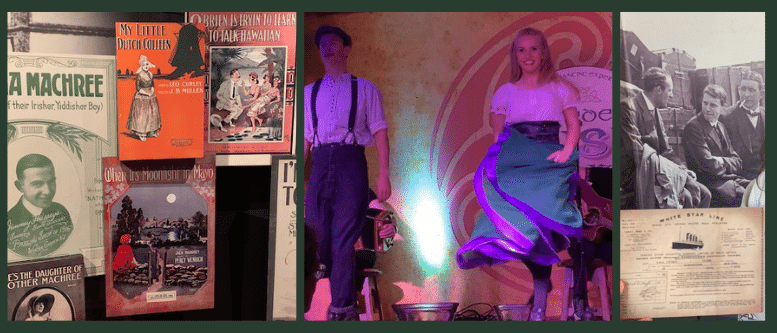
The sound and the dazzling emerald scenery is joyful. But it’s also tinged with a boozy melancholy. It’s hard to say where that melancholy comes from, though. It might be that Ireland, isolated by chilly water, needs an emotional anchor to maintain its hard-fought identity independent of Great Britain. Or perhaps the lingering sorrow is a vestige of the mass exodus by death and diaspora during The Great Famine — along with countless other tragedies, such as the Titanic, whose final port of departure we visit in Cobh.
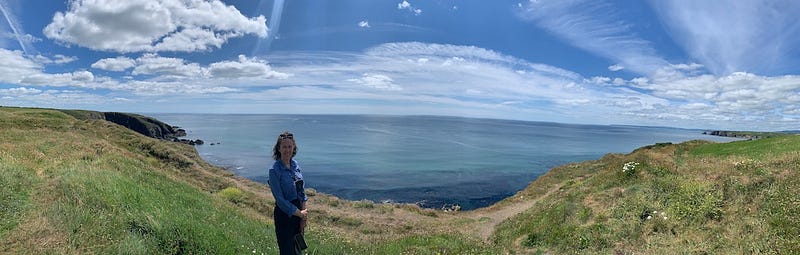
Wherever it comes from, the paradoxical joy-sadness is real. Like a stunning emptiness, it’s visible in the Medieval ruins scattered across the land. And because I’ve traveled to Ireland to follow a thread in our ancestral tapestry, it’s evident in the ghosts I see walking among the living. I don’t literally see them, of course. But I feel them. And I think everyone else around me does too to some degree.
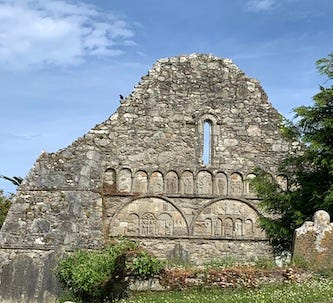
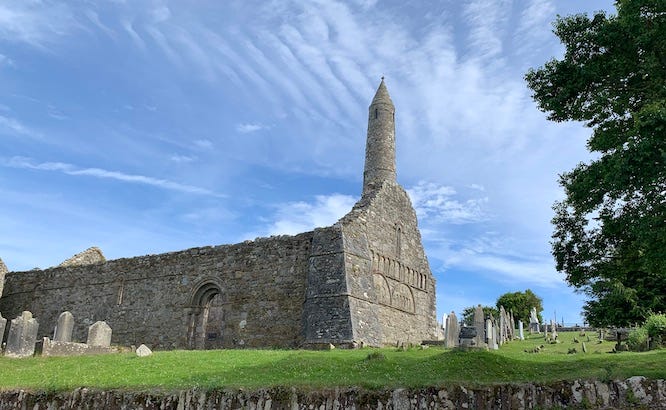
The Ancestral Village at the End of the Road
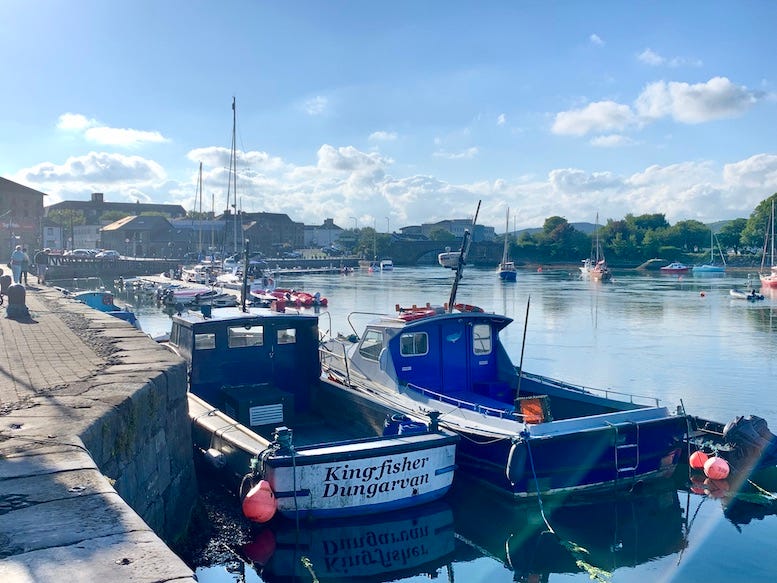
When we finally get to Colligan, a cluster of villages in the woods north of Dungarvan, my senses go on high alert. It’s beautiful here. Yet I can’t quite sense a connection to Ellen Dalton. This isn’t for lack of trying. I’d come prepared, after all. The Waterford Genealogy Facebook Groups I’m part of had set me up with local folk who give me a clearer picture of their history beyond the usual museum fare.
Yet Ellen continues to elude me.
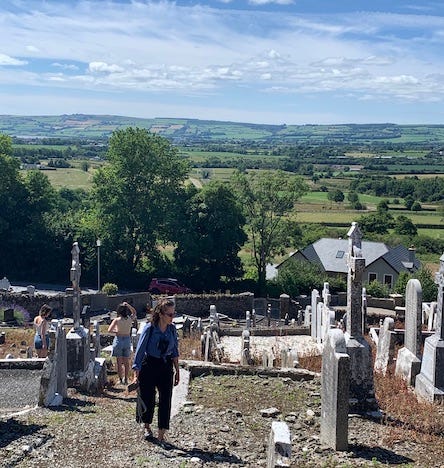
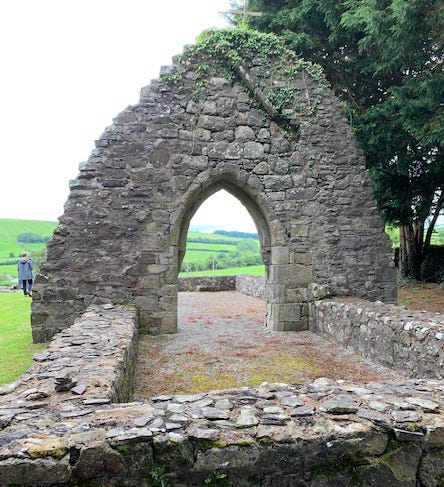
Maybe 170 years is too long. Maybe, like for so many of her era, Ireland didn’t give her a good reason to leave a piece of her memory there. Maybe the only thing I can learn about her Irish past is the town she came from and the cemeteries our mutual ancestors are likely buried in.
The most I can conclude from my visit across time and place is that I’ll never understand what made Ellen who she was. No matter how many clues I might gather about her life, the only thing I can know is an essence of what she had to endure and what she passed down to the next generations.
Some might ask if there’s value in such a vague journey of opposites — the sadness-joy; the past-present; the dead-living. And because it doesn’t result in a clear takeaway, it’s a valid question. My trip to Ireland left me with mere impressions. Yet it has given me an immense satisfaction of having connected disparate dots, no matter how ethereal and oppositional they are.
Part of me will always hold out hope for more telling clues about the life of my ancestor. (Much like the Titanic revealed her secrets long after she fell to the depths of the Atlantic, it is possible.) But until then, I’ll have to content myself with having explored the melancholy, the ghosts, and the hard life of Ireland’s past. For it renewed in me a joyful sense of gratitude for living in the present, wherever I roam.
Jacqueline Jannotta is the author of Let’s Leave the Country! A Guide to Your Family Year Abroad. She writes about other stuff too:-)


