avatarDark Energy Articles

Free AI web copilot to create summaries, insights and extended knowledge, download it at here

2516

Abstract

e></iframe></div></div></figure><h1 id="8cf3">The man did not originate from Denmark.</h1><blockquote id="cd3b"><p>“The mortally tortured body of the man from Vittrup was placed in a Danish bog, likely as part of a ritual sacrifice. This event took place approximately 5100–5300 years ago, during the local funnel beaker culture,” the team wrote in their article.</p></blockquote><p id="f744">Researchers found differences in morphological features of the skull between the man from Vittrup and the Neolithic farmers inhabiting present-day Denmark.</p><blockquote id="624b"><p>“This trader resembled more of a hunter-gatherer who inhabited Scandinavia during previous millennia,” the scholars claim. They add that he likely originated from Norway or Sweden, near the Arctic Circle.</p></blockquote><blockquote id="d82a"><p>“Additionally, the oxygen isotope content in the enamel suggests that as a child, he lived in a cooler climate, north of the regions inhabited by farmers. Genetic data indeed indicate that he is closely related to a Mesolithic individual known from Norway and Sweden,” the researchers wrote.</p></blockquote><p id="2bad">Interestingly, the results of isotopic analysis in enamel and bone collagen showed that during childhood, the man led a fishing-hunting lifestyle. The authors determined that in his youth, he likely consumed mainly fish such as cod and sea bream, as well as whale meat.</p><div id="c878" class="link-block"> <a href="https://youtube.com/shorts/kQNkzlrSSqU?feature=share"> <div> <div> <h2>What Secrets Lie Behind the Skull of a "Bog Mummy"? #shorts #history #science #life #culture #mummy</h2> <div><h3>🔴 Support via Patreon: https://patreon.com/ambientsanctuary🟠 Support via YouTube Sponsorship…</h3></div> <div><p>youtube.com</p></div> </div> <div> <div style="background-image: url(https://miro.readmedium.com/v2/resize:fit:320/0*8aSHbZ7iuA8hA7ch)"></div> </div> </div> </a> </div><h1 id="7d74">The man from Vittrup might have been sacrificed.</h1><blockquote id="a3fc"><p>Only in later years (around age 12) did his diet become “typical for farmers.” “This variable life history is also reflected in the analysis of proteins from hardened organic deposits on the teeth,” the scholars explained.</p></blockquote><p id="85ad">Scientists do not know why this man decided to emigrate to another part

Options

of Scandinavia. The authors suggest that his departure was most likely driven by a desire for trade or exchange of goods. One thing is certain:<b> the end of his life was extremely painful.</b></p><blockquote id="e25b"><p>“The damage to his skull is the result of at least eight blows,” the researchers wrote. They argue that these were likely delivered with a hard object with a rounded surface, possibly a club. “The blows shattered it into several pieces. There are no signs of healing, indicating that the injuries were lethal,” they added.</p></blockquote><p id="b7e4">Researchers only wonder whether it was a random murder or a planned action. Considering that the remains of the man from Vittrup were found alongside an animal, in a swampy area, it is very possible that it was part of a local ritual, and the unfortunate man was sacrificed in honor of an unknown deity.</p><div id="4aa8" class="link-block"> <a href="https://readmedium.com/can-the-brain-live-without-a-body-this-animal-endured-for-5-hours-9c09e750ab3d"> <div> <div> <h2>Can the brain live without a body? This animal endured for 5 hours.</h2> <div><h3>How does the brain fare outside the body? Scientists have been trying to answer this question for quite some time. The…</h3></div> <div><p>medium.com</p></div> </div> <div> <div style="background-image: url(https://miro.readmedium.com/v2/resize:fit:320/1*29ywmmcXUVYz1h4q8Cv6sA.jpeg)"></div> </div> </div> </a> </div><h1 id="0bd7">Attention all readers!</h1><p id="bb38"><b><i>As content creators on Medium.com, we face minimal compensation for our hard work. If you find value in my articles, please consider supporting me on my “<a href="https://www.buymeacoffee.com/oconnel">Buy Me a Coffee</a>” page. Your small contributions can make a big difference in fueling my passion for creating quality content. Thank you for your support!</i></b></p><figure id="1057"><img src="https://cdn-images-1.readmedium.com/v2/resize:fit:800/0*Pm9TOr-5svmNuuXB.png"><figcaption><a href="https://www.buymeacoffee.com/oconnel">https://www.buymeacoffee.com/oconnel</a></figcaption></figure><figure id="71ef"><img src="https://cdn-images-1.readmedium.com/v2/resize:fit:800/0*KJc52P2X8j4VSRWK.png"><figcaption><a href="https://www.buymeacoffee.com/oconnel">https://www.buymeacoffee.com/oconnel</a></figcaption></figure></article></body>

In Denmark, the skull of a “bog mummy” has been discovered, bearing traces of a brutal murder.

Archaeologists have meticulously examined the skull of a bog mummy discovered in Denmark. It turns out that this individual was sacrificed 5000 years ago, having been brutally beaten beforehand.
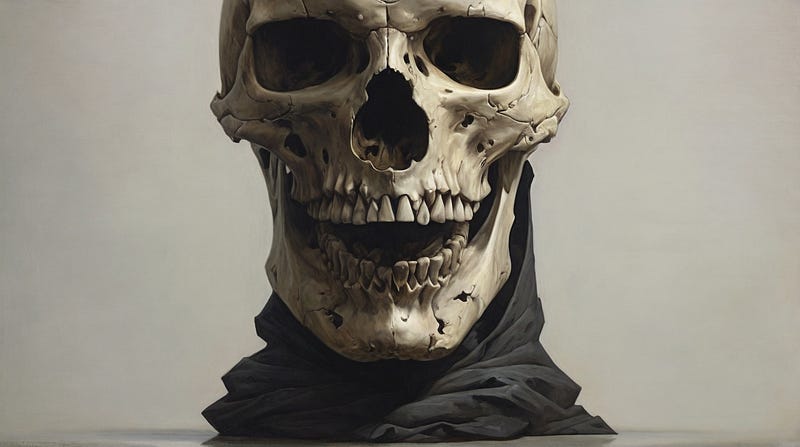
[Image generated by AI, Free to use]

Near the village of Vittrup in Denmark in 1915, archaeologists stumbled upon a ditch containing human and animal remains. Upon analysis, it was determined that both the human and animal remains dated to a similar period, around 3800–3500 BCE. These bones were transported to the Danish National Museum, where they ended up in storage, forgotten for nearly a century.

Who was the man from Vittrup?

Only in the 21st century did scientists regain interest in the remains discovered in the peat bog. Studies from a few years ago revealed that the man from Vittrup lived between 3300 and 3100 BCE. Last year, researchers from the University of Gothenburg in Sweden decided to take another look at the deceased. Their findings, described in the scientific journal “PLOS One,” led to surprising conclusions.

The team determined that the man from Vittrup might have been a wandering flint trader, possibly an immigrant who encountered the local population in the region. However, the encounter did not end well for him. Traces on the bones suggest that he was brutally murdered.

The remains of the man from Vittrup consist only of the right ankle, left lower leg, and fragments of the skull with the jaw and 16 teeth. Nevertheless, this was enough to establish that he died at around 30–40 years of age.

The man did not originate from Denmark.

“The mortally tortured body of the man from Vittrup was placed in a Danish bog, likely as part of a ritual sacrifice. This event took place approximately 5100–5300 years ago, during the local funnel beaker culture,” the team wrote in their article.

Researchers found differences in morphological features of the skull between the man from Vittrup and the Neolithic farmers inhabiting present-day Denmark.

“This trader resembled more of a hunter-gatherer who inhabited Scandinavia during previous millennia,” the scholars claim. They add that he likely originated from Norway or Sweden, near the Arctic Circle.

“Additionally, the oxygen isotope content in the enamel suggests that as a child, he lived in a cooler climate, north of the regions inhabited by farmers. Genetic data indeed indicate that he is closely related to a Mesolithic individual known from Norway and Sweden,” the researchers wrote.

Interestingly, the results of isotopic analysis in enamel and bone collagen showed that during childhood, the man led a fishing-hunting lifestyle. The authors determined that in his youth, he likely consumed mainly fish such as cod and sea bream, as well as whale meat.

The man from Vittrup might have been sacrificed.

Only in later years (around age 12) did his diet become “typical for farmers.” “This variable life history is also reflected in the analysis of proteins from hardened organic deposits on the teeth,” the scholars explained.

Scientists do not know why this man decided to emigrate to another part of Scandinavia. The authors suggest that his departure was most likely driven by a desire for trade or exchange of goods. One thing is certain: the end of his life was extremely painful.

“The damage to his skull is the result of at least eight blows,” the researchers wrote. They argue that these were likely delivered with a hard object with a rounded surface, possibly a club. “The blows shattered it into several pieces. There are no signs of healing, indicating that the injuries were lethal,” they added.

Researchers only wonder whether it was a random murder or a planned action. Considering that the remains of the man from Vittrup were found alongside an animal, in a swampy area, it is very possible that it was part of a local ritual, and the unfortunate man was sacrificed in honor of an unknown deity.

Attention all readers!

As content creators on Medium.com, we face minimal compensation for our hard work. If you find value in my articles, please consider supporting me on my “Buy Me a Coffee” page. Your small contributions can make a big difference in fueling my passion for creating quality content. Thank you for your support!

https://www.buymeacoffee.com/oconnel
History
Science
Death
Religion
Culture
Recommended from ReadMedium